
Before I explain a little more of the NC500 route, just a word on my Blog headings. Long-suffering readers will know that my captions are all song titles with some (however tenuous) relevance to the content of the post or to the experiences of my day on the trail. Most of the numbers are contemporary (meaning, at least in my mind, somewhere within the last 60 years or so), and that includes yesterday’s title ‘Flower of Scotland’. I had imagined the latter to be a traditional tune, but it is in fact a 1960’s composition by Roy Williamson of the renowned folk group, The Corries. Today’s selection, another unofficial anthem of Scotland, is a more traditional tune though, dating from the mid-19th century, and to which the words were added in 1950 by writer and broadcaster ‘Cliff’ Hanley.
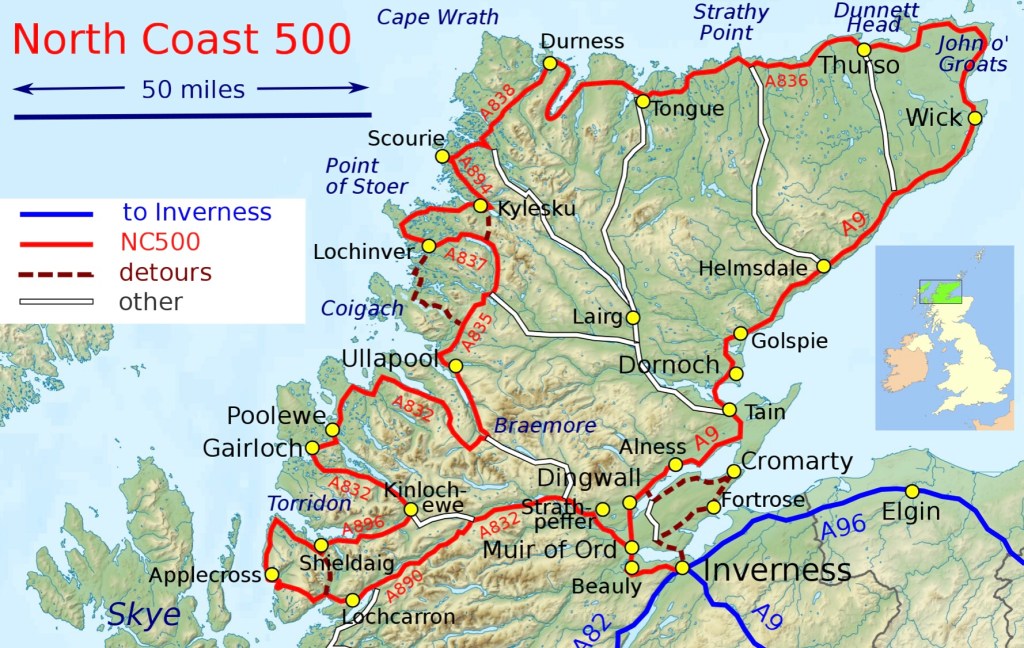
Looking at our imminent task, perhaps a more apt title might have been ‘Scotland For The Brave!’ So my main purpose today is to say a little more about our proposed Ride & Stride venture around the North Coast 500.
These five hundred or so miles of metalled roads that make up the stunning coastal tour around the northern Highlands of Scotland have existed for many decades, and they follow thoroughfares established over many centuries, and in some cases millennia. So it comes as a bit of a shock to discover that the ‘NC500’ was only created in 2015, by the Tourism Project Board of the Northern Highland Initiative, as ‘Scotland’s own Route 66’! As with ‘Flower of Scotland’ (and despite the fact that I have toured the area by car a couple of times in my teens and twenties) I had a sense that the circuit had been around since time immemorial.
So notwithstanding the somewhat manufactured branding, the guidebooks quite rightly extol the eternal beauty of this northernmost of mainland UK tours. Wider acknowledgement in recent years of the wonders of the coastal fringes of Inverness-shire, Ross and Cromarty, Sutherland and Caithness has brought with it some issues around infrastructure as more vehicles take to the route, particularly in these post-pandemic times. This pressure on facilities and on the environment has informed our decision to avoid the peak summer period for our challenge: as well as lighter traffic, we are hoping that a September start should also help us to circumvent the worst of the midges, whilst enjoying milder (and hopefully slightly drier) weather than later into the autumn. We’ll see.
The ‘official’ NC500 route covers around 520 miles, although variations and excursions in our planned itinerary are expected to add a little to this total. So we are expecting to average around 62 miles per day over our nine days of activity. This total will be split into daily sections of, roughly, 50 miles for the cyclists and 10 miles for the runners and walker. The resulting total of 560-odd miles is made harder by an aggregate ascent of around 42,000 feet (13,000 metres), so representing an average of just under 4,000 feet (1,200 metres) per day for the cyclists and about 1,000 feet (300 metres) per day for the runners and walker. A fair daily challenge for us all, especially those of us now into our Sixties!
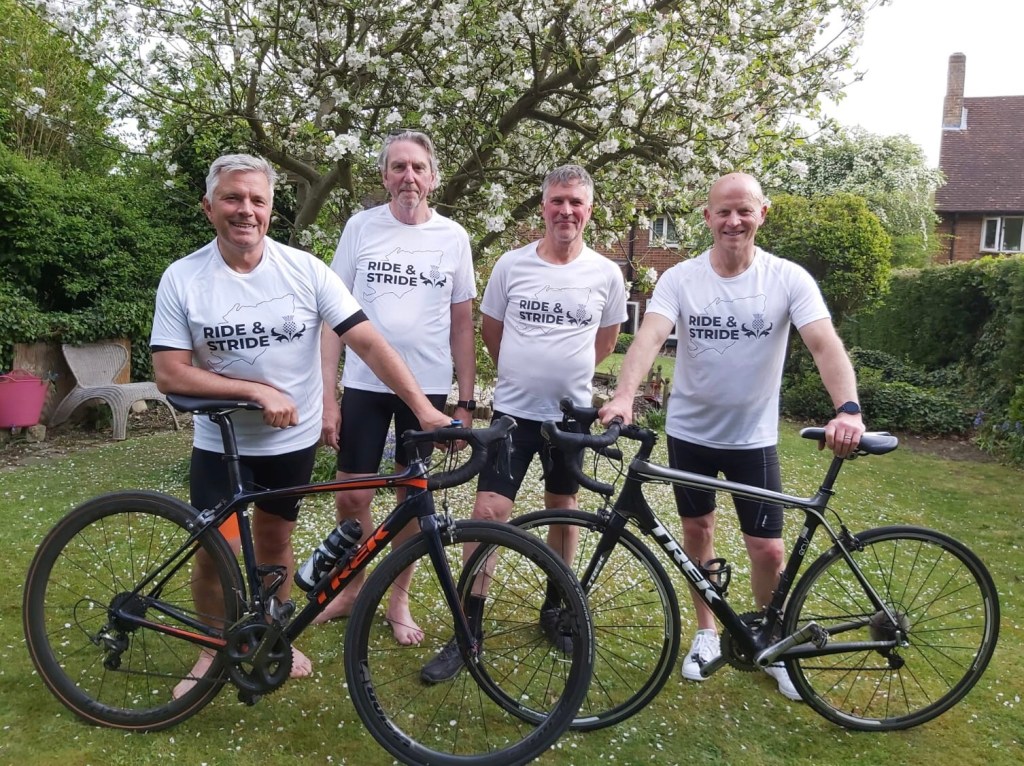
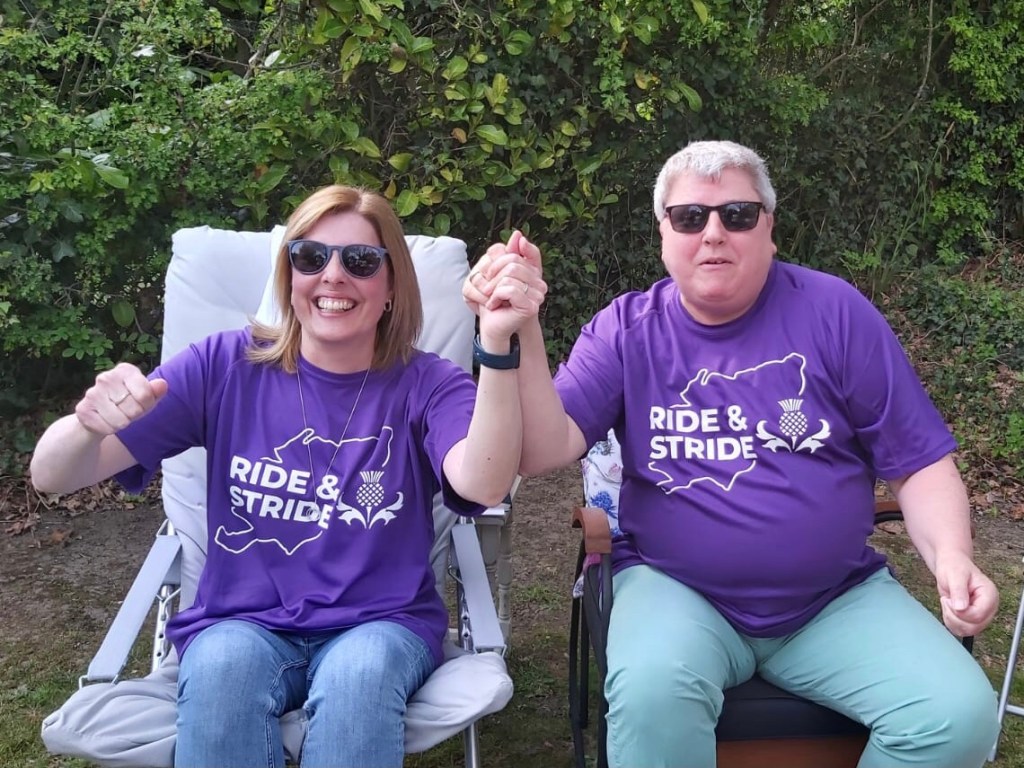
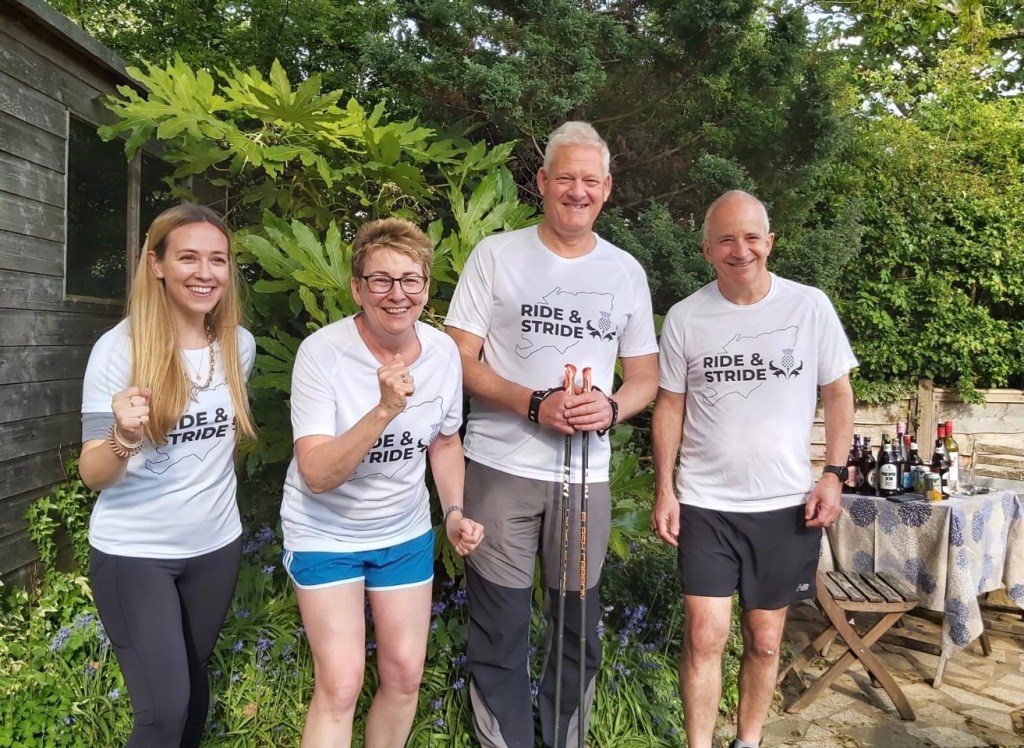
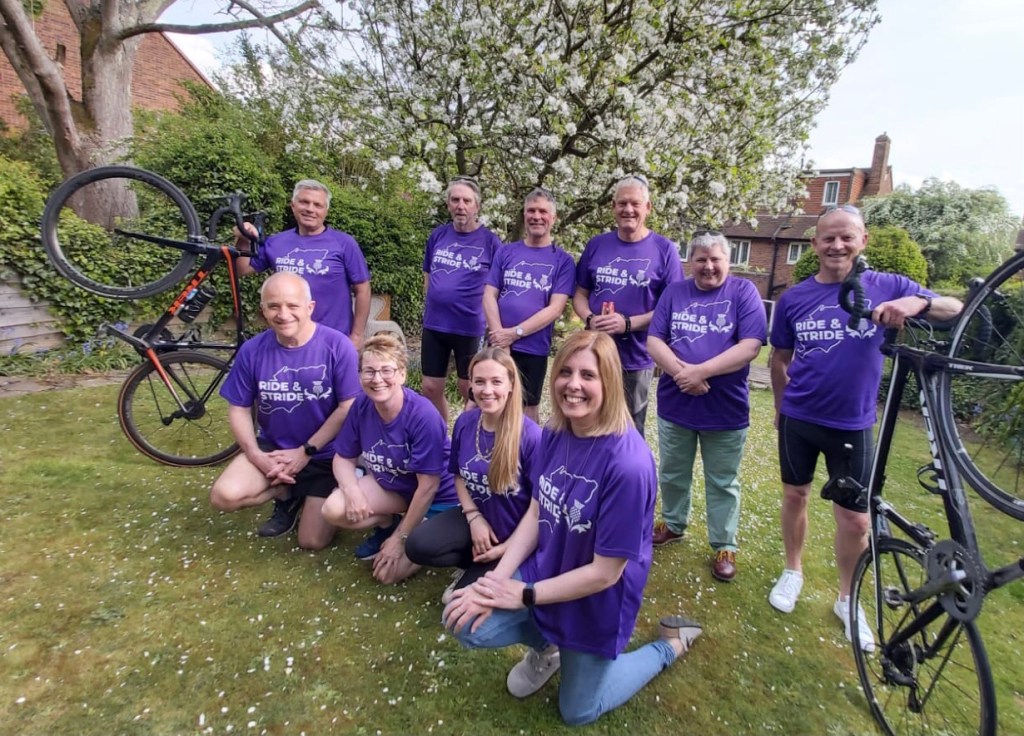
I will say a little about the Team’s training programmes in a future post, but for now a few more pictures. Yesterday I introduced the Ride & Stride team, but I’ve unearthed a few more shots from our meet-up back in April:
In my next piece I will cover the three charities that we are supporting on Ride & Stride: Cancer Research UK, Mind and Parkinson’s UK, and how these fine organisations have touched our own lives and those of family and friends. Meanwhile, our fundraising (like our training) has been gaining pace, and if you would like to see more of our Story, or to make a contribution, then please click on the following link:
 Walking for Fun, Challenge and Charity!