LETJOG PEAK No 9: High Holborn, City of London (22 metres)
Walk Date: Sunday 16 April 2023
Well, having worked on High Holborn a while ago for the better part of two decades I never stopped to think that the name might indicate a peak of any sort, least of all a County Top! But all things are relative, and exiting the City of London to the west the roads do indeed lead to the higher ground of the area now known as ‘Midtown’. My ninth LETJOG Peak is the lowest point of all of the summits of the 48 Ceremonial Counties of England, measuring just 22 metres above sea level, but nonetheless a most interesting walk was in prospect today!
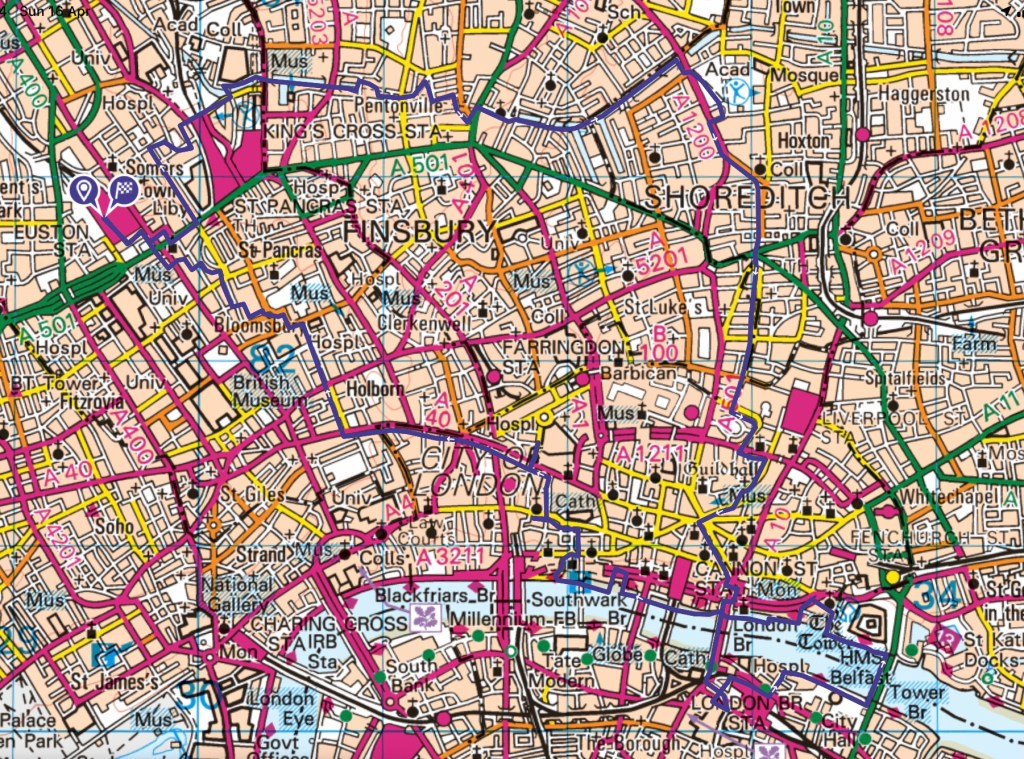
Hopefully my dark blue line is just about identifiable, indicating today’s ‘circular’ walking route from Euston Station, leading clockwise along Regent’s Canal, then turning southward through Shoreditch and through the City, over London Bridge to The Shard, along the river to Tower Bridge, and back along the north bank to St Paul’s and the ‘County Top’ on High Holborn
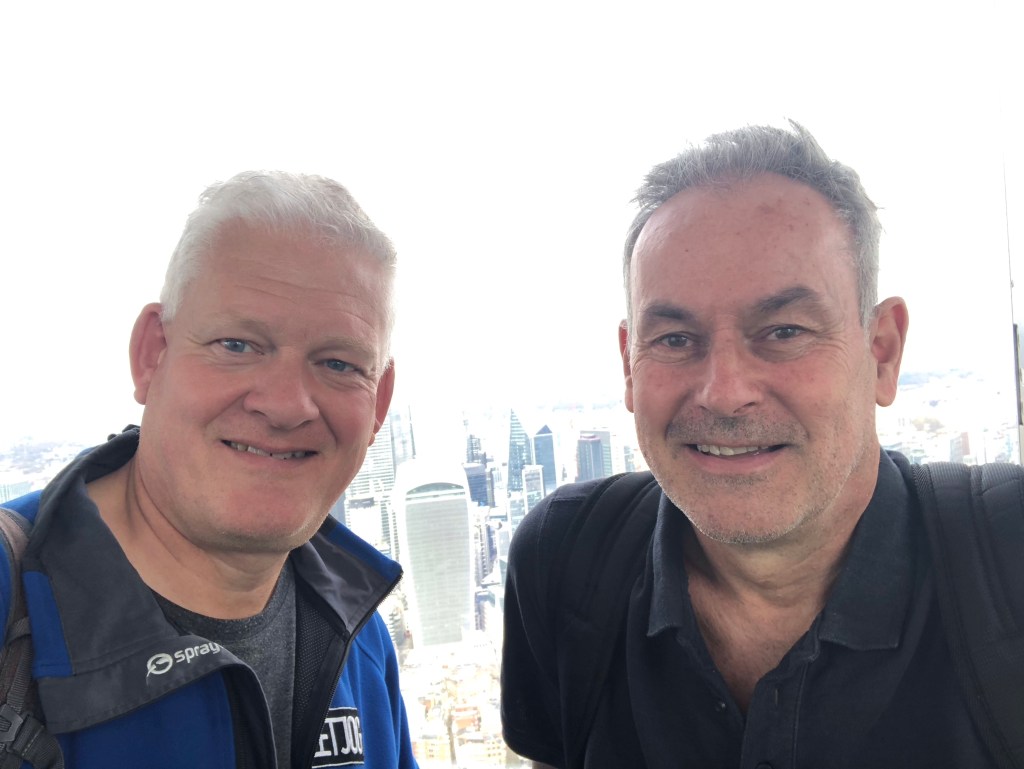
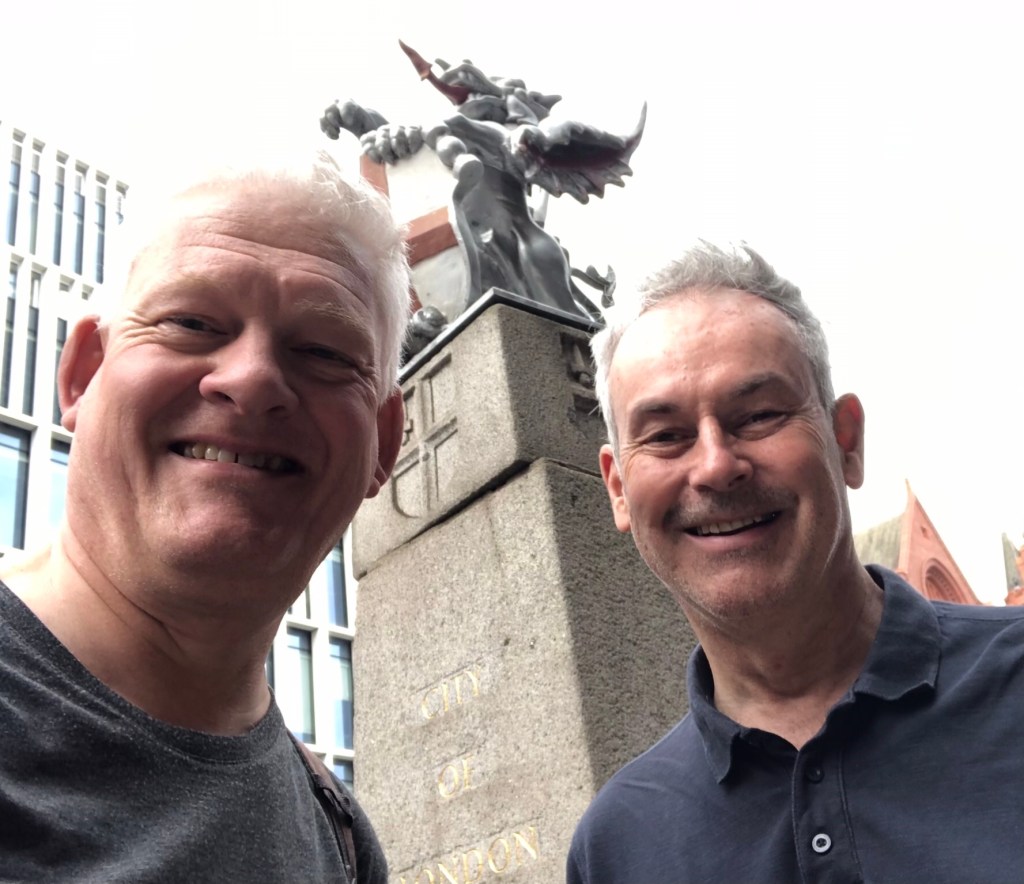
It was most wonderful to share today’s walk with an old friend, Mark Smith, who I have known since my early 20s. Nearly four decades ago (and many times since) we would meet after work around these, and other, parts of Central London, and so it was most appropriate that Mark and I should undertake this particular 13-mile ramble together. Setting off in the morning from Euston Station we chose a pleasant Sunday, in cool and dry springtime weather, to re-visit some old haunts, and to find some new corners of our fine capital city.
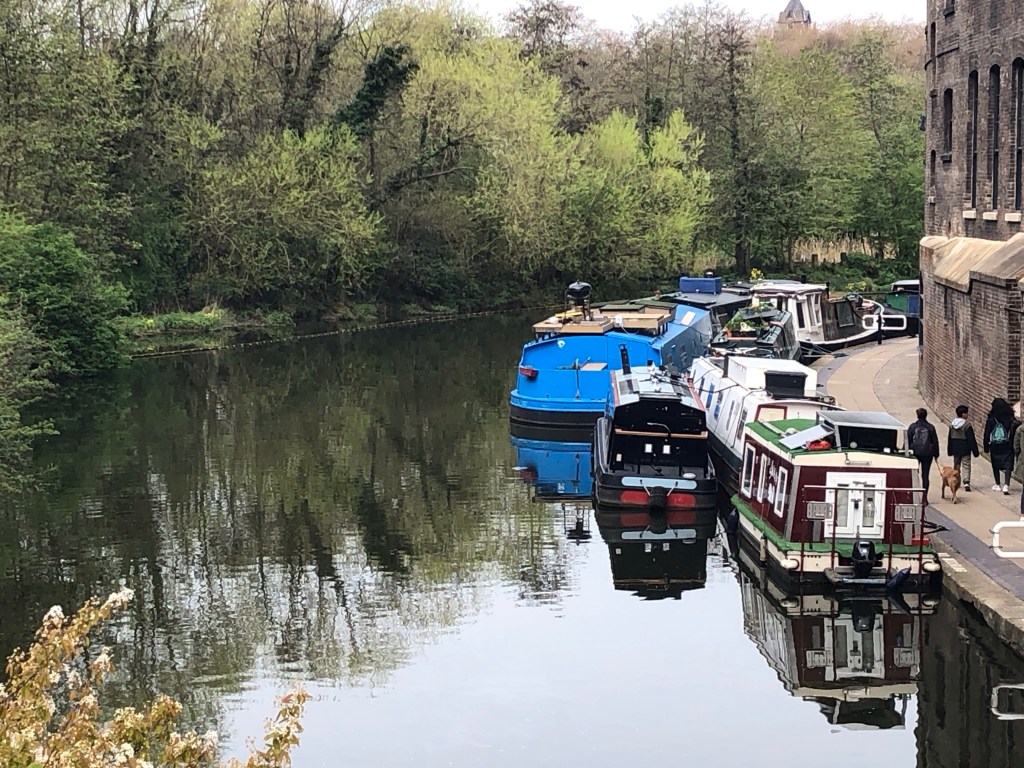
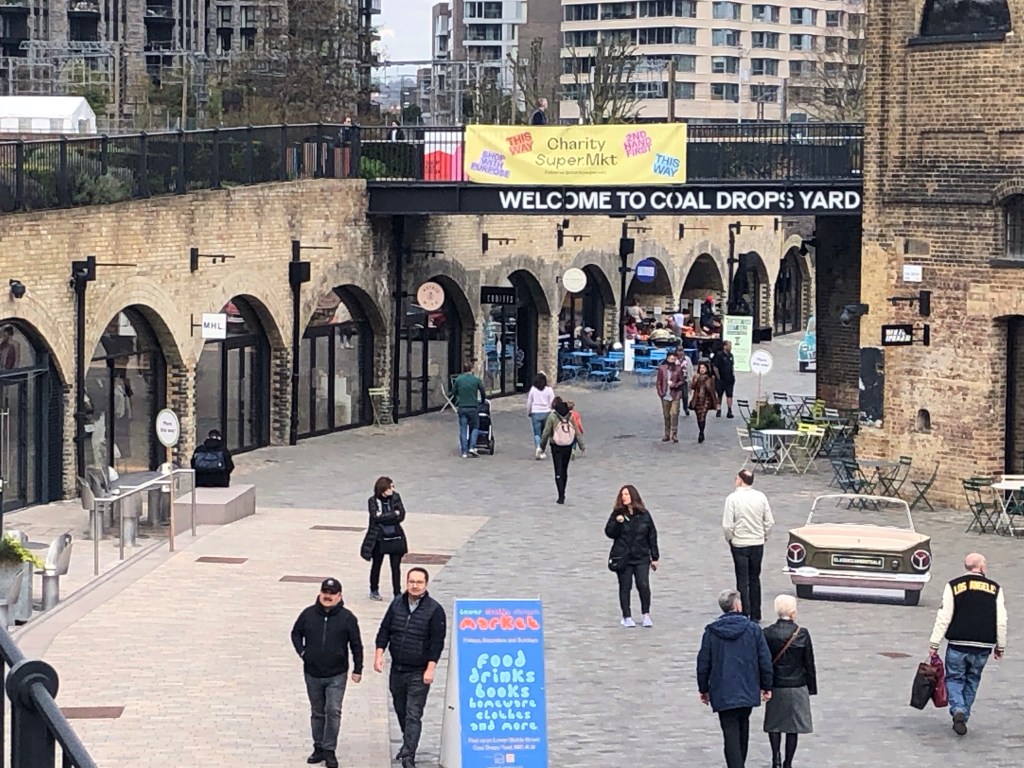
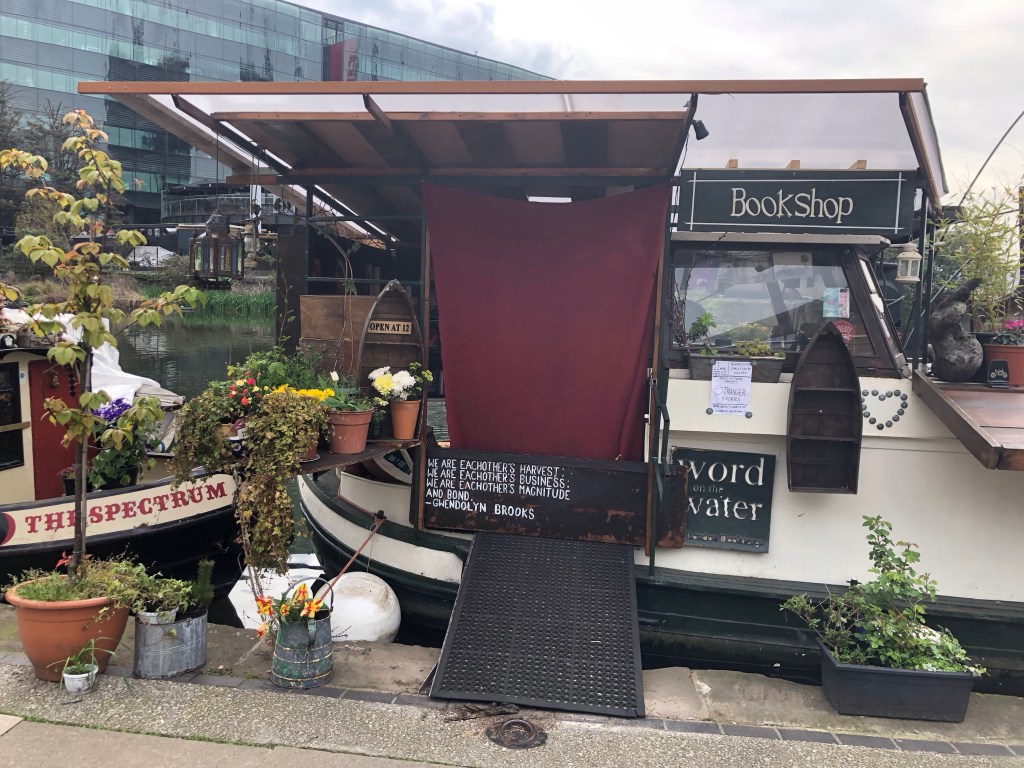
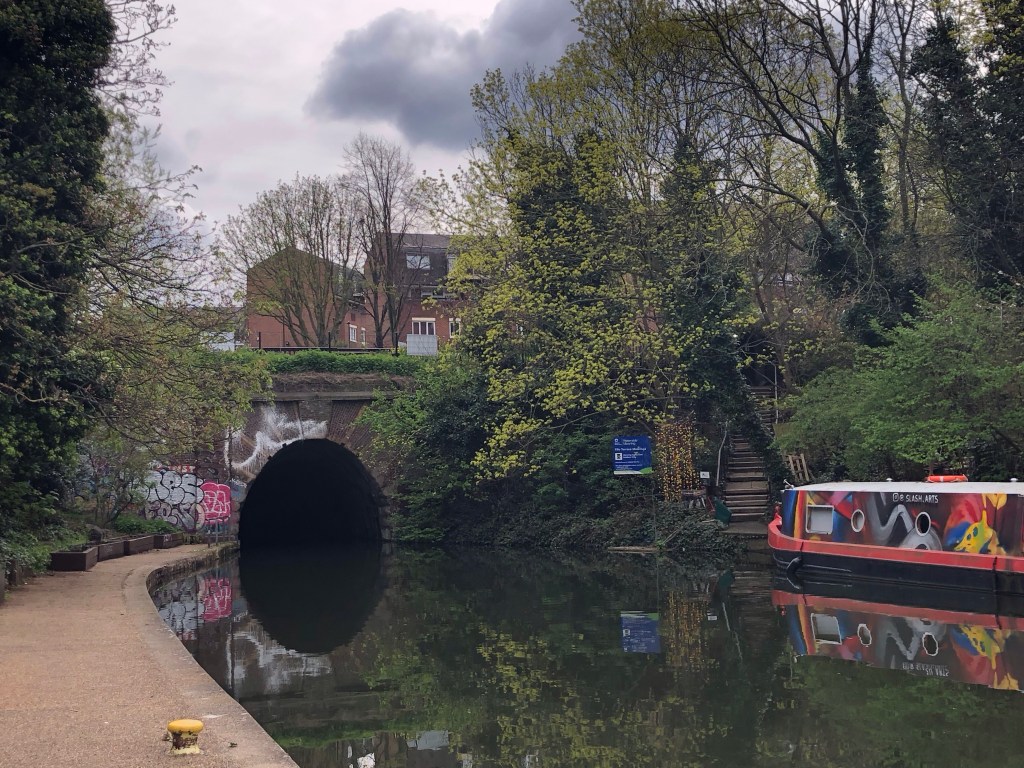
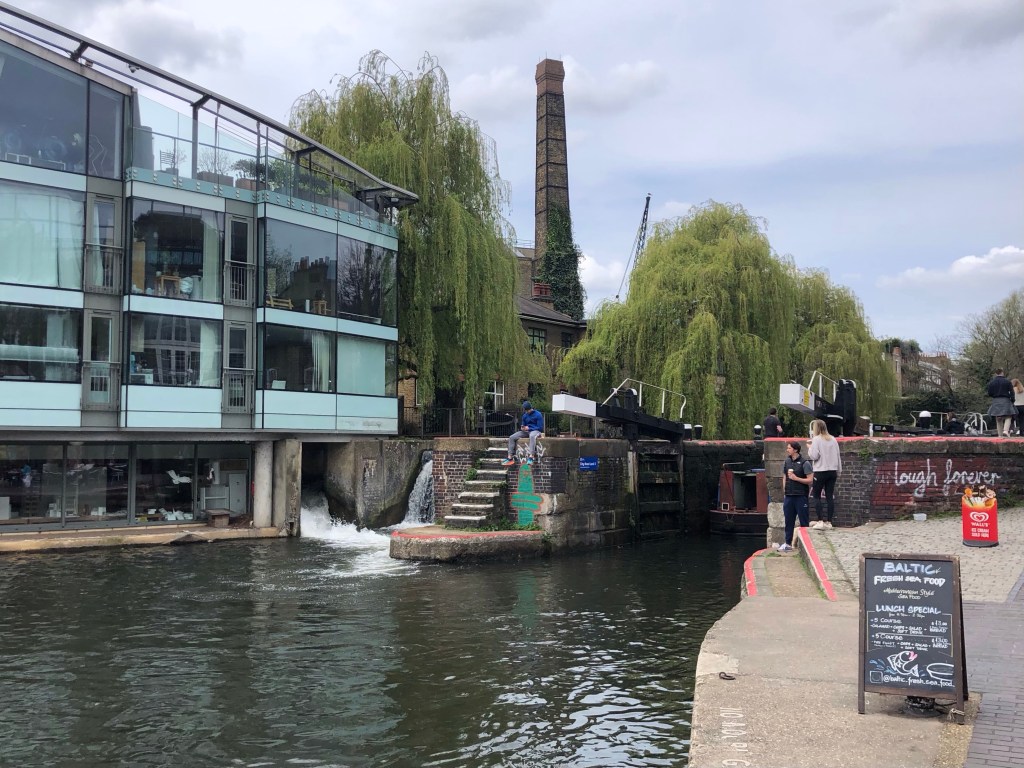
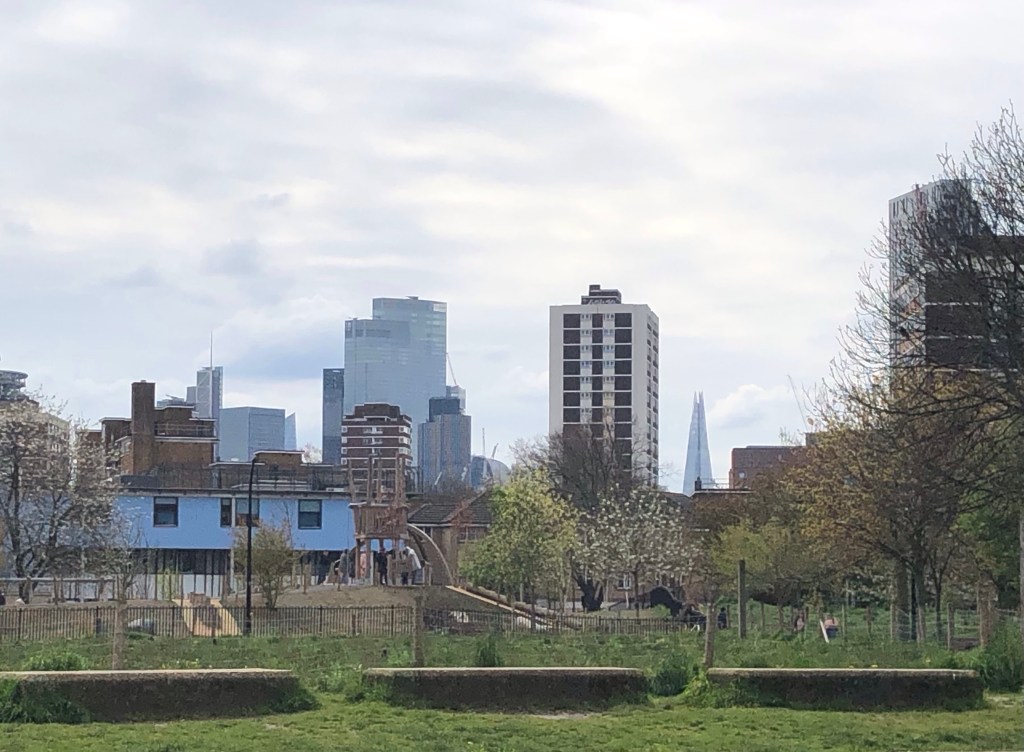
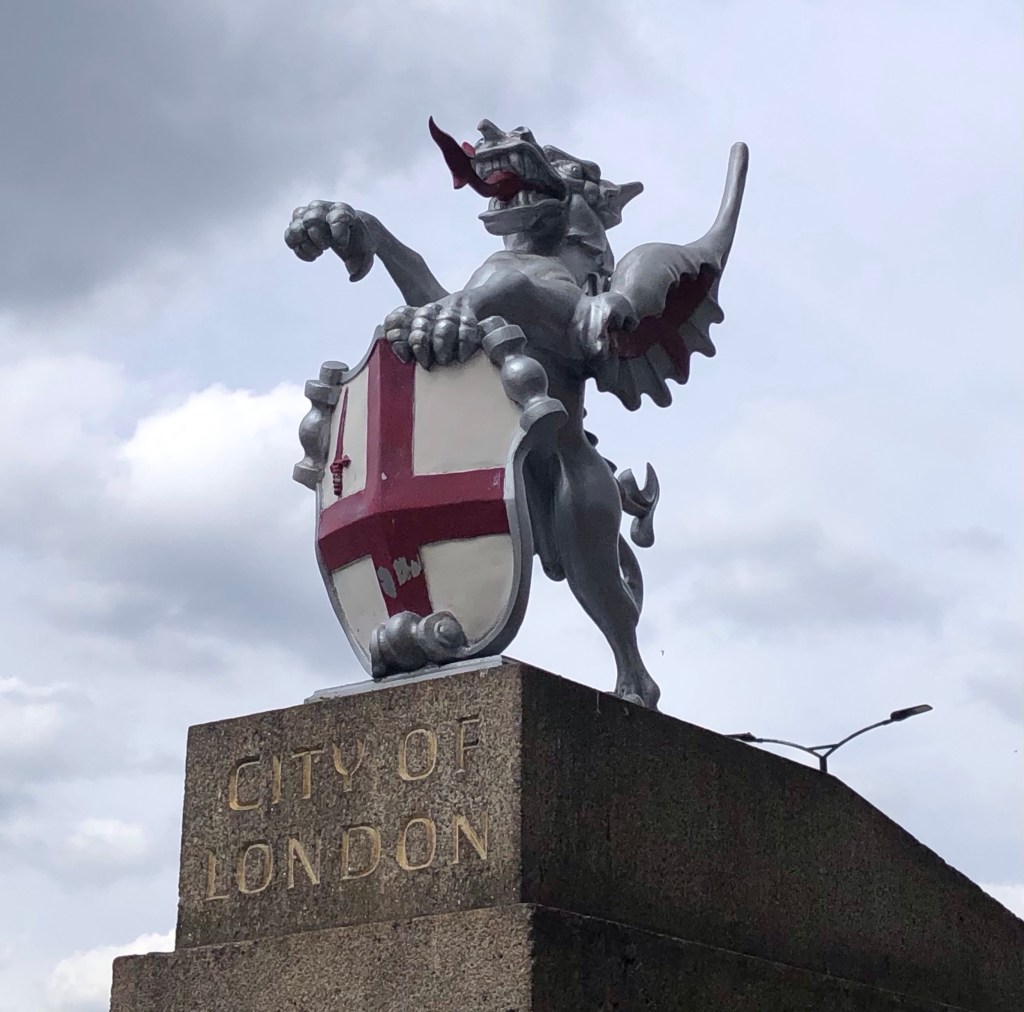
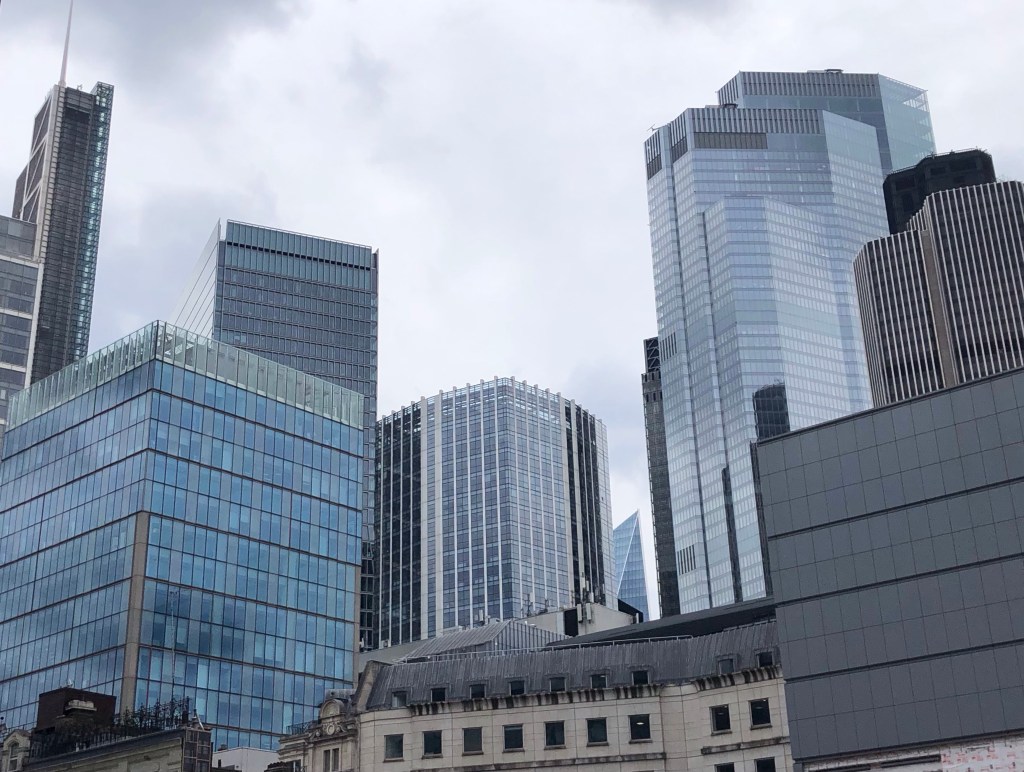
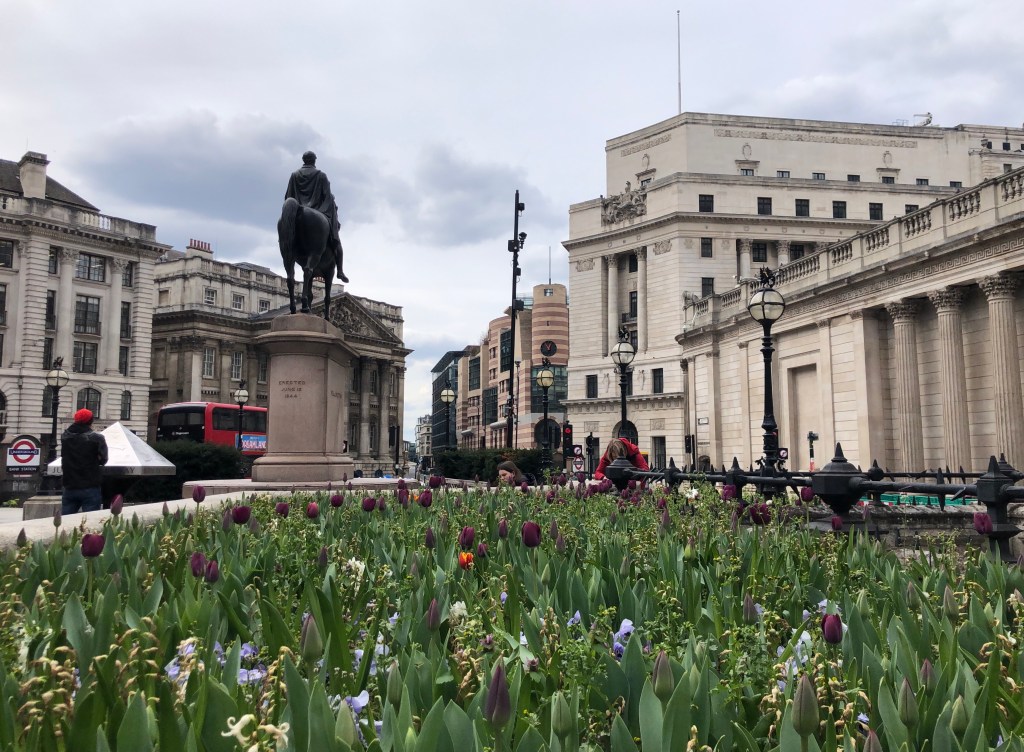
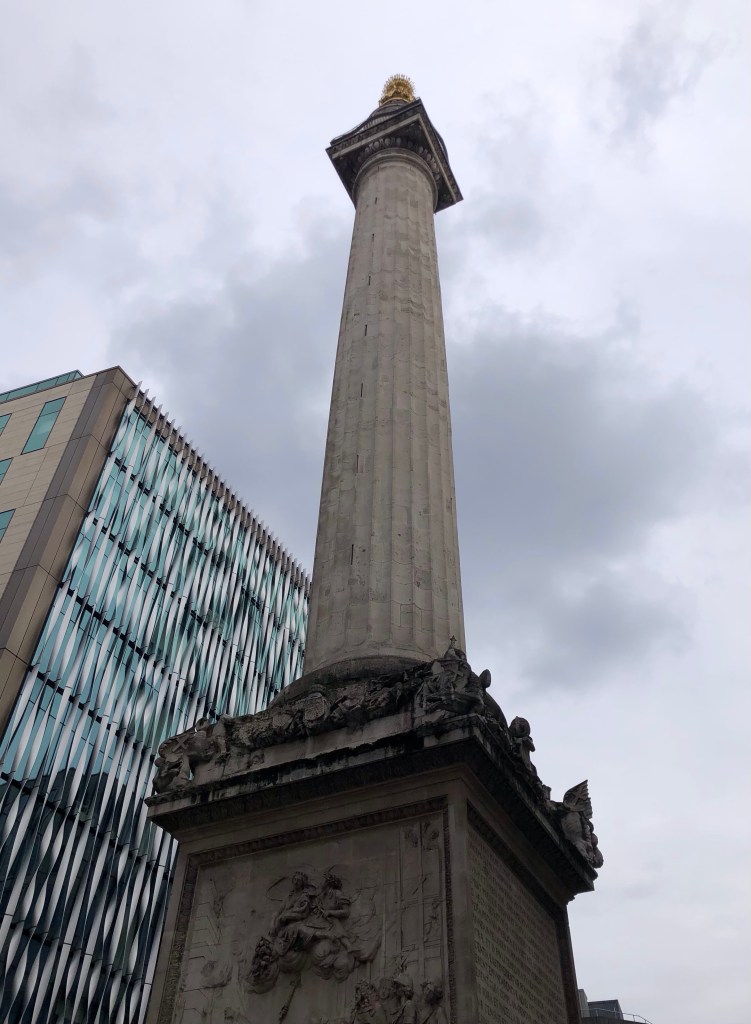
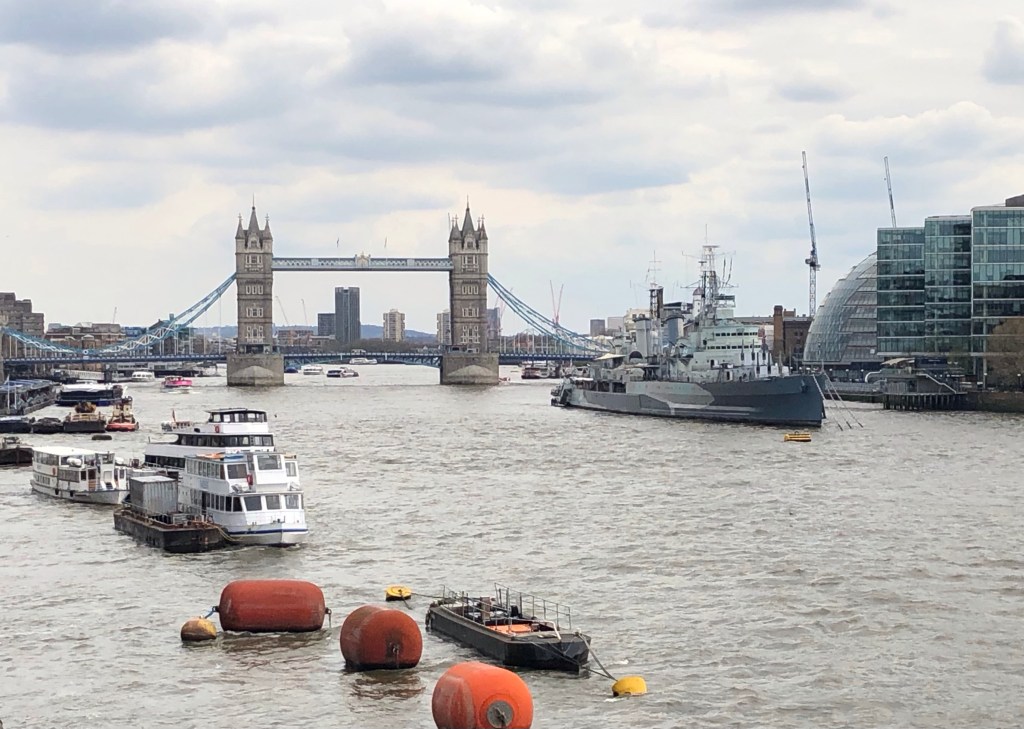
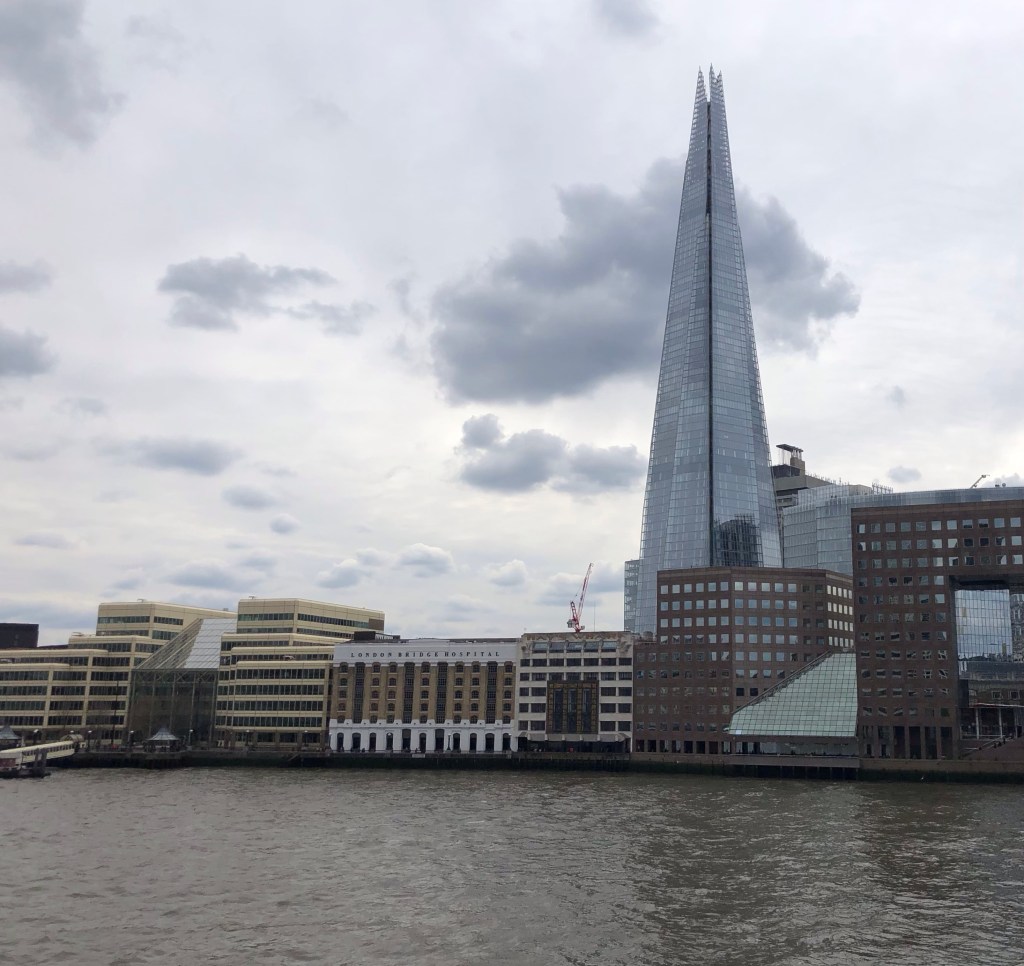
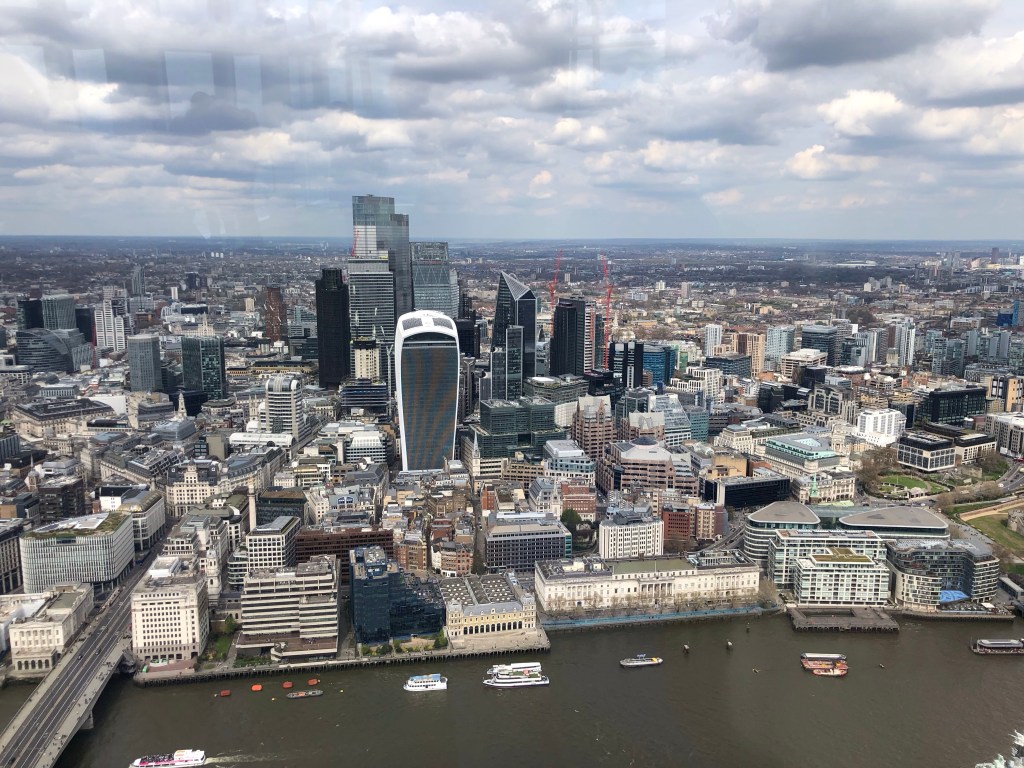
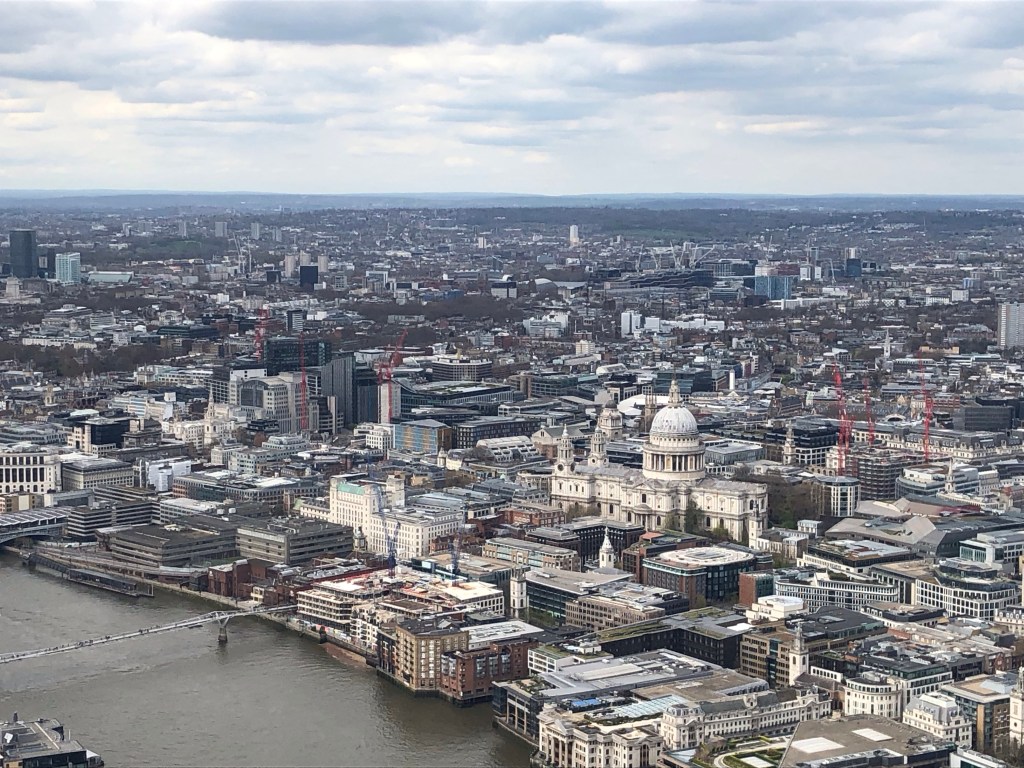
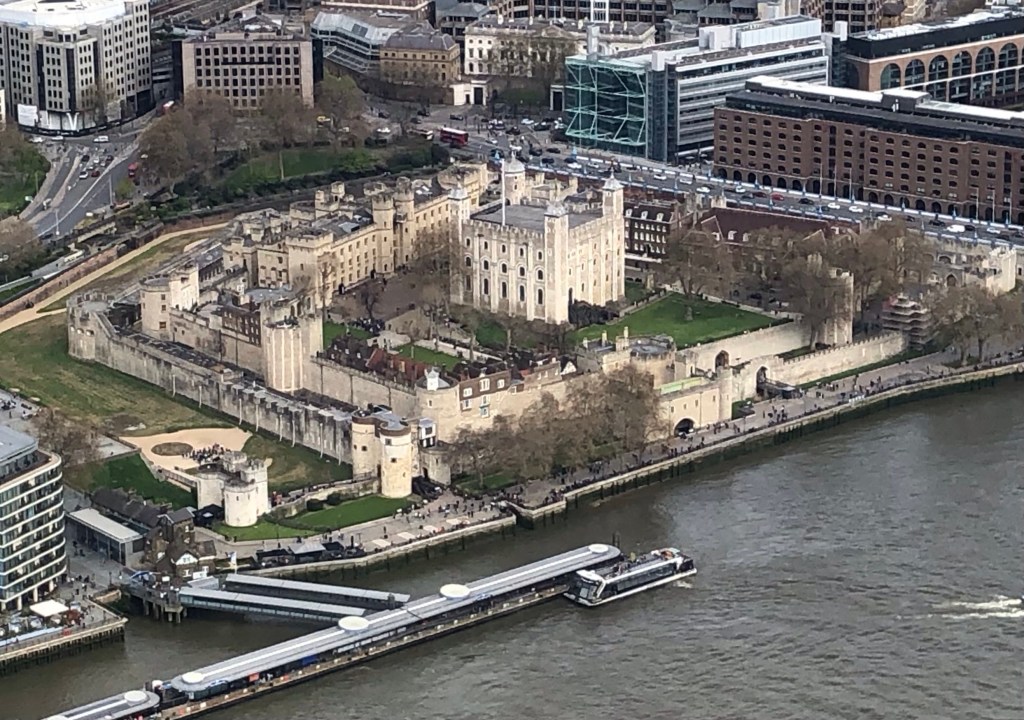
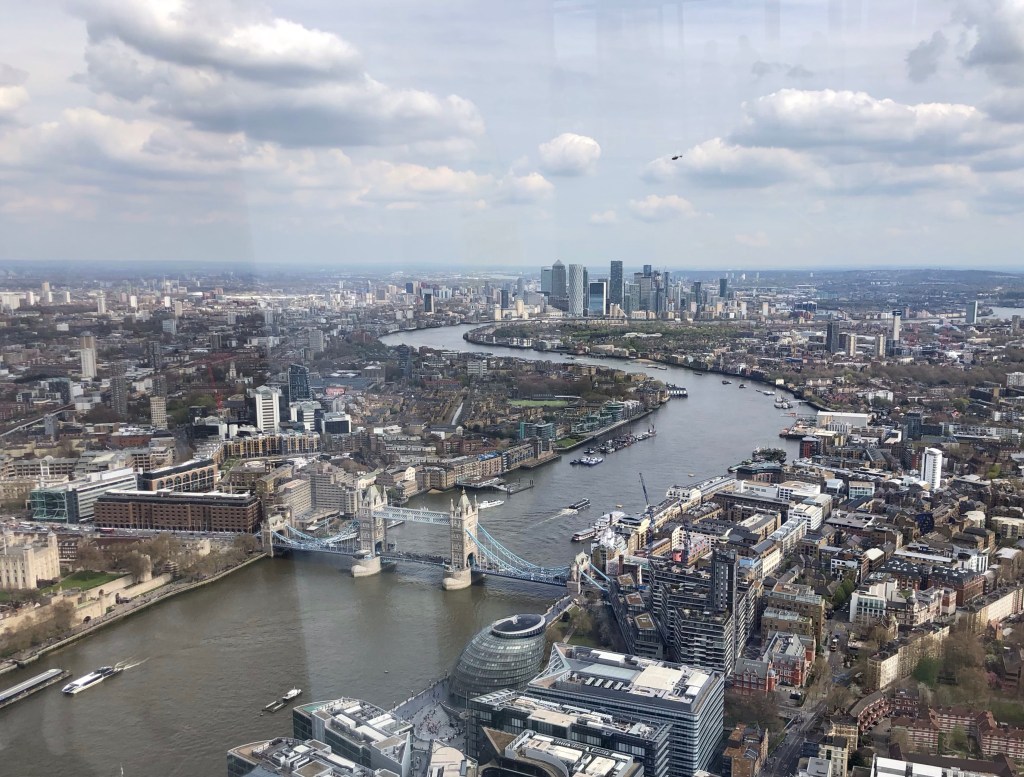
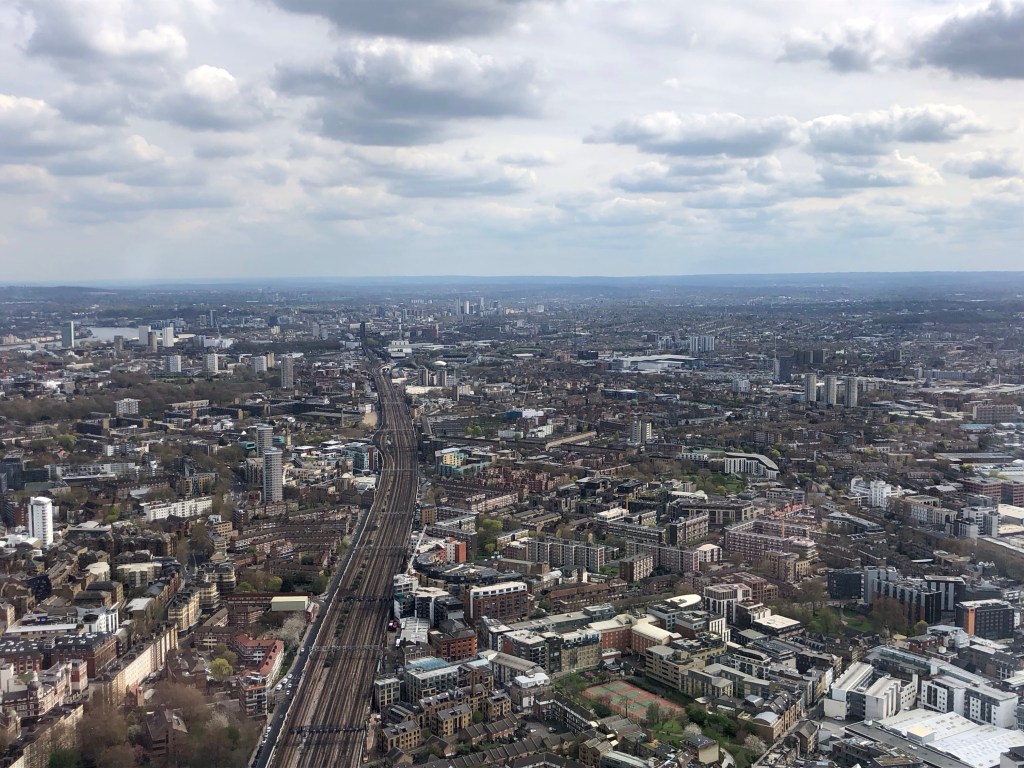
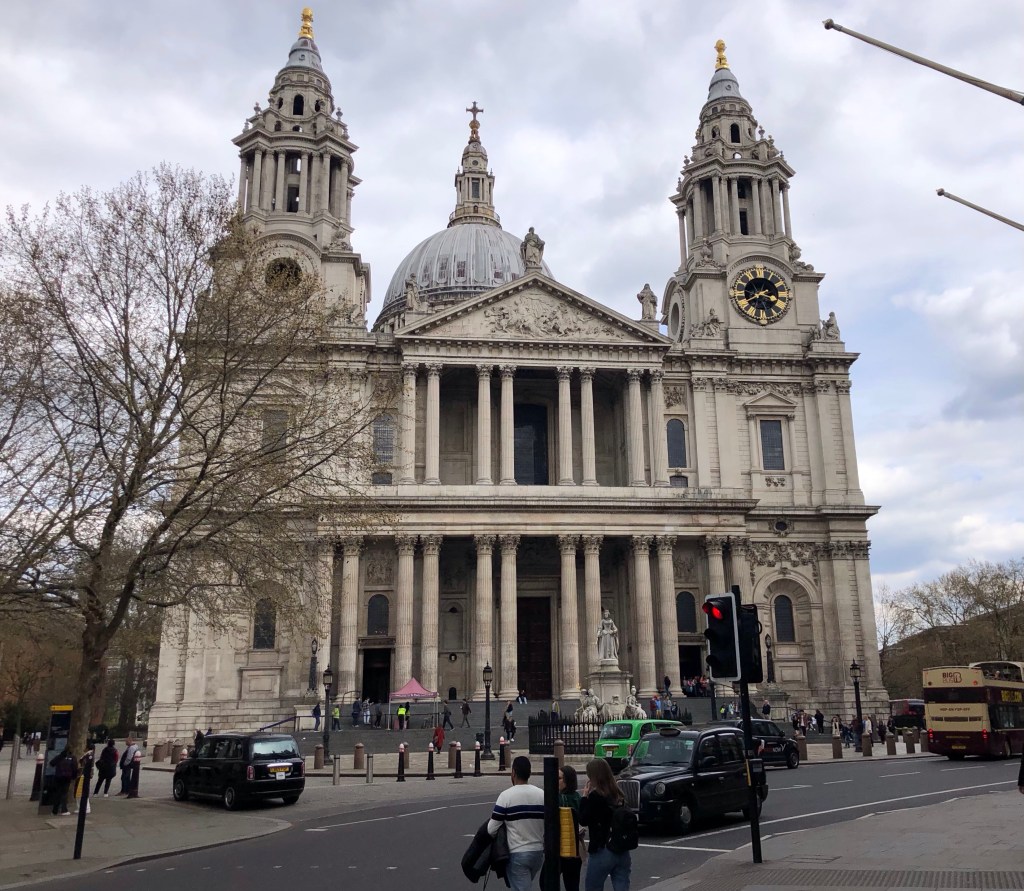
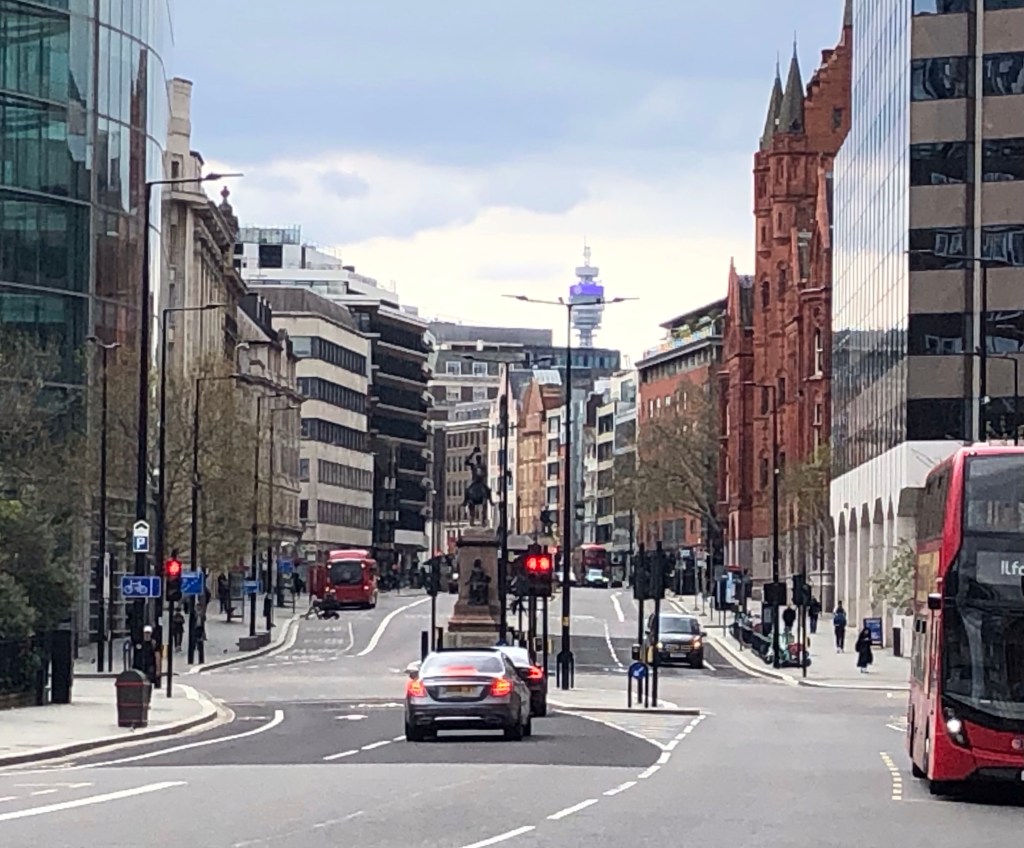
Regent’s Canal – at this point just a stone’s throw from Euston Station – opened in 1816 to connect the Paddington Arm of the Grand Union Canal with the River Thames at Limehouse BasinShortly, just along the towpath, Coal Drops Yard, part of the new Kings Cross Central development, behind the railway terminusA floating bookshop!The entrance to the 886-metre Islington Tunnel, where the towpath stops (we concluded that the narrowboats must have been propelled along this section by the bargemen lying on their backs and ‘walking’ along the ceiling of the tunnel)Approaching Eagle Wharf Marina in Islington, where manufacturing, commerce, housing and leisure exist side-by-side along the water’s edgeThrough Shoreditch, via a pit-stop for brunch, our first views of the City (and of The Shard)In the City . . .. . . the modern structures of steel and glass dwarf the older stonework of the Square MileA little green space outside the Bank of England on Threadneedle StreetThe fluted Doric column of the Monument to the Great Fire of London (of September 1666) is sited near the northern end of London Bridge where the Church of St Margaret stood previously – the 62-metre structure, completed in 1677, was designed by Sir Christopher Wren and Robert HookeFrom London Bridge, looking down the River Thames to Tower Bridge and HMS BelfastThe London Shard, in Southwark on the South Bank, was designed by Renzo Piano and completed in 2012: at 310 metres high the 72-storey structure remains the UK’s tallest buildingA trip up ‘The View from The Shard’ on the 69th floor proved irresistible on such a clear day, for some wonderful views over the commercial heart of the City . . .. . . and down onto St Paul’s and the western part of the Square MileHaving been chosen originally by William I for the site of the White Tower in the 1080s as he sought to protect the gains of his conquest, The Tower of London was added to over successive centuries during the late Middle Ages,The vistas today extended for 50 miles in all directions, here eastward down the Thames past Tower Bridge and over Canary Wharf . . .. . . and (in the very far distance) south-eastwards towards Westerham Heights and Betsom’s Hill on the North Downs, County Tops that I ascended last monthTaking in the sights!Back on terra firma at the front of St Paul’s Cathedral: the building was designed by Sir Christopher Wren in the years following the Great Fire and was ‘topped out’ by his son Christopher Jnr in 1708 – Wren himself survived well into the 18th Century to see the completion of the works over the subsequent decadeWalking west over Holborn Viaduct we approached the summit as the road rises along High Holborn . . .. . . to the County Top at the City of London‘s boundary with Midtown just outside of Chancery Lane tube station – the red terracotta gable over Mark’s shoulder (and the similarly-coloured towers and facade in the preceding photo) are of Waterhouse’s fine gothic revival-style building, Holborn Bars, formerly the Prudential headquarters where I worked for two years in the mid-1980’s
Thank you for your great company today Mark, and for the drink in the Cittie of Yorke on High Holborn towards the end of our stroll – I don’t think that either of us had been in this establishment for a quarter of a century or so, but it has changed remarkably and reassuringly little. Perhaps the same can be said of our sense of humour. A great LETJOG Peak day!
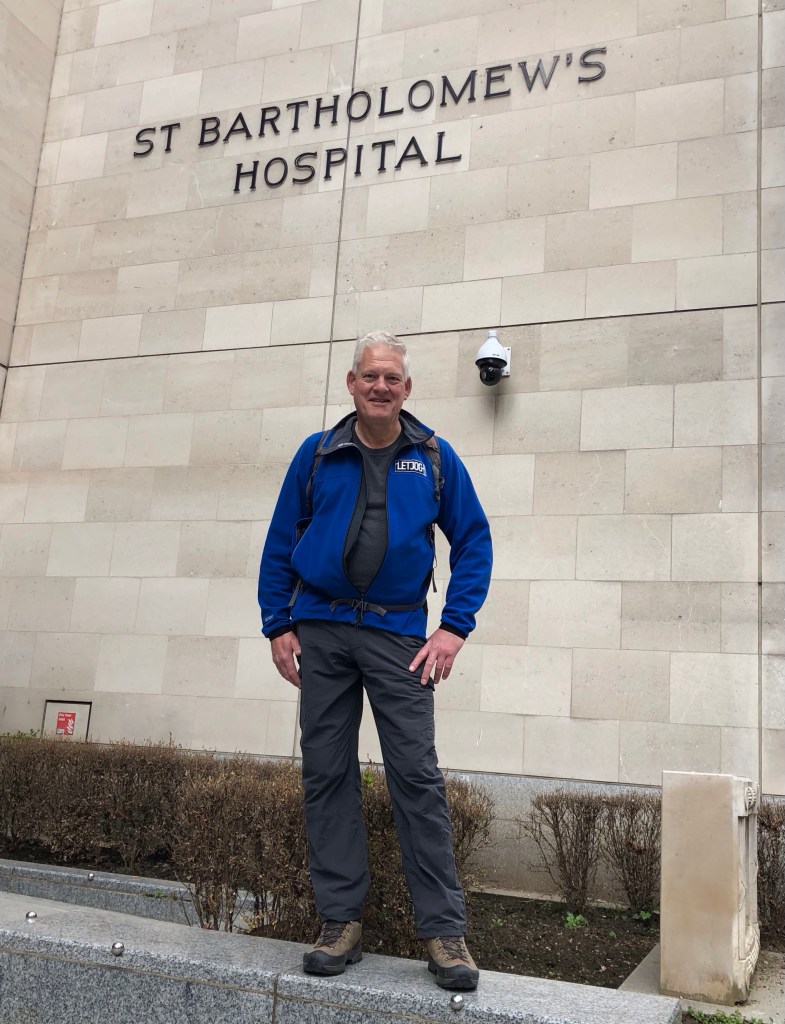
Outside my birthplace, some six decades on. And a bit!
I do not share my place of birth in the City of London with many popular music artists, or at least not so far as I am aware. So choosing a song-title heading for my Blog from a native musician has been more testing today than usual. I haven’t yet borrowed a Blog heading from the catalogue of the inimitable David Bowie, and seeing as he hailed from the nearby suburb of Brixton this seems an appropriate time to right that notable omission. ‘Suffragette City’ was penned by Bowie and originally appeared as a B-side to ‘Starman’, before the song’s inclusion on his 1972 album ‘The Rise and Fall of Ziggy Stardust and the Spiders from Mars’, with lyrics that reference Anthony Burgess’ novel ‘A Clockwork Orange’.
2 thoughts on “Suffragette City”
I had a great day! Thanks for asking me to join you Nick.

 Walking for Fun, Challenge and Charity!
I had a great day! Thanks for asking me to join you Nick.
LikeLike
A fascinating walk!
LikeLike