
LETJOG PEAK No 40: Whitehorse Hill, Oxfordshire (261 metres)
Walk Date: Friday 11 August 2023

I may have mentioned in one of my earlier Blogs that when I was very young, certainly well before the re-designation of the English counties under the 1972 Local Government Act, I had a jigsaw comprised of thick wooden pieces cut into the shapes of the traditional English shires. Aside from the county name, each piece (where large enough) included images of the local industry or of products grown or made in that county: I can recall for example the footwear of Northamptonshire, the dairy cows in Devon, the lace of Nottinghamshire, and in the case of today’s county the car works in Oxford. I guess that might be where my interest in travelling our land whilst bagging County Tops might have originated! Well, on that note, my LETJOG Peaks venture is coming together quite well now: with 40 peaks under my belt I am into the last fifth of my task, and aside from the summits themselves I am also passing some note-worthy statistical landmarks. On today’s walk I took my millionth step of the challenge, and somewhere upon my planned foray next week to Merseyside, Lancashire and North Yorkshire I expect to pass the 500-mile marker, to reach a total time of 200 hours on the trail, and possibly also to exceed a cumulative total of 20,000 metres climbed.
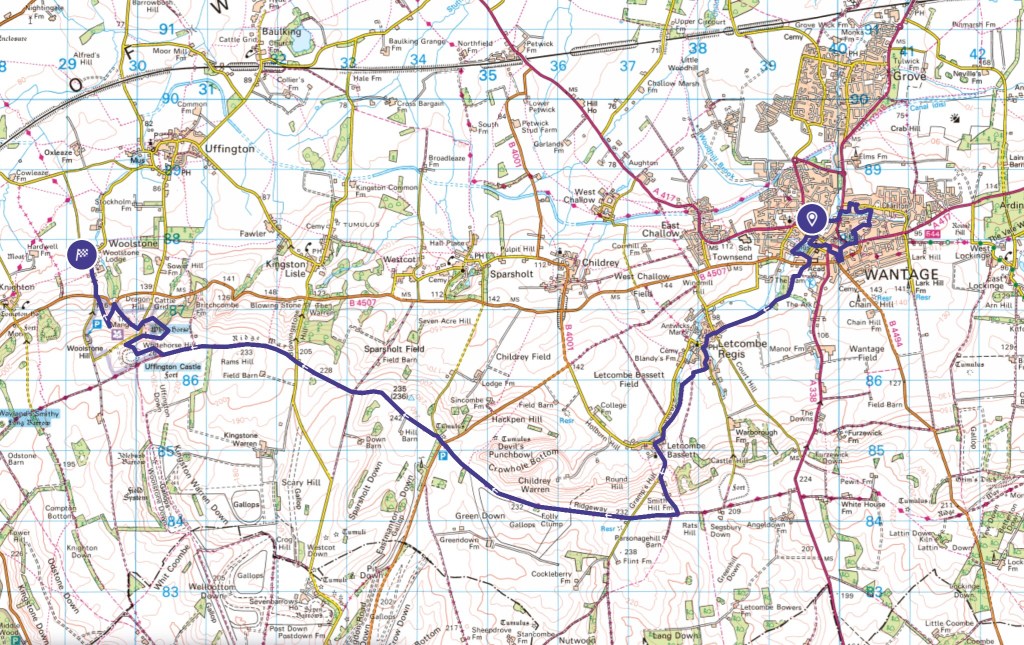
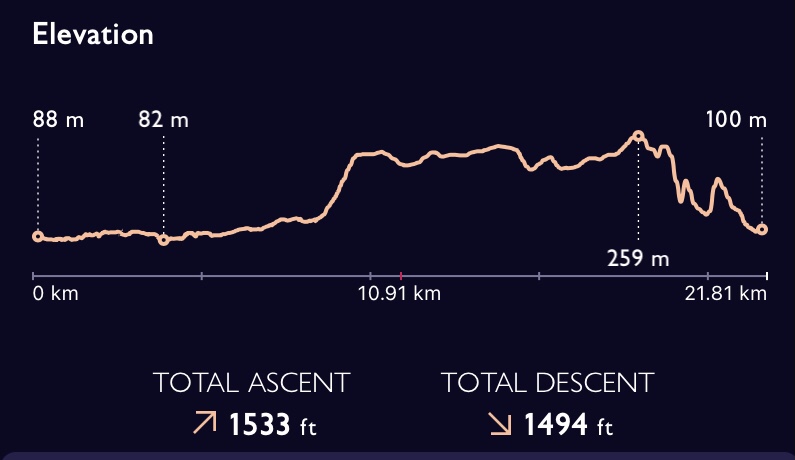
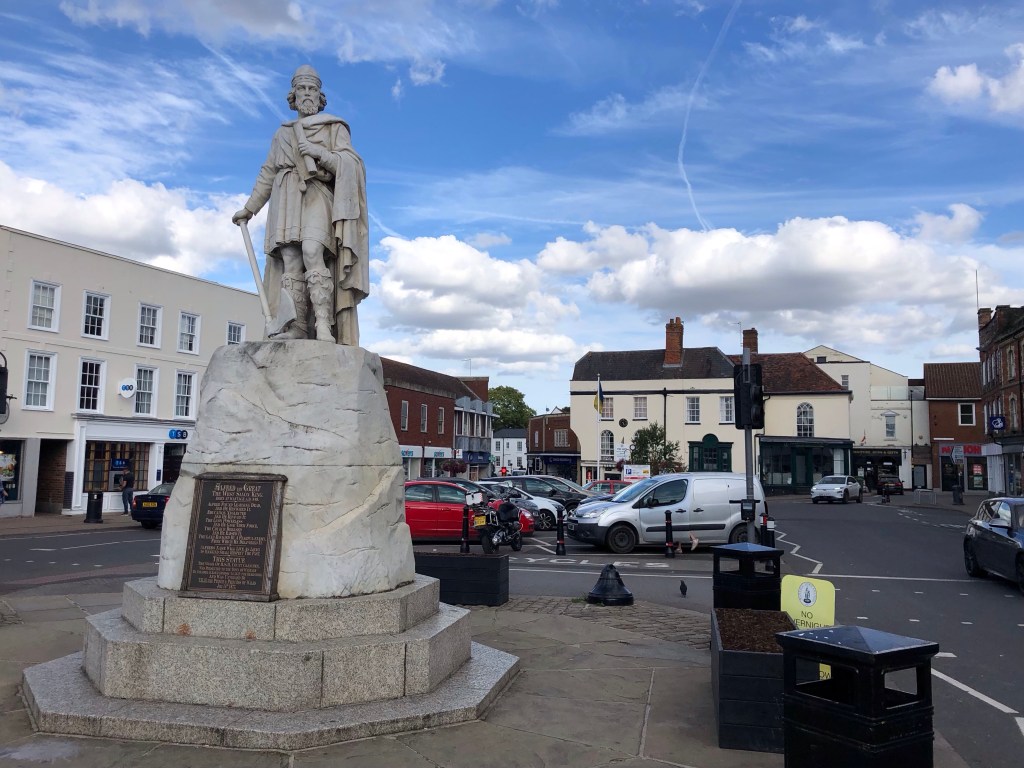
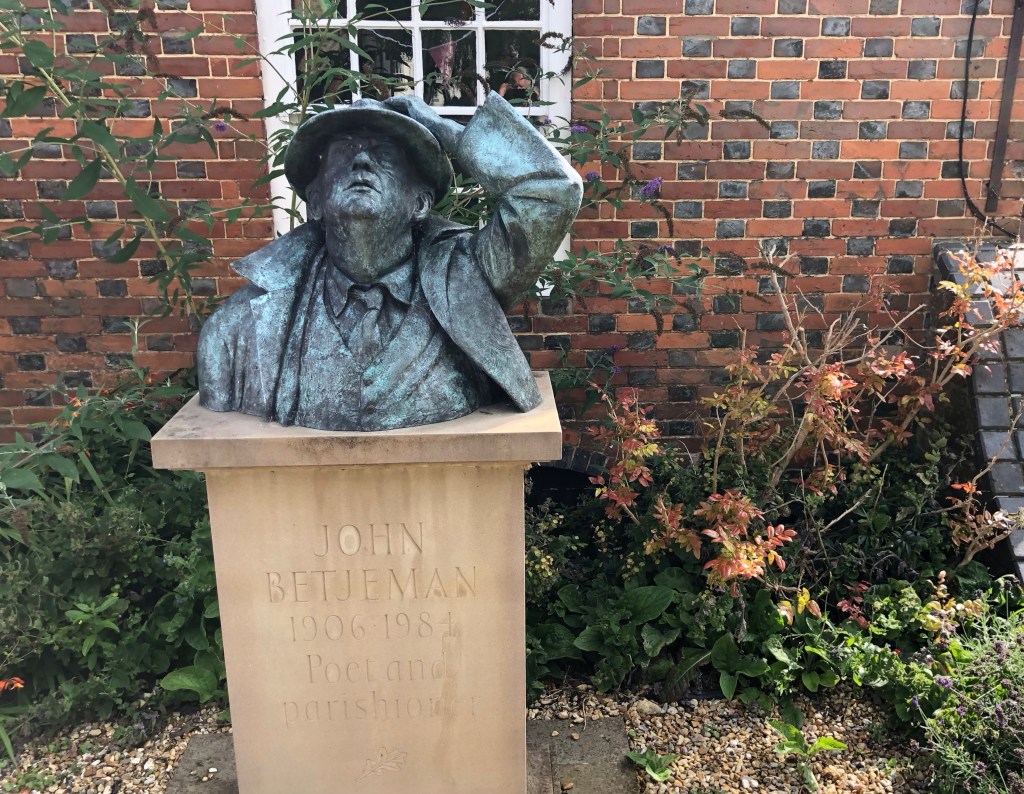
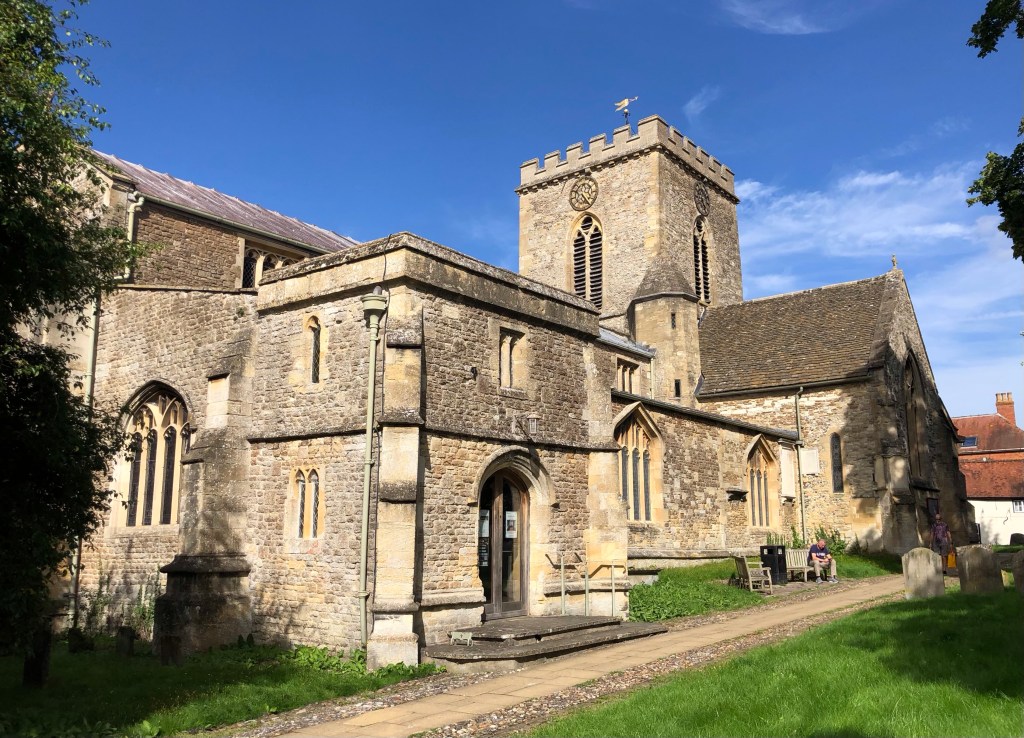
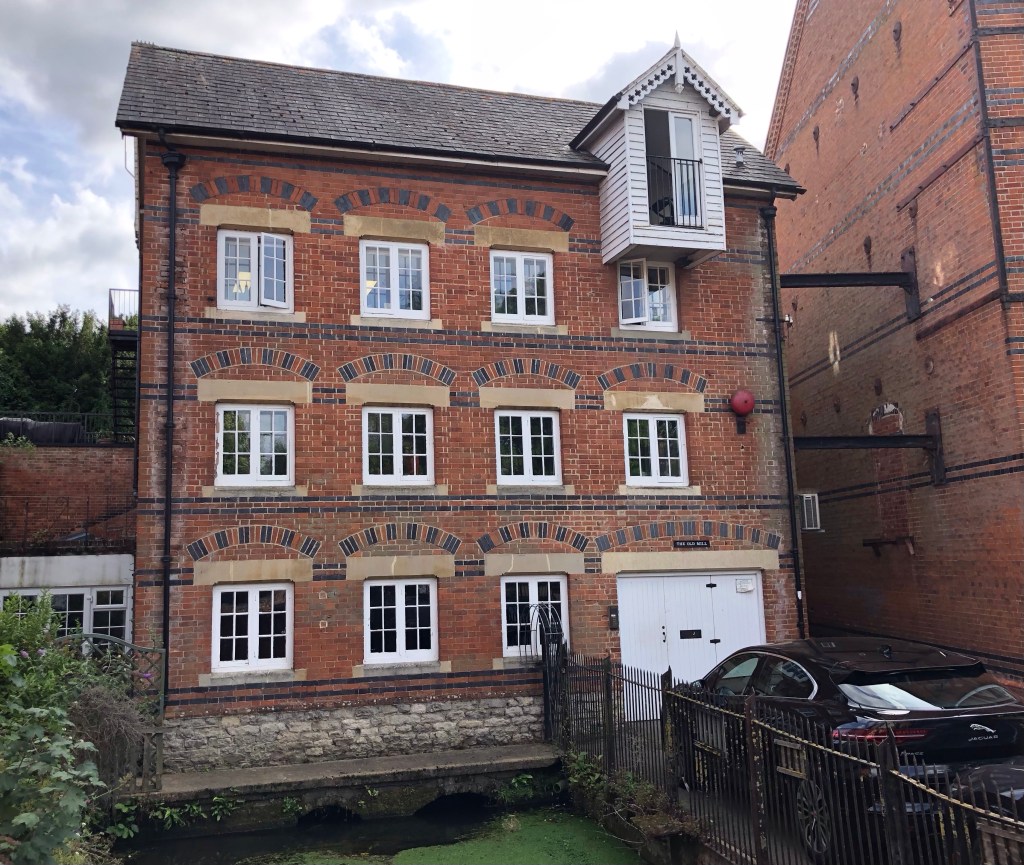
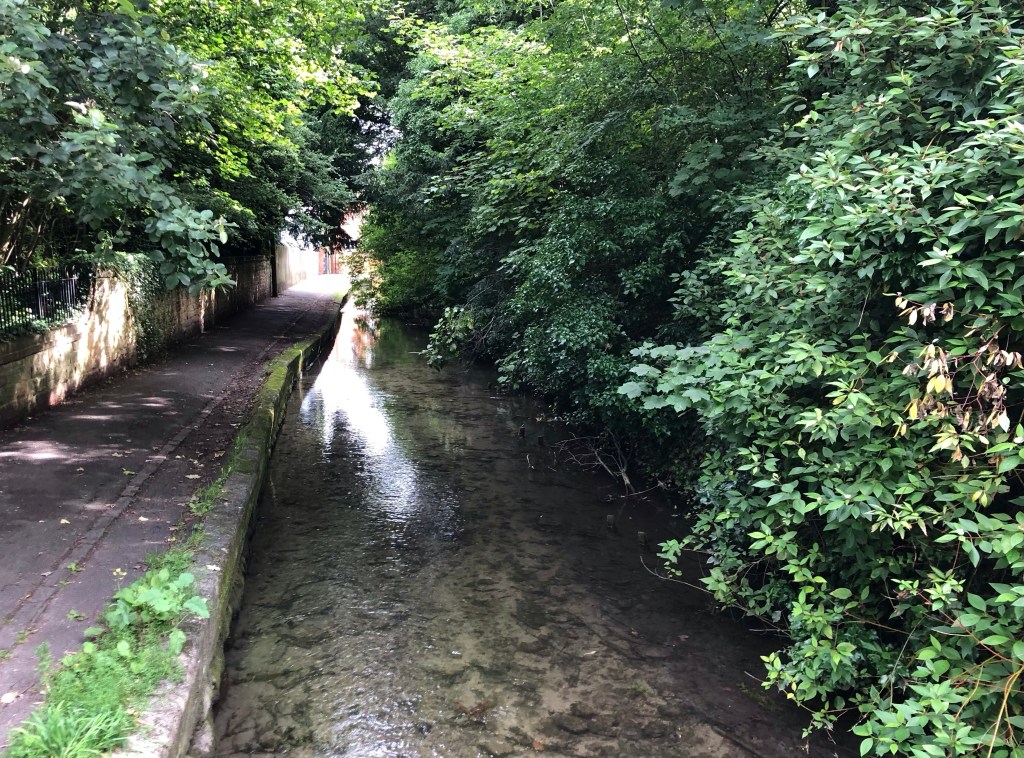
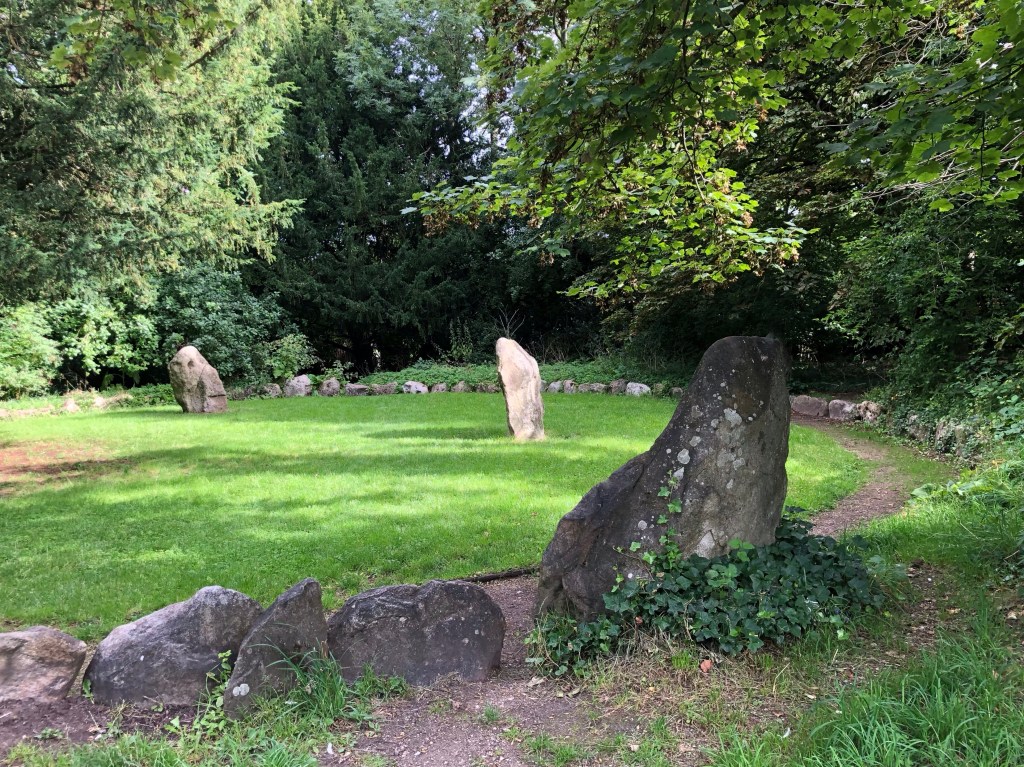
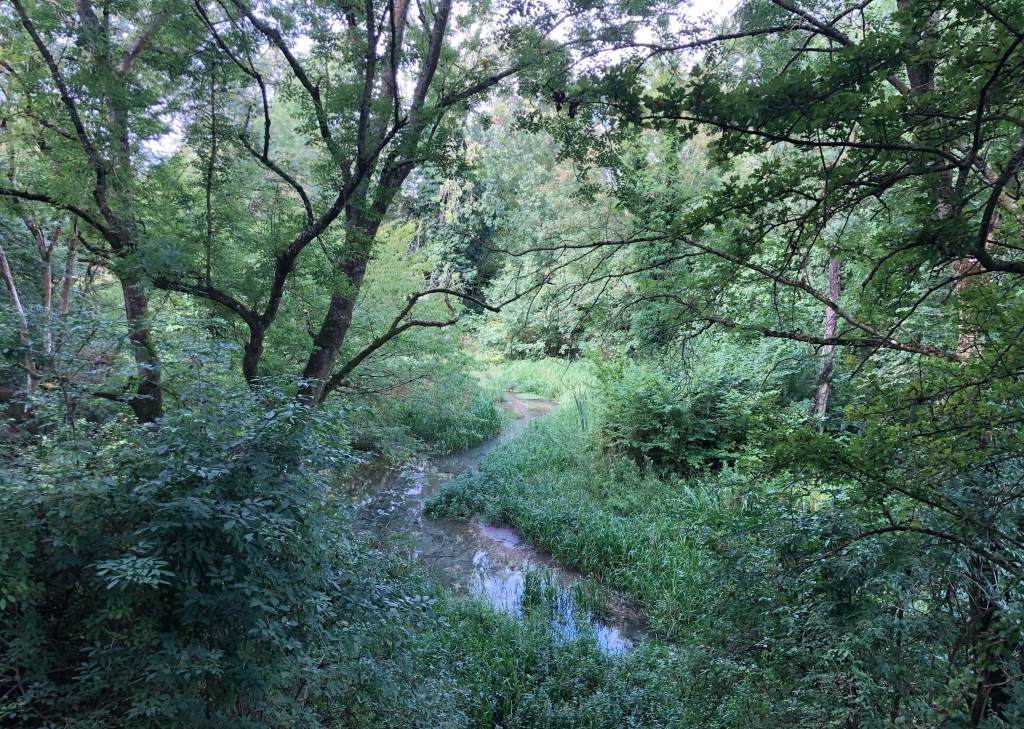
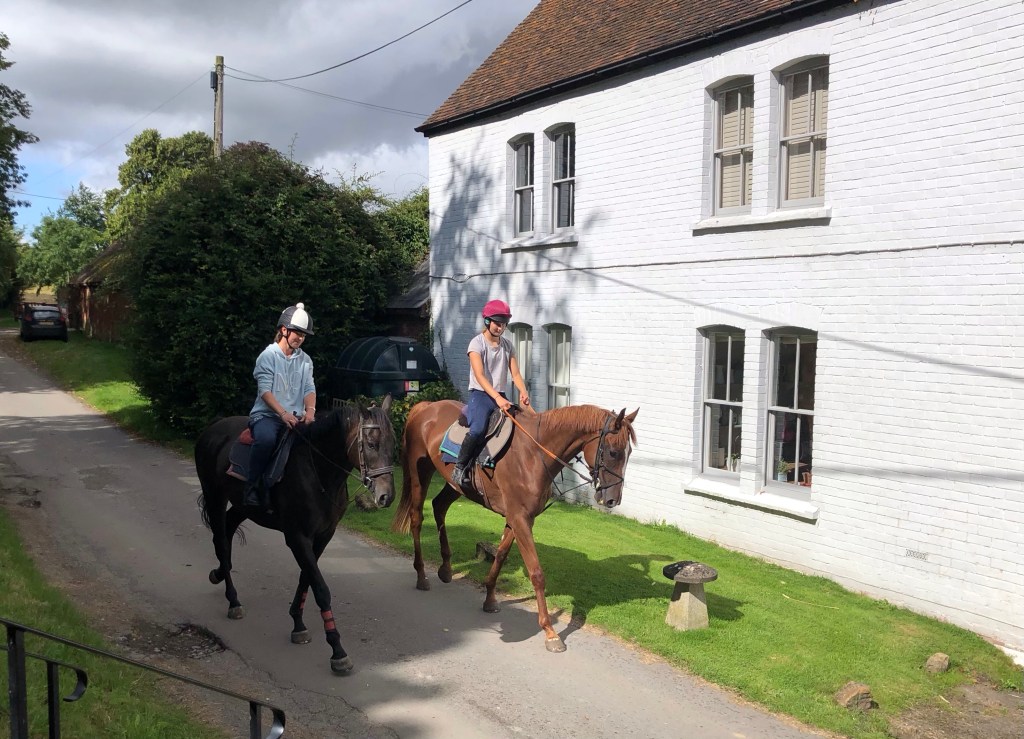
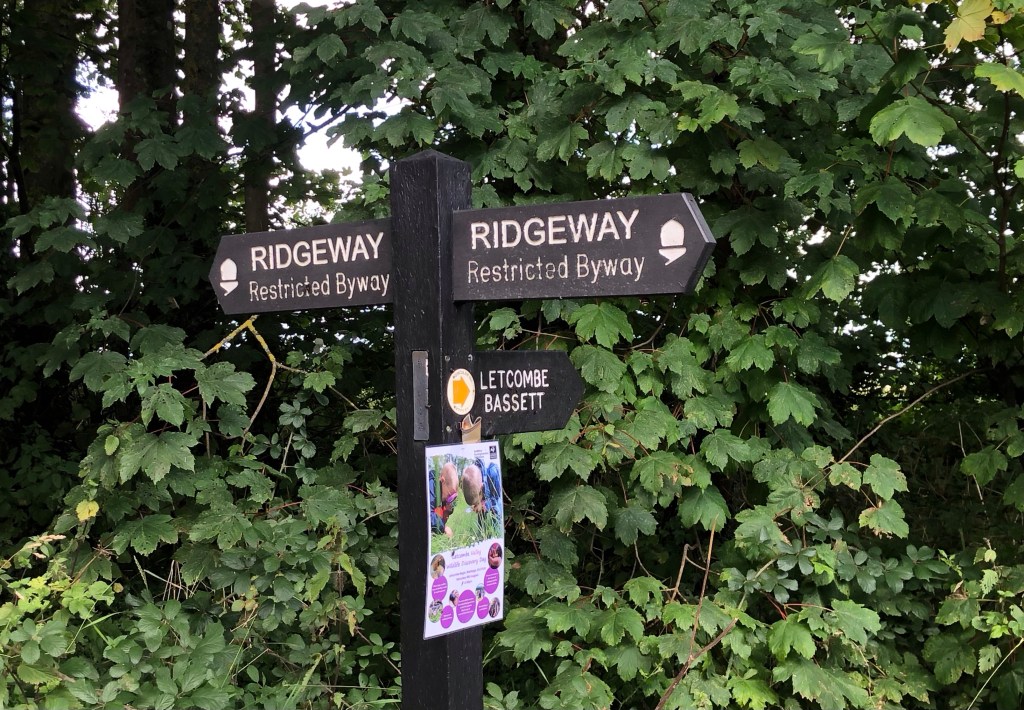
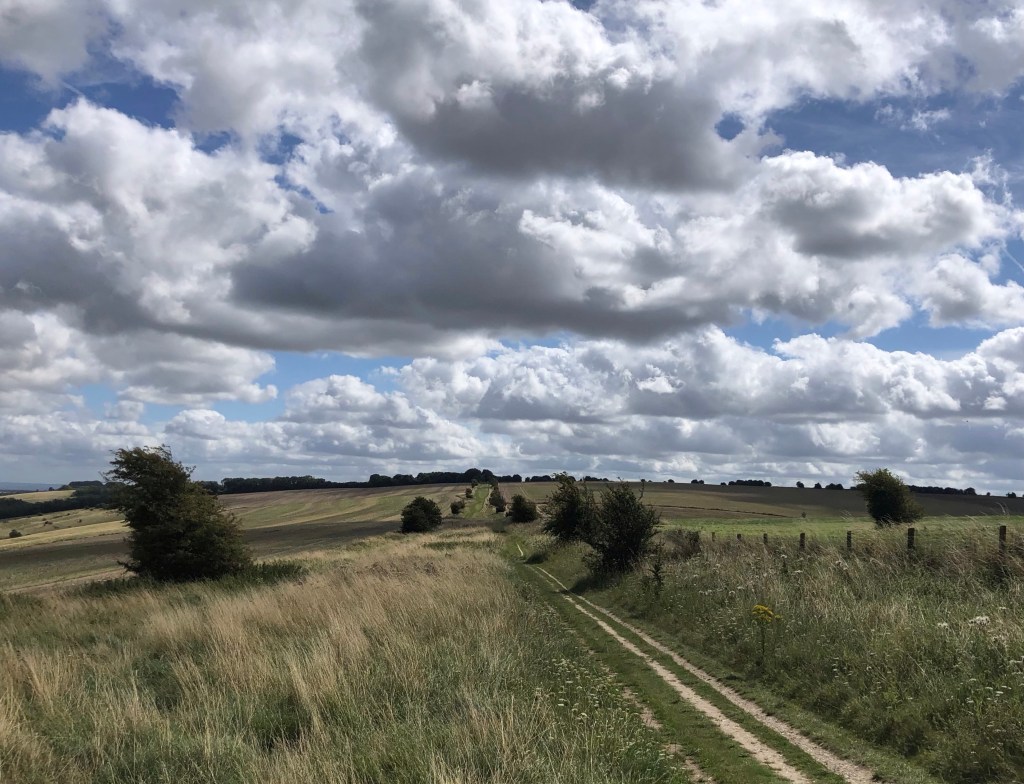
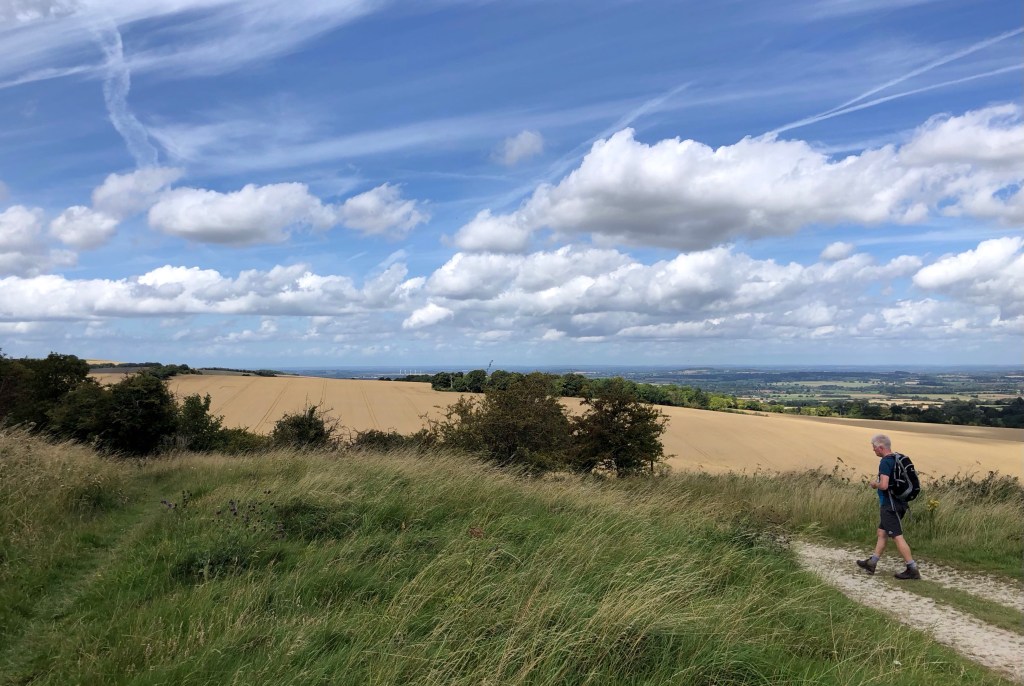
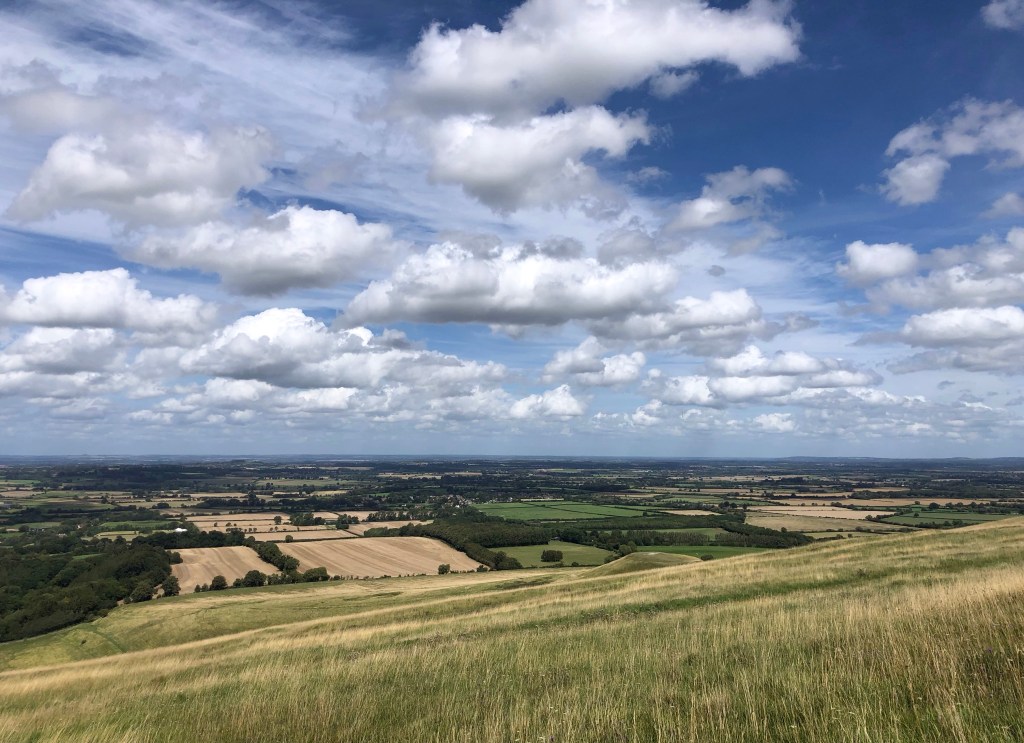
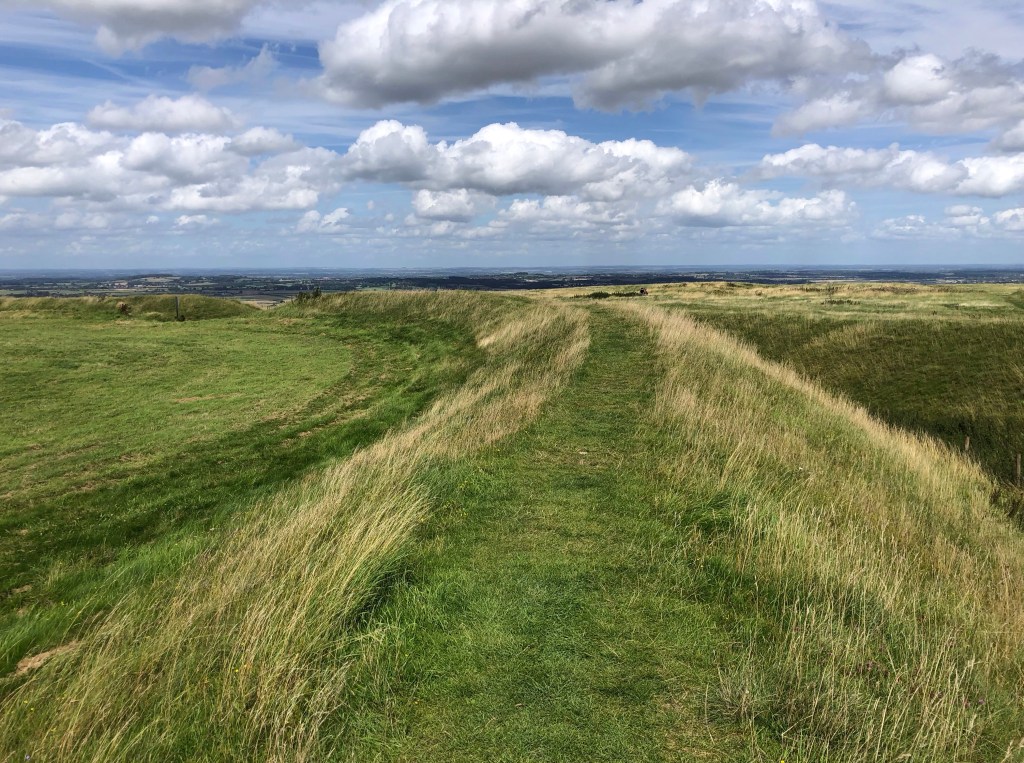
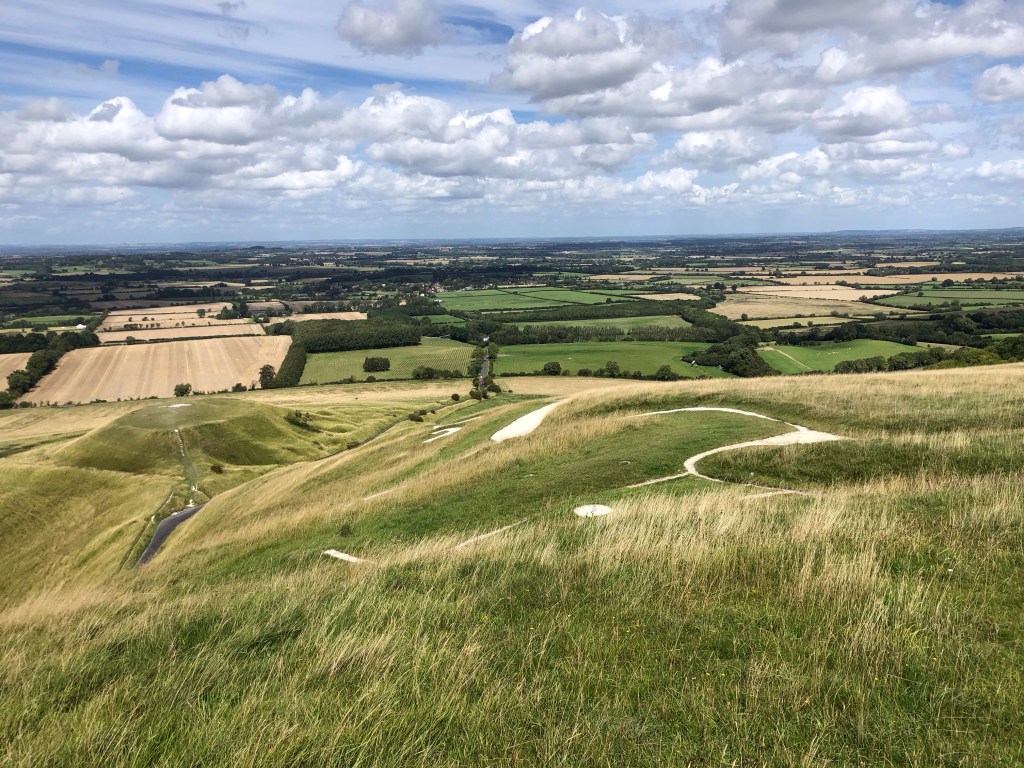
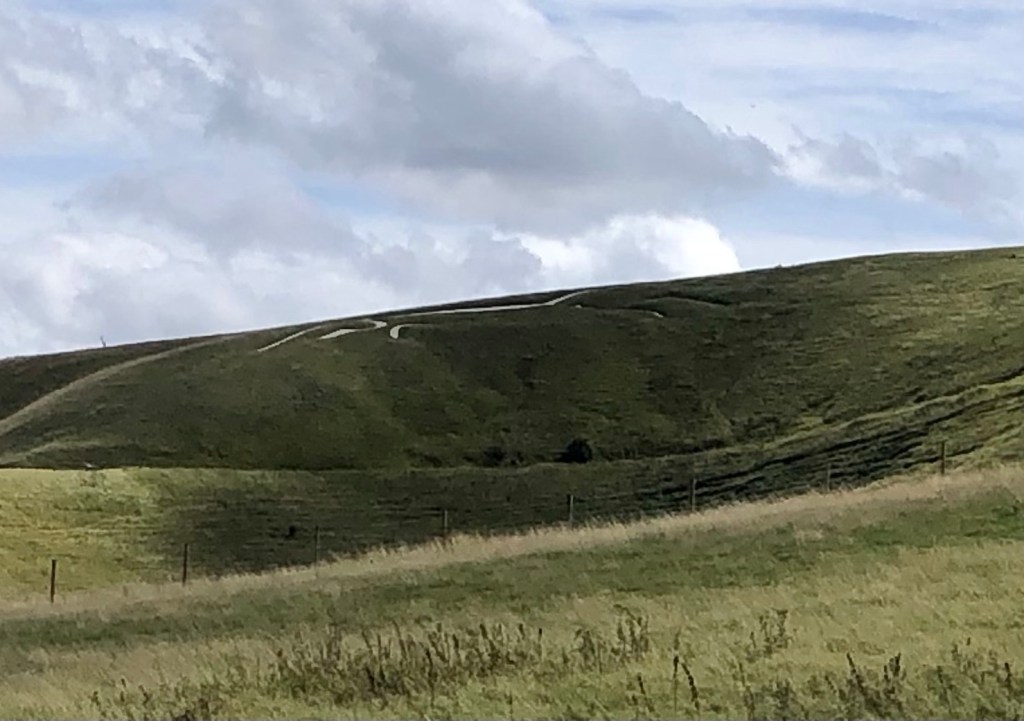
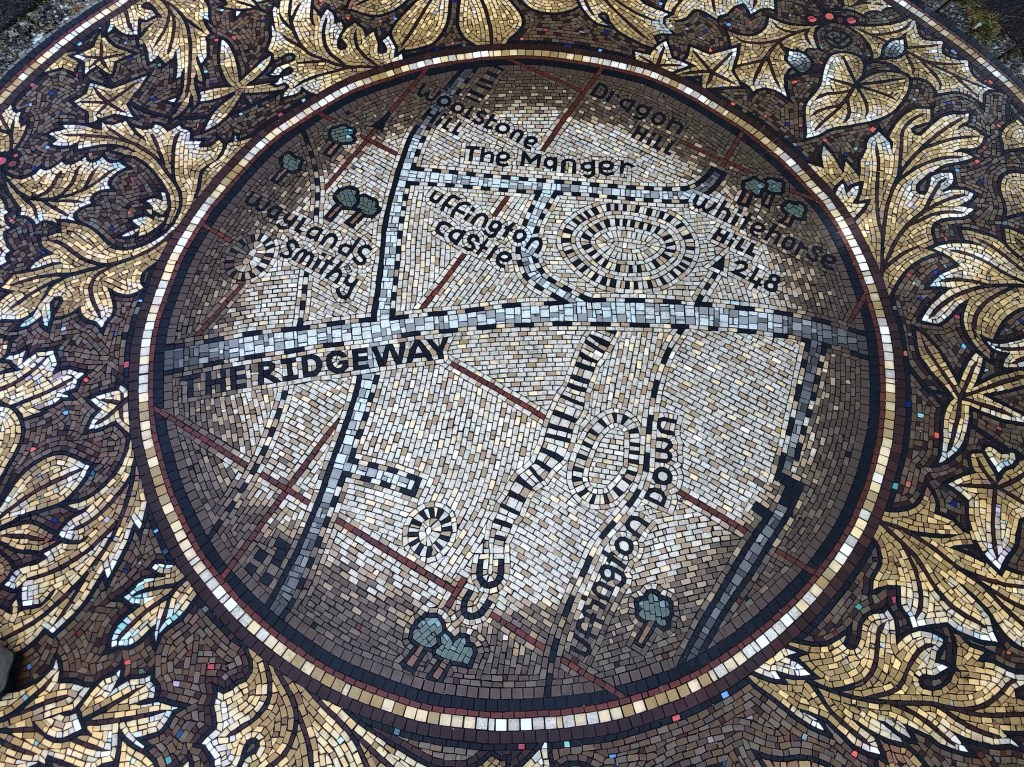
Today though was certainly less about facts and figures, and (appropriately enough given my comments on my childhood activities above) more about a most pleasant day spent rambling on the pastoral uplands of Oxfordshire with Tim, my younger brother. Walking from Tim’s front door we took a meandering tour of the fine market town of Wantage before making our way through some of Oxfordshire’s most verdant countryside and through the Letcombes, Regis and Bassett, two rustic villages of stone, brickwork and thatch that must rank amongst the county’s finest, before heading up onto the North Wessex Downs and along the ancient Ridgeway path to the top of the county at Whitehorse Hill. Here we spent an hour or so exploring the earthworks of the early Iron Age hilltop fort of Uffington Castle and the hummock of Dragon Hill (where legend has it that St George slayed his foe), whilst admiring the prehistoric hill figure of the Uffington White Horse itself. Here’s how we got on:
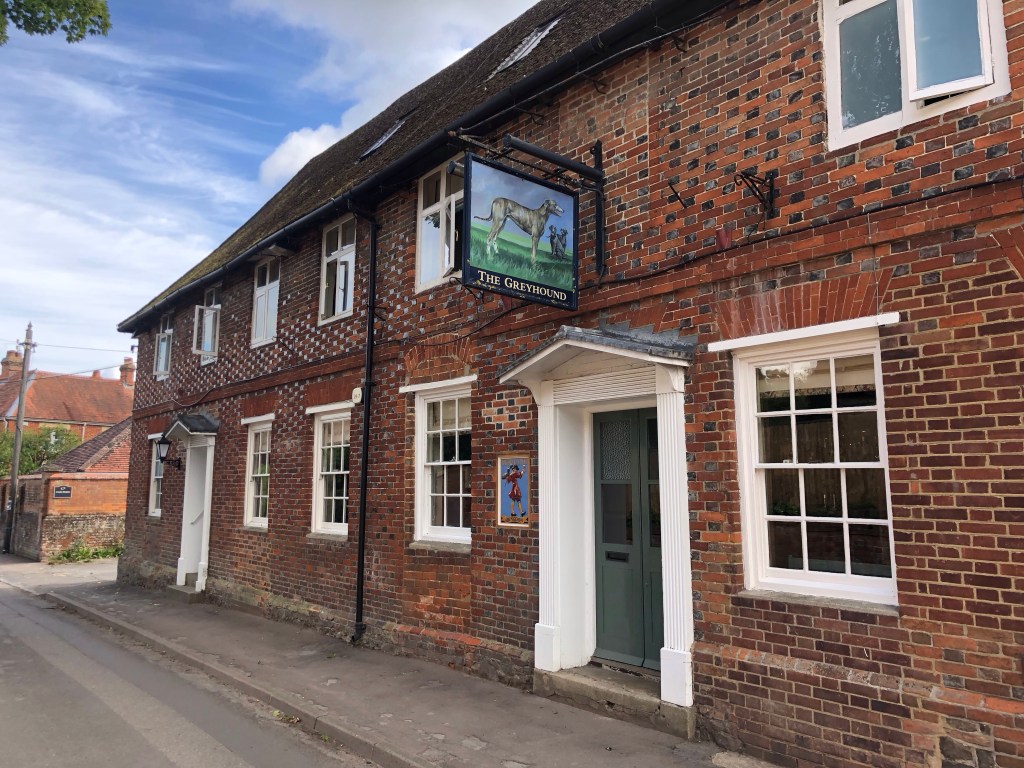
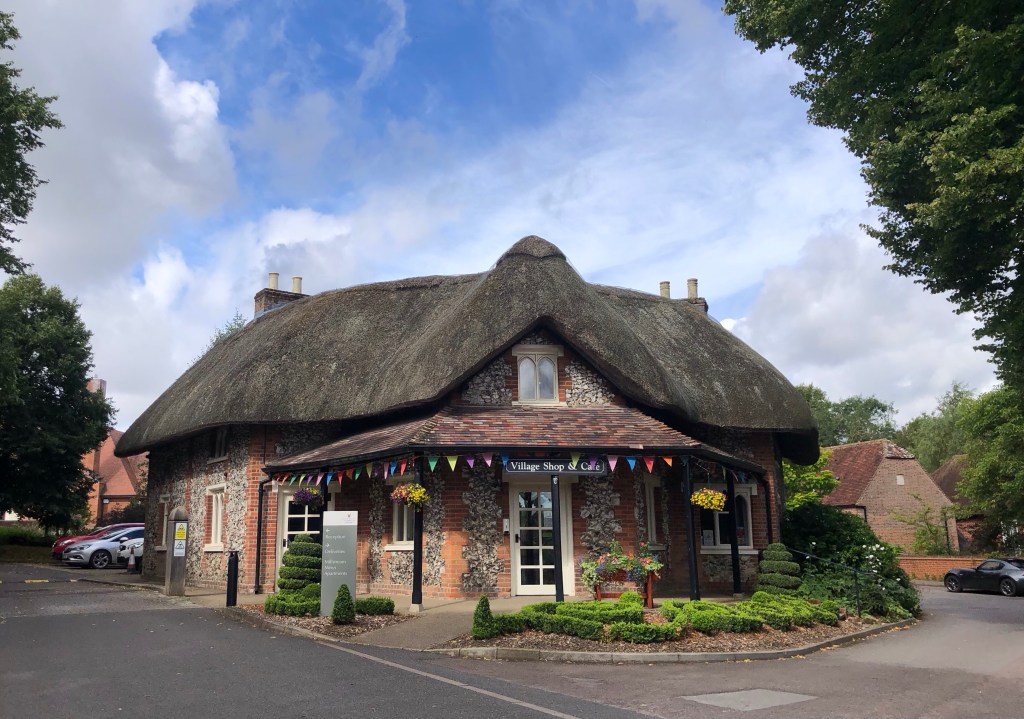
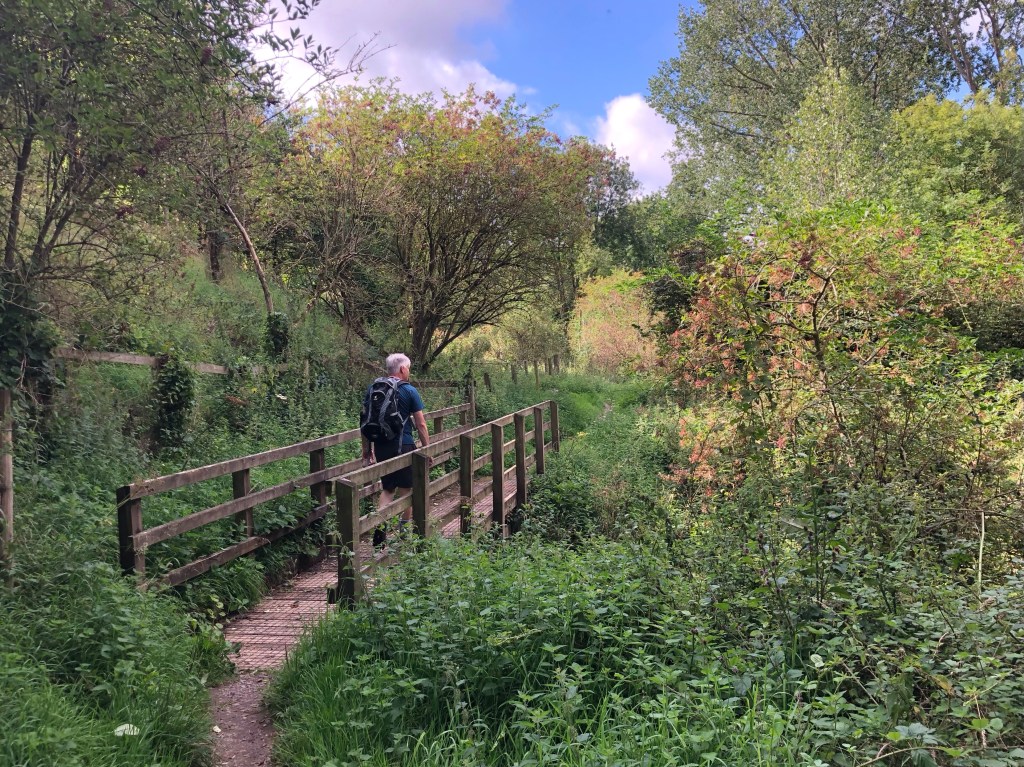
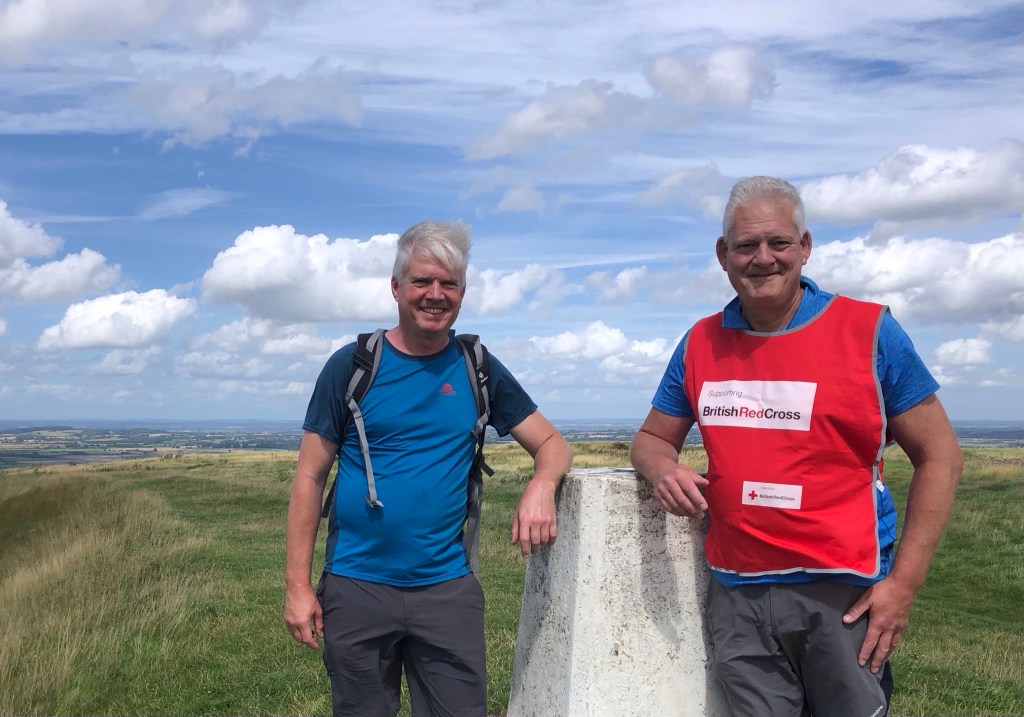

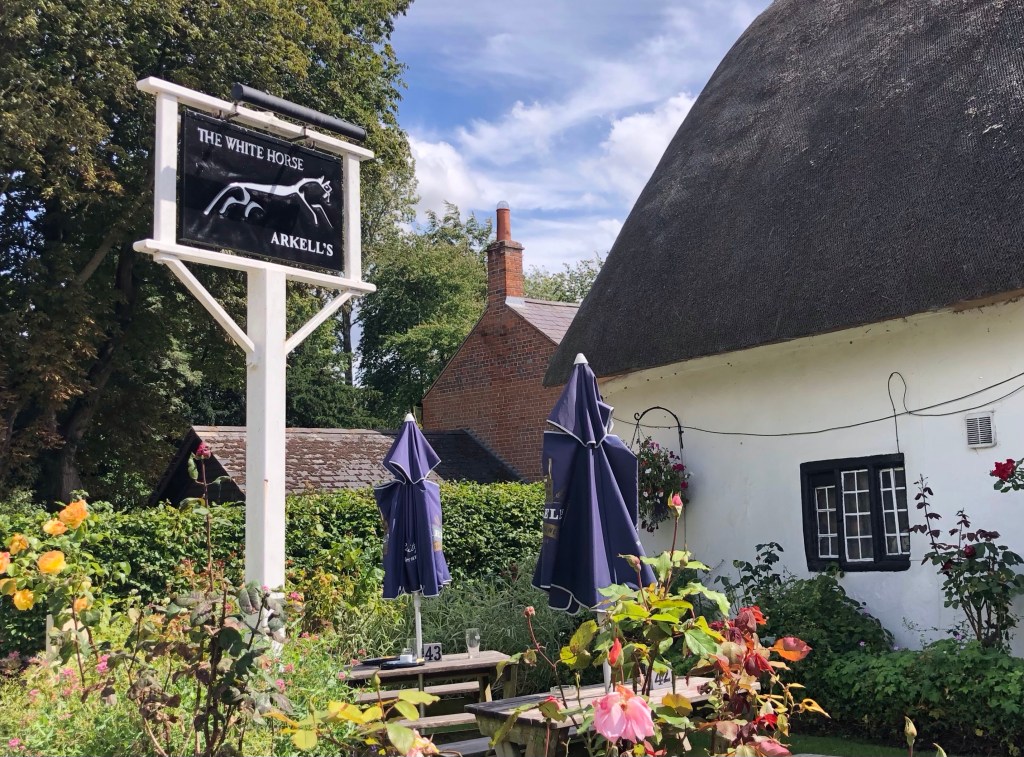
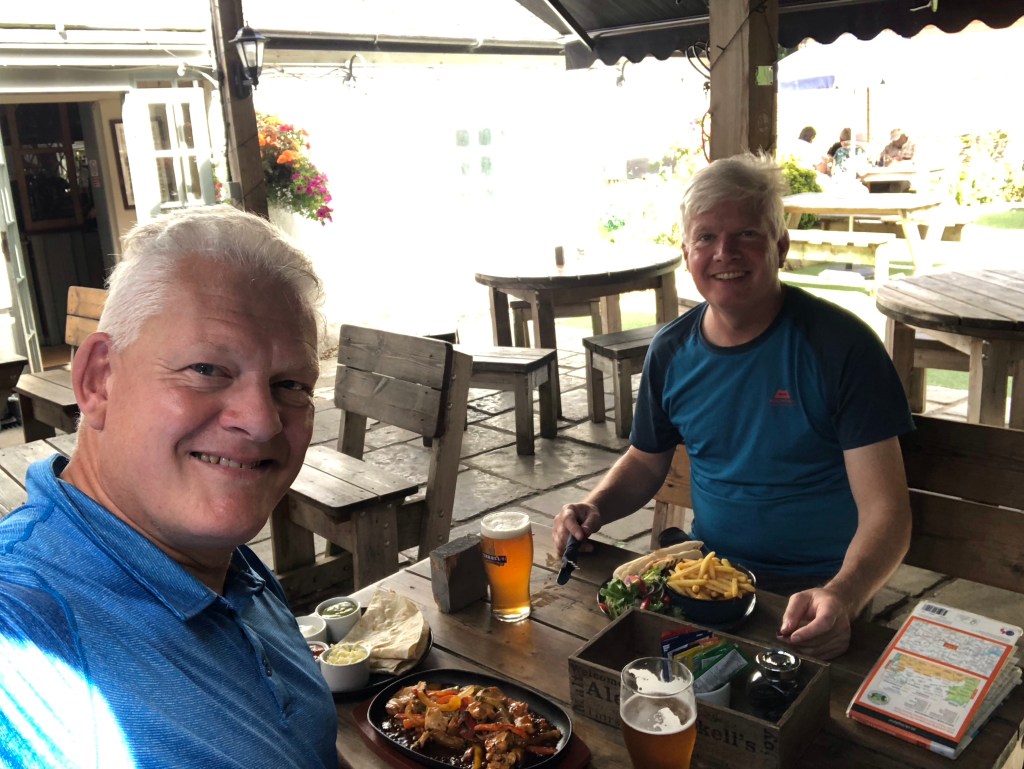
With our 15-mile trek completed a late lunch was certainly in order, if only to mark the conclusion to a fine summer day of walking. It has been super to have your great company today Tim, and many thanks for arranging my tour of your home patch and for booking such a fine venue for our lunch – it has been great to see this corner of Oxfordshire in all its glory. Thanks also to Ridgeway walkers Sarah and Nathan who I ambushed on the top to take our photo – we ended up chatting for a few minutes, comparing walks, and I have just seen their kind contribution to the British Red Cross’ Ukraine Crisis Appeal that my LETJOG Peaks challenge is supporting. Thank you both very much – the JustGiving link for those others who may be interested in donating is on my Home page, or it can be accessed directly by clicking on the following button.
Thank you all! And as for the jigsaw, I really must check sometime as to whether our parents still have the box stashed away somewhere in the back of a cupboard!
Since their formation in 1985 in the Oxfordshire town of Abingdon-on-Thames, Radiohead have become one of the country’s foremost rock bands, culminating perhaps with their induction into the Rock and Roll Hall of Fame in 2019. The five-piece group features lead vocalist and multi-instrumentalist Thom Yorke, raised and schooled in Oxfordshire, who has been described by Rolling Stone magazine as ‘one of the greatest and most influential vocalists of his generation’. The song ‘Jigsaw Falling Into Place’ was written by Yorke and his colleagues in the band, and the number appeared as a single from their seventh studio album ‘In Rainbows’, released in 2007. Adopting this song title for today’s Blog heading seems an apt way of describing the current progress of my LETJOG Peaks challenge, as I plan my ten final climbs.
 Walking for Fun, Challenge and Charity!
Pictures of Wantage made me want to visit. 15 miles before lunch is very impressive Nick! Glad you had a sunny day
Linda
LikeLike