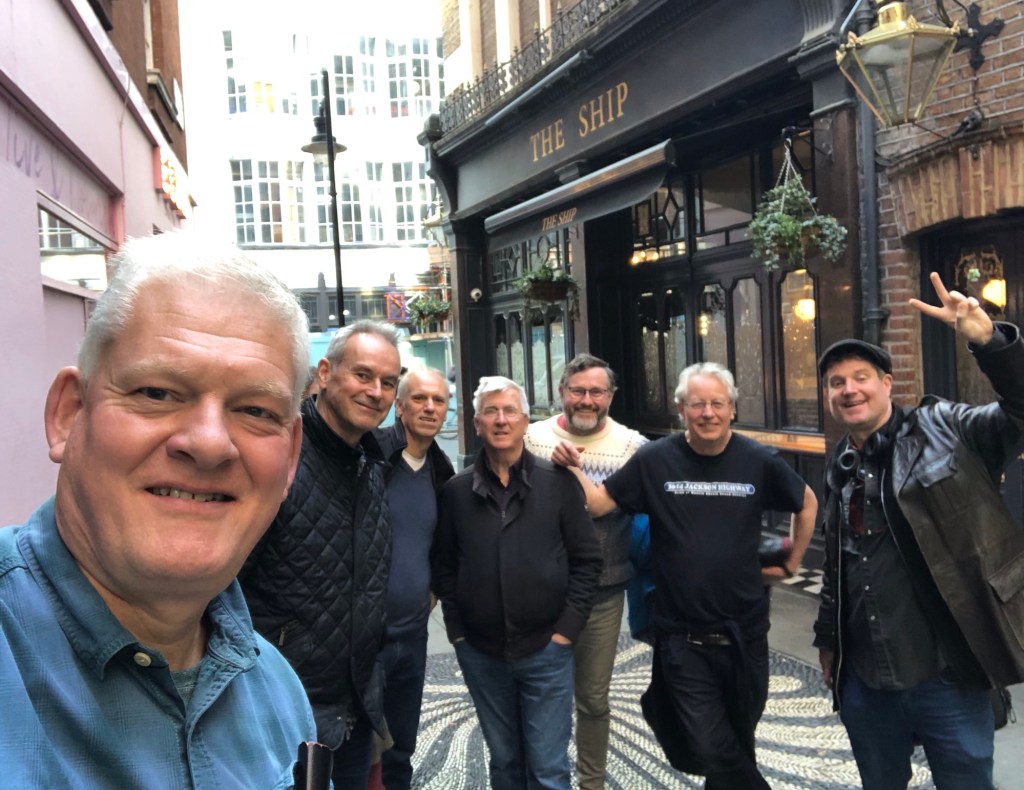
Today I took a ramble with a difference: a walking tour of Soho in central London alongside six close friends and under the guidance of West End actor and musician Al, from Experience Local Tours. Our walk was loosely described as a ‘Rock ‘n’ Roll Tour’, though personalised by the company to the particular musical interests of our group. What followed was a stroll through the streets of Soho for several hours, gleaning information from Al and being regaled by anecdotes of the great and good of the 60s and 70s rock and pop scene. It is fair to say that none of us noticed particularly the exercise element of our afternoon, immersed as we were in the environment and culture of music scenes past, and in the escapades of the artistic protagonists. Here are just a few shots from our perambulation through Soho’s rich musical history.
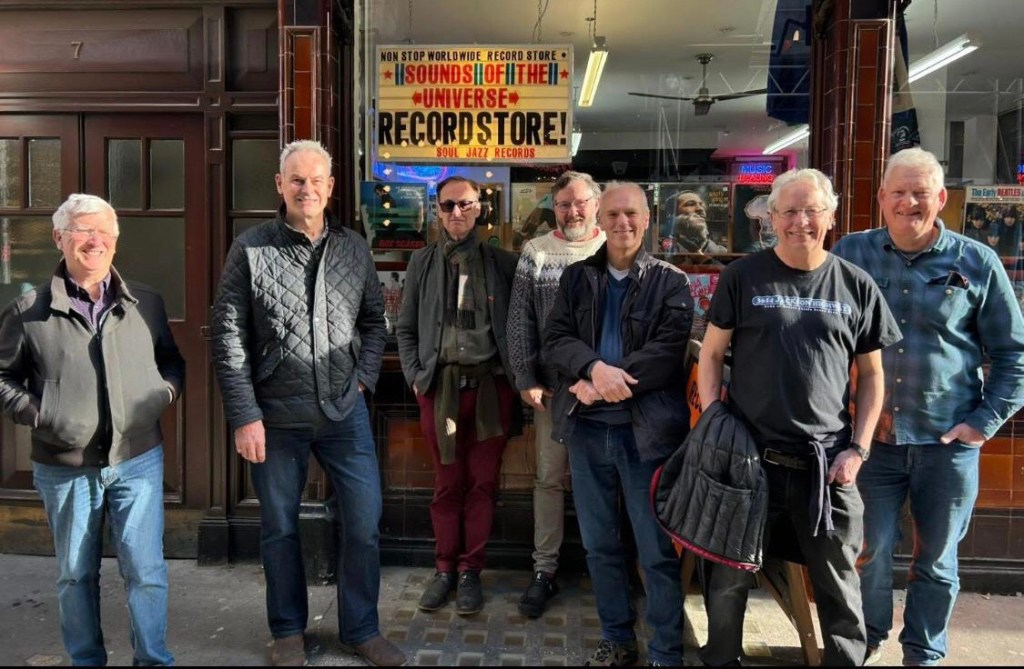
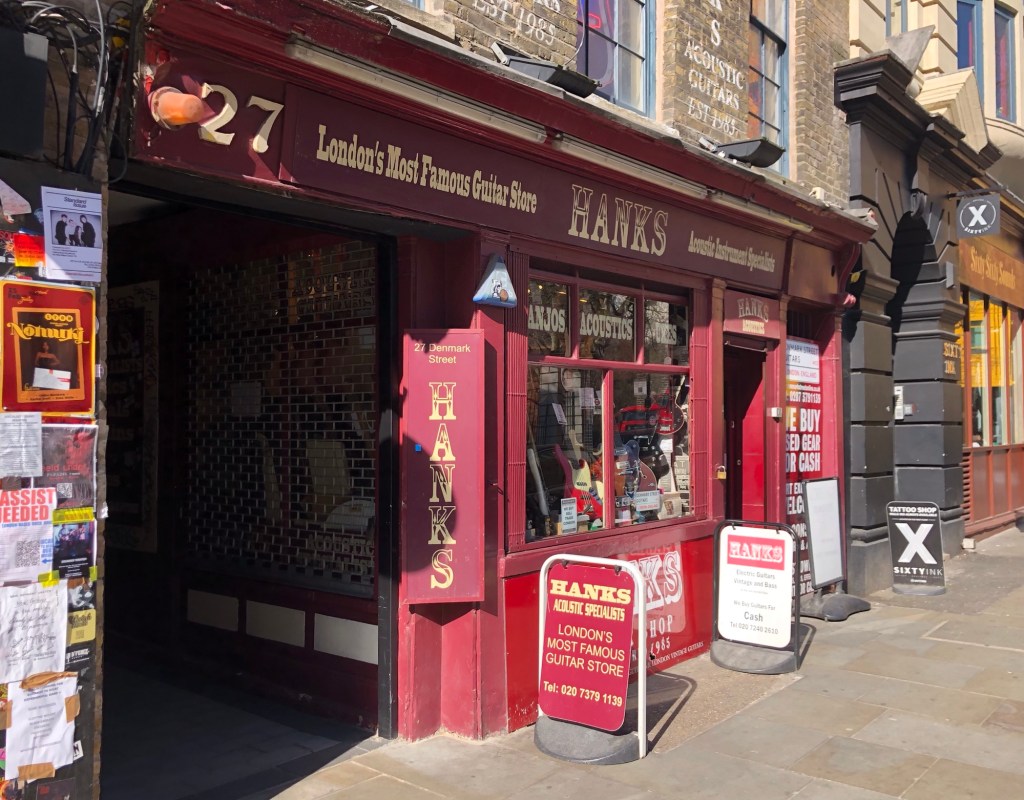
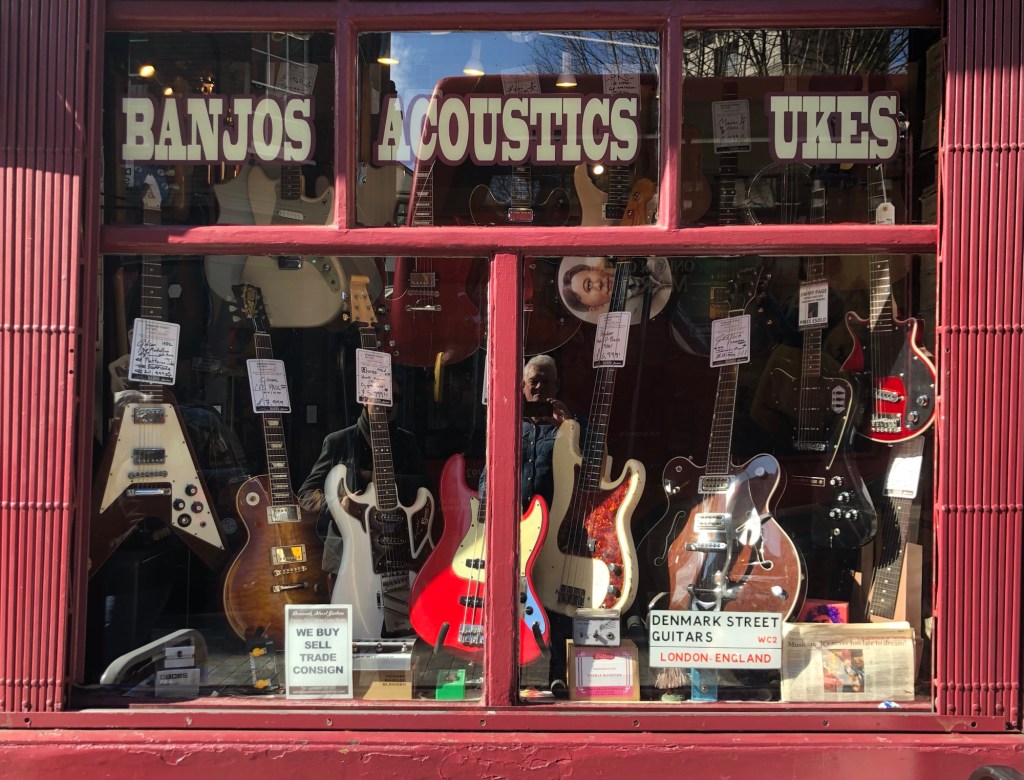
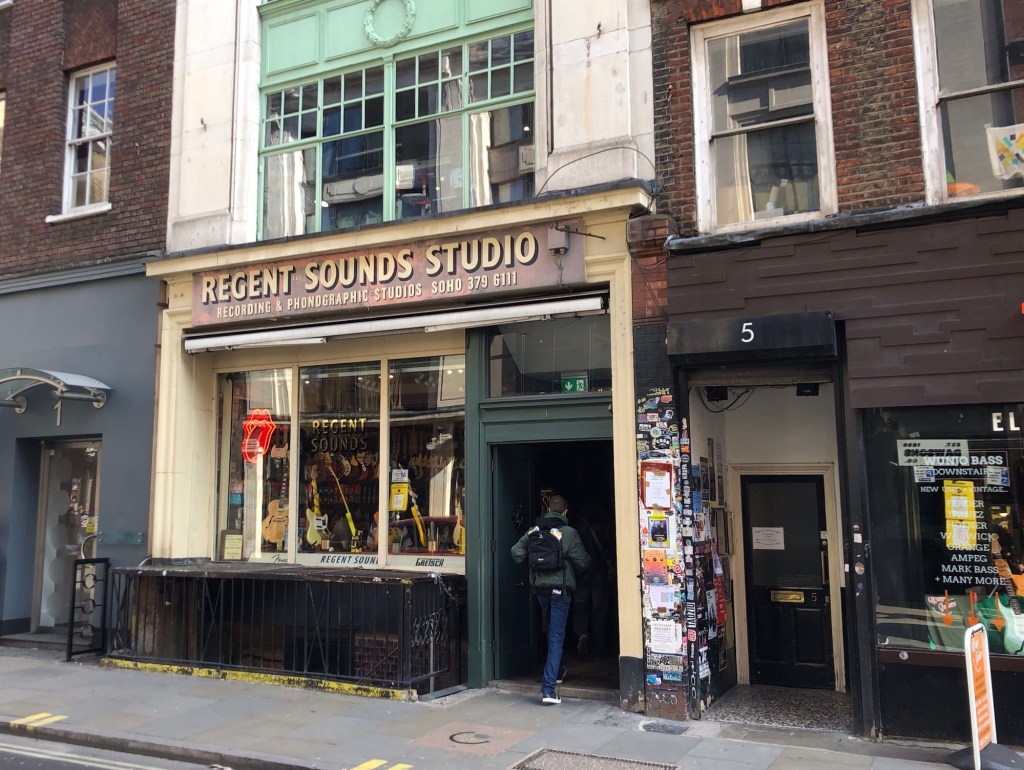
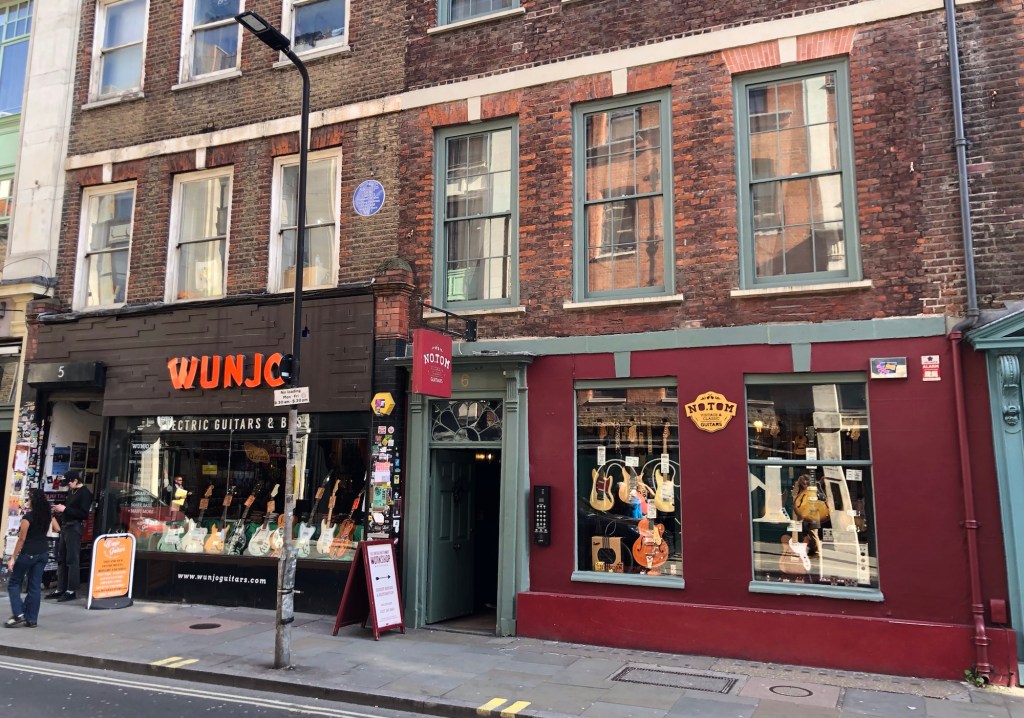
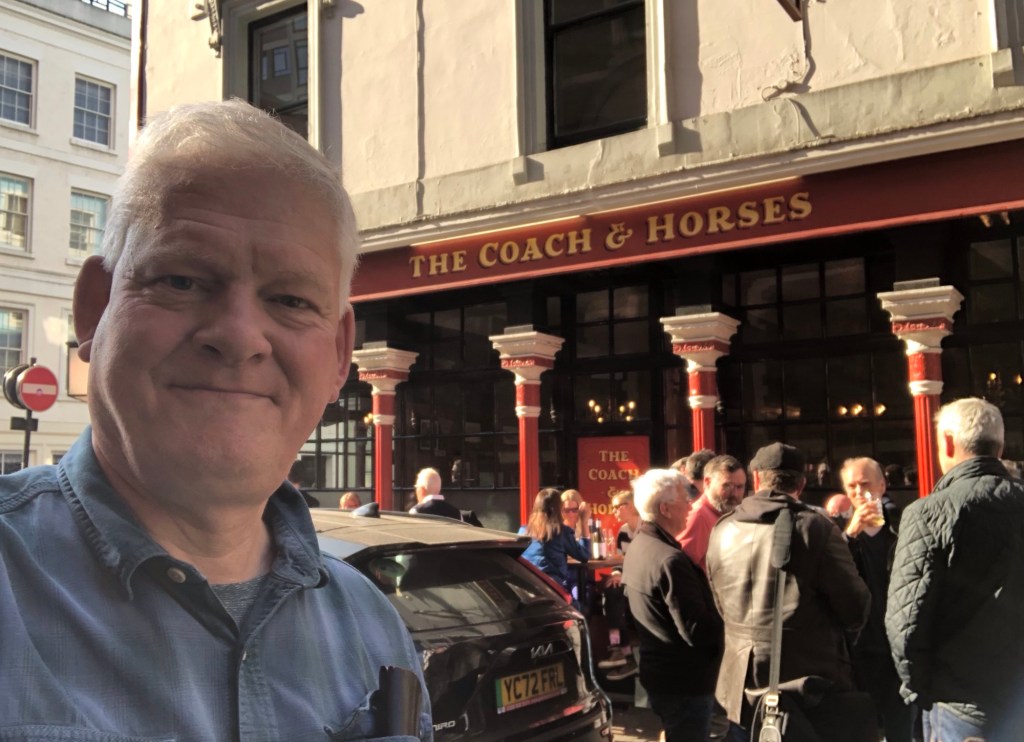
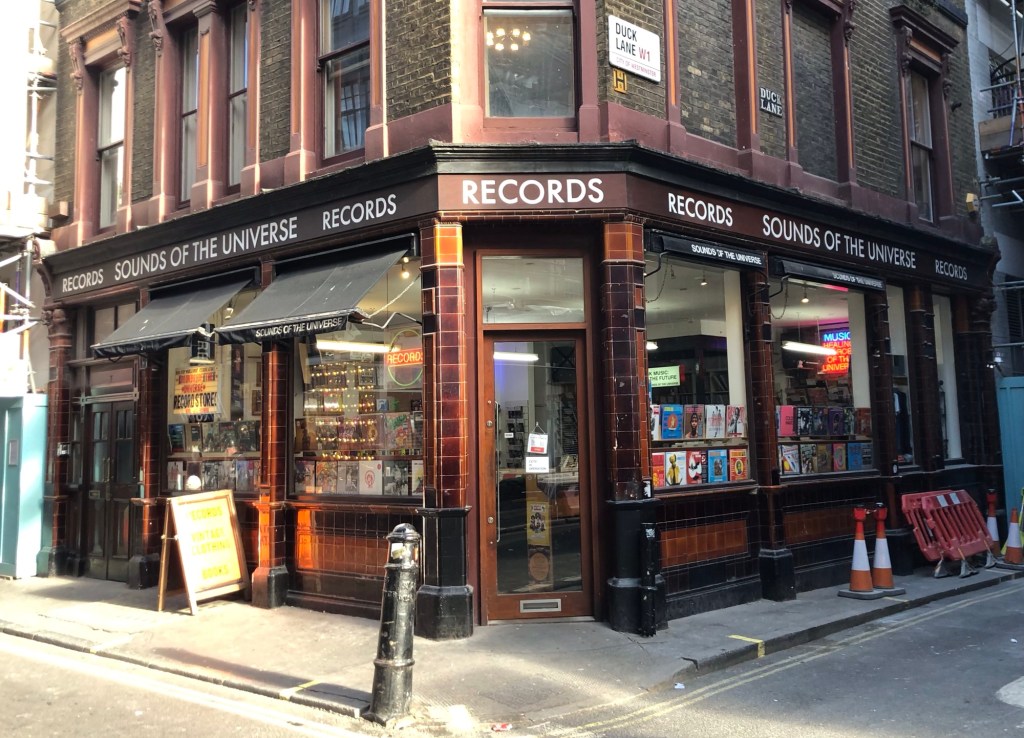
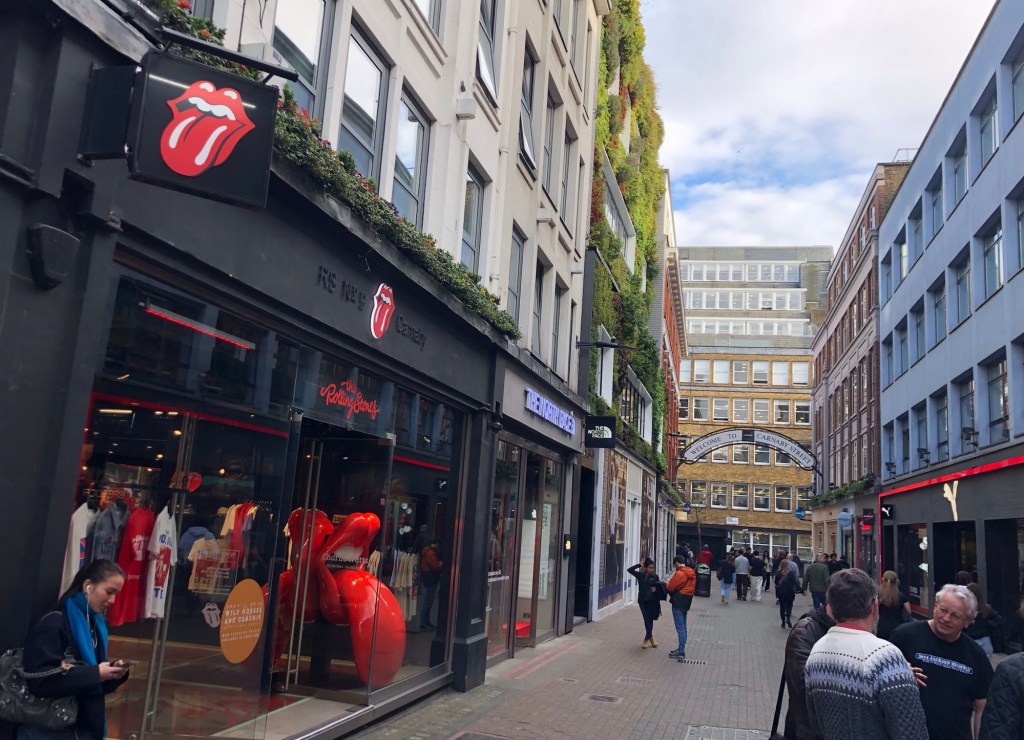
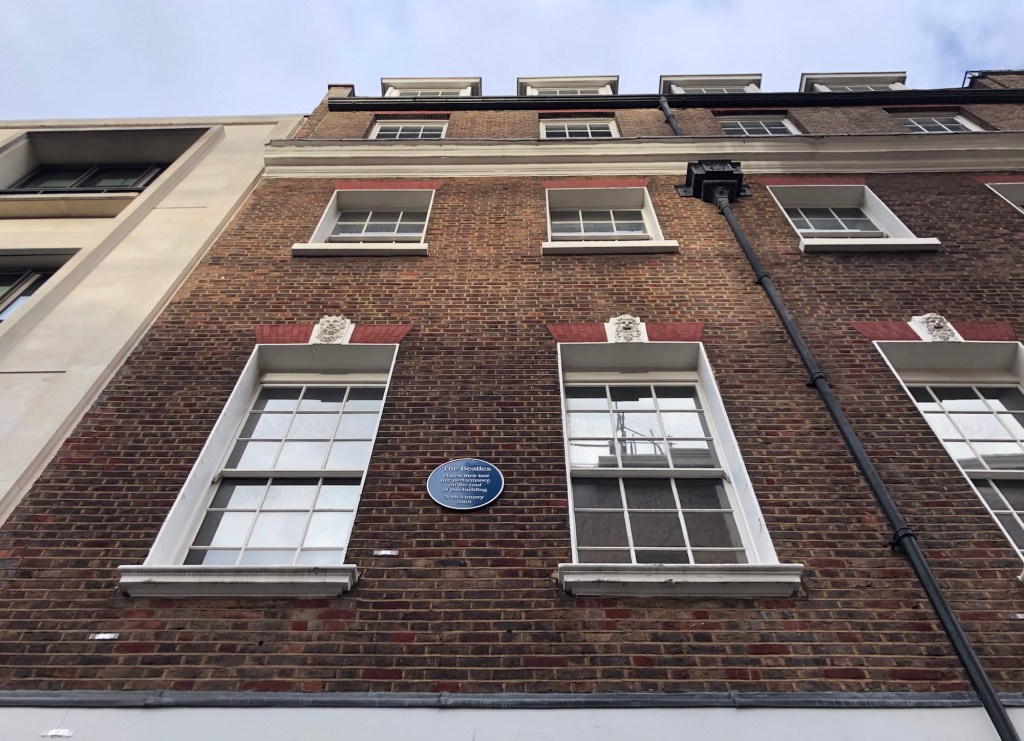
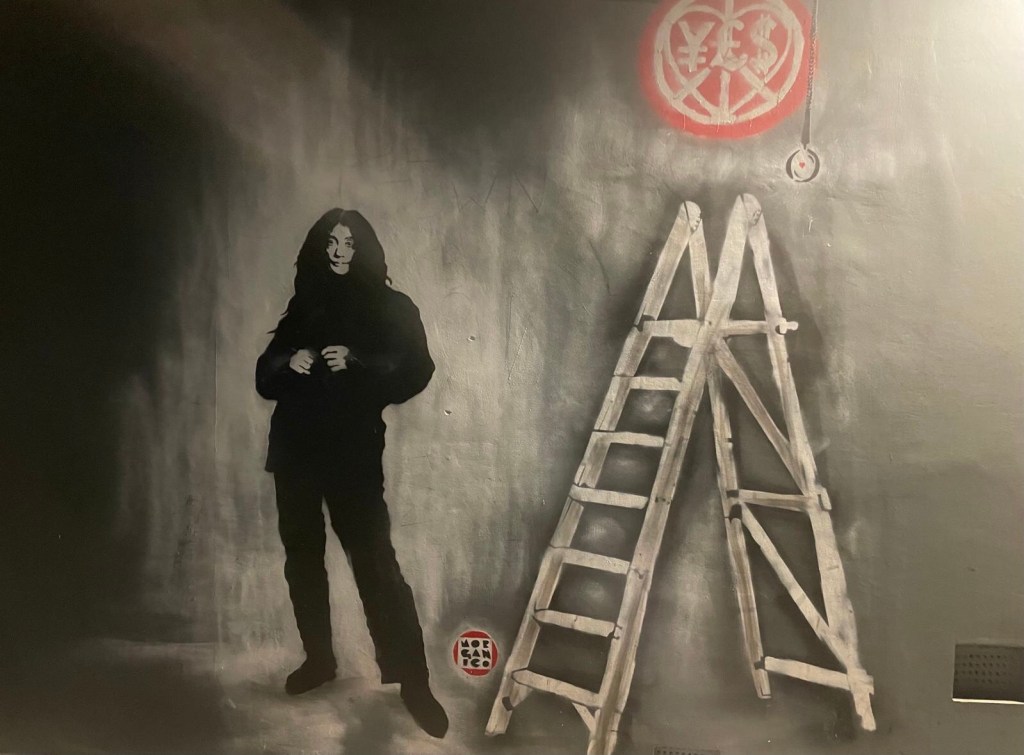
Our Music Muser group comprises Paul, Mark, Mike, James, Mark, George and myself: we have now been meeting for over six years, with a playlist each month on a different theme that is then put up for discussion at our monthly meeting – or when we are ‘on tour’, like today!We started our journey in Denmark Street WC2, the UK’s ‘Tin Pan Alley’: the name (taken from its New York equivalent) dates from the 1920s when the road first became home to an increasing number of music shops, publishing houses and, later, recording studios – Hanks was established in 1985 . . .. . . and sells guitars previously owned by many a rock icon (currently an instrument once owned by Johnny Marr is available for a cool £15,999, whilst Jimmy Page’s ex has sold for an undisclosed sum)Just across the street is Regent Sound Studios, where a ground floor studio (two-track technology and egg box insulation on the walls) held the recording sessions for the Rollin’ Stones’ debut EP and the band’s first two albums, as well as hosting The Kinks’ ‘You Really Got Me’, whilst Jimi Hendrix was thrown out ‘for making too much noise’Wunjo Guitars next door counts Pete Townshend as one of the shop’s early customers, whilst the neighbouring No.Tom guitar store once housed album design company Hipgnosis (Pink Floyd, Genesis, Yes, Black Sabbath, Led Zeppelin, 10cc, et al) on its upper floors – it might be odd therefore that the blue plaque on the building is not to a music artist but to Augustus Siebe, the inventor of the deep-sea diving helmetThe Coach and Horses on Greek Street lays claim to being ‘Soho’s most famous pub’, bearing witness to many a gangster and celebrity over the years . . .. . . whilst the Ship Inn on Wardour Street has also enjoyed a colourful history in the music world: it was the haunt of many a rock star, and stories include Elton John buying a drink for everyone in the establishment after recording ‘Candle In The Wind’ in the nearby Trident Studios, Jimi Hendrix falling base over apex down the stairs after a drunken tryst on the upper floor with a barmaid, and Keith Moon pouring whisky over the bar before setting light to the place!The Sounds of the Universe record store was once upon a time the Bricklayers Arms, a meeting place that, in 1962, spawned the Rollin’ Stones (the group dropped the superfluous apostrophe to become The Rolling Stones as they broke through during the following year)Carnaby Street W1 was the birthplace of ‘Swinging London’ in the 1960sAs the blue plaque attests, the Apple Corps HQ at 3 Saville Row owes its fame to the impromptu 42-minute Beatles set on the rooftop on 30 January 1969 that comprised nine takes of five new songs and became the group’s final public performance before their disbandment the following year: as John Lennon put it ‘I’d like to say thank you on behalf of the group and ourselves, and I hope we’ve passed the audition’And to end on a Beatles theme, as the tour concluded we adjourned for refreshment and some rock ‘n’ pop banter in the courtyard behind the Chequers Tavern on Duke Street – the pub backs onto Mason’s Yard, once home to the Scotch of St James nightclub (another haunt of numerous rock musicians and the swinging London set of the mid-1960s) and to the counter-culture Indica Bookshop and Gallery where John Lennon first met Yoko Ono in November 1966
Thus ended a quite wonderful afternoon’s tour, the walking playing very much second fiddle to musical history, cultural icons, rock ‘n’ roll anecdotes and pop trivia. So thank you to our guide Al – and to all of you who have made it this far, for bearing with me through this account of our group’s musical indulgences: I will revert to Blogs on walking and nature very soon! Indeed, around our London foray I have been busy putting together my walking challenge for this spring, and in a few days’ time I hope to reveal the plans here for my next long trek.
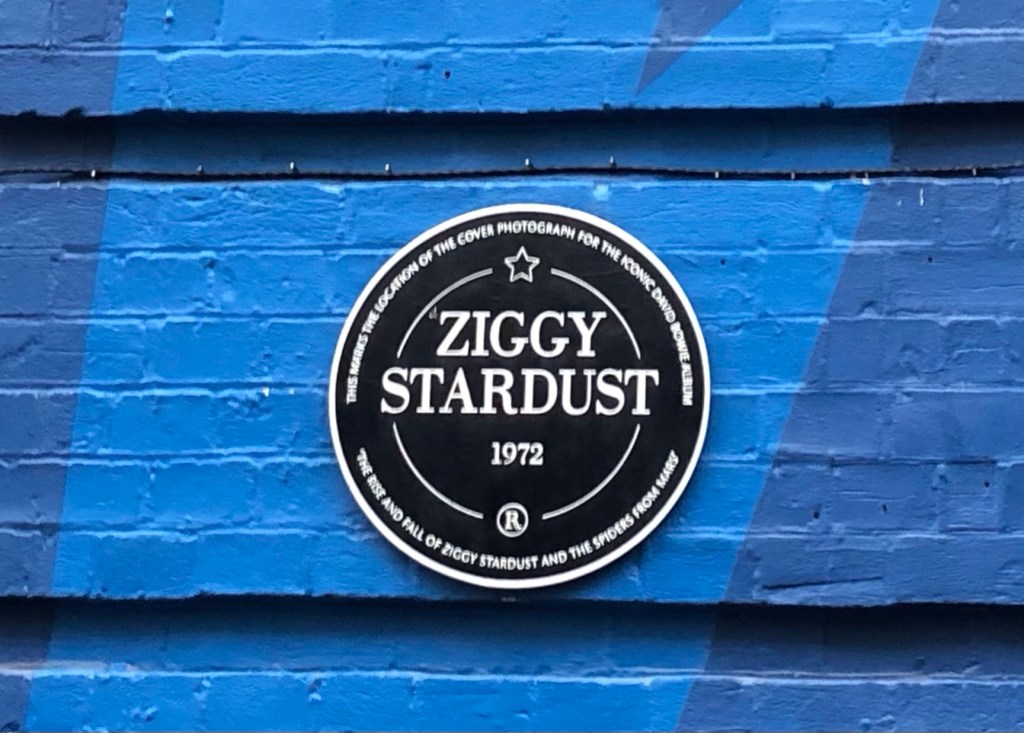
The Ziggy Stardust plaque in Heddon Street commemorates the demise of David Bowie’s alter ego following a gig at Hammersmith Odeon on 3 July 1973, where the last song that Ziggy performed was ‘Rock ‘n’ Roll Suicide’: rather than ‘merely’ the end of Ziggy, the world stopped as the media and Bowie’s fan base took his subsequent epitaph as an indication of the star’s own immediate musical retirement – Bowie had them there of course, and his creative genius was to survive many more iterations up until his eventual but untimely death in January 2016
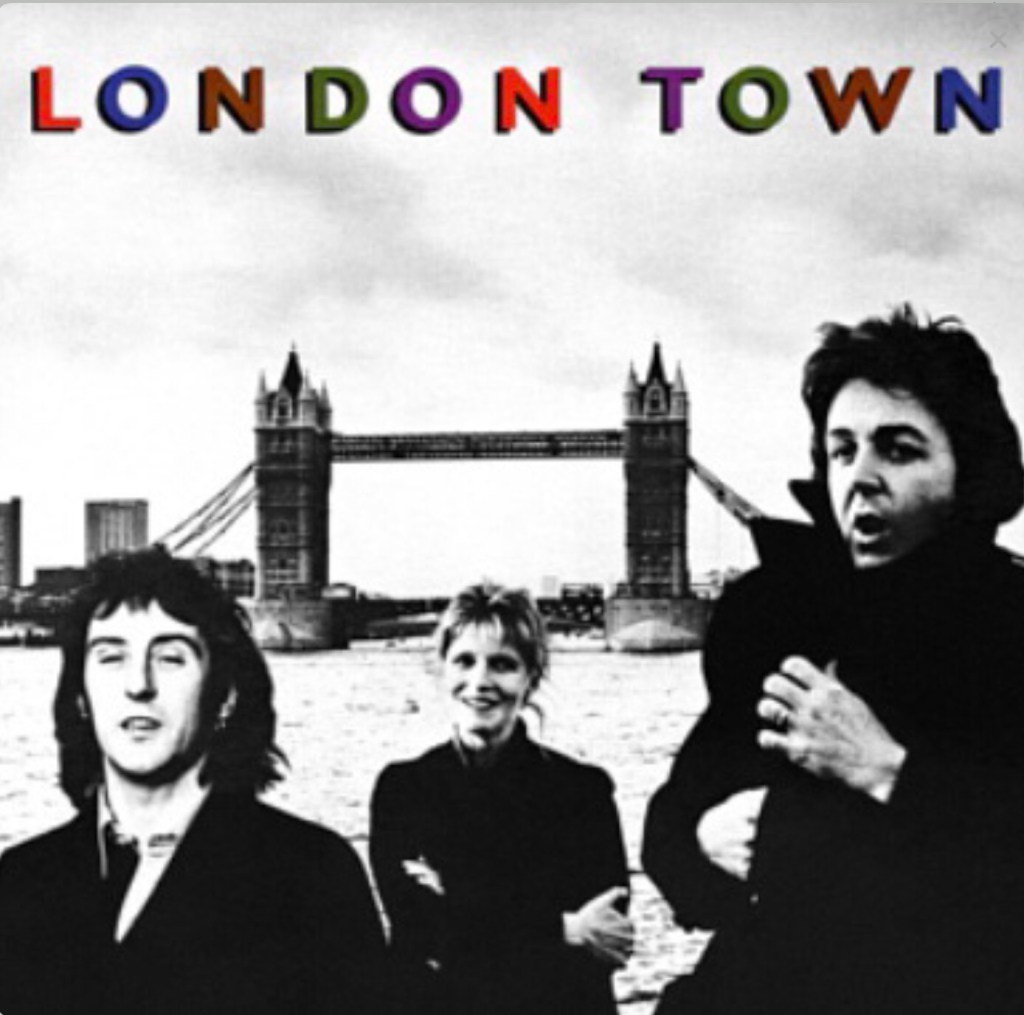
The song ‘London Town’ was penned by Wings members Paul McCartney and Denny Laine and released in 1978 as the opening and title track on the band’s sixth studio album. London was (very much) McCartney’s second home during the 1960s and the offices of his company MPL Communications remain in Soho Square: despite his Liverpudlian origins McCartney was a central figure in the capital’s music scene of the 1960s, so it is fitting that I use one of his song titles as my Blog heading today.


 Walking for Fun, Challenge and Charity!