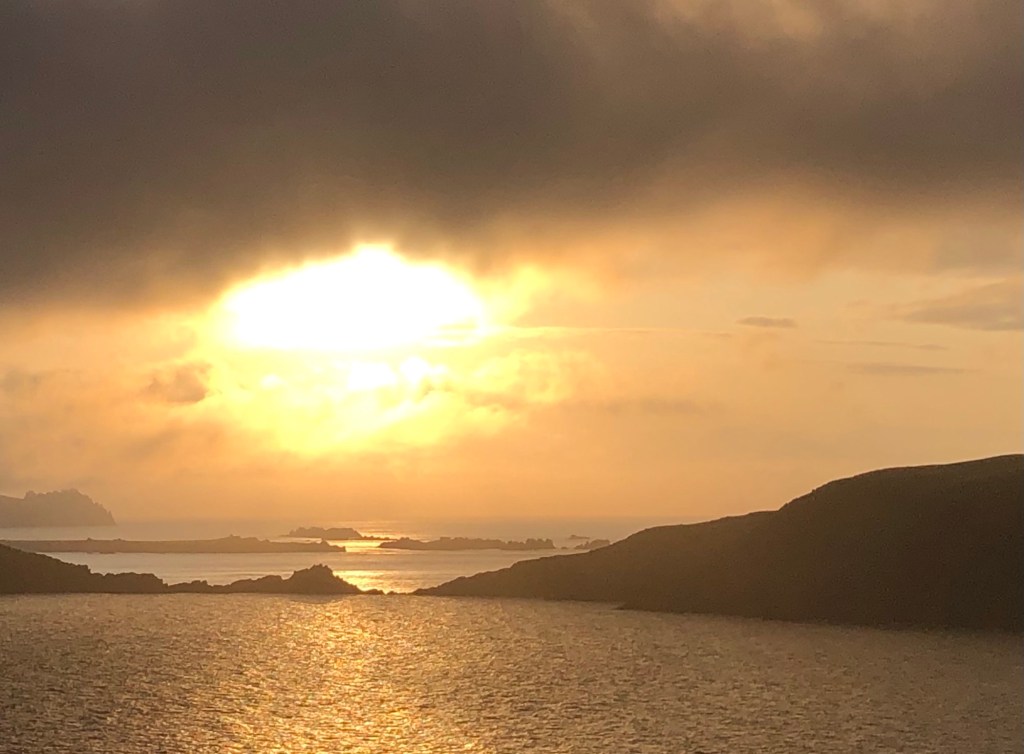
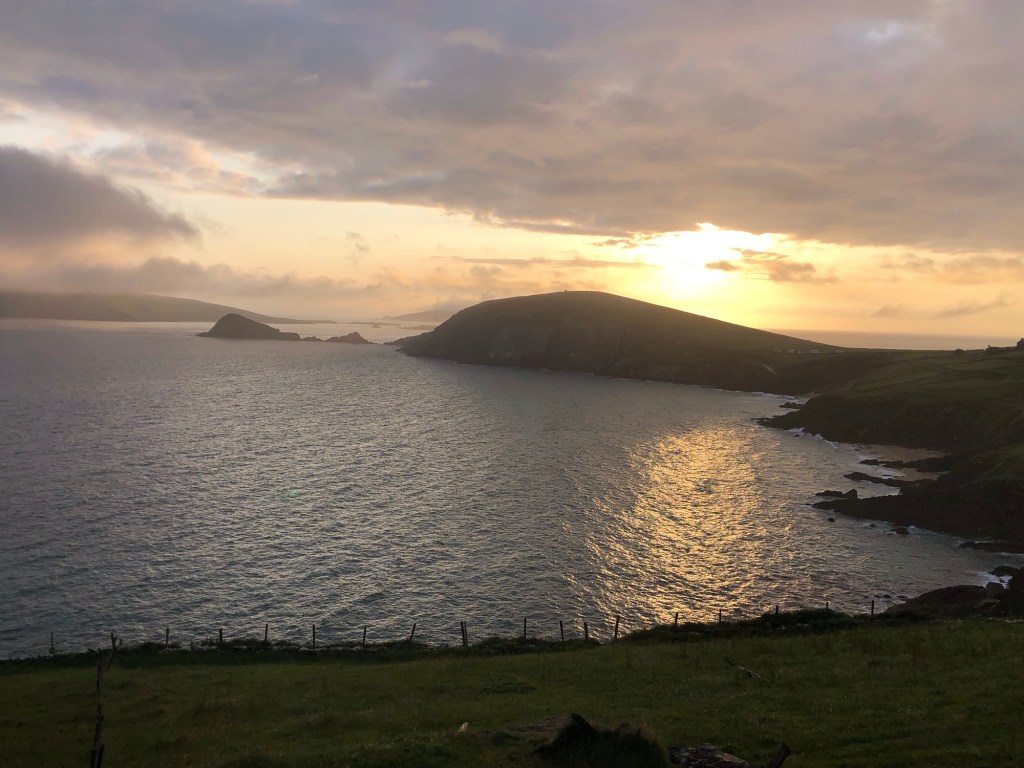
Looking westwards over the Atlantic: the summer solstice sunset on Saturday 21 June, from Dunmore Head on the Dingle Peninsula
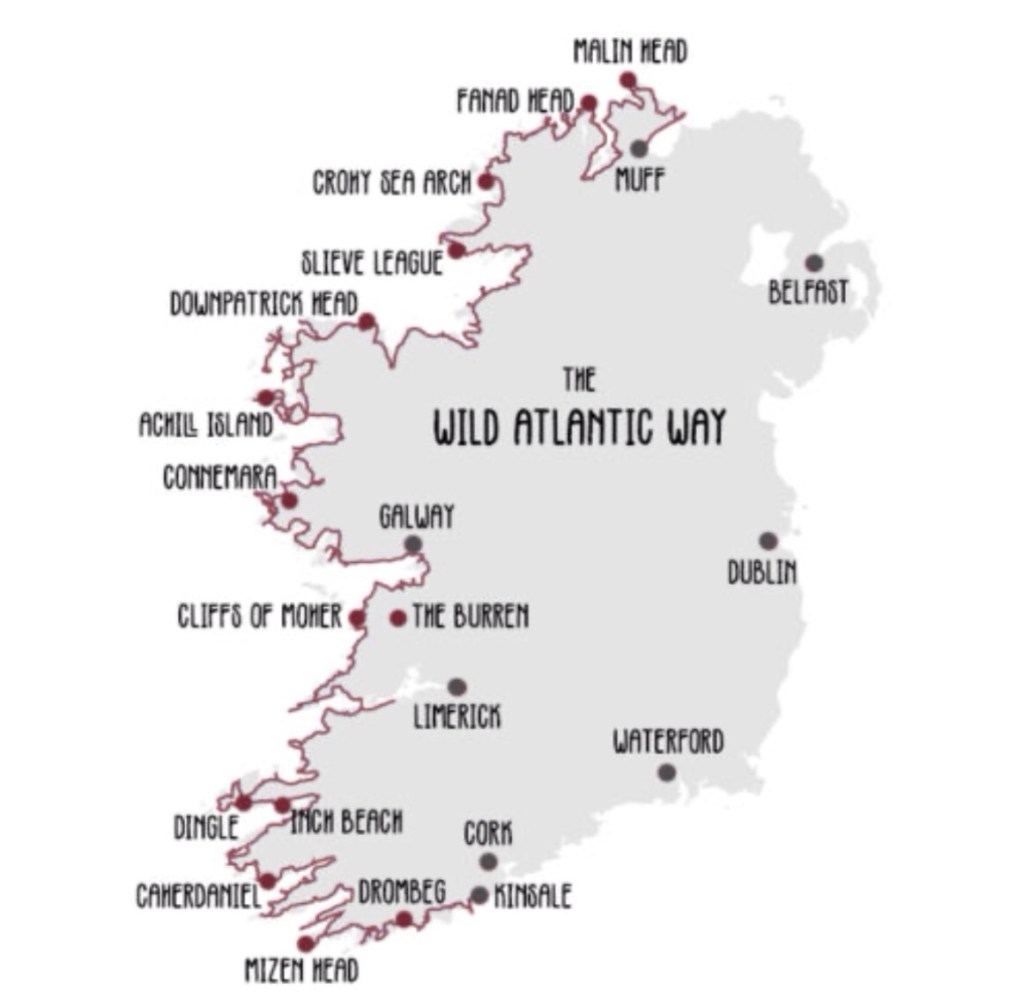
I promised last week to post a few photos of the road-trip to Ireland that Rachel and I took at the end of last month. Our journey covered the southern half of the 1,500-mile Wild Atlantic Way, a collection of roads and lanes that follow the coastline of western Ireland from Kinsale, on Ireland’s southern Celtic Sea coast, all the way around the peninsulas of the country’s south west, and then northwards to County Donegal’s Inishowen Peninsula, to Malin Head at Ireland’s most northerly point. Although the throroughfares themselves have been there for decades, the route was designated officially only in 2014. Since that time the Way has attracted many visitors, and has been widely recognised as a catalyst in promoting sustainable tourism and preserving the natural and cultural heritage of the west coast of Ireland.
The Wild Atlantic Way: over 1,500 miles of rugged coastline, stunning beaches, charming villages and ancient monuments
Before I am accused of any misrepresentation, I should clarify that Rachel and I drove rather than walked the route and, although we had a full two weeks, we decided just to complete the first half of the Way, for now, from Kinsale up to Galway. On most days we covered about 70 miles, undertaking the journey from south to north, so as to keep the sea on the left for easy access to the roadside viewpoints. As for accommodation we stayed in a combination of hotels and B&Bs, moving on each day save for a two-day ‘rest’ in Killarney. In all we covered around 800 miles on and around the Way, and walked about 80 miles by the Irish coast. Here are a few of the highlights of our escapade.
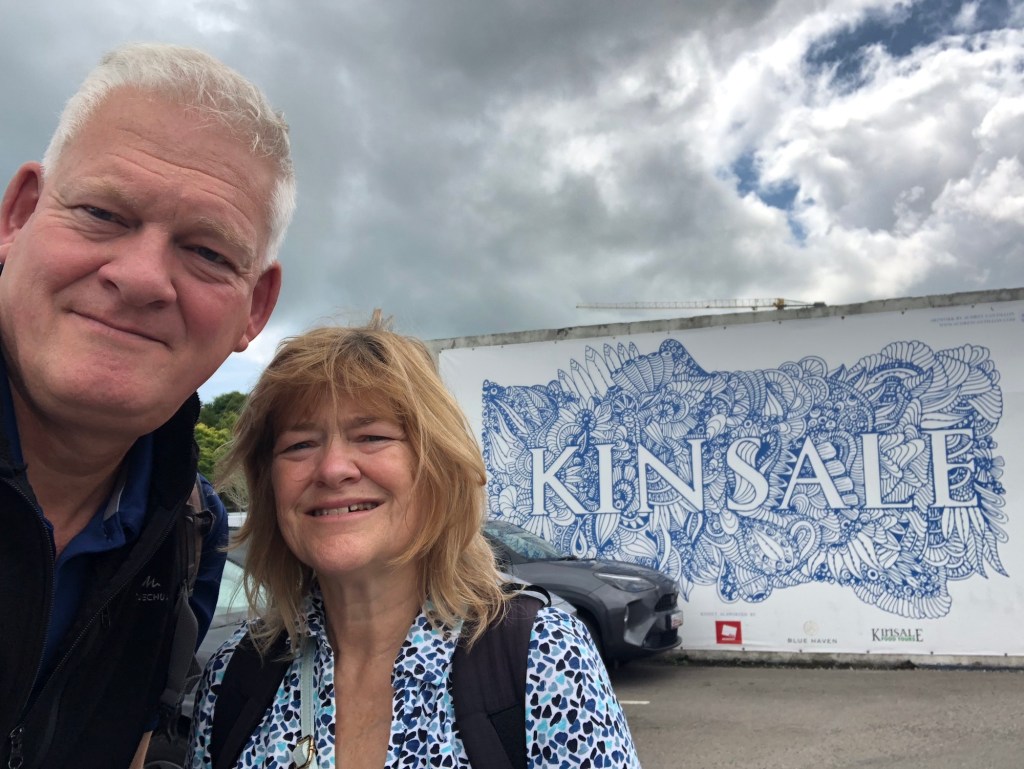
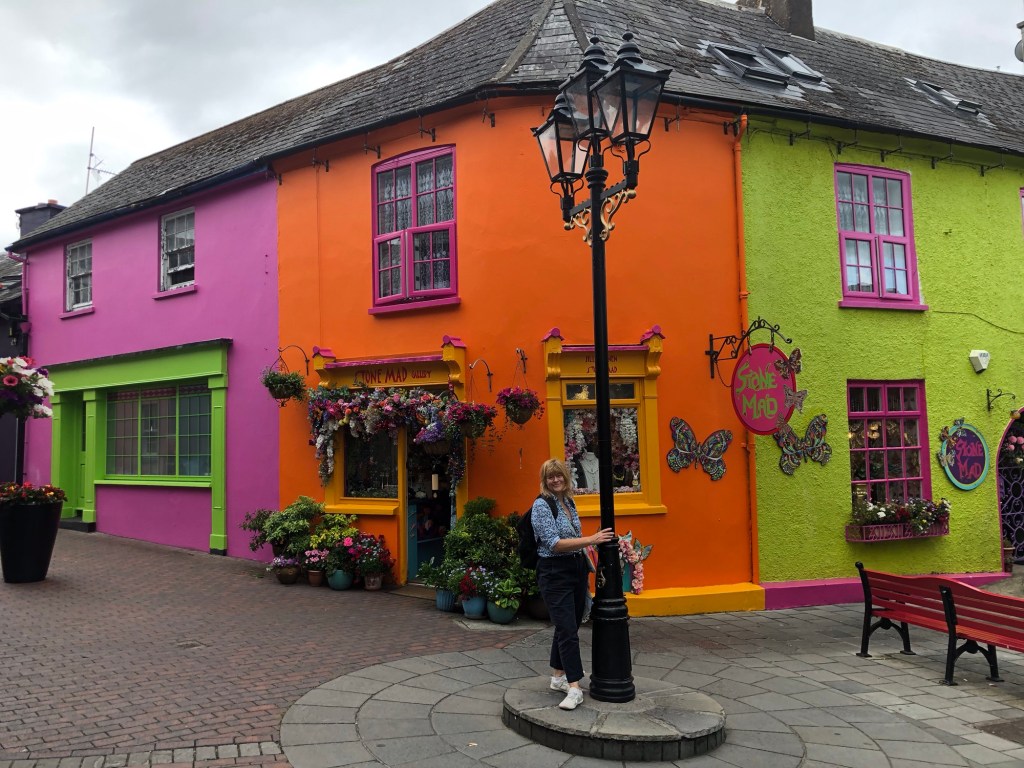
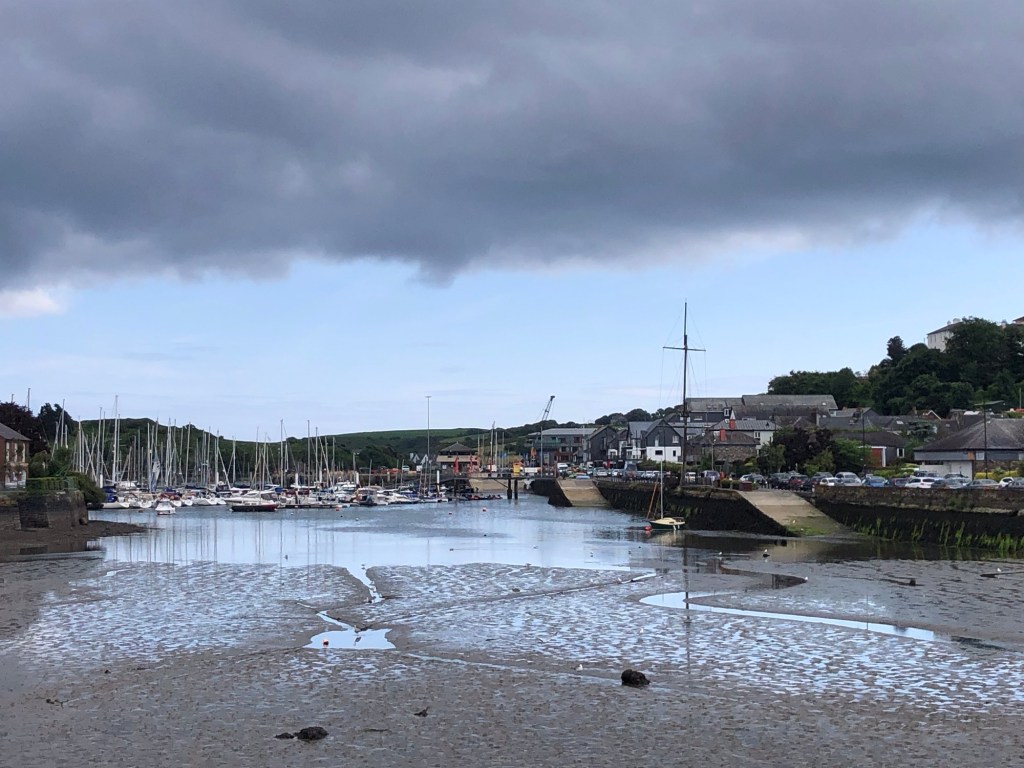
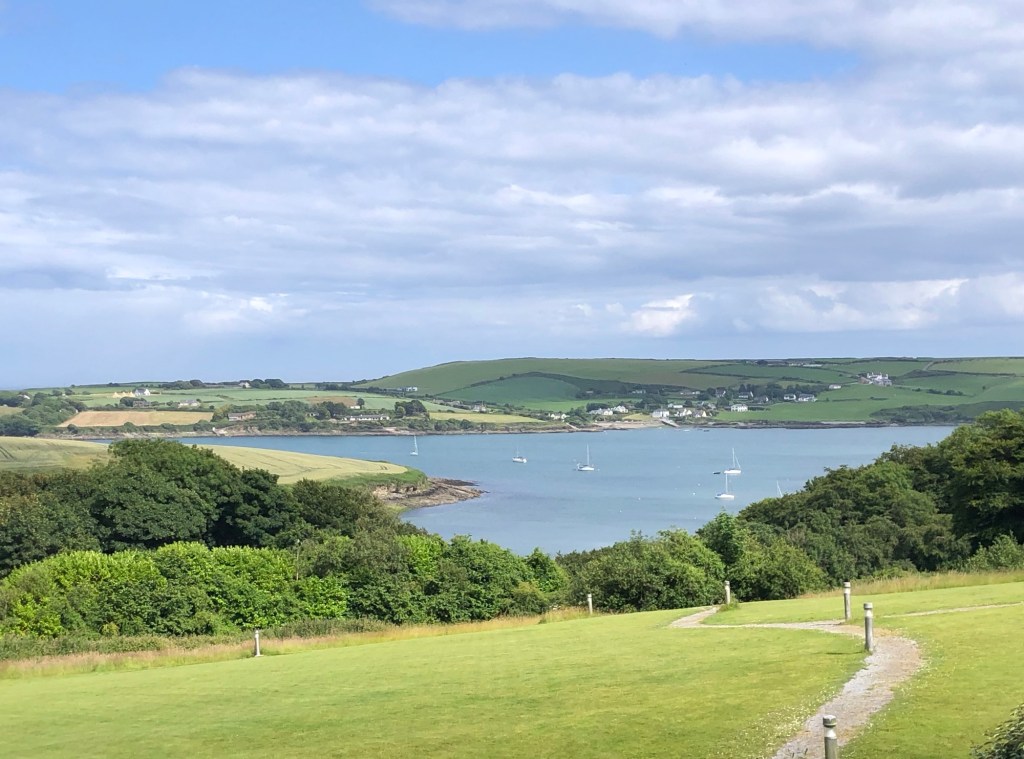
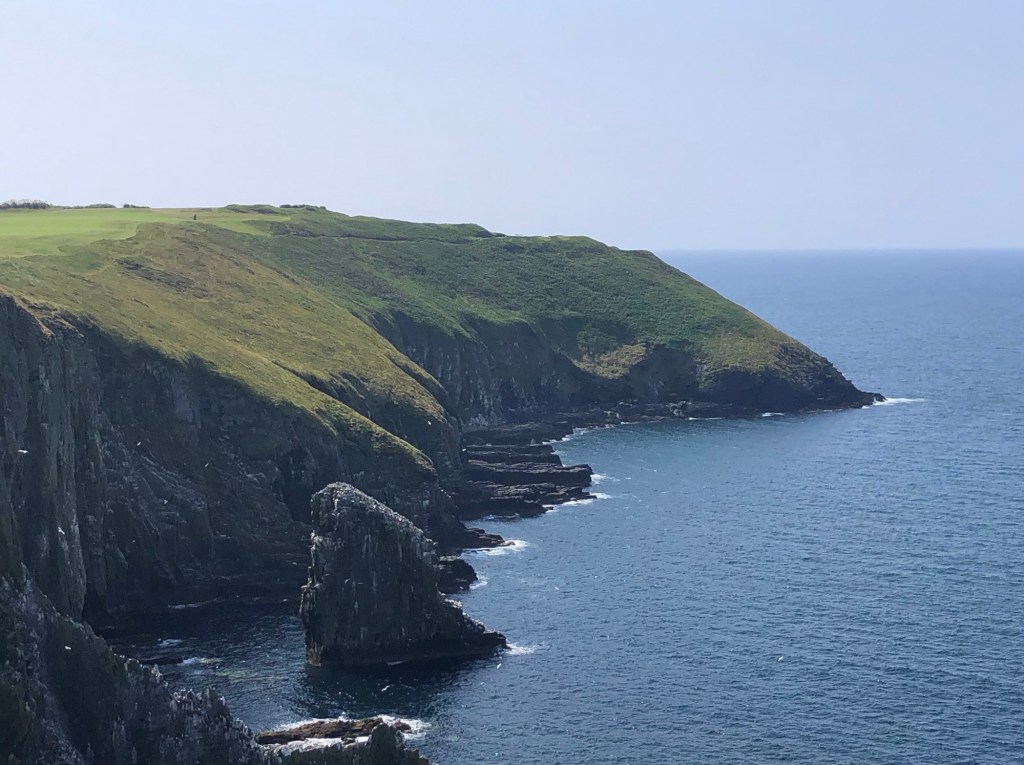
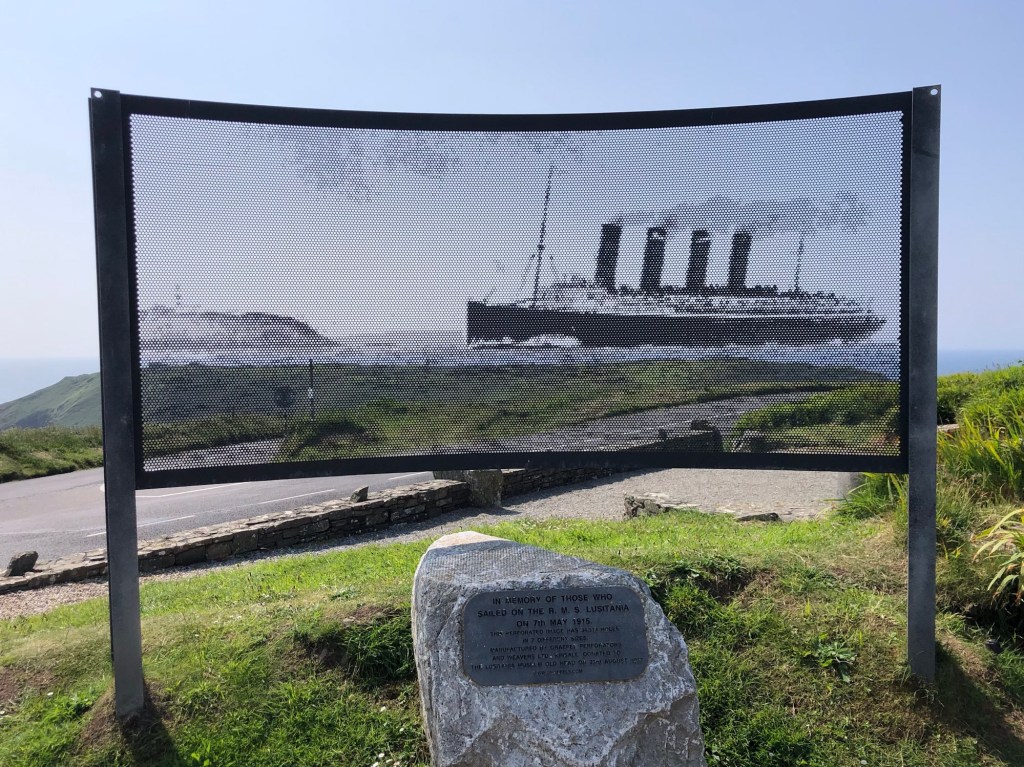
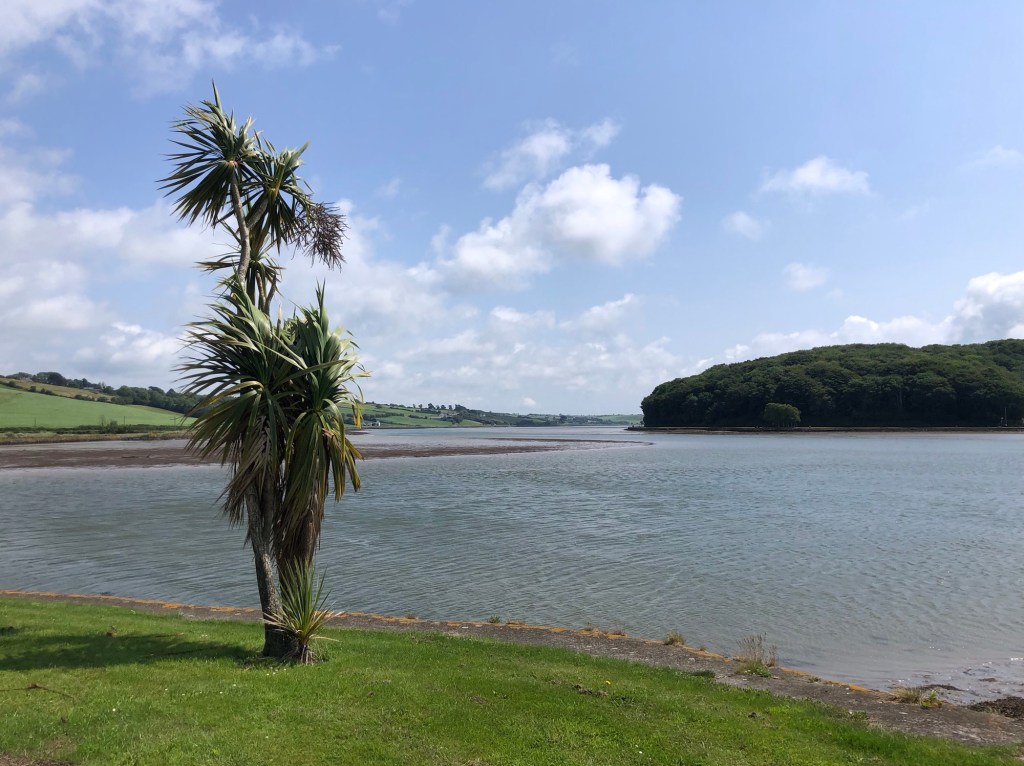
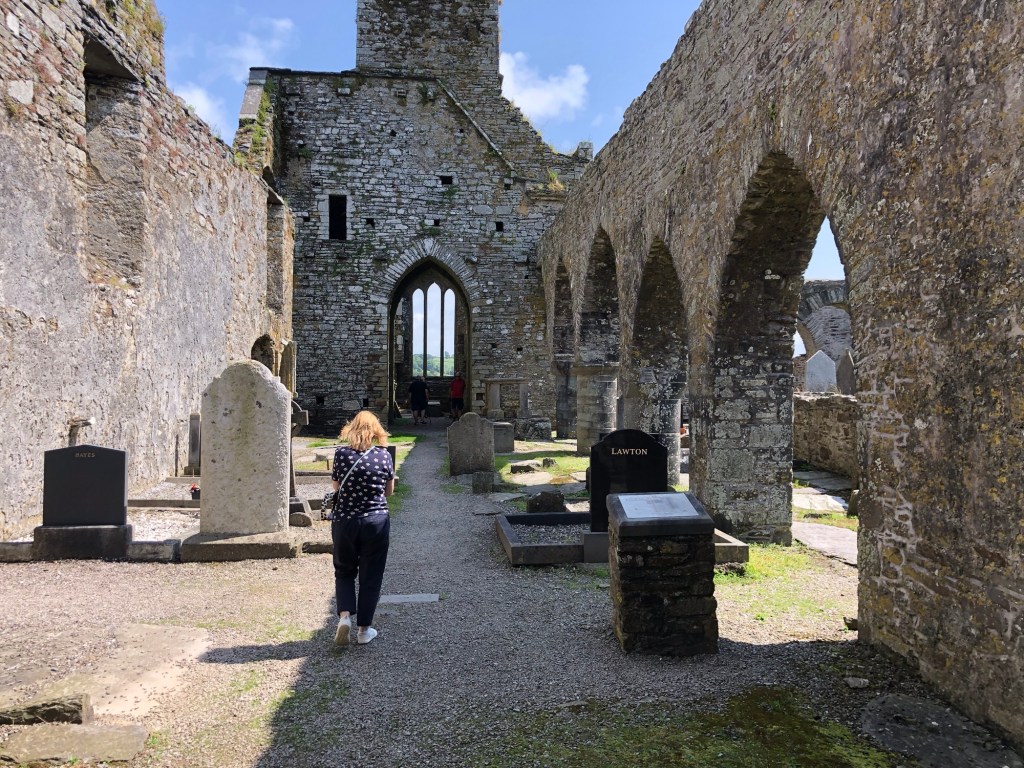
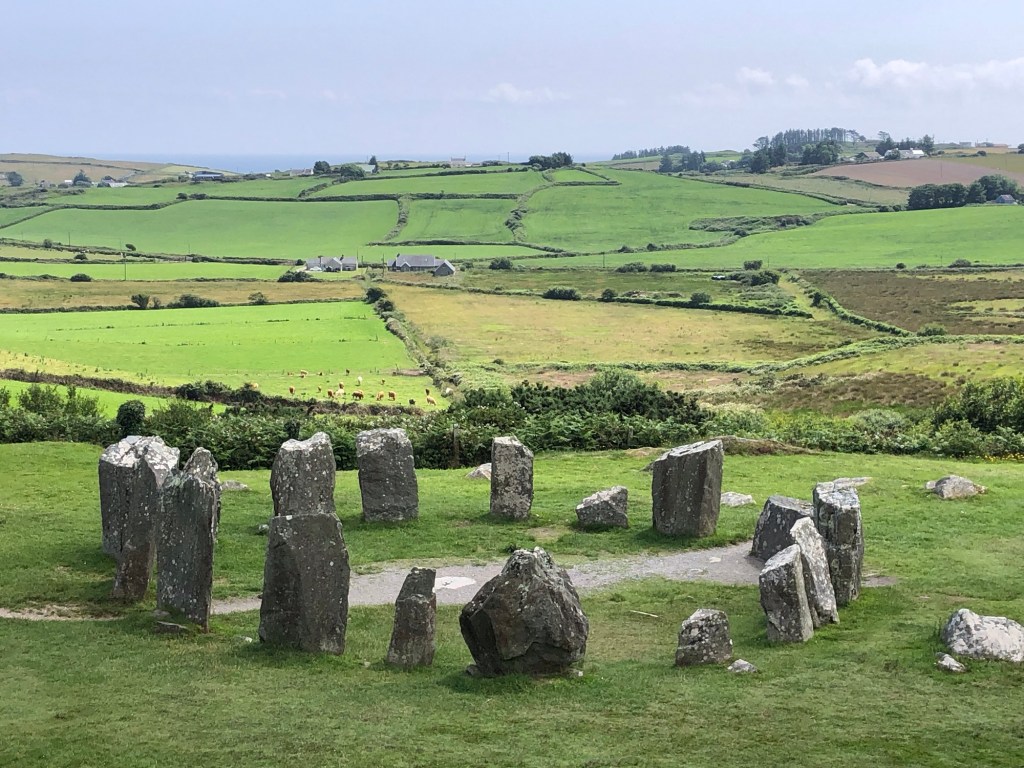
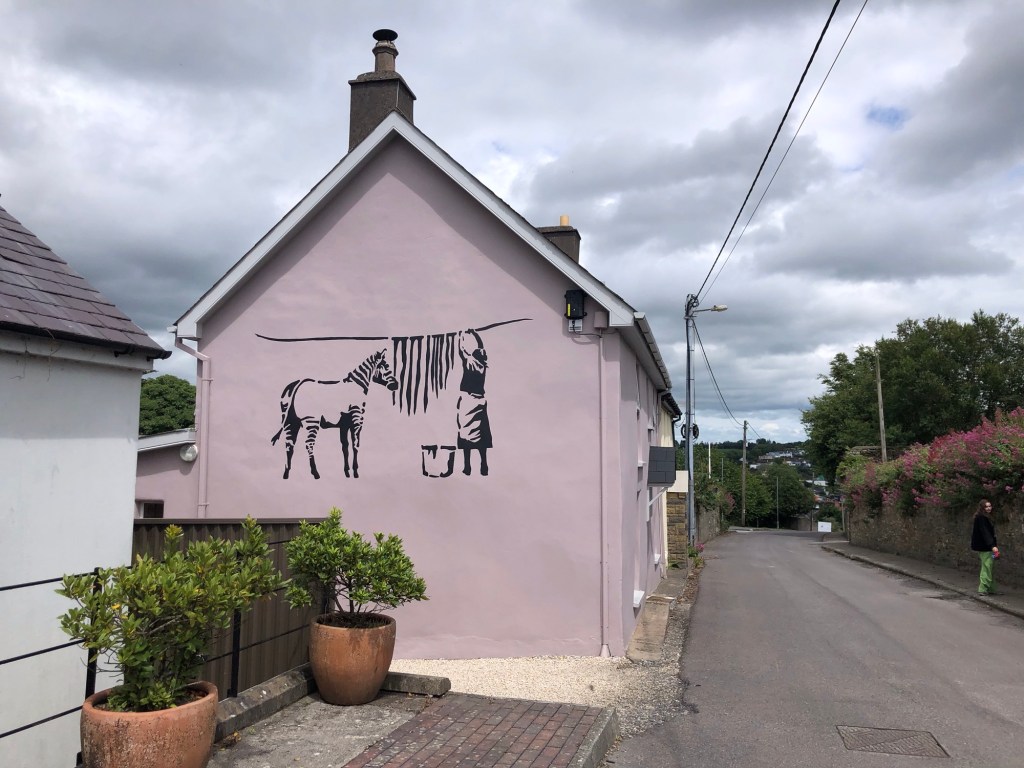
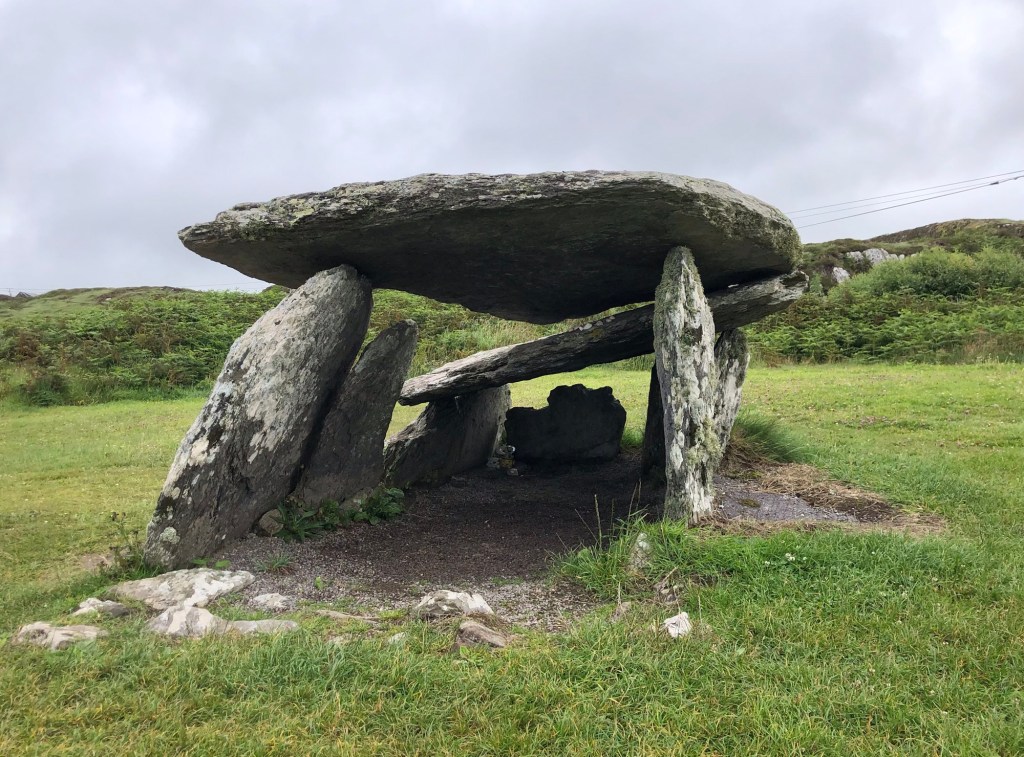
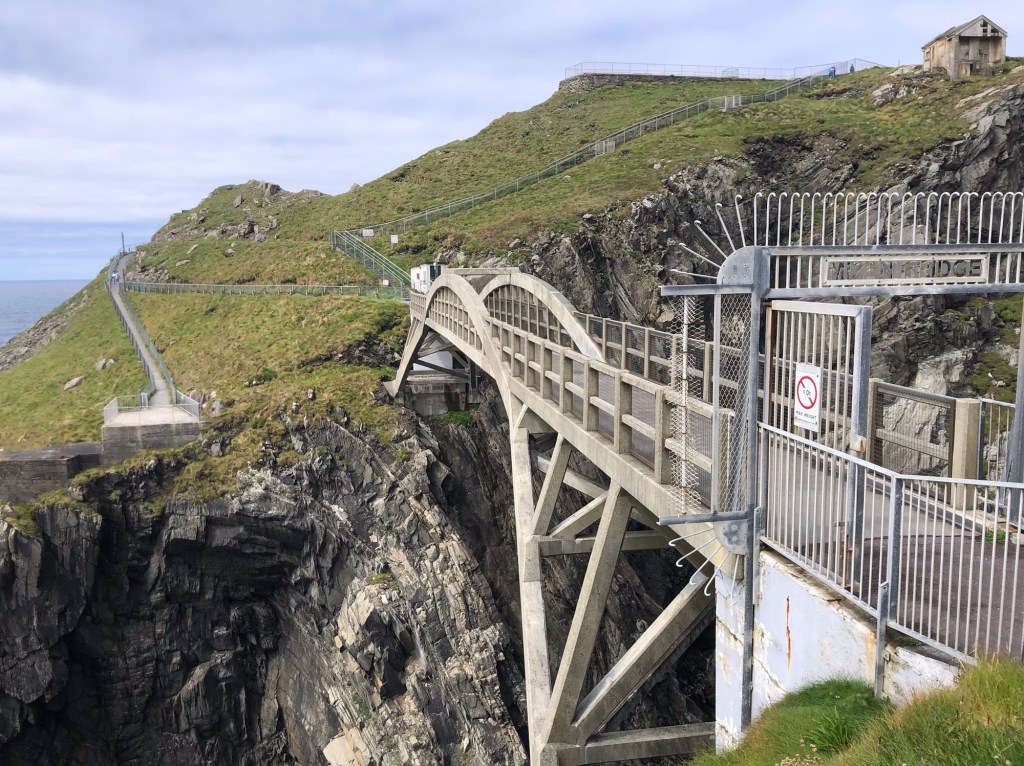
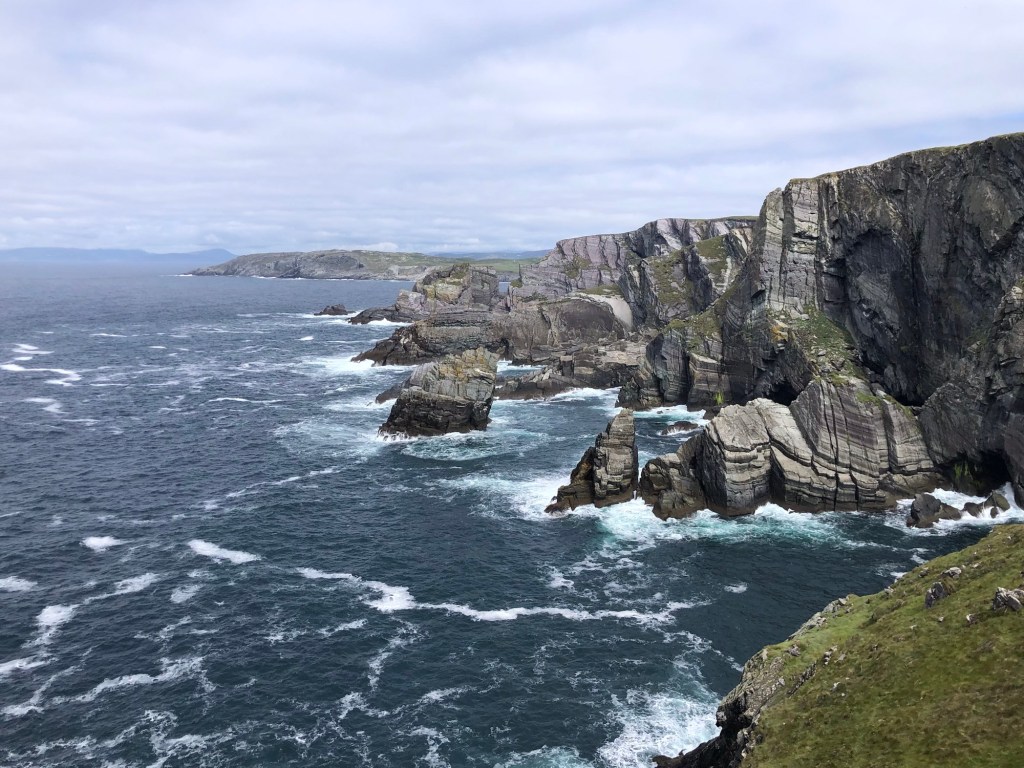
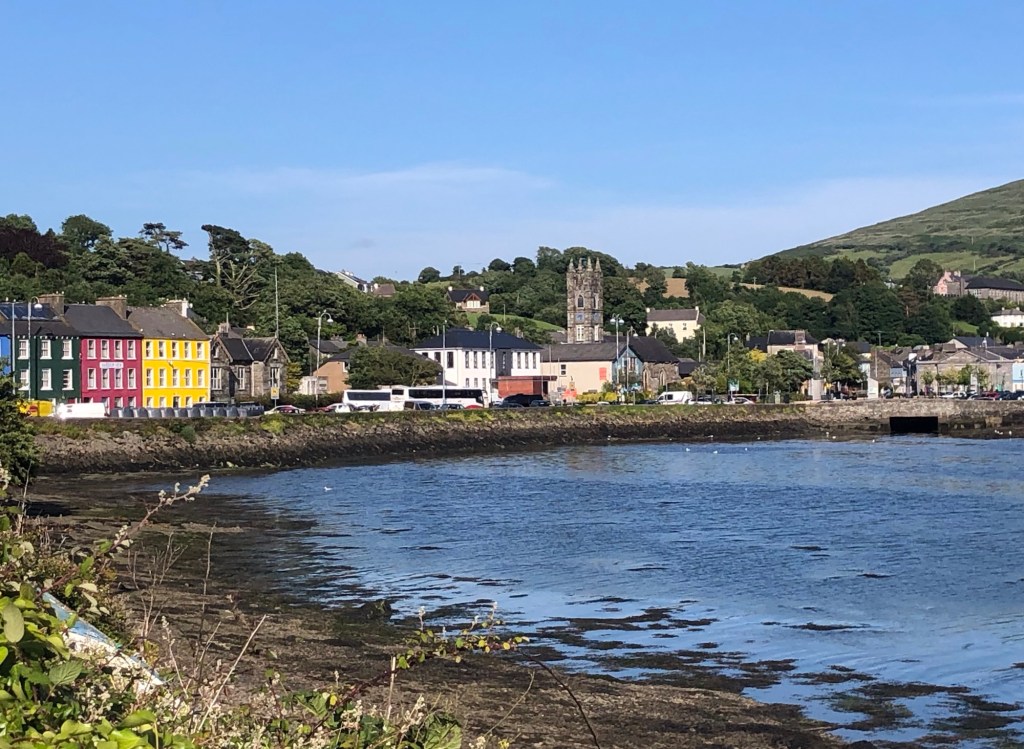
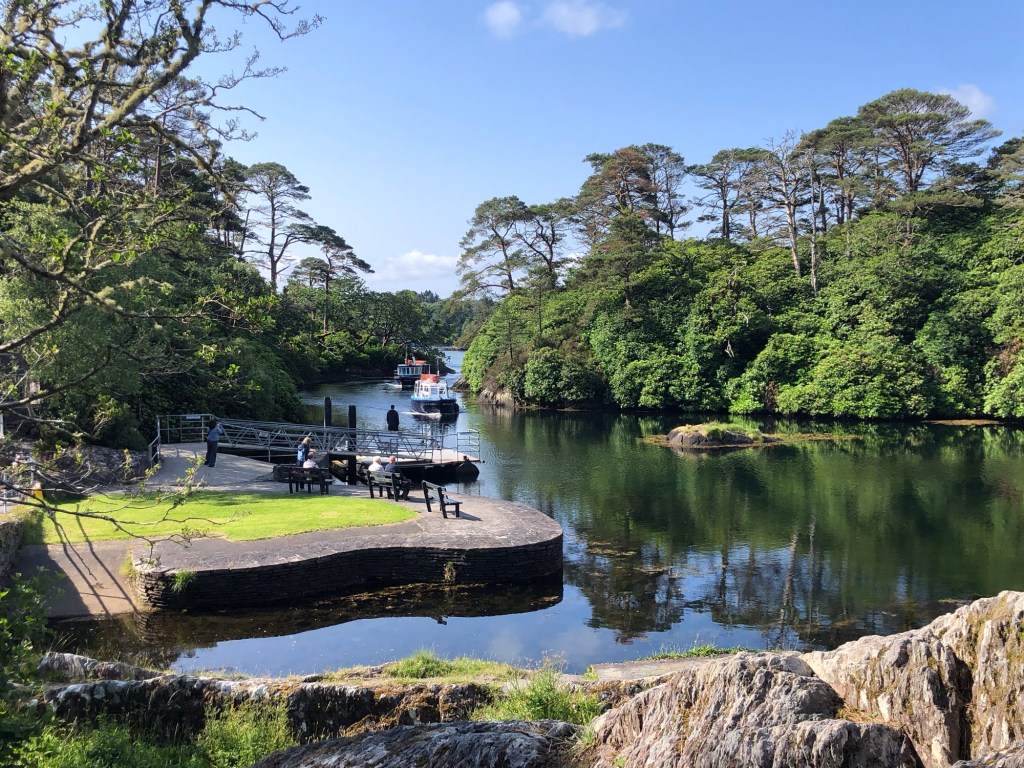
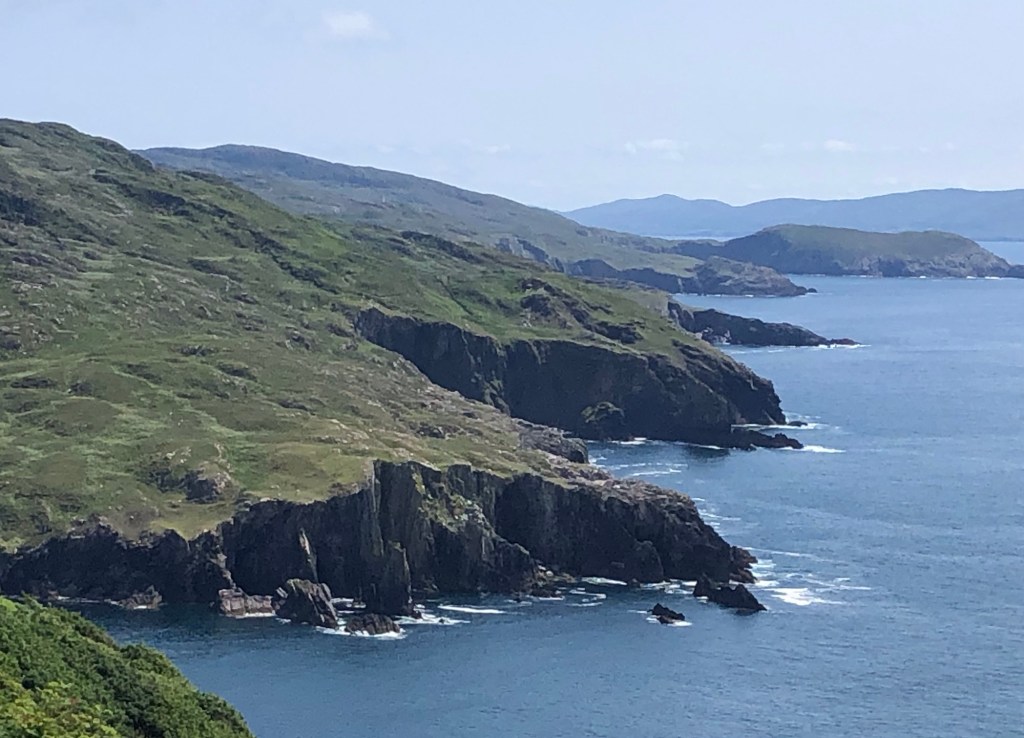
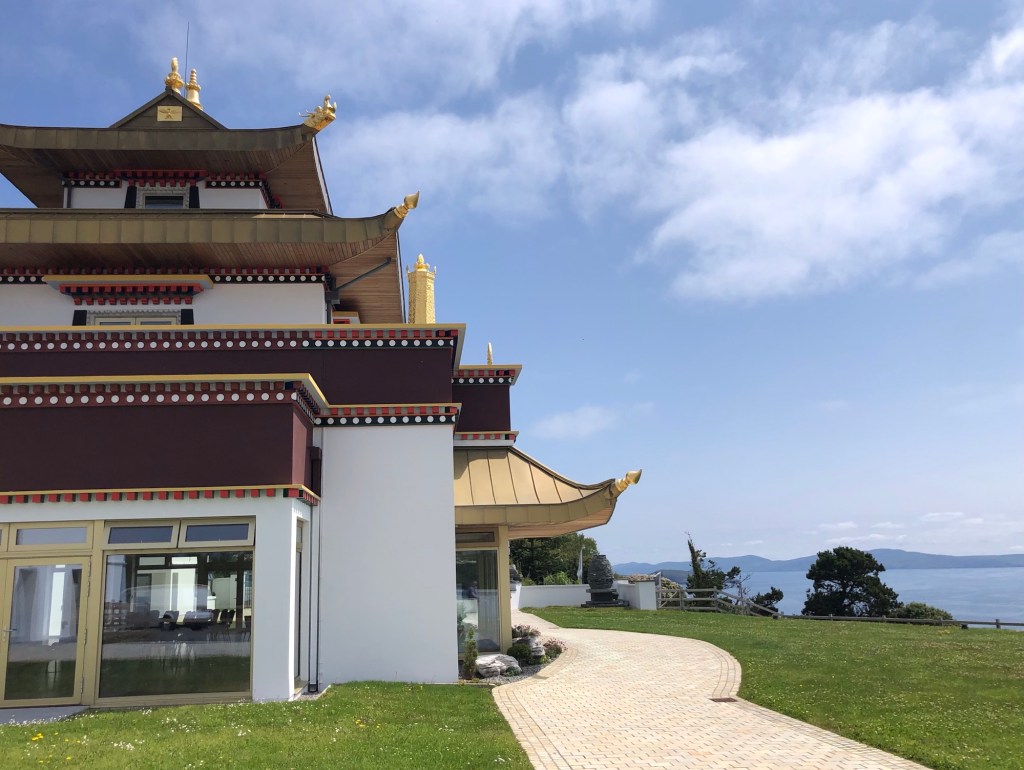
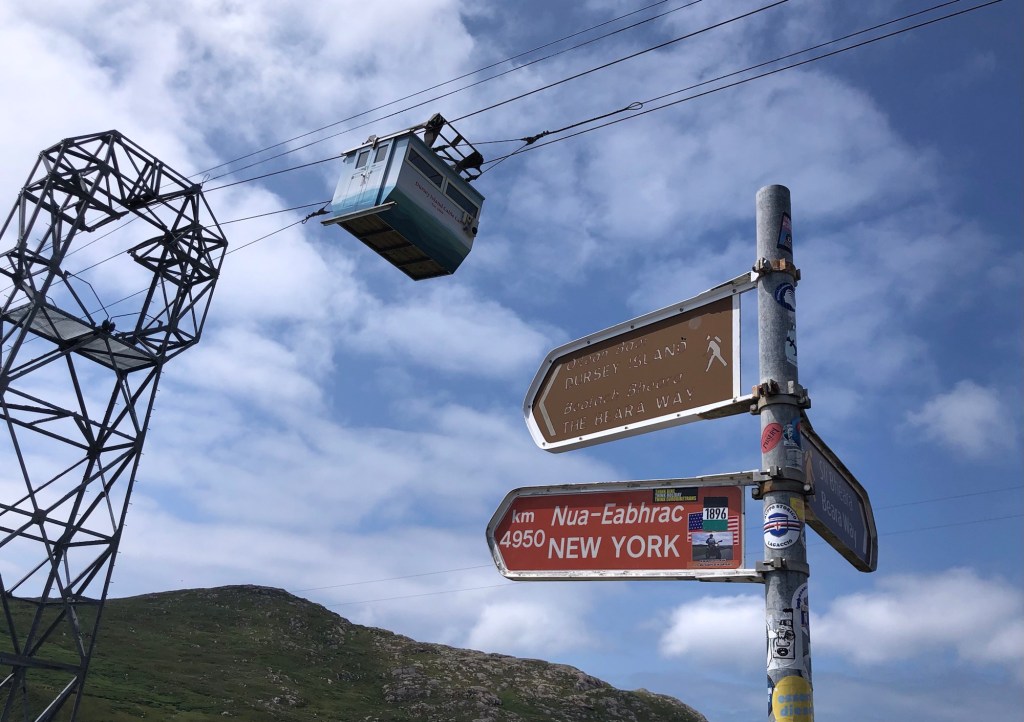
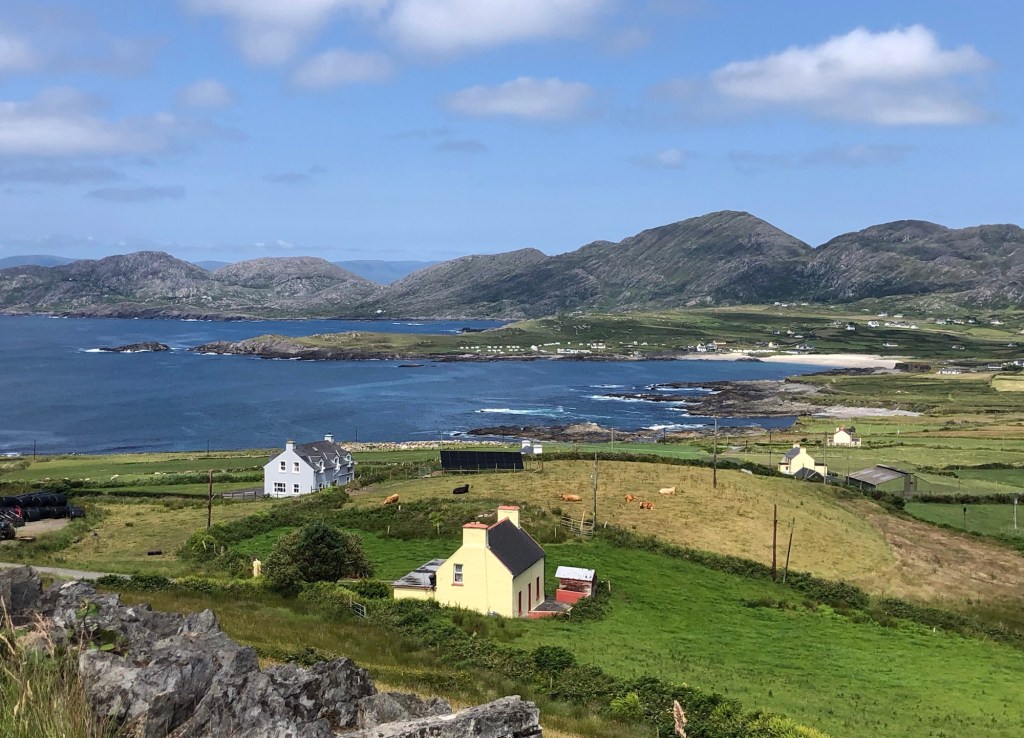
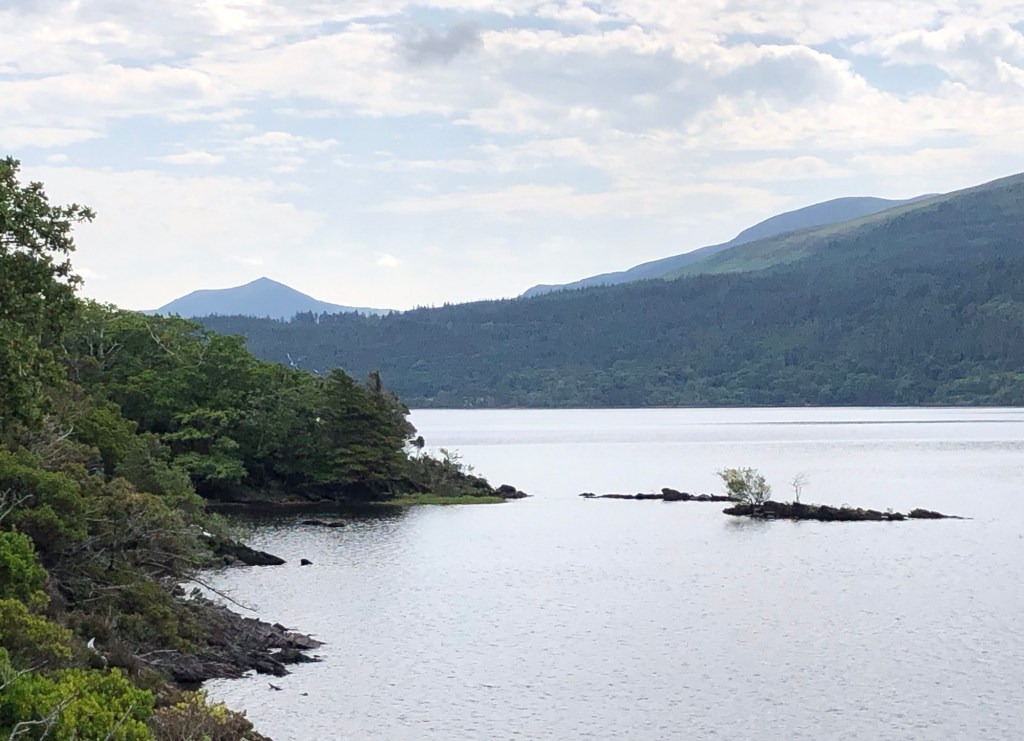
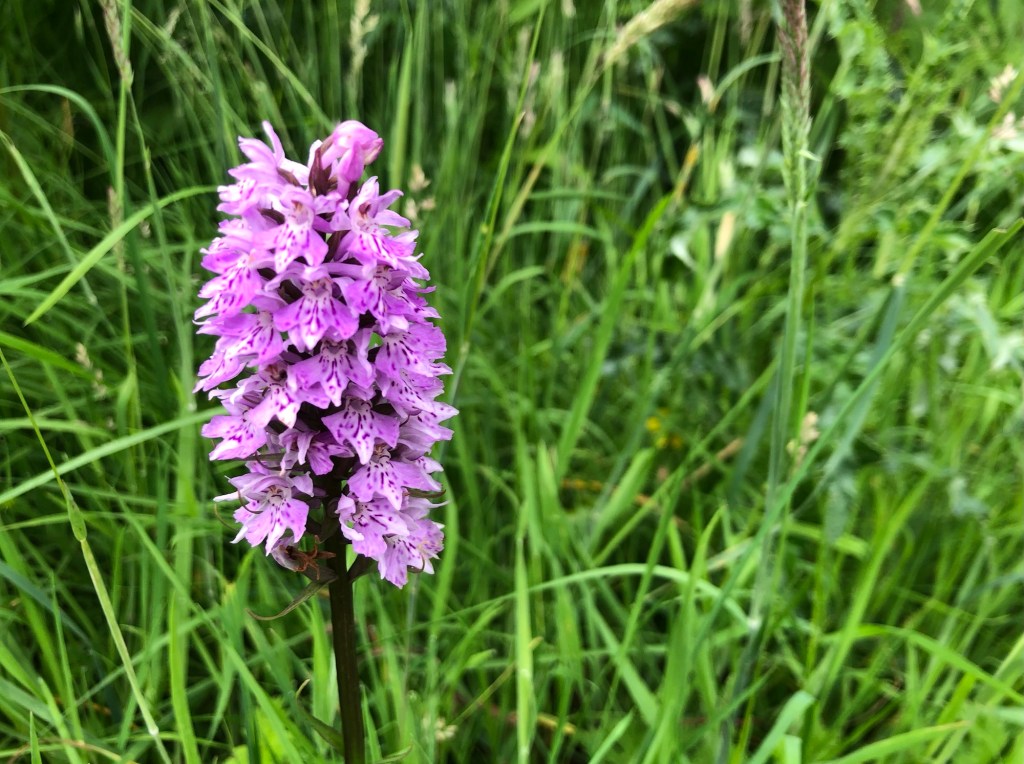
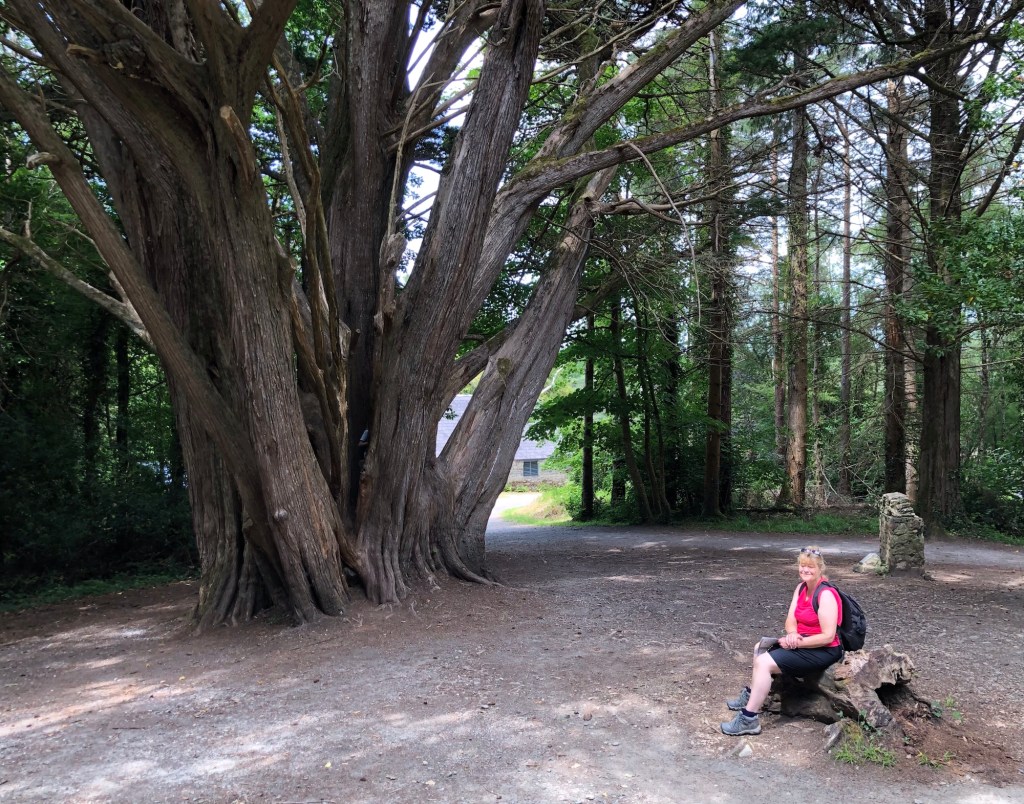
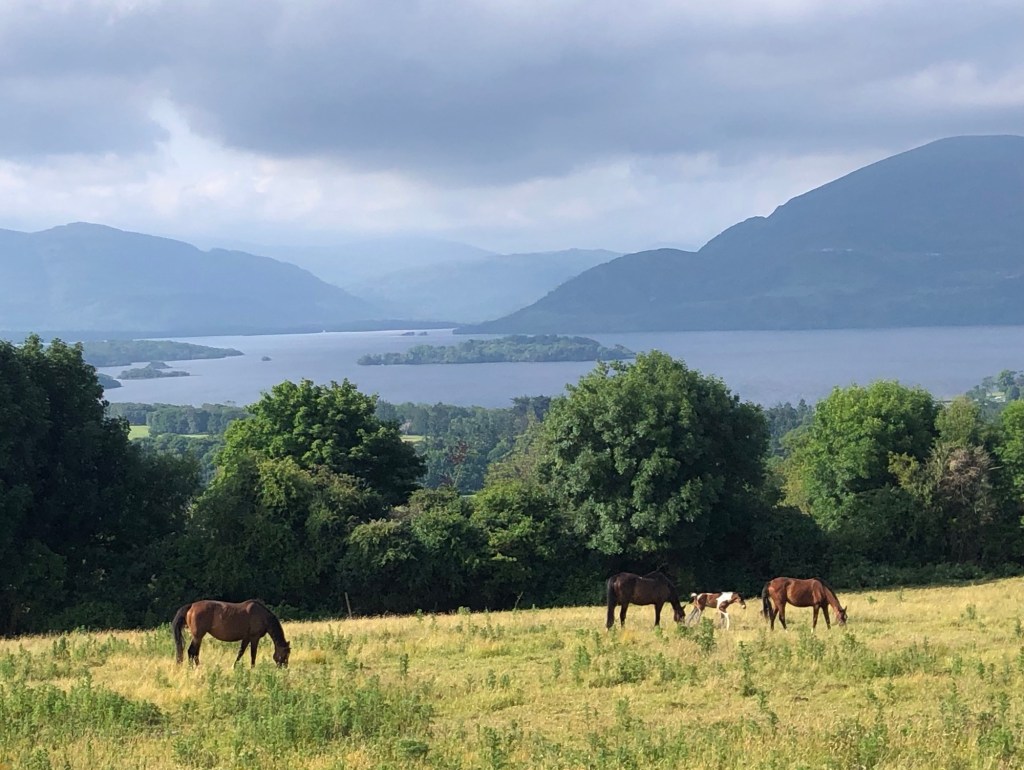
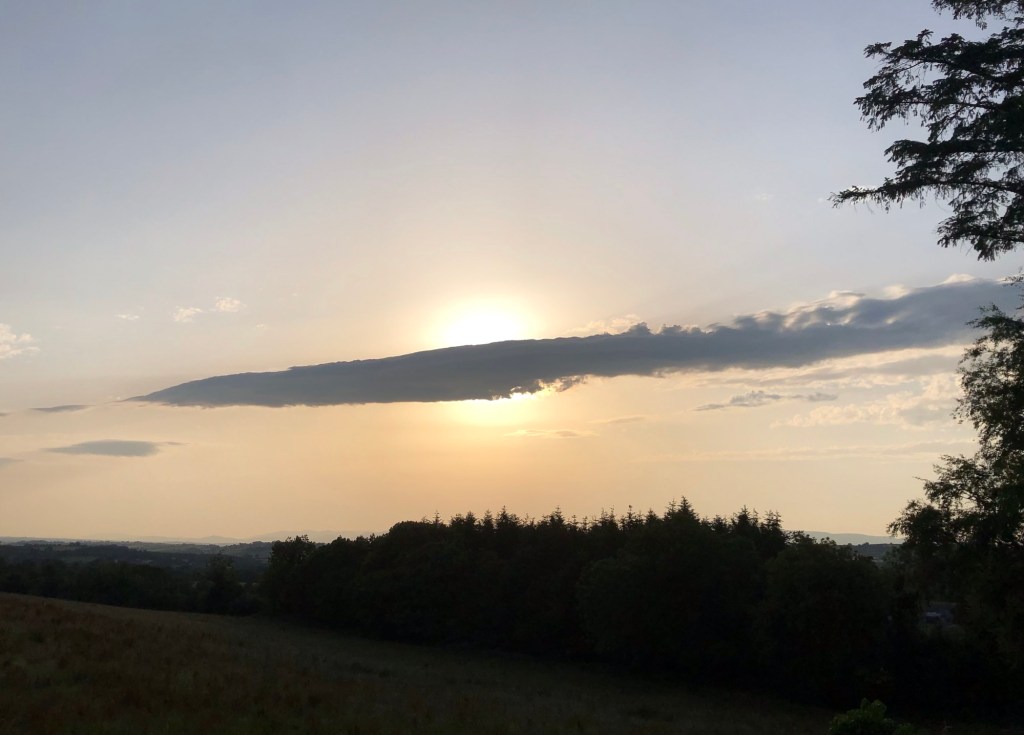
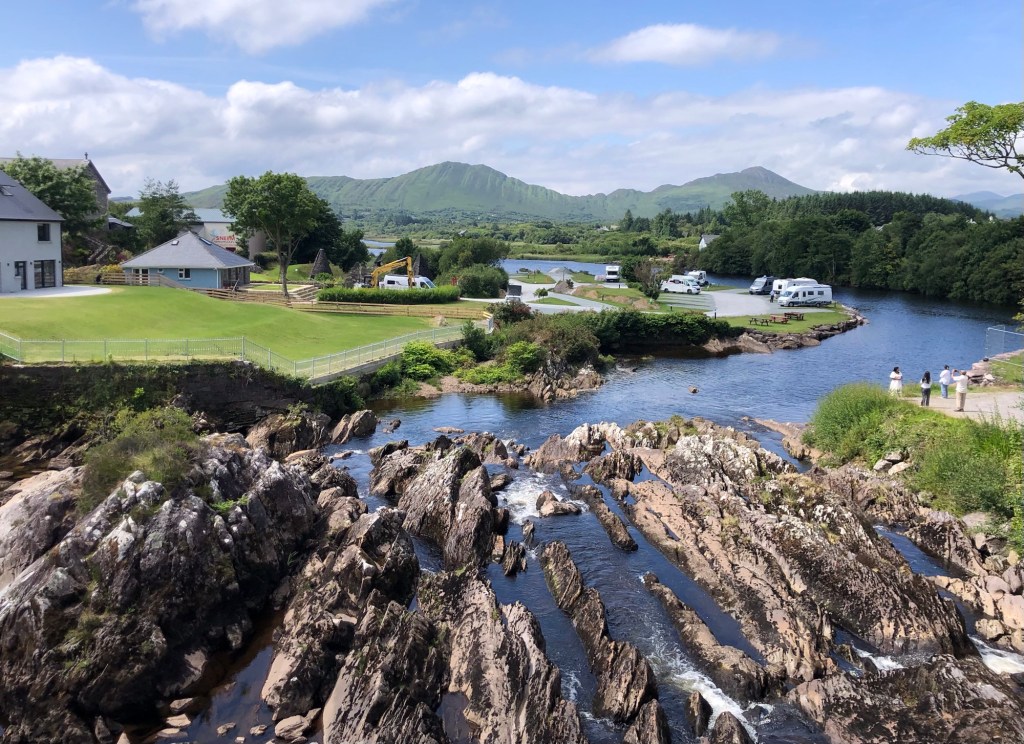
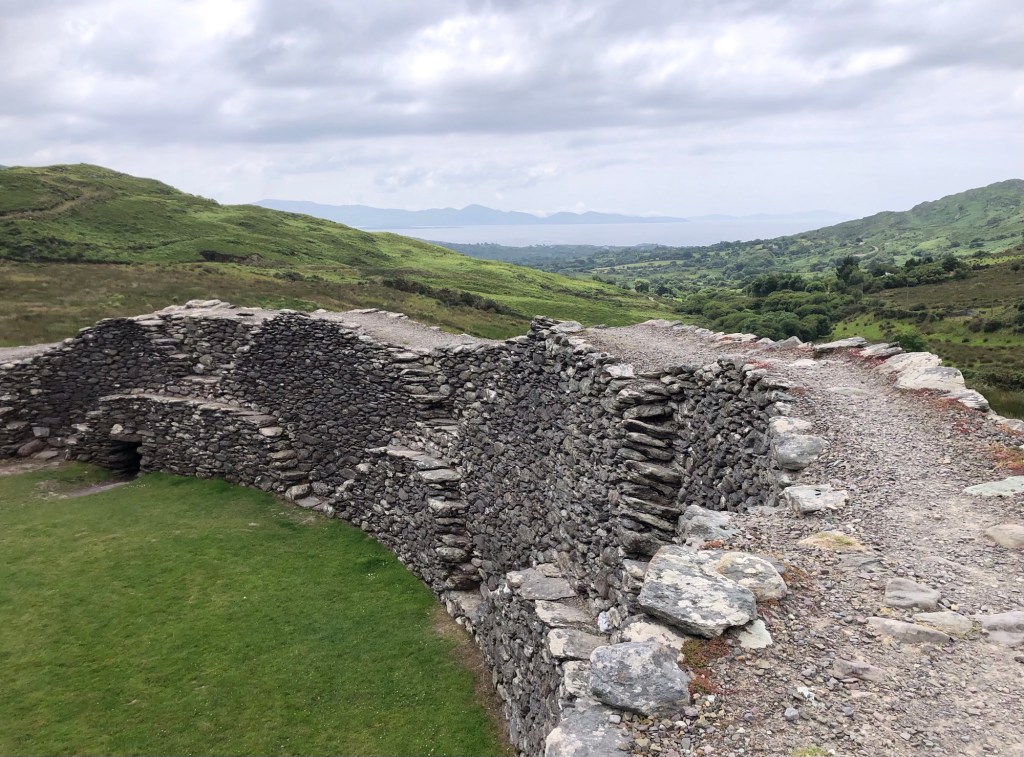
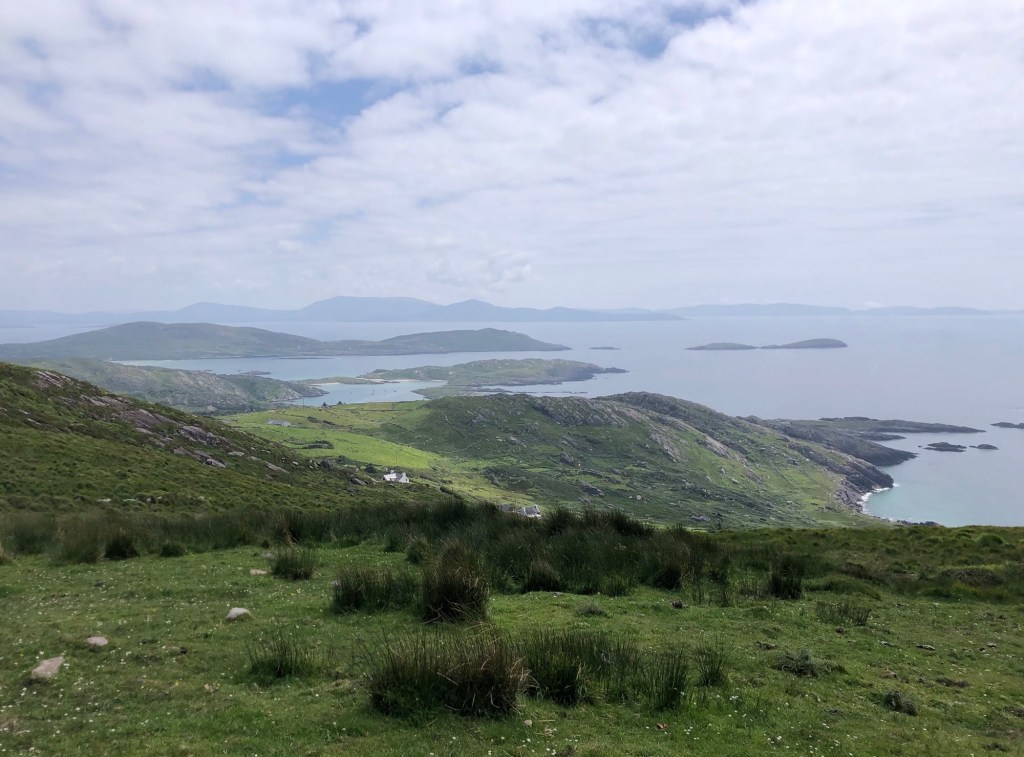
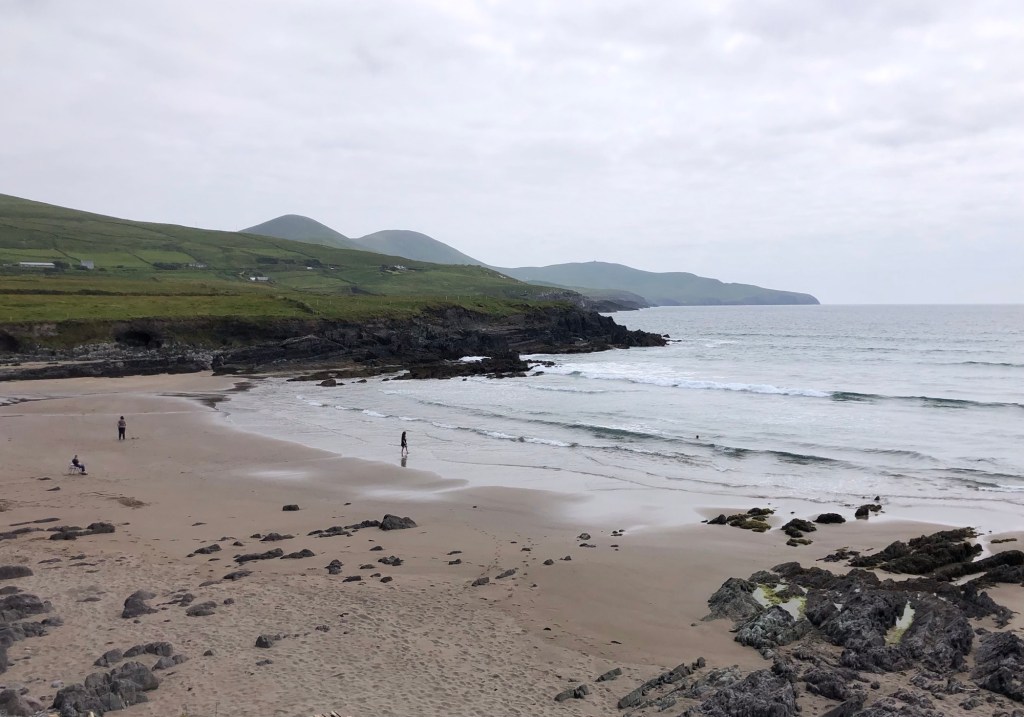
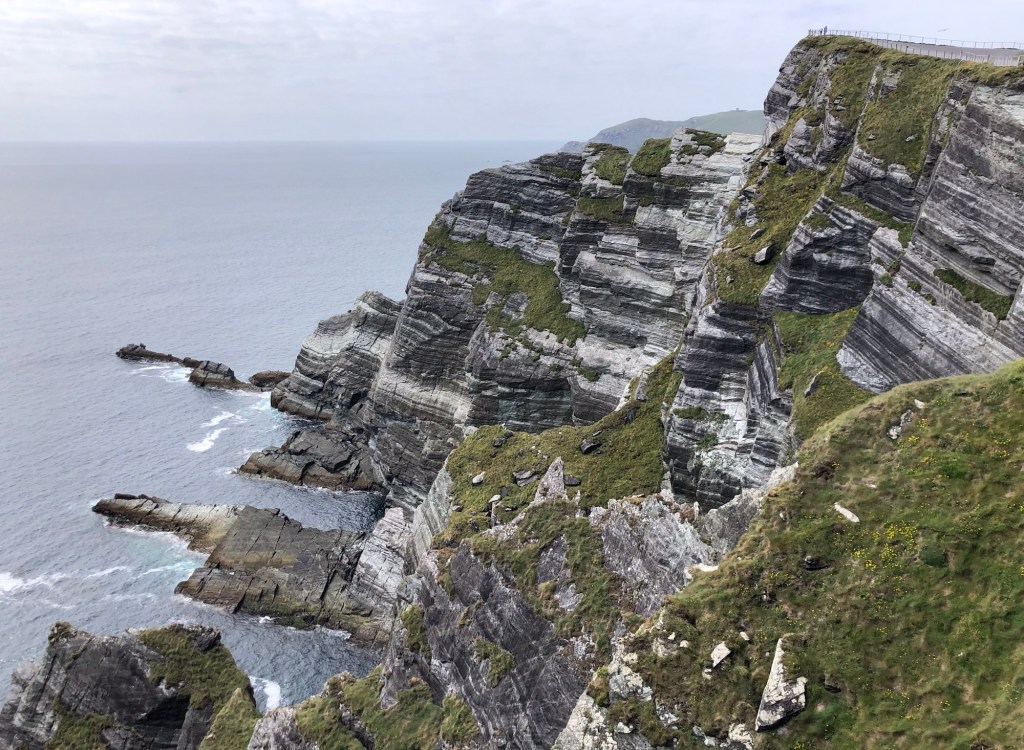
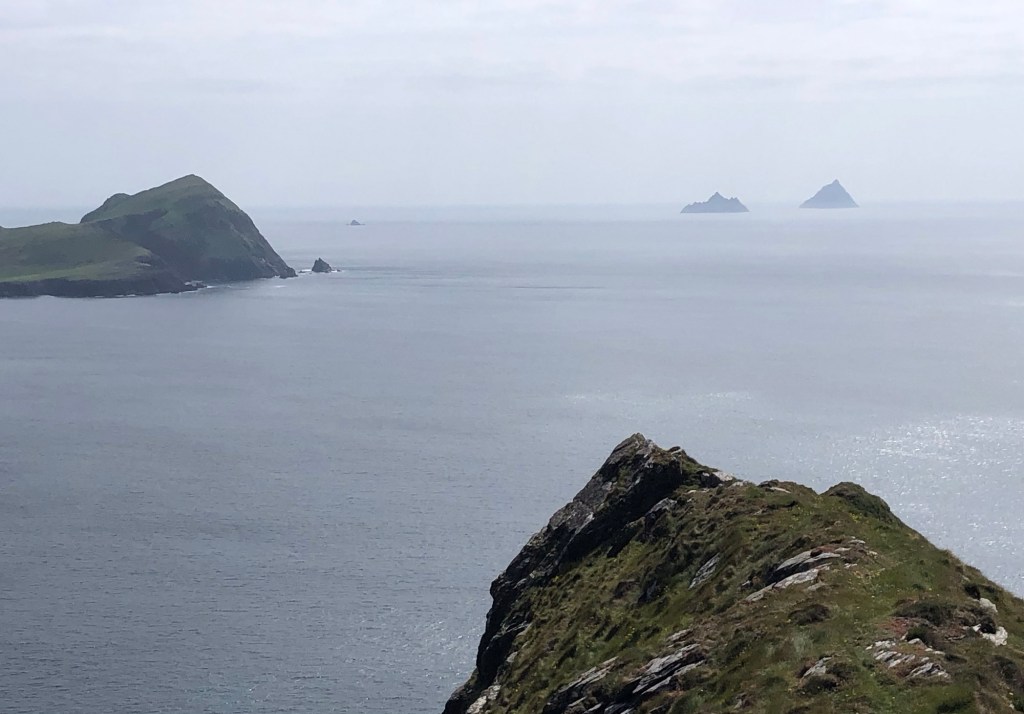
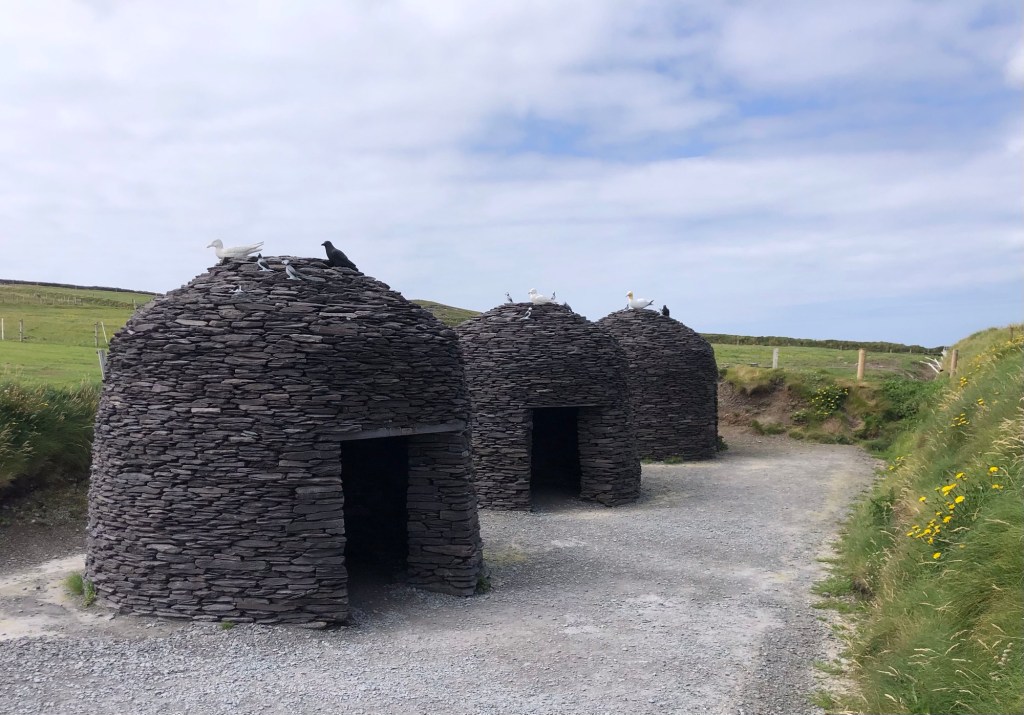
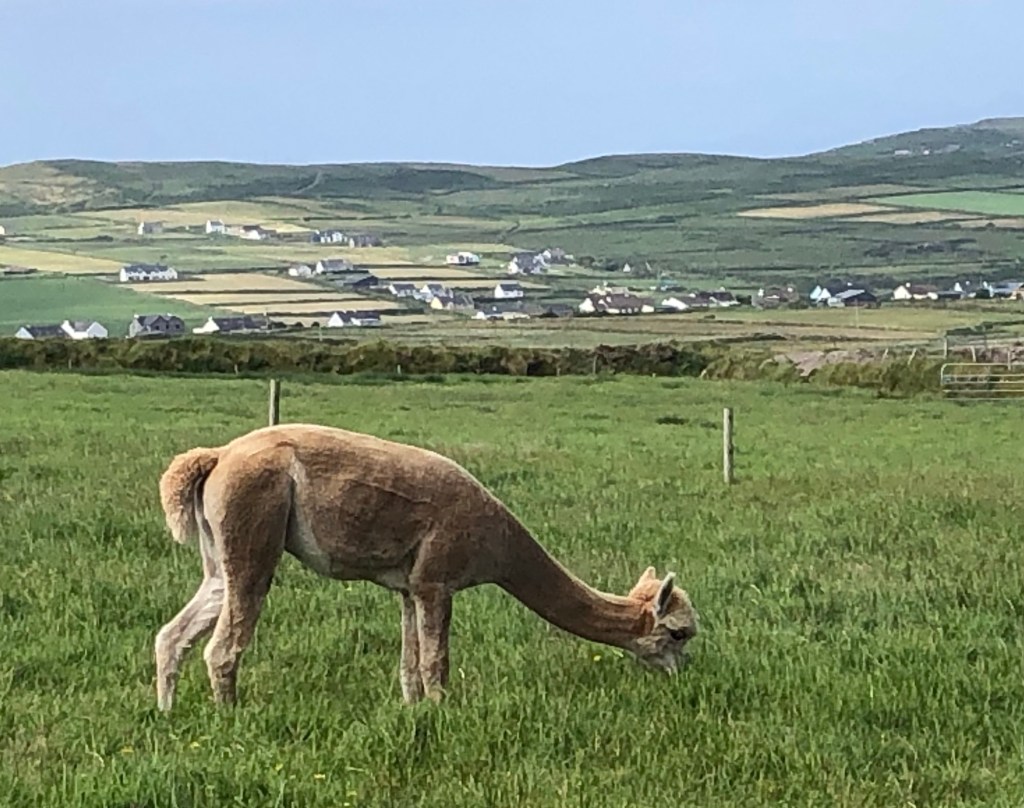
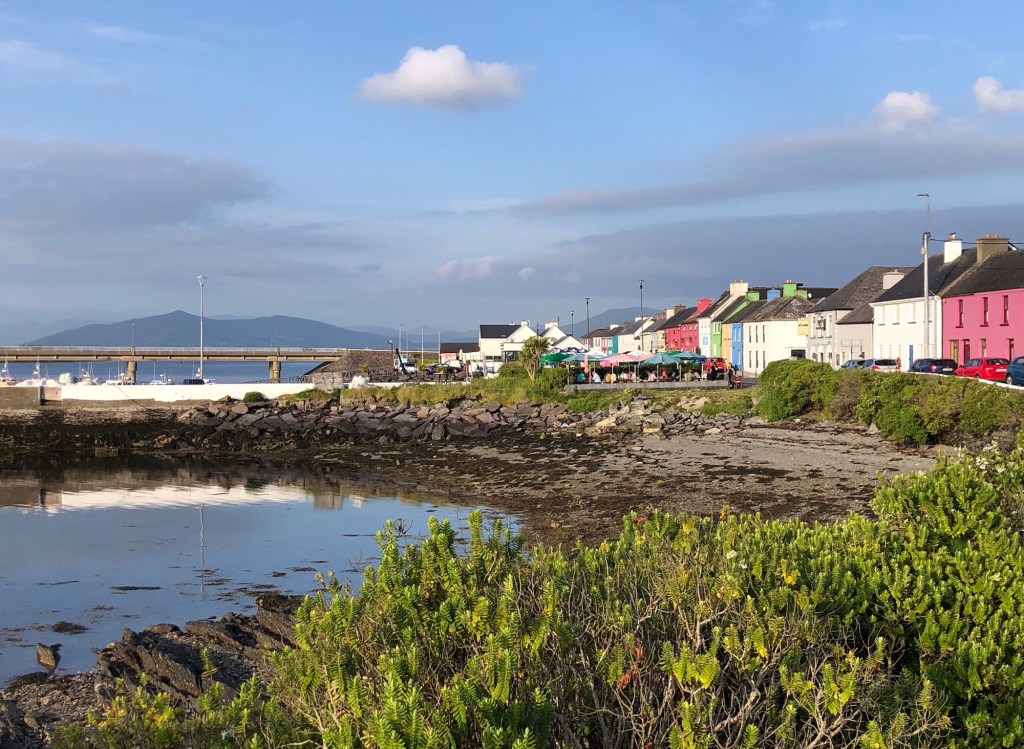
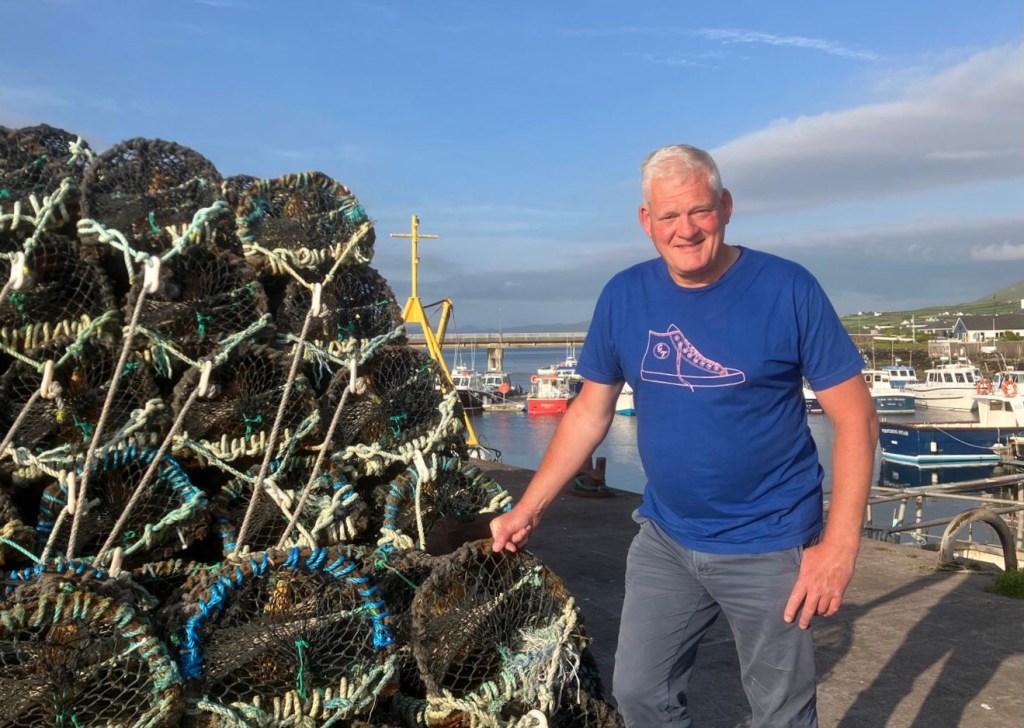
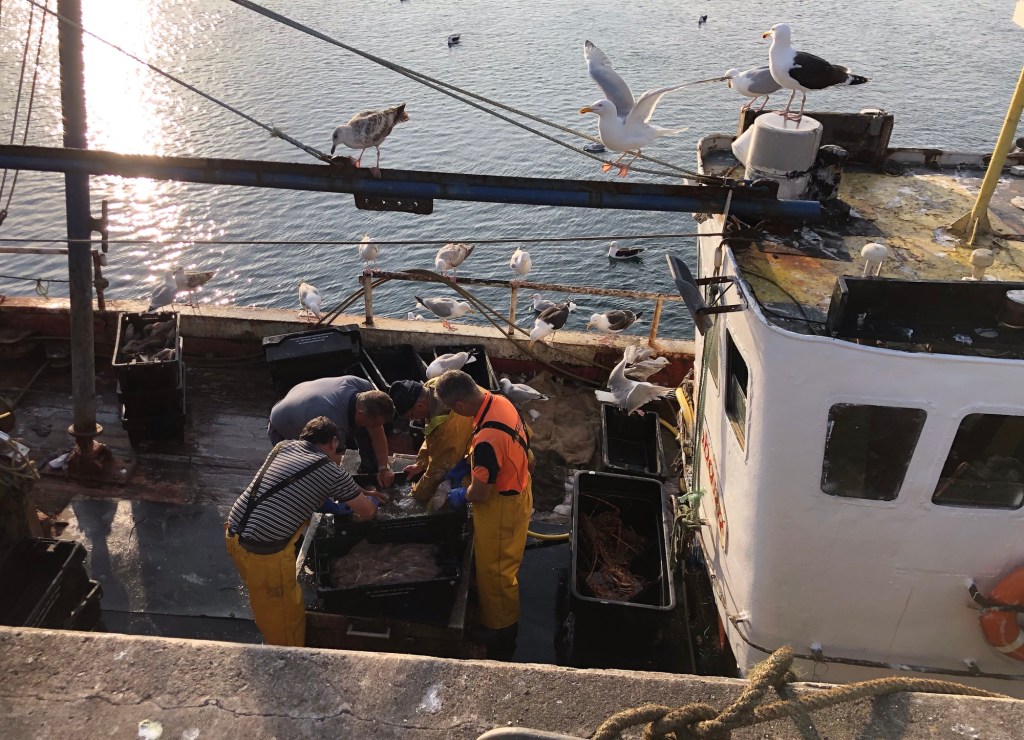
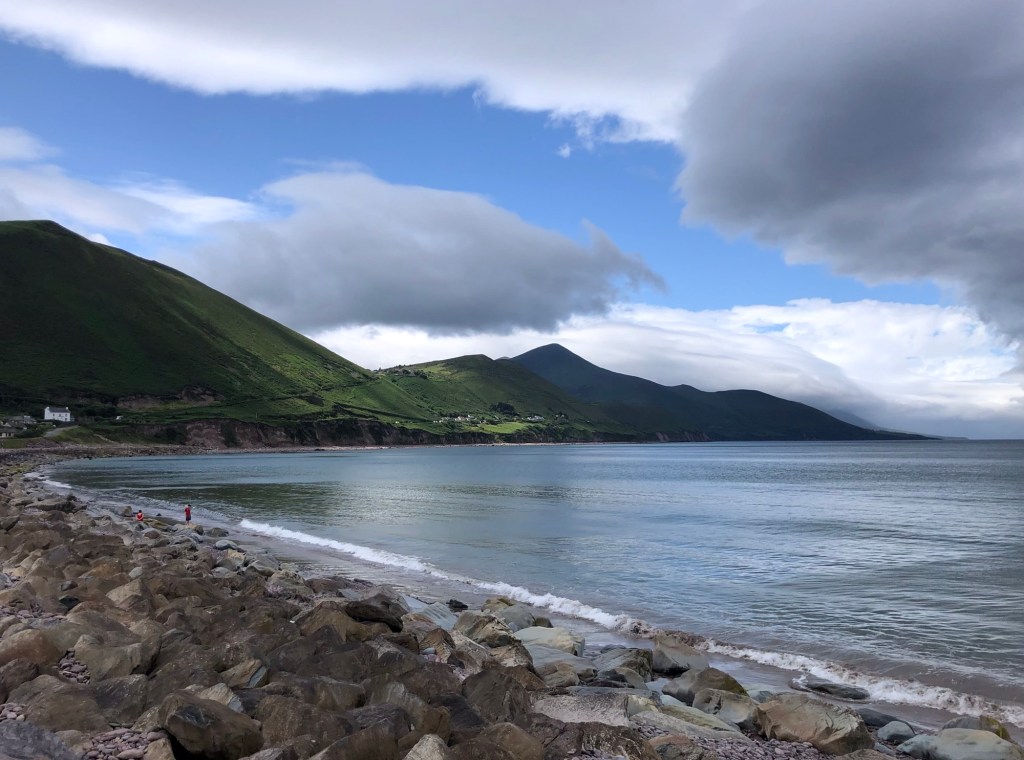
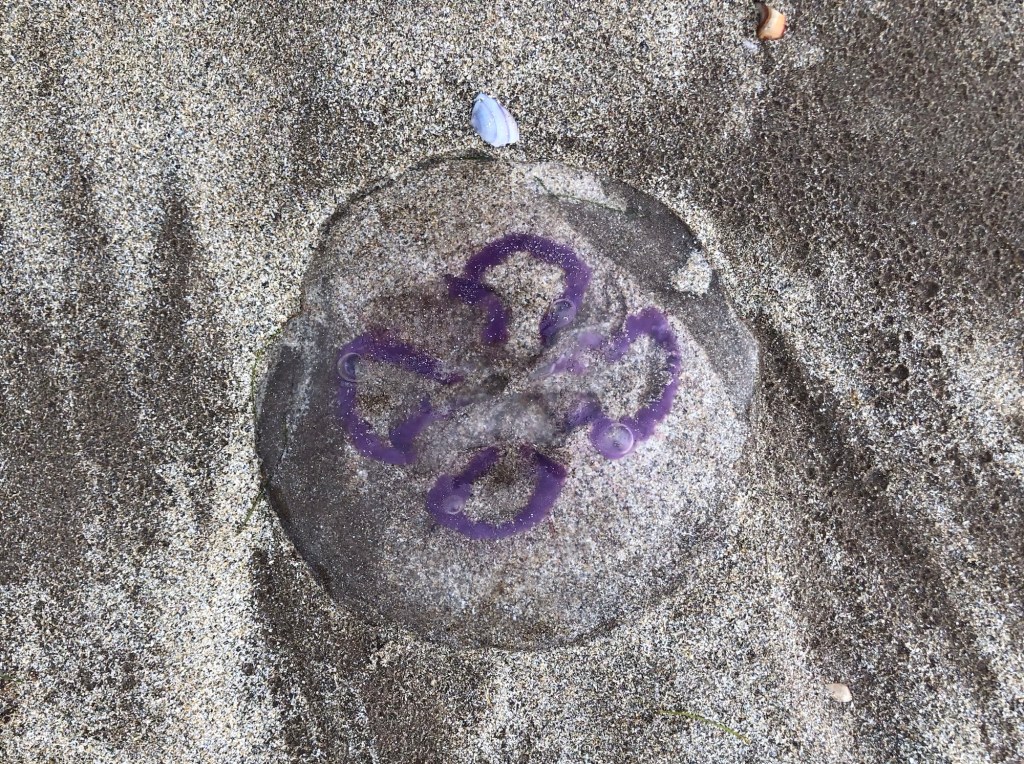
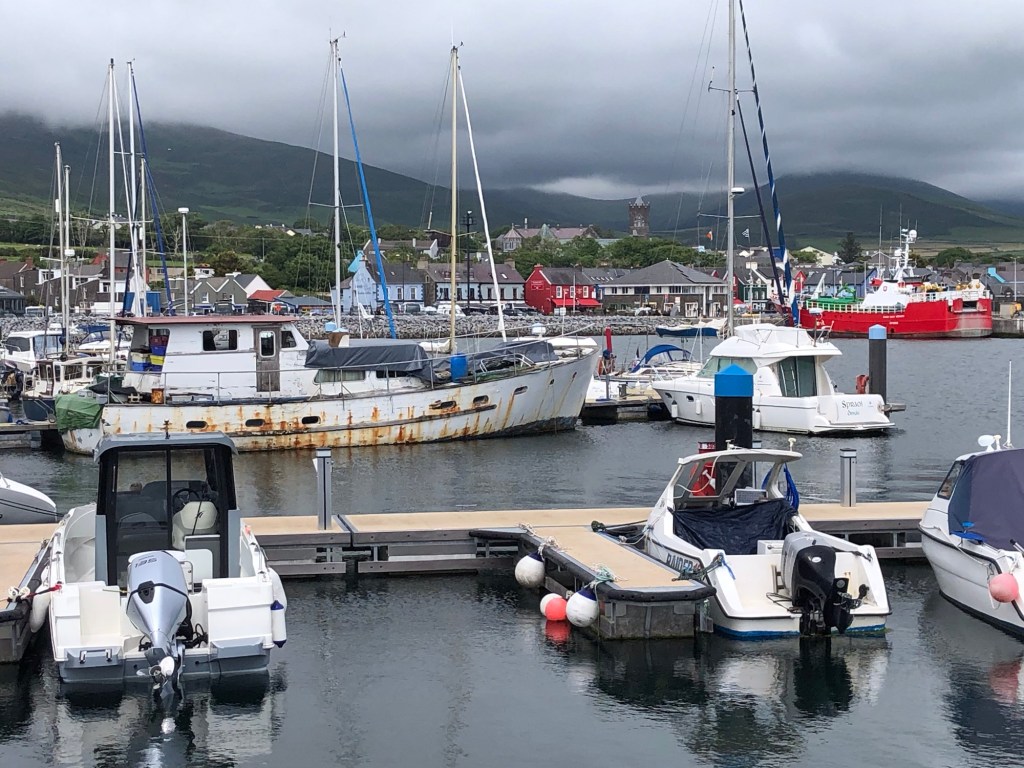
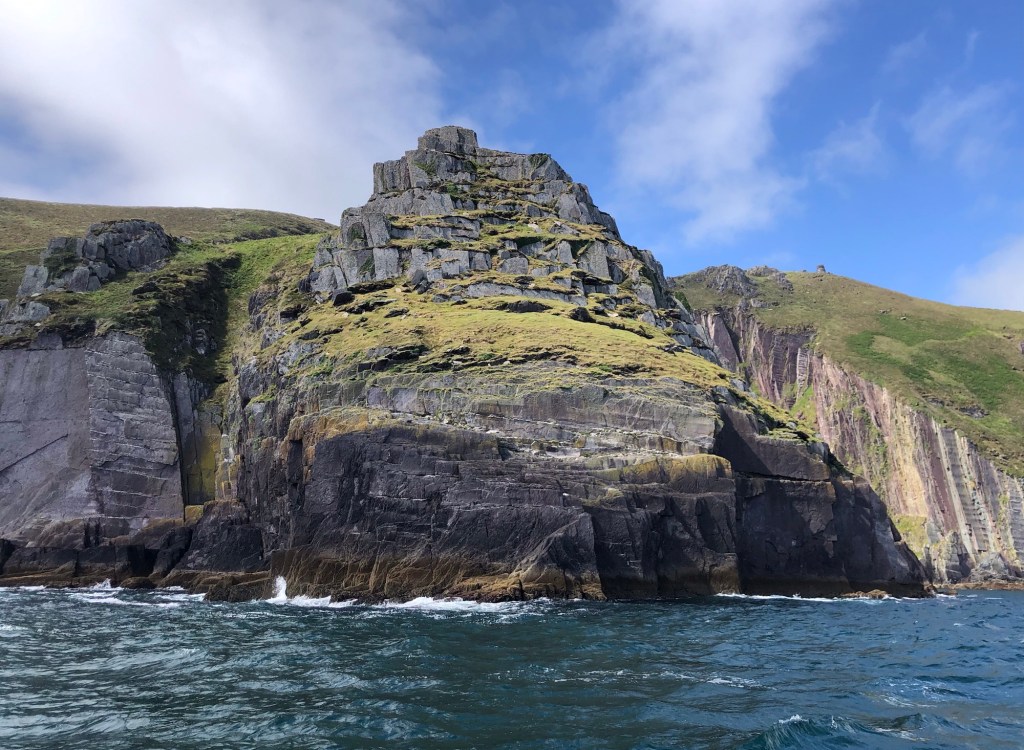
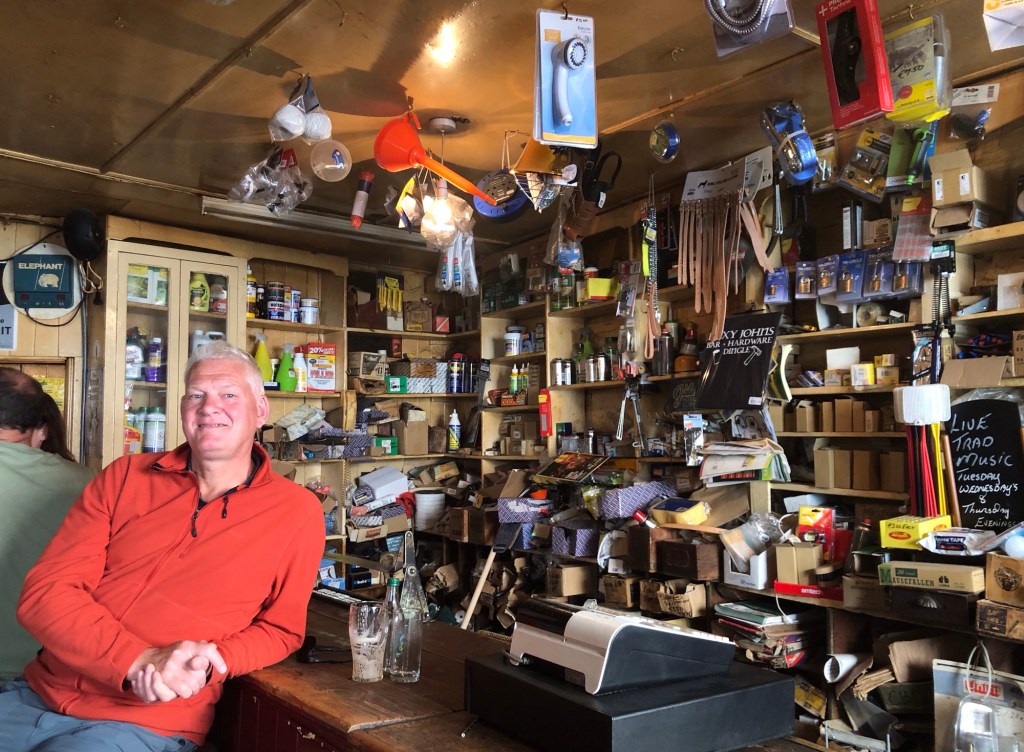
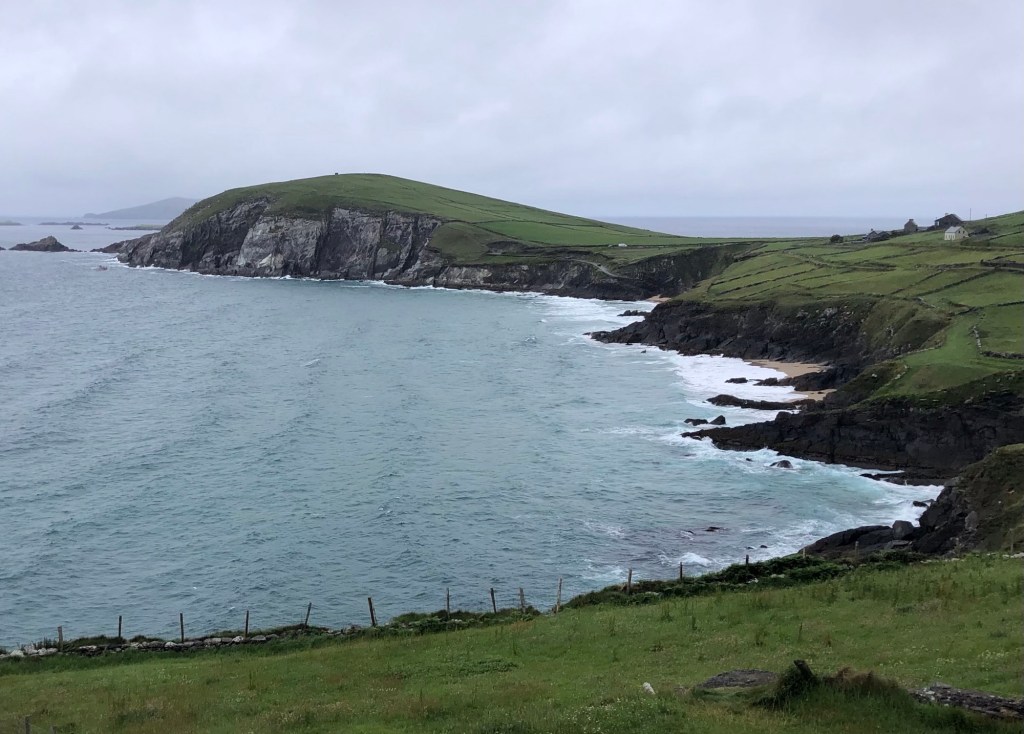
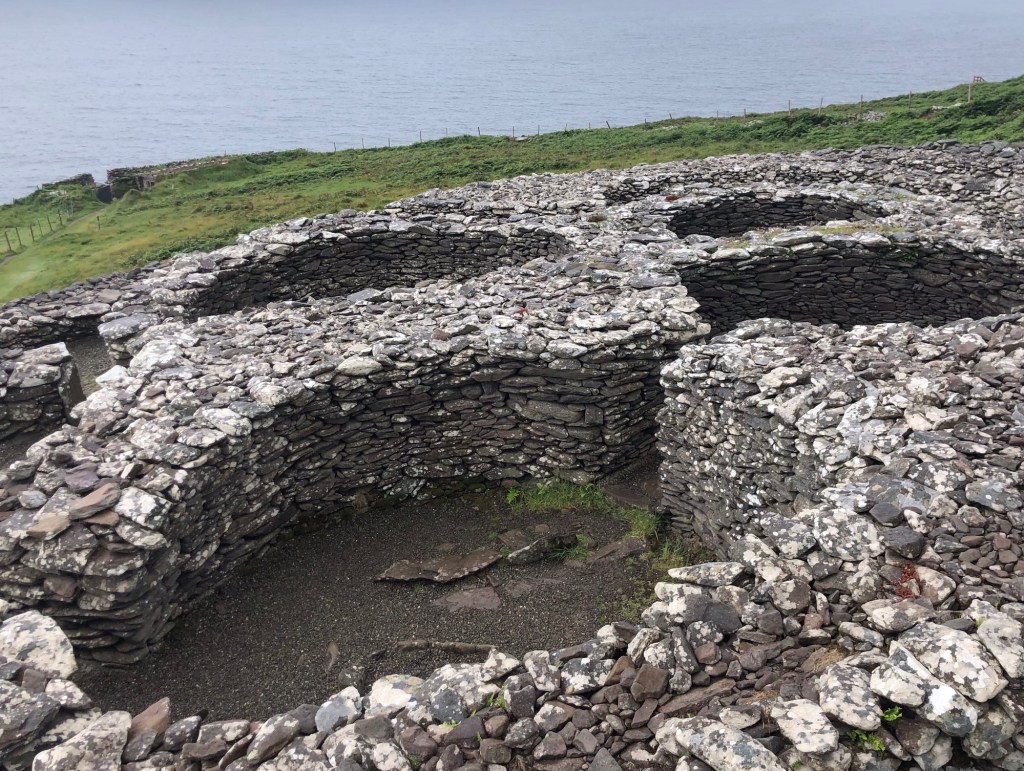
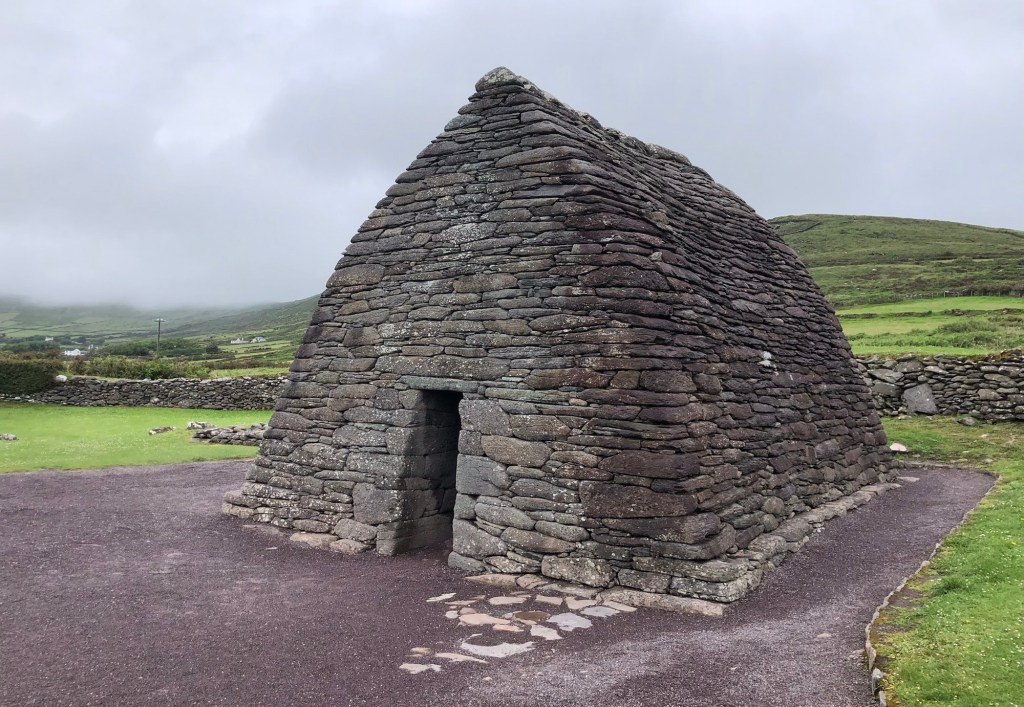
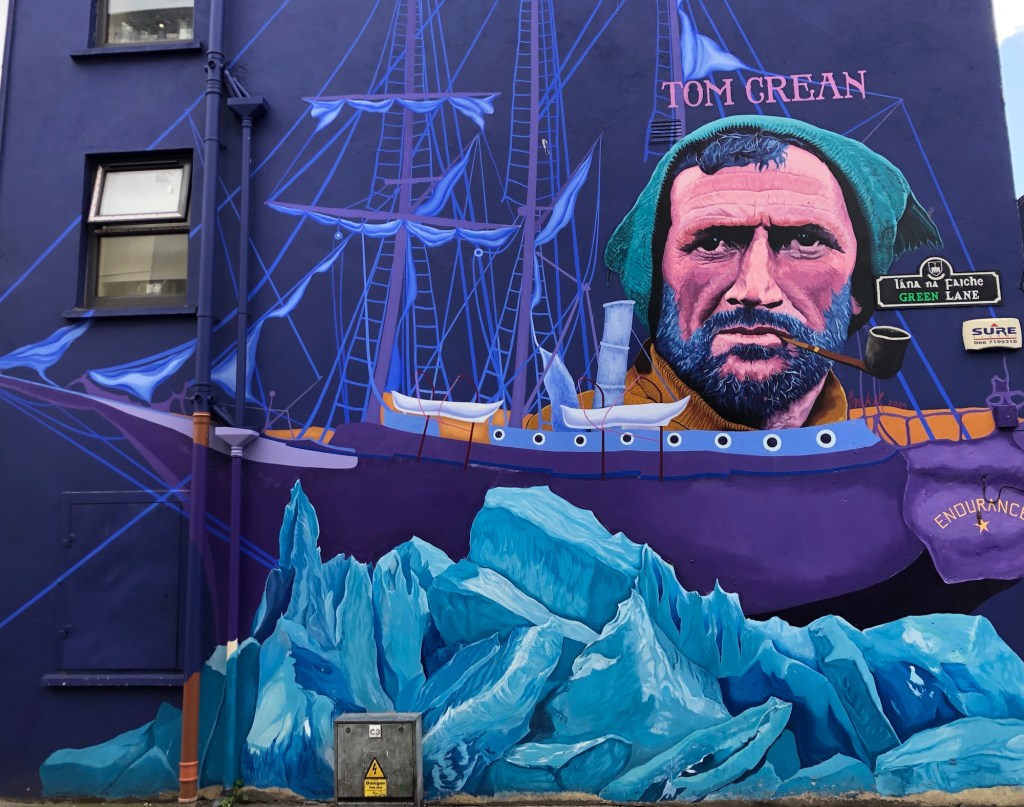
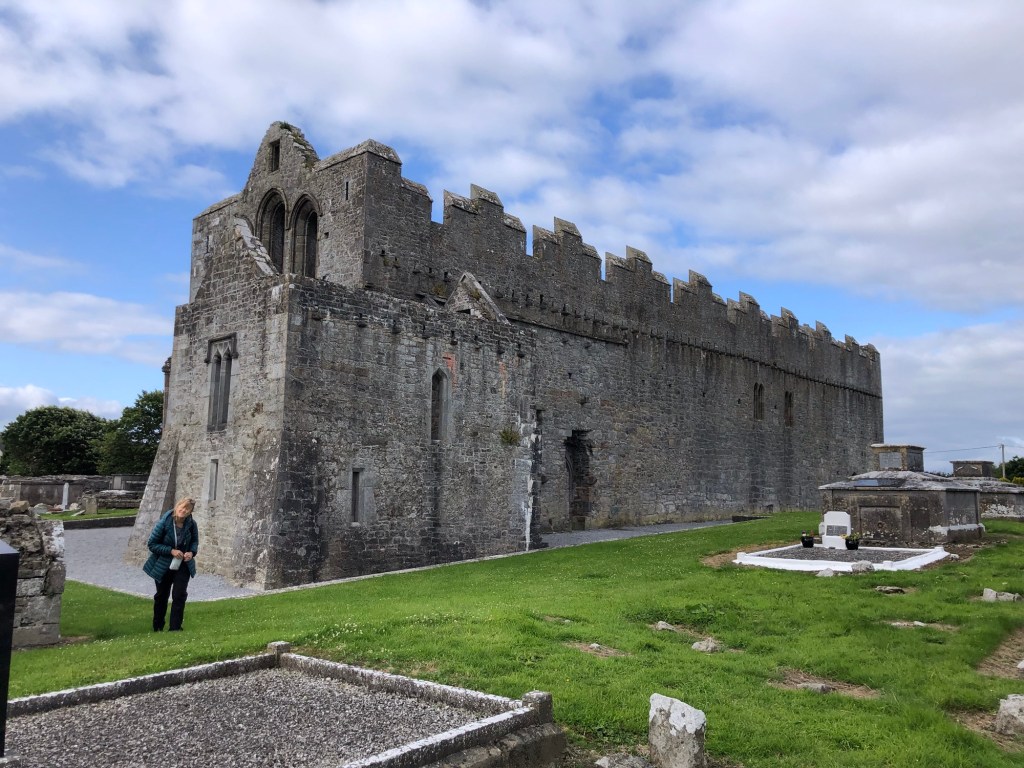
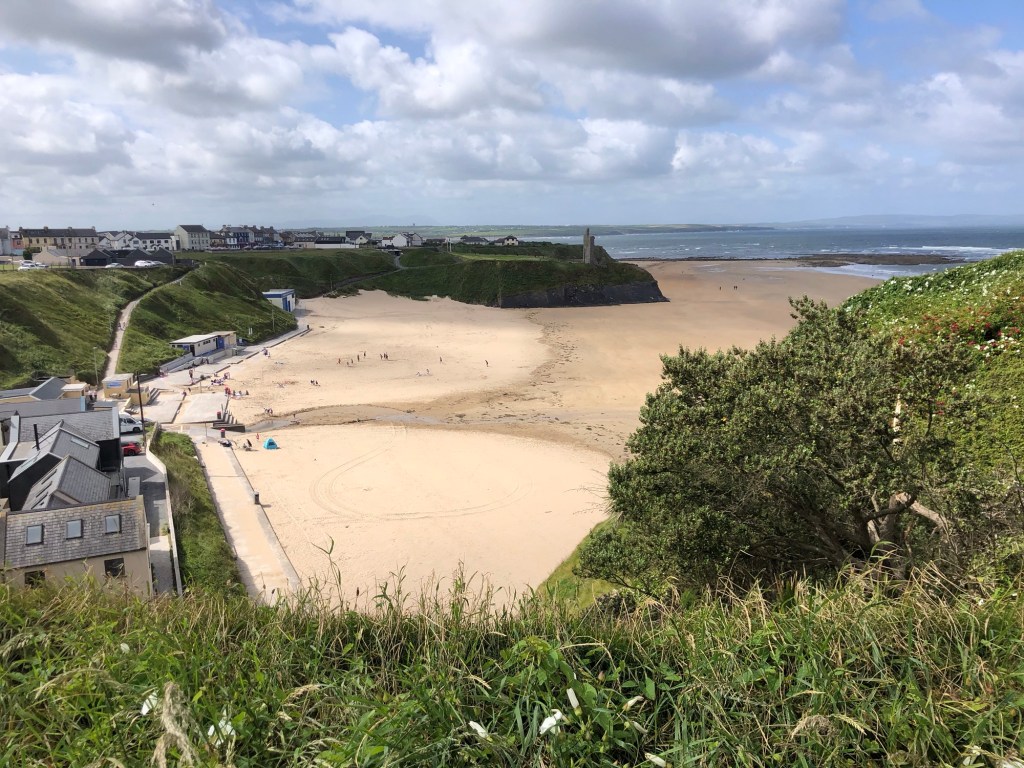
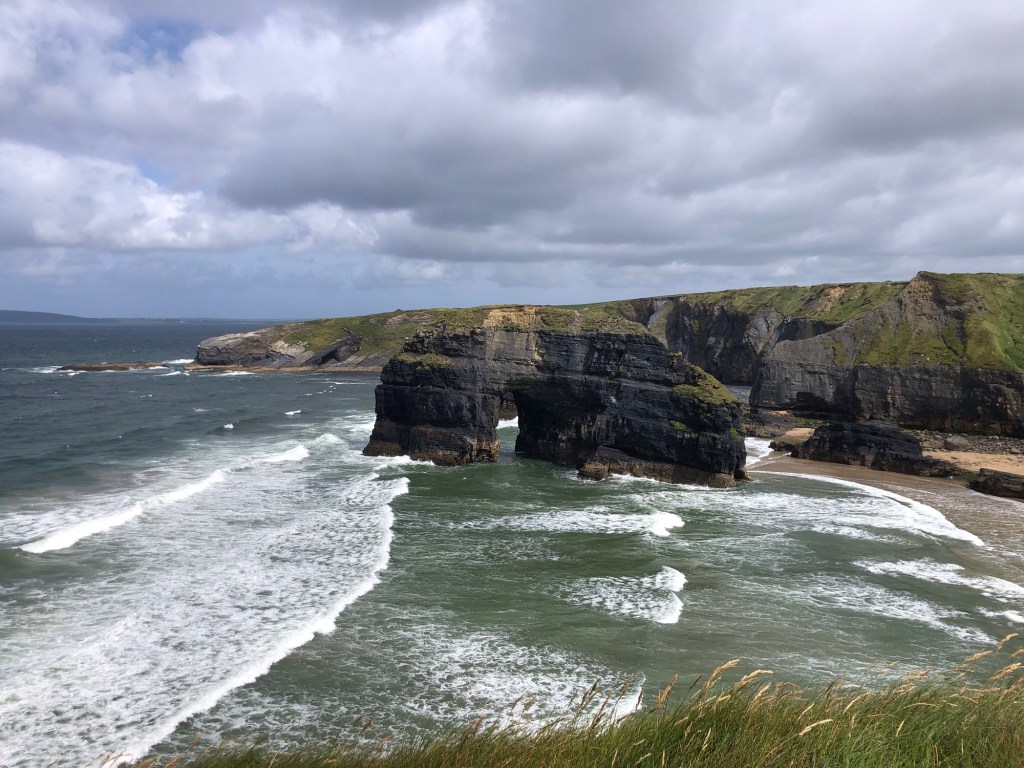
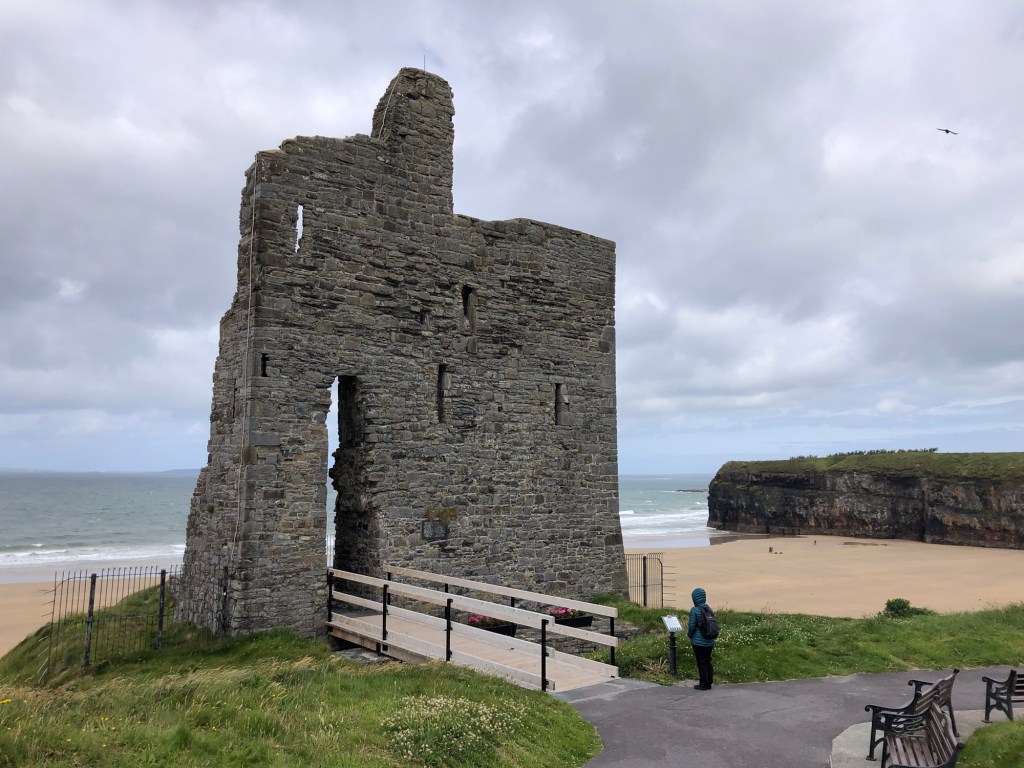
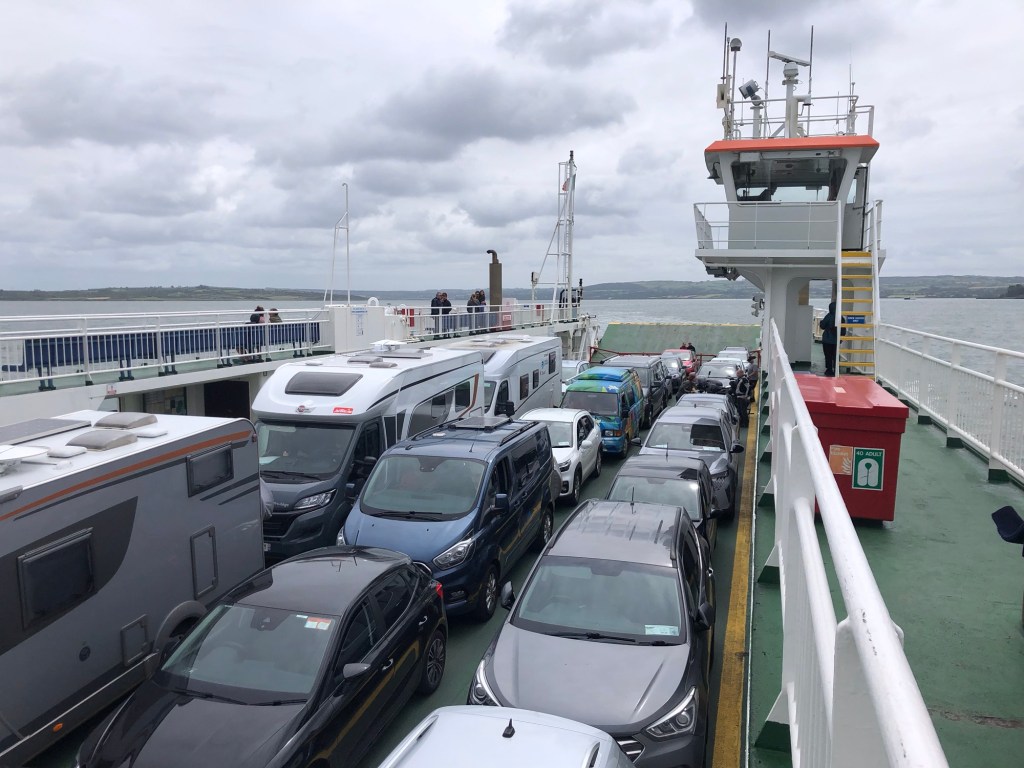
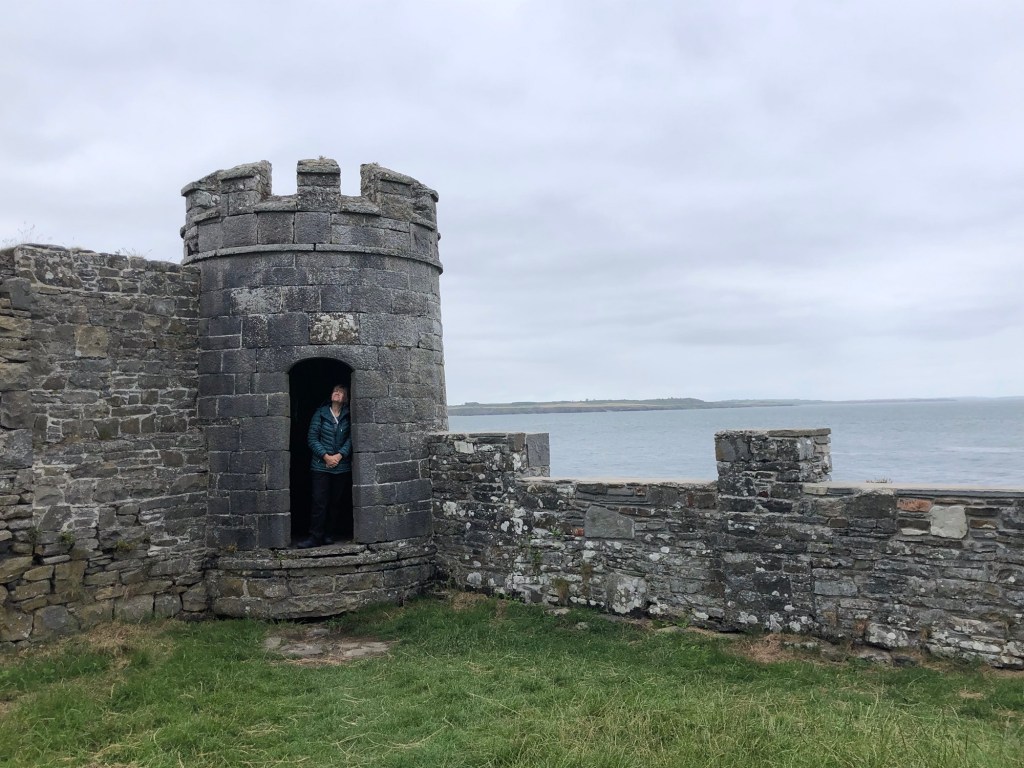
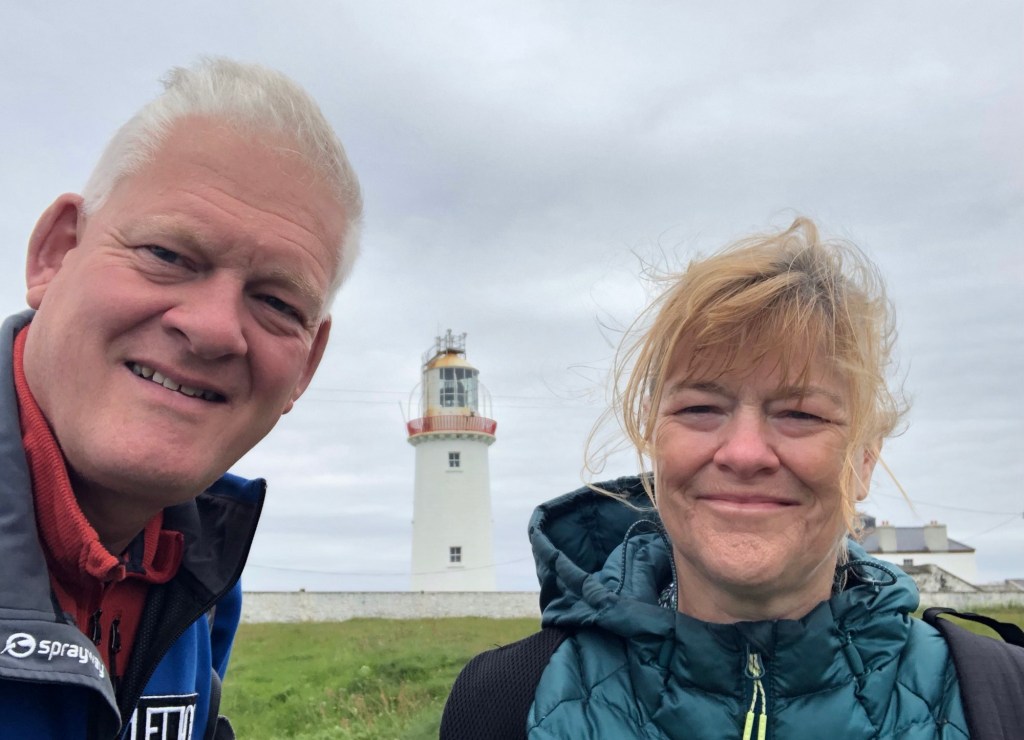
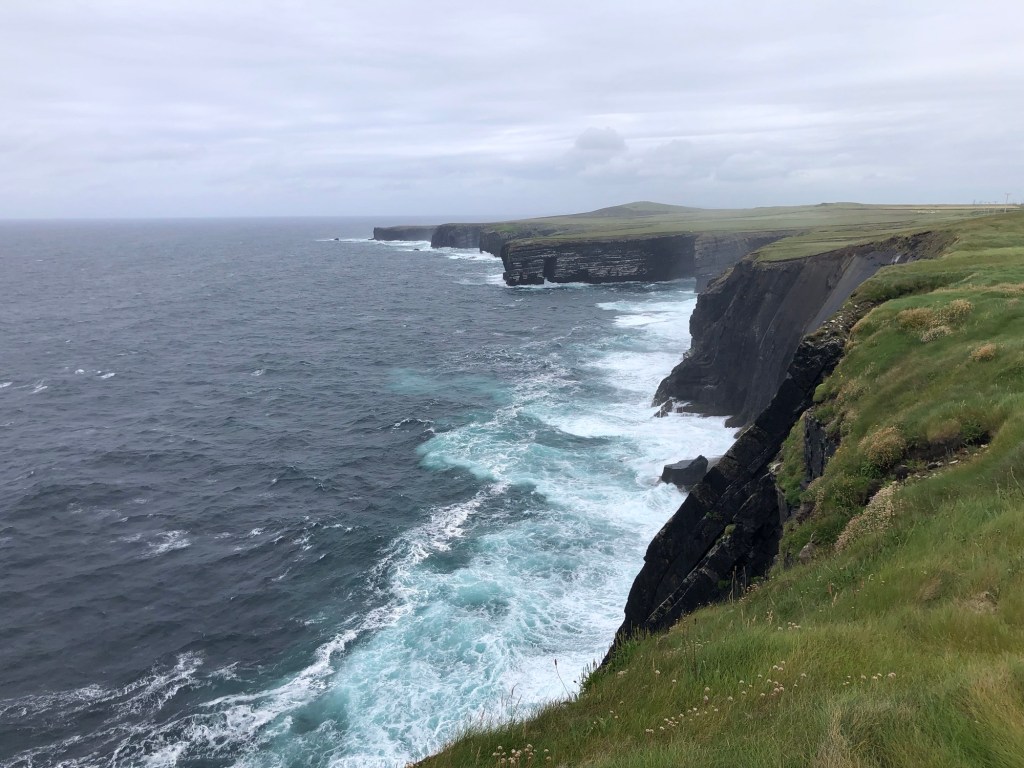
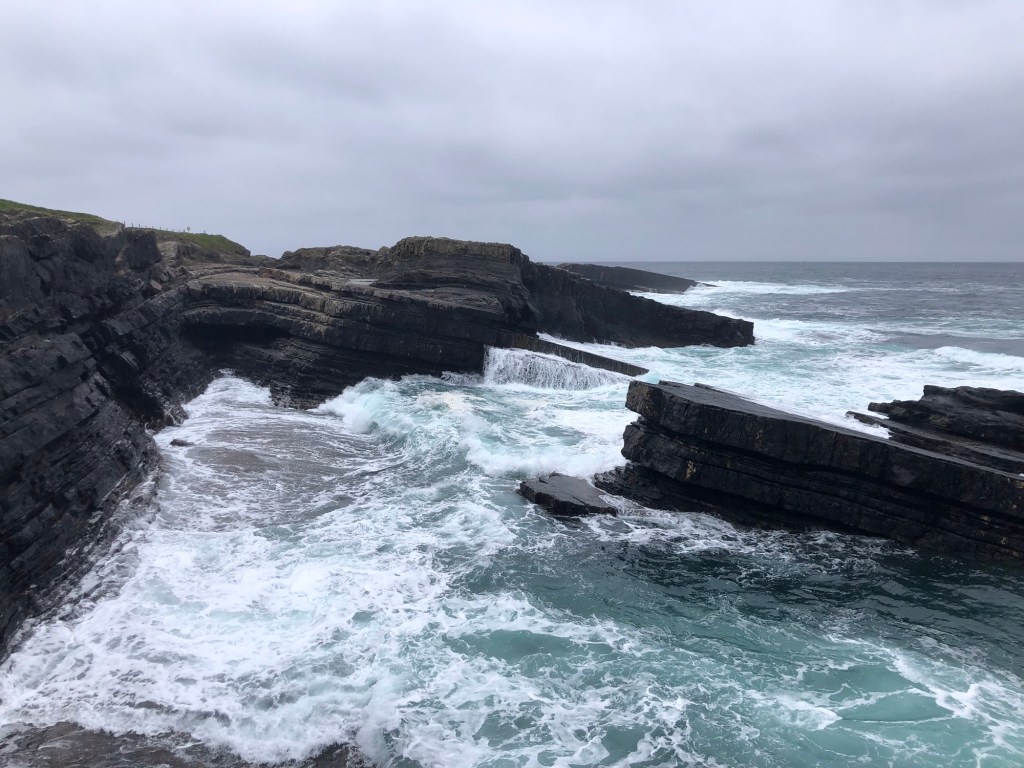
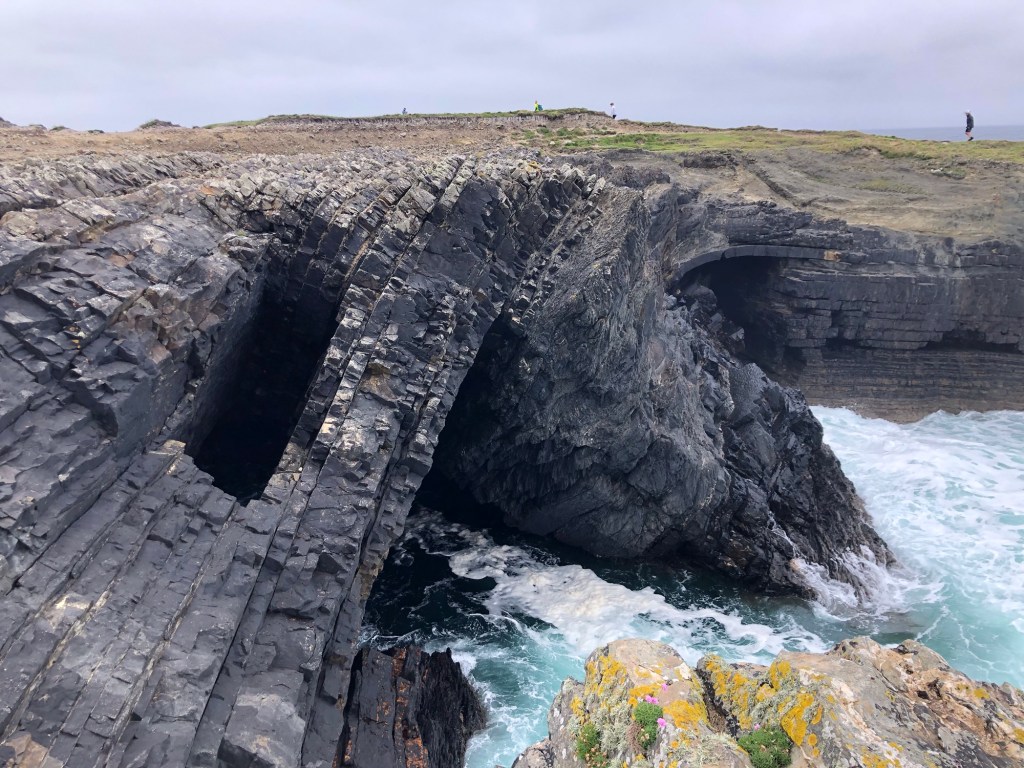
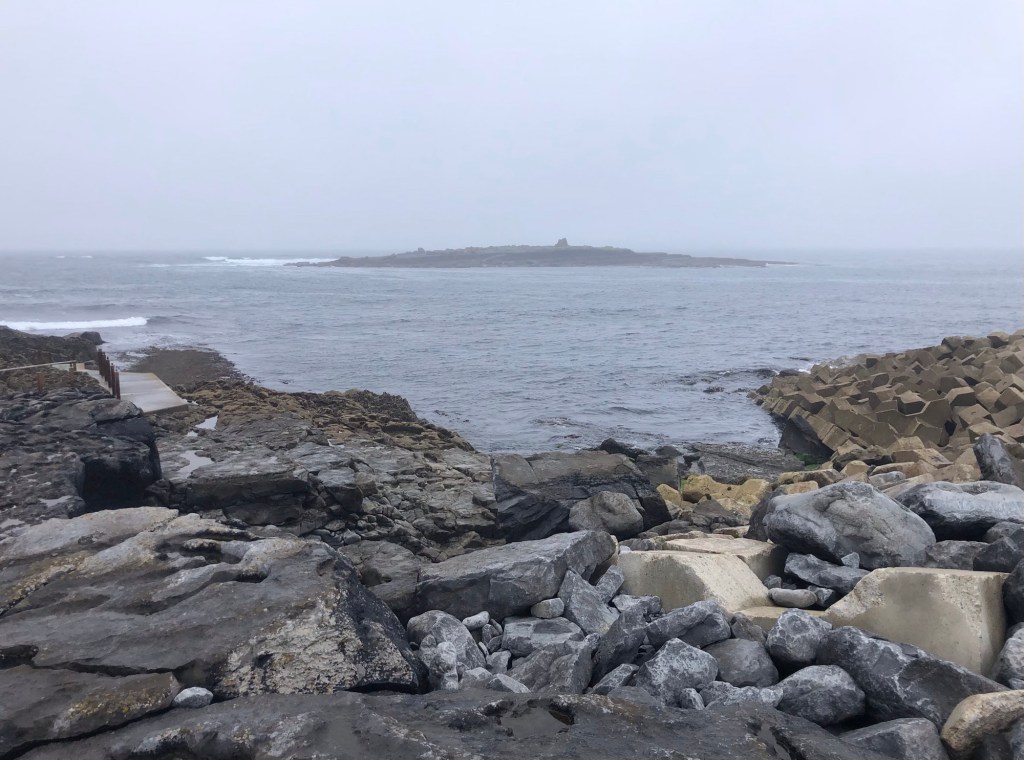
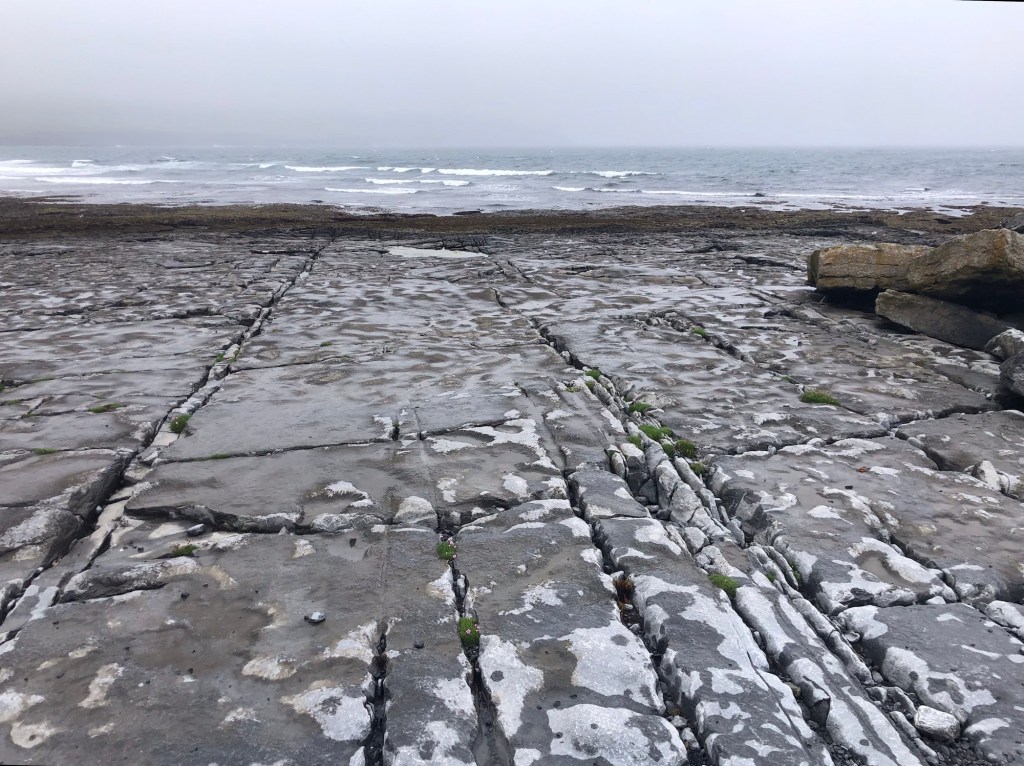
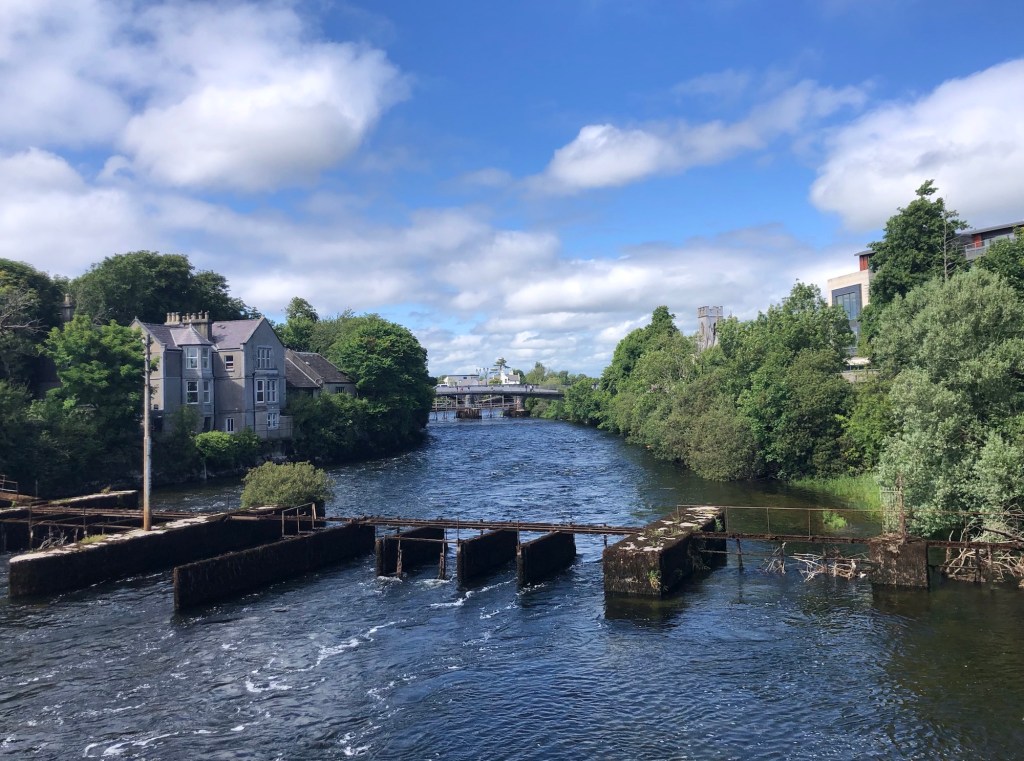
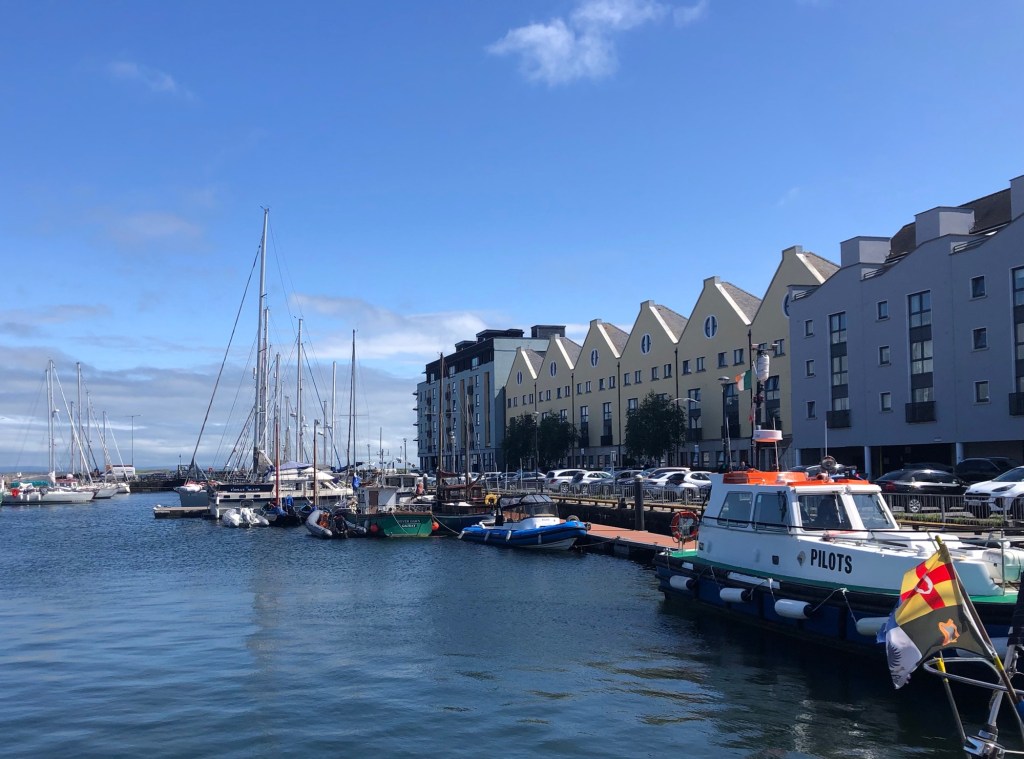
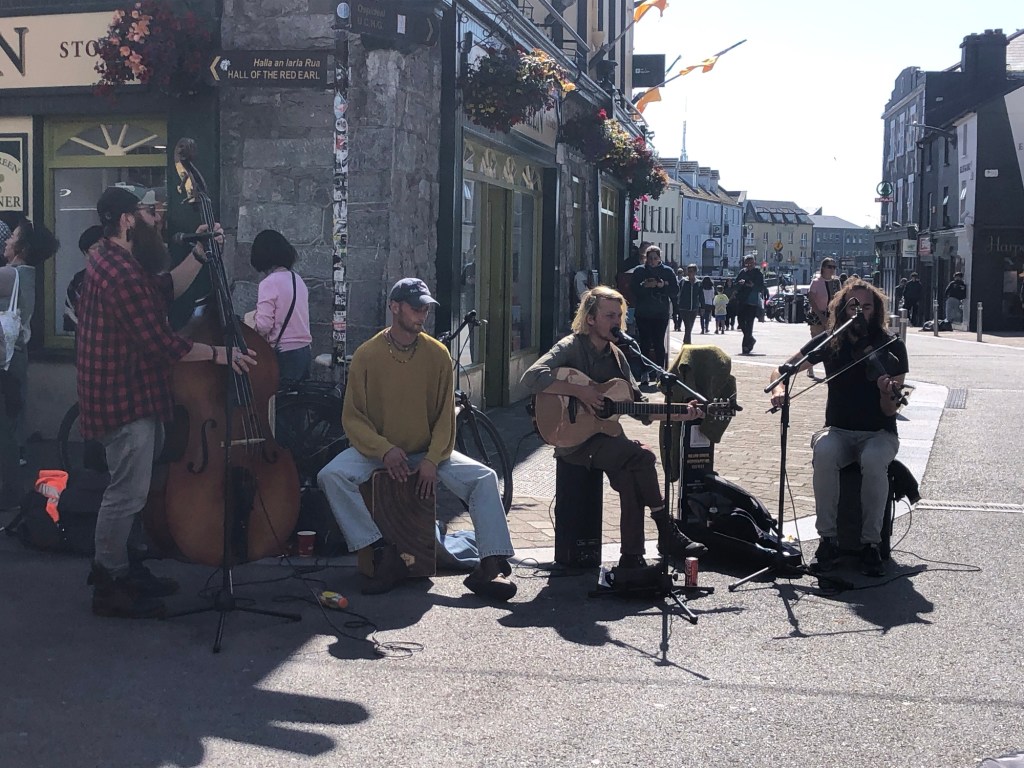
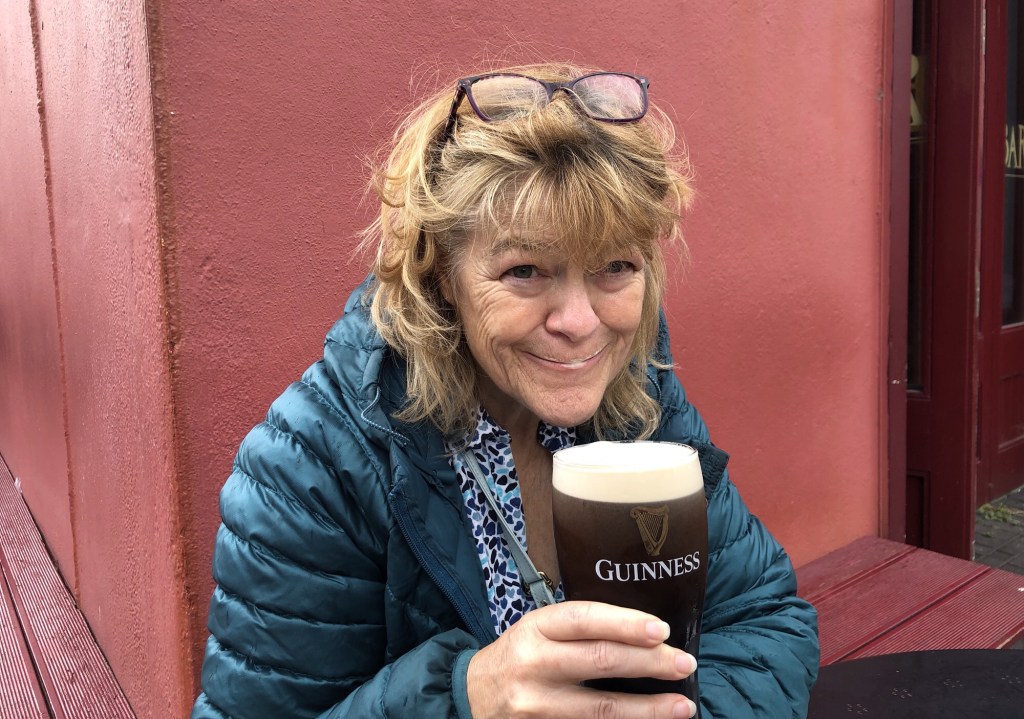
Kinsale, on Ireland’s southern coast . . .. . . and a colourful start to the Wild Atlantic WayKinsale Harbour . . .. . . and our view across Oyster Haven from our evening lodgingsNext day, at the Old Head of Kinsale . . .. . . off which the Luisitania foundered after being torpedoed by a German U-boat in 1915, with the loss of 1,200 lives – an event that led to the US joining the hostilities in EuropeThe bay at Timoleague is rather more serene . . .. . . and here we explored the early 14th Century Franciscan friaryThe megalithic Drombeg Stone Circle, (aka The Druid’s Altar) near Glandore, dates from prehistoric timesInteresting murals adorn the villages of the south coastThe Stone Age ‘altar wedge tomb’ at Toormore is one of a dozen on the Mizen PeninsulaThe footbridge to Mizen Head Signal Station, at the south-west extremity of Ireland . . .. . . and some spectacular seascapes from the headlandAn evening stroll in BantryNext morning, our first ramble of the day, around the coastal inlets of Glengarriff . . .. . . then out onto the Beara Peninula for sea views . . .. . . and a visit to the tranquil Dzogchen Buddhist retreat centreAt the end of the peninsula we stopped beneath Ireland’s only cable car, across to Dursey Island – we contented ourselves with our picnic lunch, whilst watching the dolphins playing in the sound beneath usAn afternoon of sea views and bucolic beauty, on the drive to KillarneyNext day, in Killarney National Park, a gentle walk around Muckross Lough . . .. . . amongst orchids . . .. . . and mighty yew treesThen an evening stroll . . .. . . before the sunset at Aghadoe, just outside of Killarney, where we based ourselves for two nightsNext day we started out on the Ring of Kerry around the Iveragh Peninsula, one of the best-known stretches of the Wild Atlantic Way, where we began by exploring the colourful town of SneemThen to Staigue Fort, an Iron Age stronghold, overlooking the Atlantic inlet known as Kenmare River to the south of the peninsulaSome stunning land- and sea-scapes around the Iveragh coastline . . . . . . the cove at Keel, opening into Saint Finans Bay . . .. . . and the Kerry Cliffs . . .. . . that look out as far as the Skellig IslandsSome replica clocháin, or ‘beehive huts’, the traditional dwellings favoured by medieval monks . . .. . . and a contemporary residentPortmagee harbour, our destination for the day . . .. . . where we checked out the lobster pots . . .. . . and joined the gulls inspecting the catchNext morning, as we completed the Ring of Kerry, we took a walk out onto Rossbeigh Strand . . .. . . where colourful jellyfish had washed up on the beachThe fishing boats and pleasure craft at Dingle . . .. . . where we took a choppy boat tour of the cliffs below Ballymacadoyle Hill, pounded by the Atlantic wavesDinner in Dingle was accompanied by live music, before a drink in Foxy’s Bar that doubles as a hardware store . . .. . . before a sunset drive out to Dunmore Head, the most westerly point of the Irish mainland (and the destination of my East to West walk last year)Next morning, back out to the Head . . .. . . for an exploration of the early medieval stone huts of Cashel Murphy . . .. . . and on to the 7th Century corbel-built Gallarus Oratory, one of the earliest Christian churches in IrelandBefore leaving the Dingle Peninsula, we took a rural ramble in the hills near Ballyduff . . .. . , and then spent a oleasant afternoon checking out Tralee, where this mural commemorates the Antarctic explorer Tom Crean who hailed from a family of farmers in nearby AnnascaulNext morning on the road again, and a stop at Ardfert to visit the ruined Cathedral that dates from the 12th CenturyThen a walk along the beach and cliffs at Ballybunnion . . .. . . to view the sea stacks and arches . . .. . . and the remnants of the town’s castleThen the car ferry across the River Shannon, from Tarbert to KillimerNow in County Clare, we had our picnic lunch and stretched our legs at Carrigaholt Castle . . .. . . before driving out to Loop Head for a rather wild Atlantic walk!A spectacular coastline . . .. . . a chaos of crashing waves . . .. . . and some extraordinary rock formations at the end of this isolated headlandAfter a rainy night in Kilkee we progressed up the coast to Doolin, with views out to the Arran IslandsThe renowned Cliffs of Moher were lost to us in the mist and drizzle this morning, though we managed a short walk on a fine limestone pavementThe weather cleared as we crossed the River Corrib in Galway City, the halfway point on the Wild Atlantic Way, and our final stop of this tourAn afternoon walk around the harbour . . .. . . and the lively city centreStreet music that fell somewhere between skiffle and folk . . .. . . and sinking the black!
We returned from our trip via the Wicklow Mountains south of Dublin, and then back to the ferry at Rosslare Harbour on the south-east of the island, arriving home sun-kissed, wind-swept and remarkably dry. On our Wild Atlantic Way trip we experienced some of the finest scenery on show in these maritime isles, took in a lot of Gaelic history and culture, and enjoyed the generous Irish hospitality at every turn of the Way and at every roadside stop. We do, of course, have the second half of the journey, from Galway northward to Muff, to look forward to at some future date, so that we can complete our circumnavigation of the Emerald Isle, and I hope to be able to report back on the second half before too many moons pass!
Guitar shop window in Cork city centre
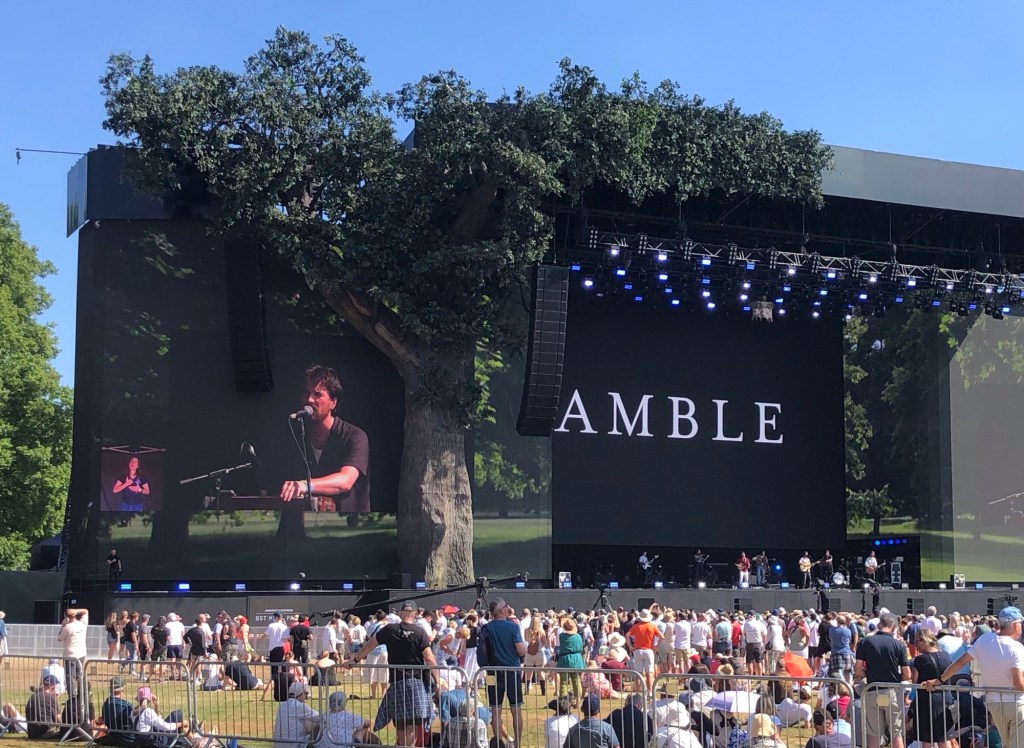
I have only recently come across Amble, a three-piece folk group from Ireland, whose name is derived from the Gaelic Am Beal, meaning ‘river mouth’ or ‘tidal inlet’. That connection with their island, and their song title ‘Of Land And Sea’ provide me with an appropriate Blog heading for our adventures on the Wild Atlantic Way. The song was released just a couple of months ago on the band’s debut album ‘Reverie’, that one review describes as ‘novelistic folk, tapping into the serenity of the countryside’. All of the compositions on the album are written by the group members: Robbie Cunningham (lead vocals and guitar), Oisin McCaffrey (vocals, guitar) and Ross McNerney (mandolin, guitar), and their work is well worth a listen – assuming your tastes in music happen to overlap at least in part with my own!
The main stage at Hyde Park, last Friday, 11 July, where Amble wowed the crowd as support to Van Morrison, Cat Stevens and Neil Young at the BST Festival
One thought on “Of Land And Sea”
Great photos! Ireland really has an enthralling landscape.



 Walking for Fun, Challenge and Charity!
Great photos! Ireland really has an enthralling landscape.
LikeLike