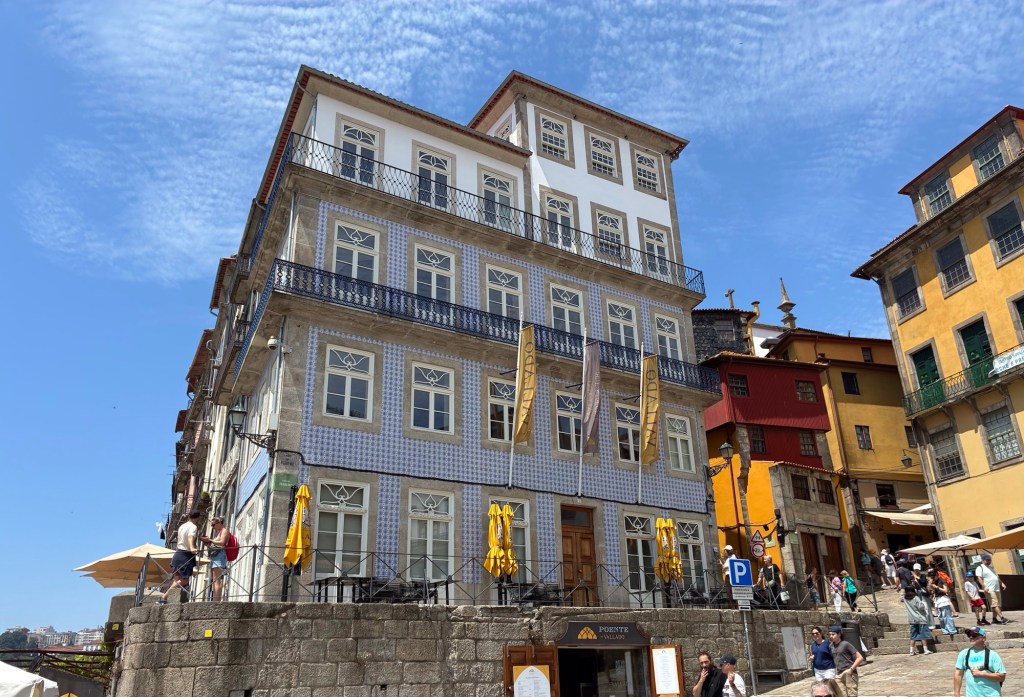
Tiled façades add a decorative ambience to the Porto street-scene
I made the right call in scheduling a free day to explore the centre of Porto ahead of my Camino walk tomorrow, so I will start with a few facts and figures. With a population of around 250,000, Porto is Portugal’s second city (after Lisbon), and it was from here, in the 12th Century, that Portugal took its name as a nation independent from Spain. The settlement’s location, on the banks of the Rio Douro (the so-called ‘River of Gold’) and just a few kilometres inland from the Atlantic Ocean, ensured medieval prosperity as the city developed into a key trading hub whilst producing a wealthy merchant class to match. Henry the Navigator was born here in 1394, and Porto played a leading role in the maritime discoveries of the New World. The city’s past trading and navigational glories remain, reflected in the fabric of the place, and I managed to visit quite a number of its principal landmarks on my self-guided walking tour today.
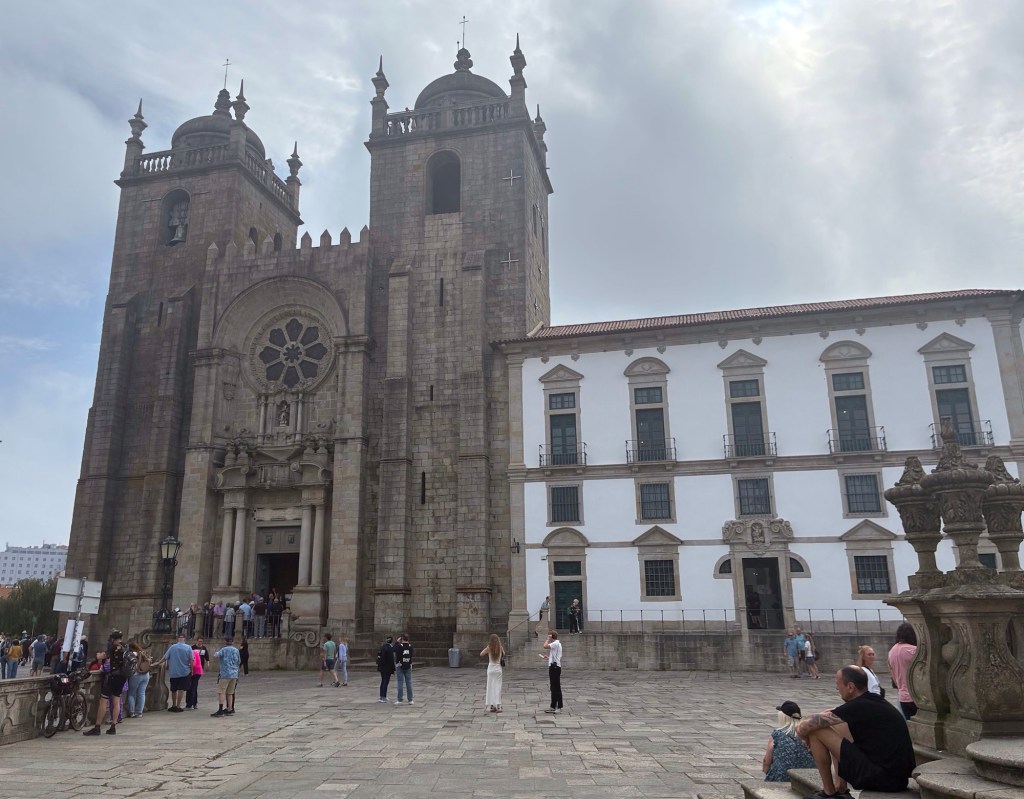
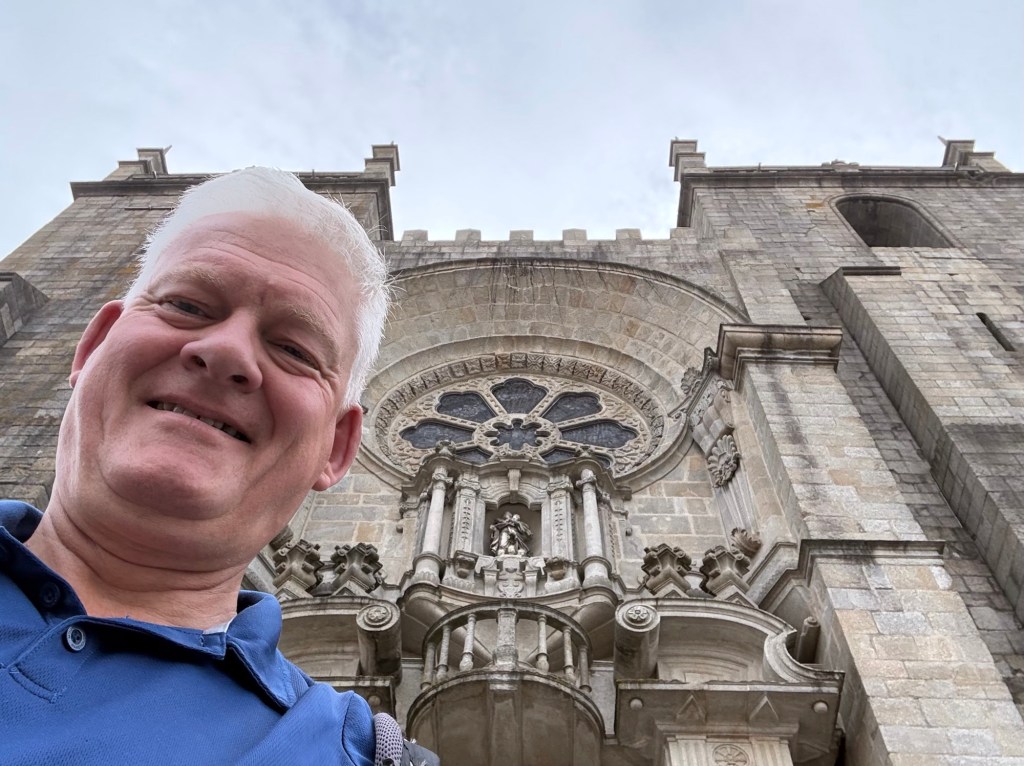
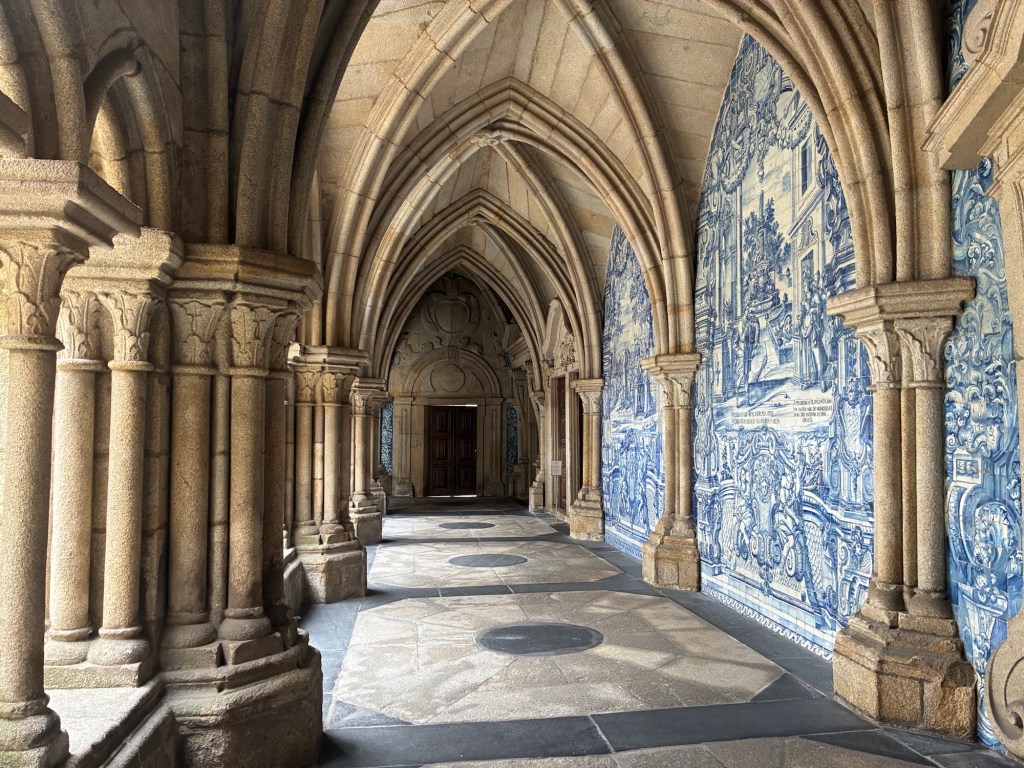
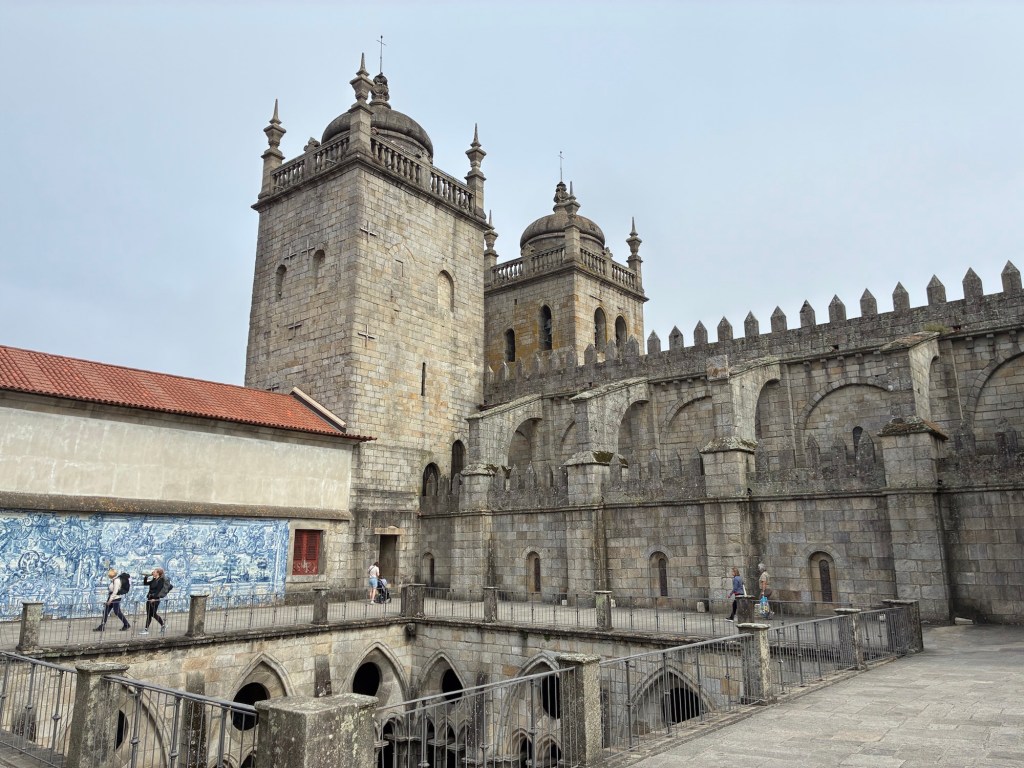
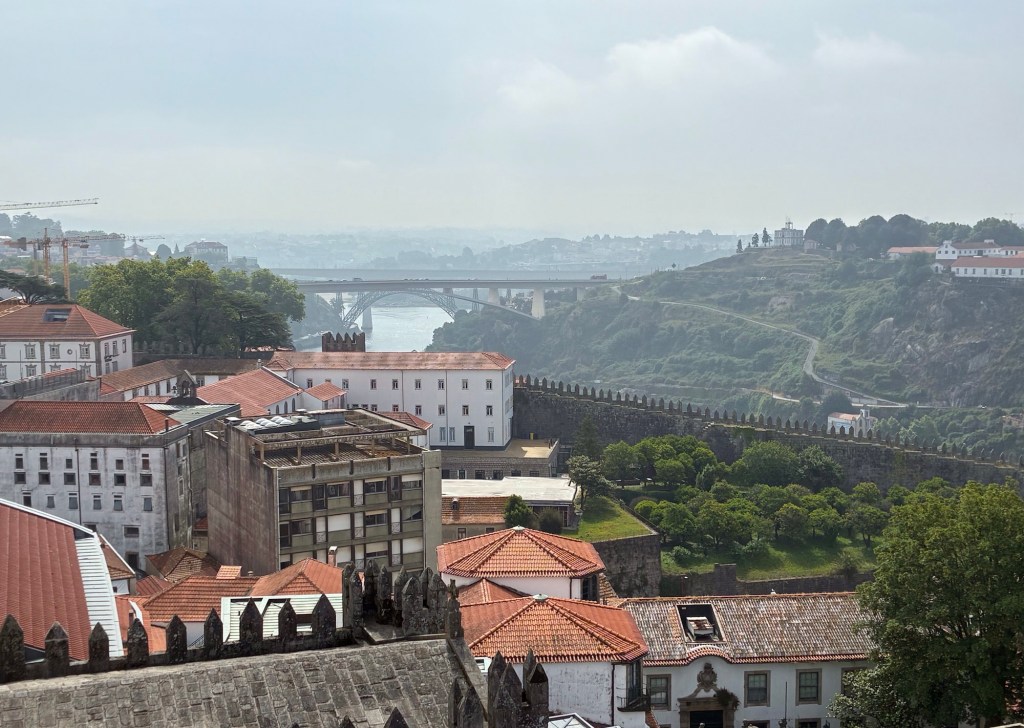
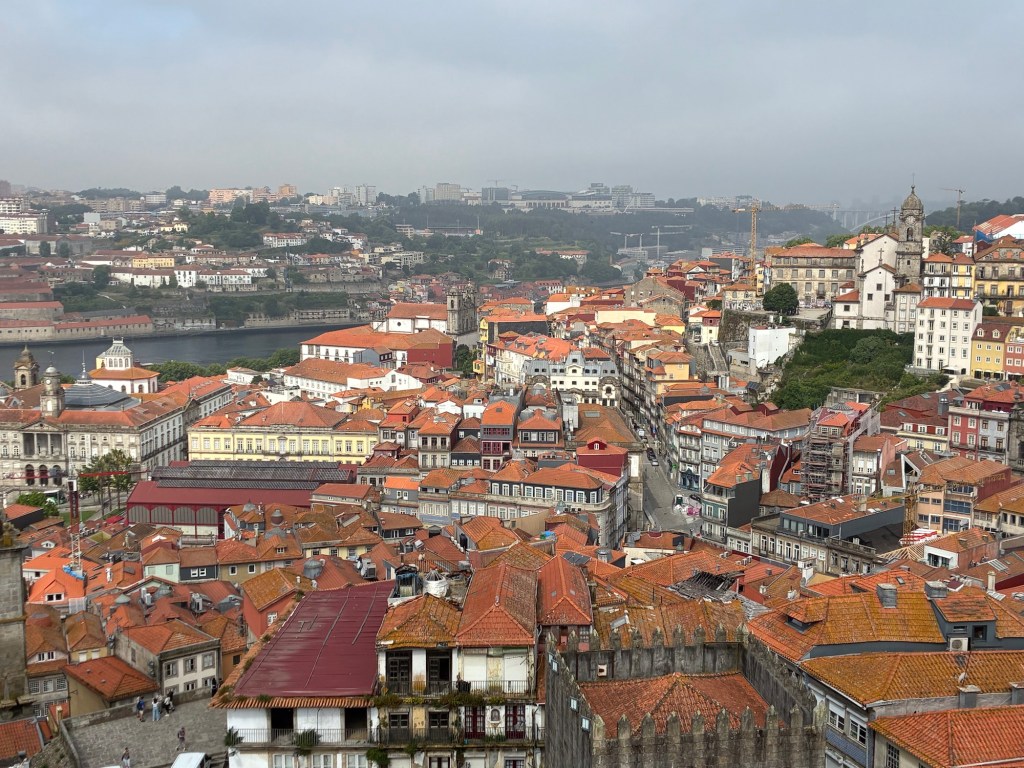
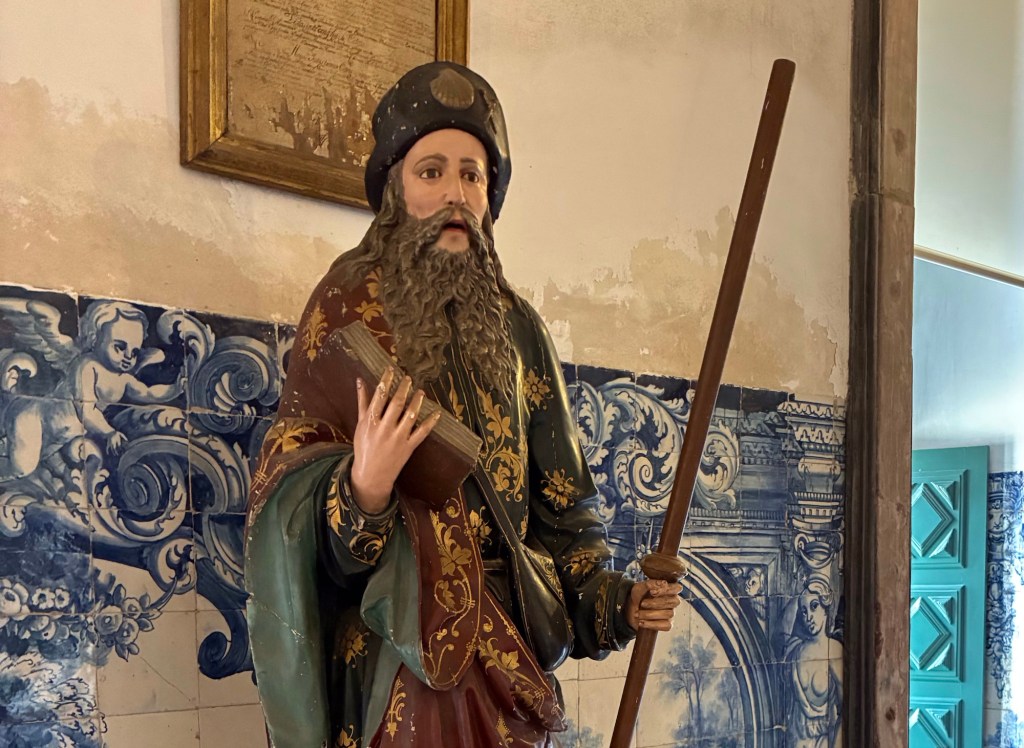
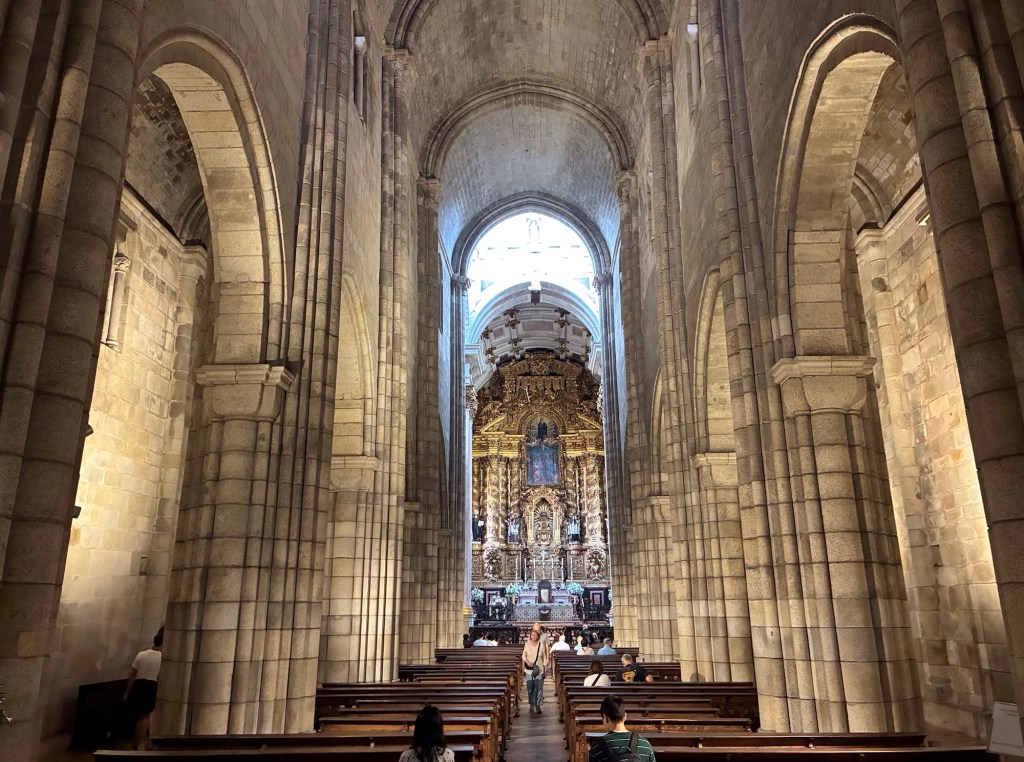
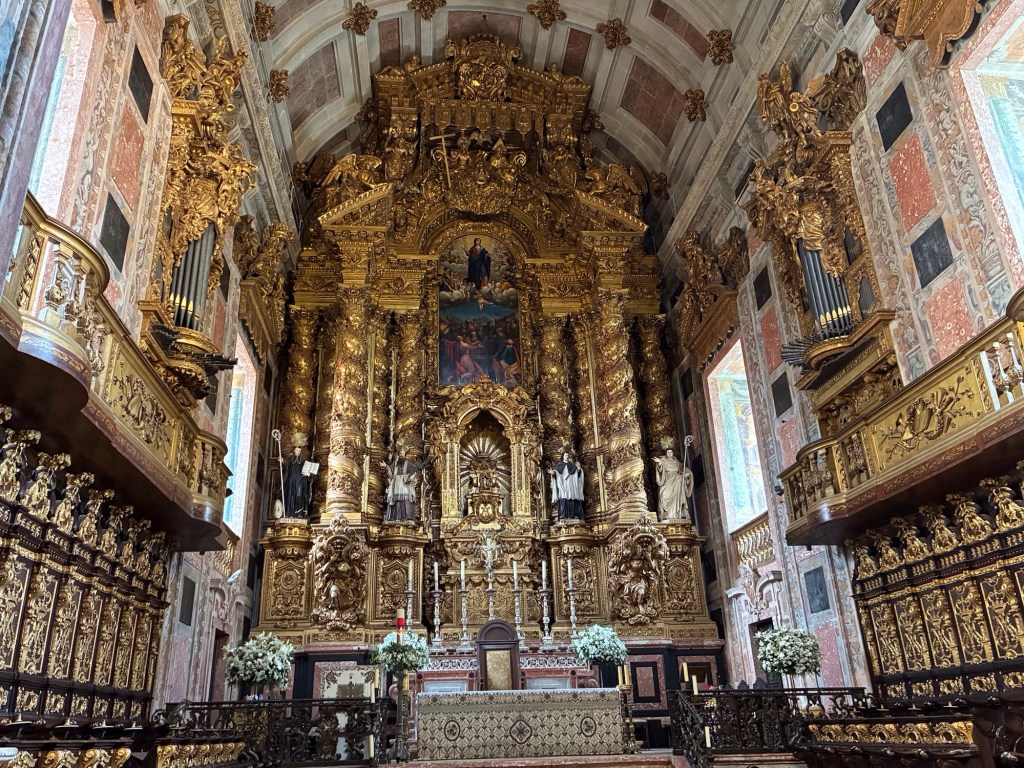
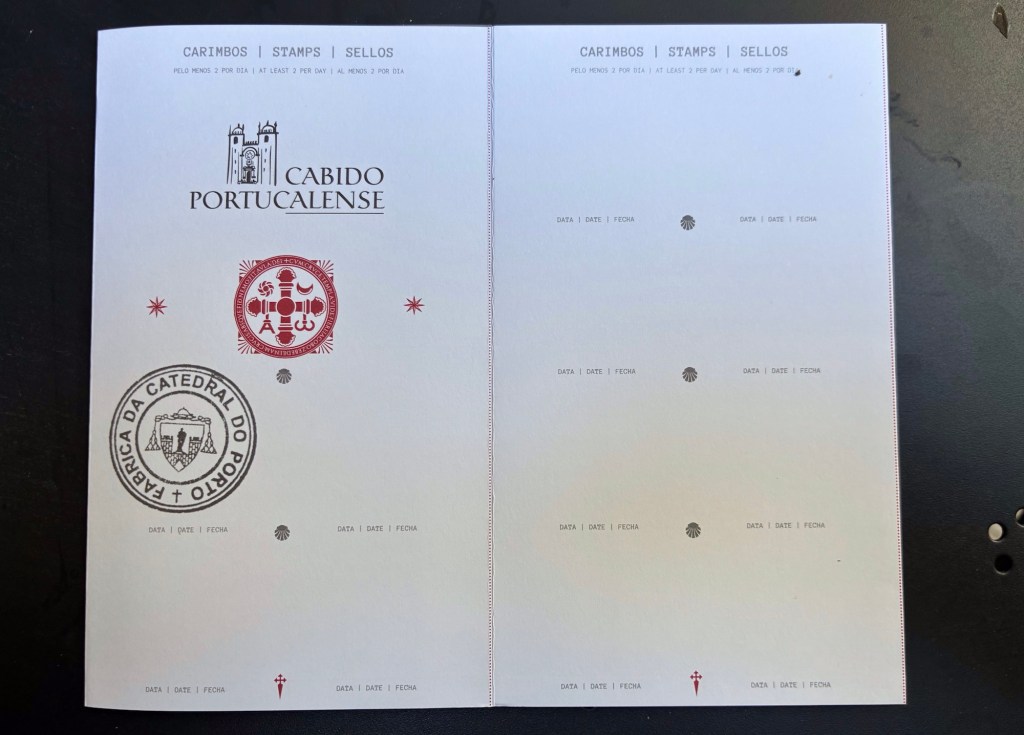
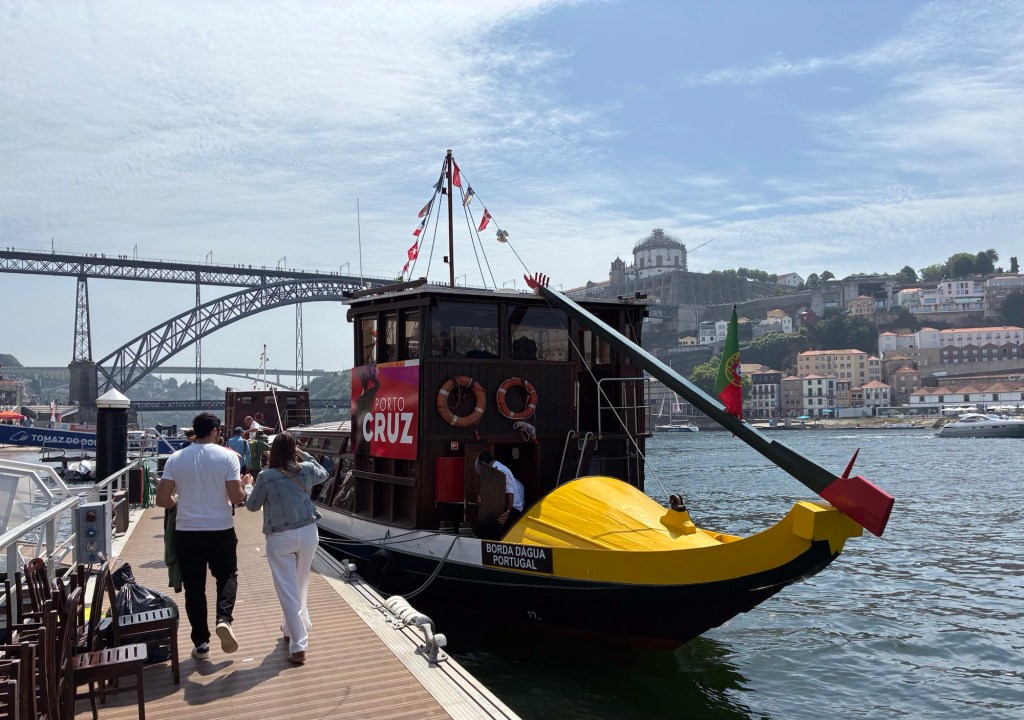
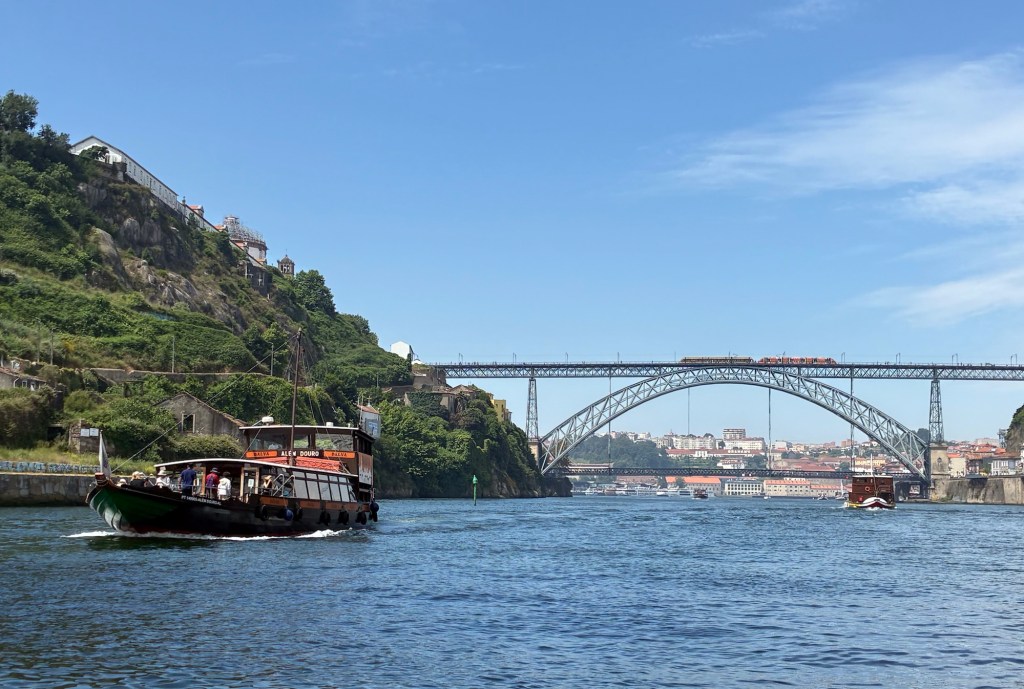
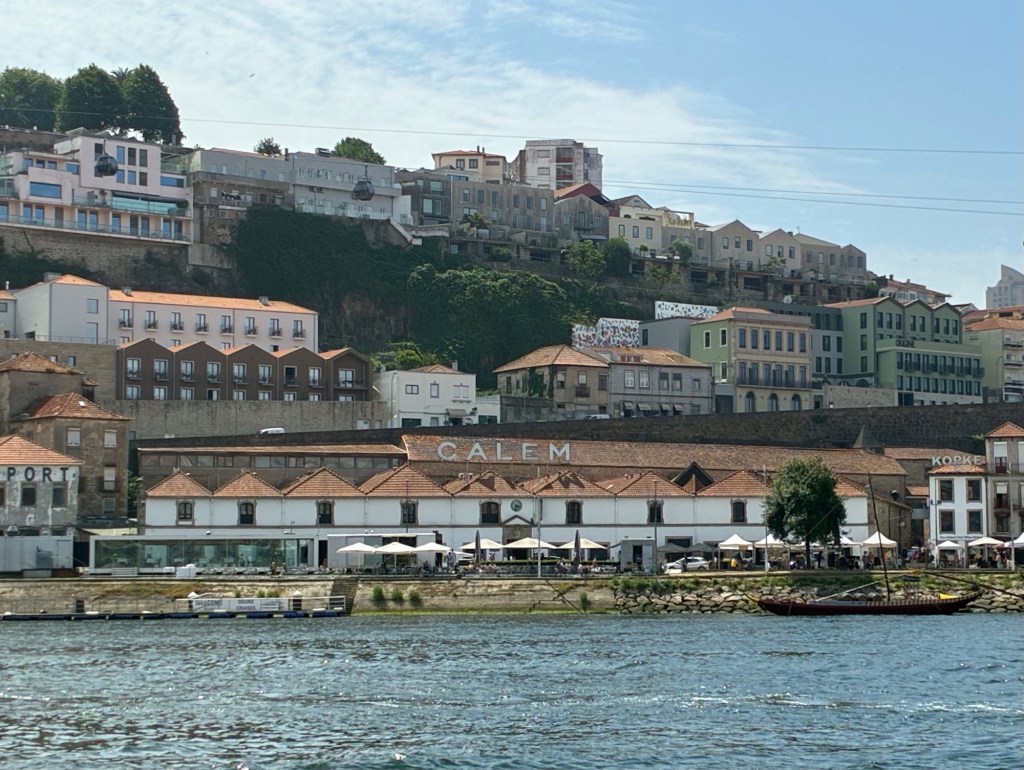
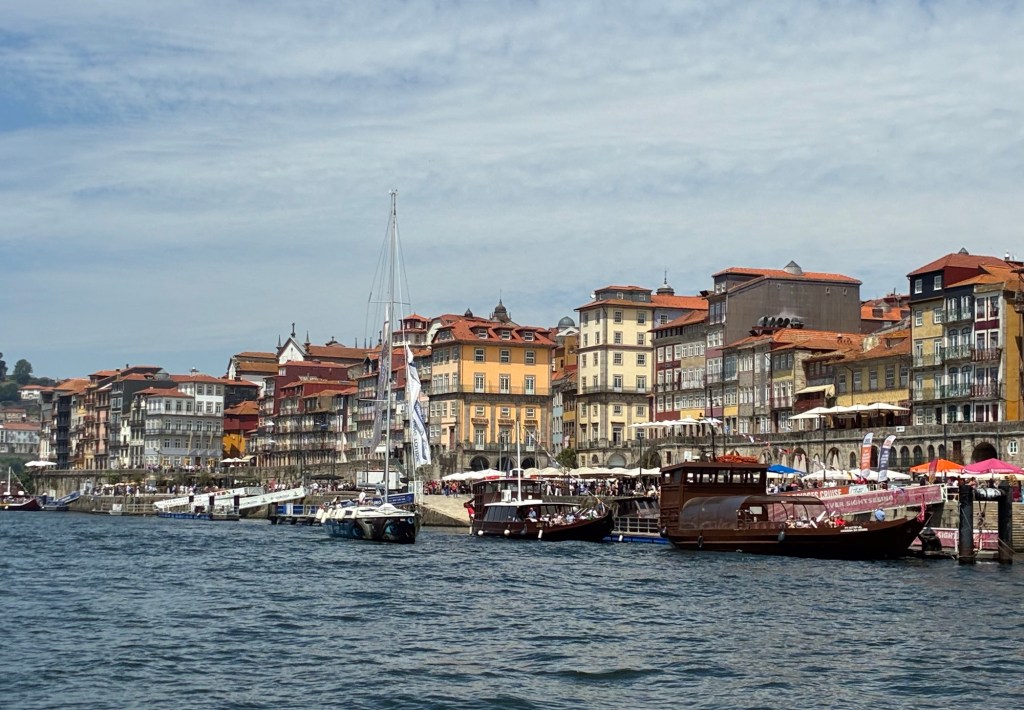
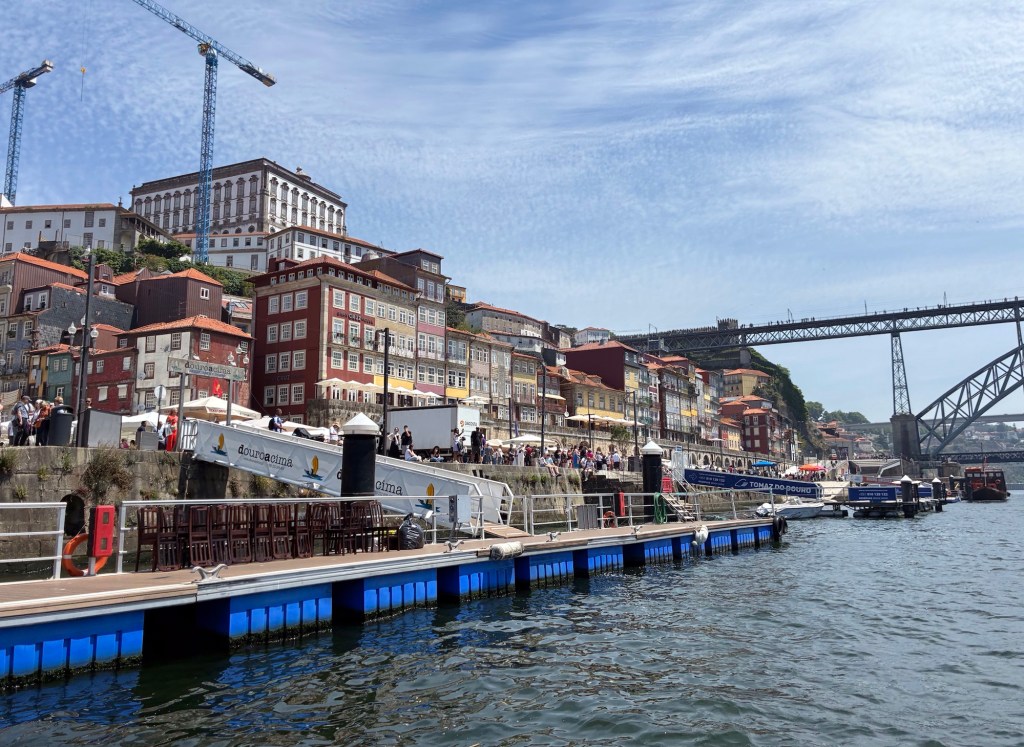
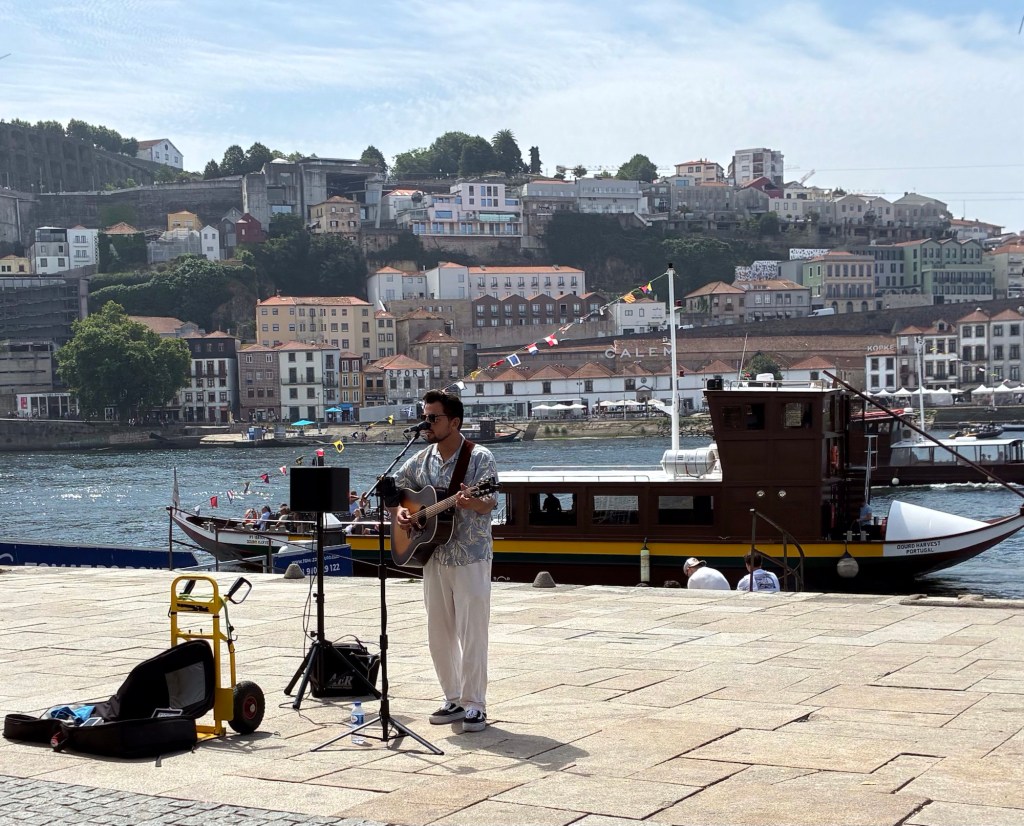
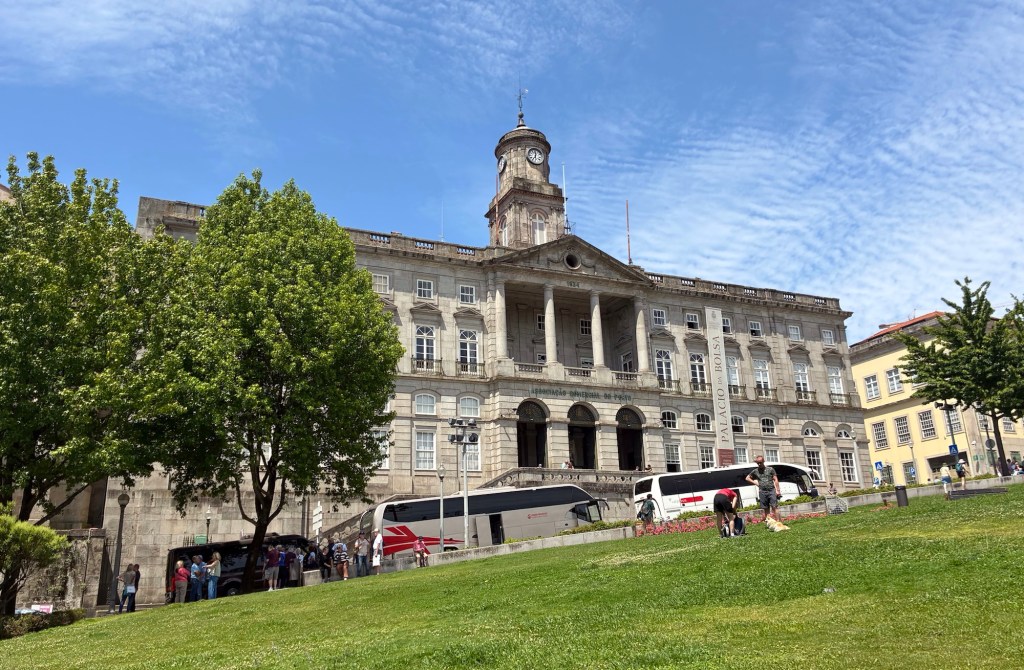
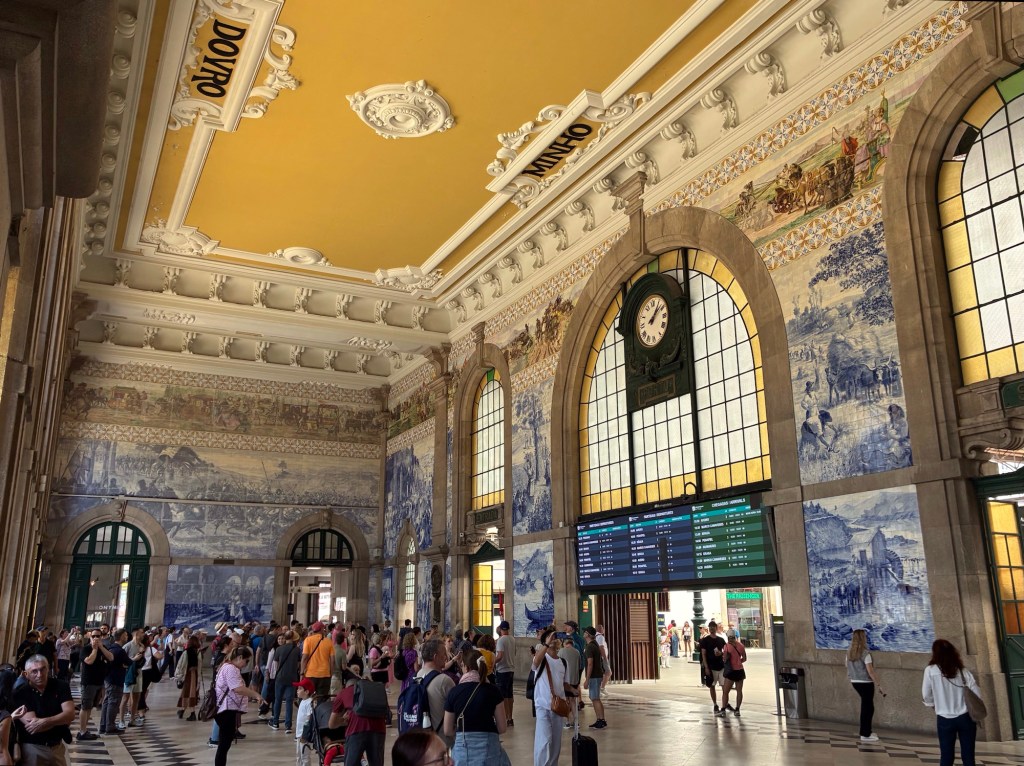
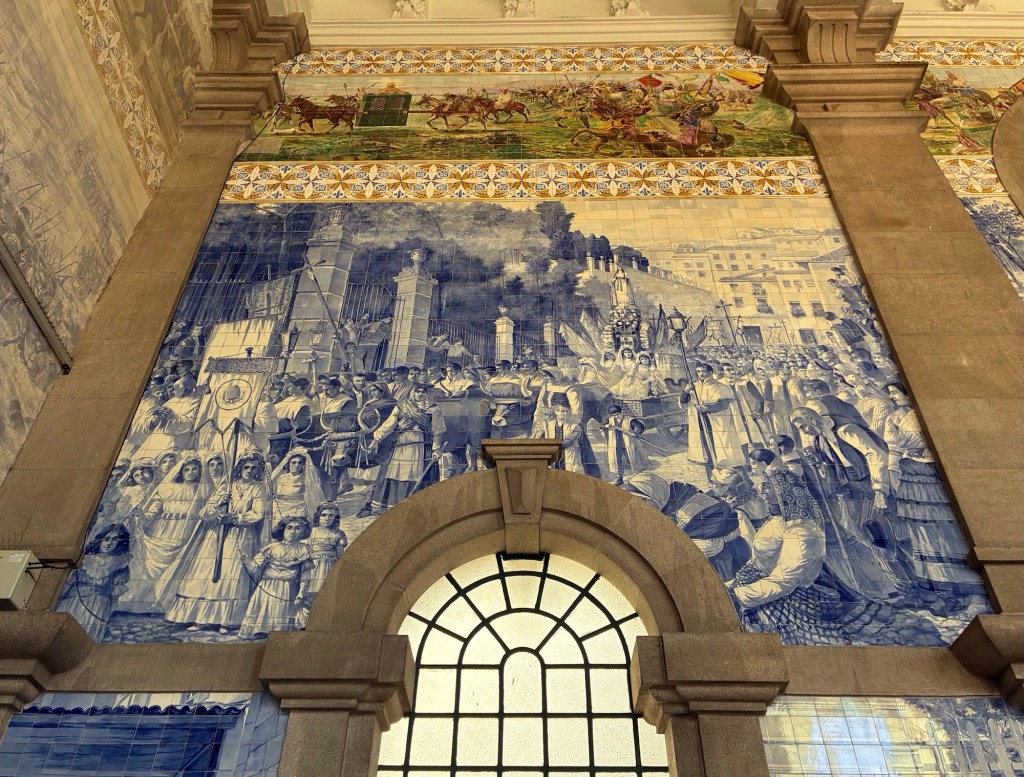
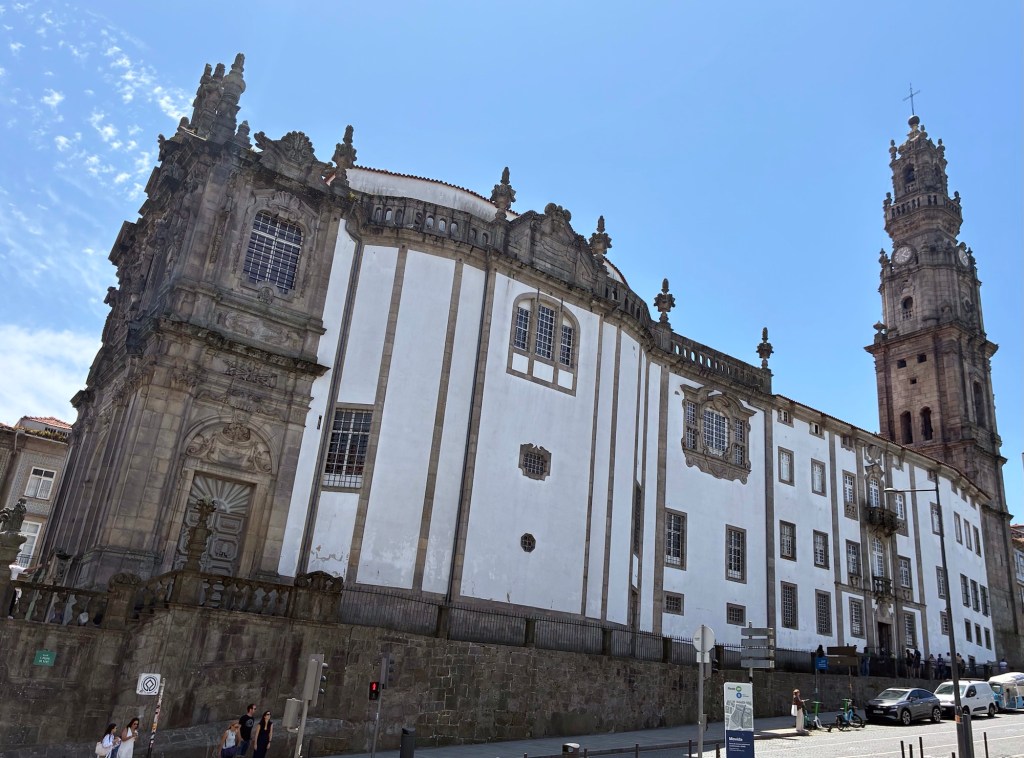
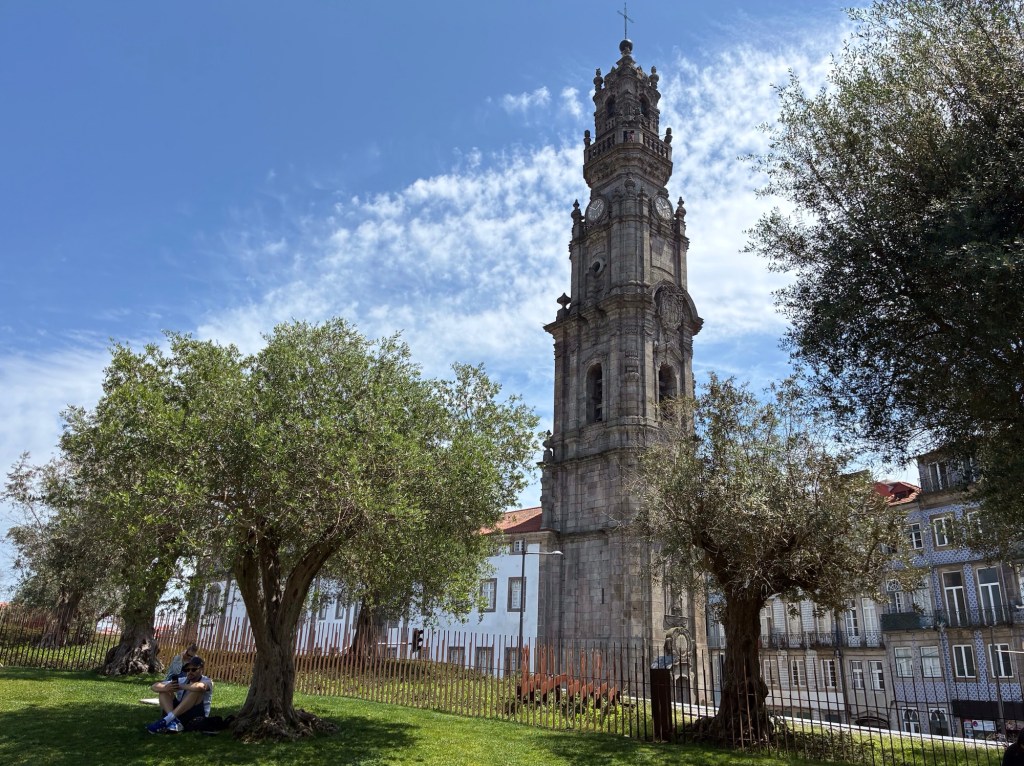
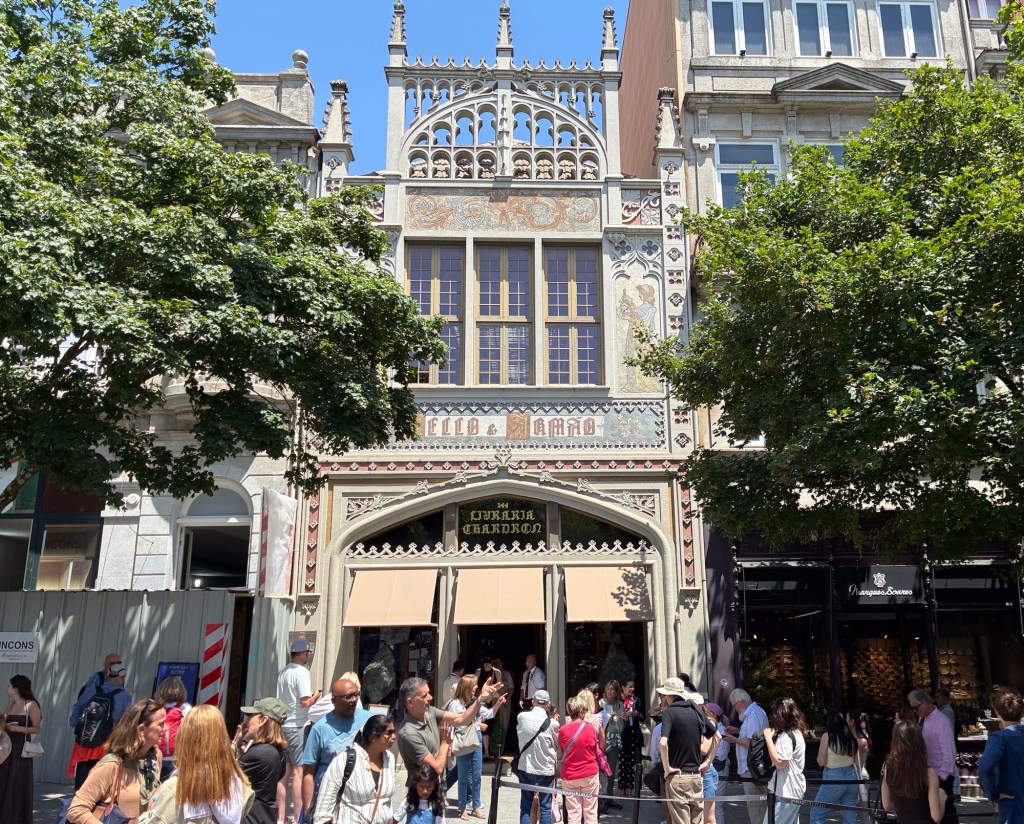
My first stop – before the crowds, and before the sun broke through the early cloud cover – was to register for my Camino walk and to buy my ‘Pilgrim’s Passport’ at the Catedral Sé: this ‘fortress-church’ was inaugurated in the 12th Century before many subsequent additions and alterations, particularly during the Baroque periodAnd just to prove that I was indeed here!My tour started around the cloisters . . .. . . and then up into the raised courtyard . . .. . . before climbing one of the towers to take in the city views westward, towards the sea . . .. . . and upstream, eastwards, over the terracotta roovesComing back down I nearly missed the un-signed but elaborately-furnished Notary Chamber Room containing this 16th Century statue of Santiago Peregrino, pilgrim staff in hand: the icon is reckoned to grant a blessing to all those embarking by foot on the CaminoPillars of the Earth . . .. . . internally the cathedral is extraordinary – it is difficult to convey the ornate detailing in a couple of photographs, but the ‘man’ hours in constructing and decorating this building must surely run into the millionsAnd, lest I forget, I have now started my stamp collectionNext up, down to the waterside for a short Douro river cruiseThe maritime gateway to Porto . . .. . . leads to the many port warehouses . . .. . . and to the bustling riverside centre of the cityPulling back into our berth – cathedrals aside, there is no high-rise in Porto, but there is also no shortage of cranes in this prospering placeA chance now for a late brunch and some more entertainment, before setting off on tour once moreThe Palácio de Bolsa is the country’s Stock Exchange, built in the 18th Century and now a UNESCO World Heritage SiteThe main hall at the Estação São Bento railway terminal, dating from 1904, is now a Portuguese National Monument, seemingly drawing as many tourists as travellers . . .. . . all marvelling at the 20,000 azulejo ceramic tiles, designed and painted by Jorge Colaço, that make up the huge wall panels depicting the history of PortoThe Igreja dos Clérigos (Church of the Clergymen) stands proud as one of the city’s most characteristic symbols . . .. . . though it’s 75-metre Baroque bell-tower is perhaps better viewed from the quiet of the nearby Parc de LisboaMy day tour was supposed to have concluded with a tour of the Livraria Lello that, with its various neo-Gothic, Art Nouveau and Art Deco elements, is renowned as one of the most beautiful bookshops on the planet following its restoration in 2016: the problem has become the masses who now have to pay and queue for upwards of an hour for a viewing – a wait that I decided to forego!
The feel of Porto is relaxed and very safe, and it is a pleasant destination for a short city break from the UK. It’s longitude, at 8.5 degrees west of the Greenwich meridian, means that it shares a time zone with the UK, though with a latitude of 41 degrees (around ten less than London) its maritime climate produces generally rather warmer (and considerably wetter) conditions than back home. For now though the forecast for the next few days is for any rain clouds to remain some hundreds of miles west, over the Atlantic, meaning that my imminent Camino trek is likely to stay fine and settled – if a little warm for walking!
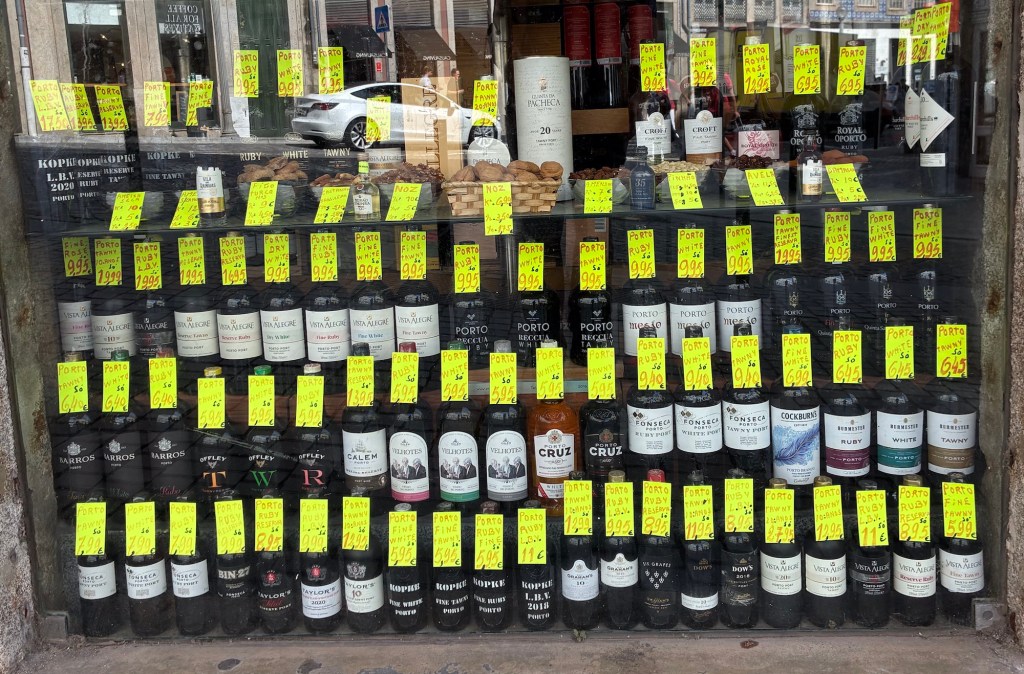
Rather negligently I didn’t manage a port warehouse tasting tour today, and so I had to content myself with the numerous shop displays around the city centre (as well as a glass of 10-year-old tawny, that my waiter rather insisted that I take as a ‘digestif’ after dinner)
So, despite my relative abstinence, ‘Red Red Wine’ seems a fitting heading for today’s Blog: it is taken from the title of American singer-songwriter Neil Diamond’s 1967 recording from his second studio album ‘Just For You’. The song hit the US Billboard chart in 1968, by which time Diamond had moved on from the Bang Records label, with the latter having decided to augment the recording with a background choir – but without the artist’s involvement or permission. Accordingly Diamond has never liked the resultant single that was released, and instead he has included a live version of the number on his various greatest hits collections. Many other musicians have produced covers of ‘Red Red Wine’ – possibly the best-known being the reggae version by Birmingham band UB40, that hit the top of the UK charts in 1983.
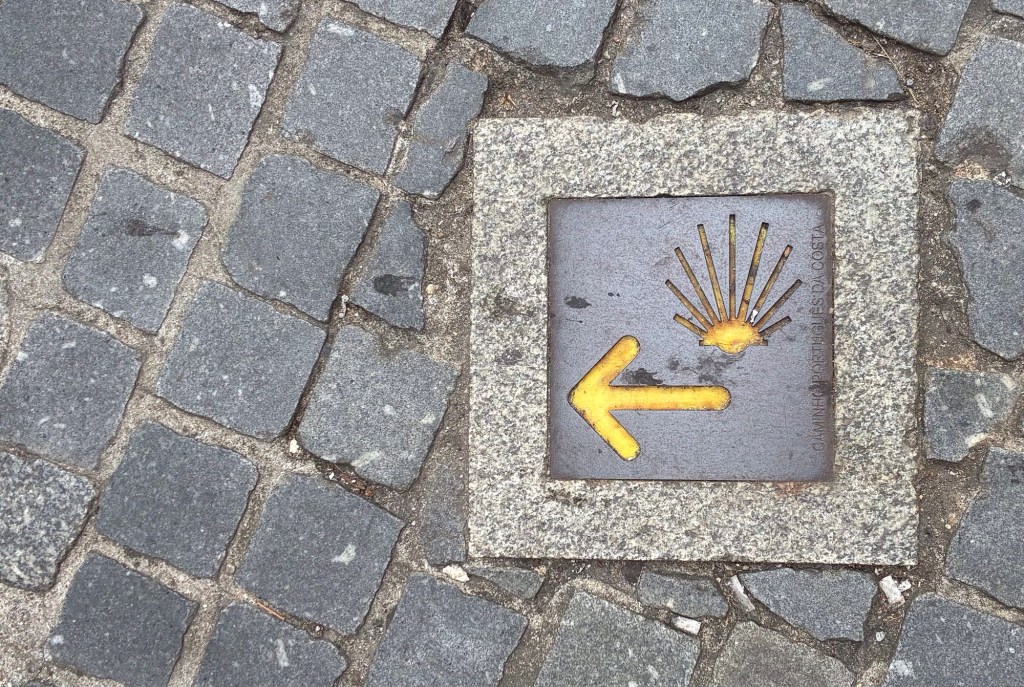
Just to remind me why I am really in Porto, this Camino pavement marker is one that I will be following tomorrow morning out of the city
3 thoughts on “Red Red Wine”
Hi Nick, we will be reading your blog with great interest before we follow in ye footsteps. Enjoy the walk and meeting fellow Pilgrim walkers



Hi Nick, we will be reading your blog with great interest before we follow in ye footsteps. Enjoy the walk and meeting fellow Pilgrim walkers
Carol and Tim
LikeLike
Many thanks for the tourists guide to Porto. Looks like a great destination for a weekend break.
LikeLike
Nice photes Fats
LikeLike