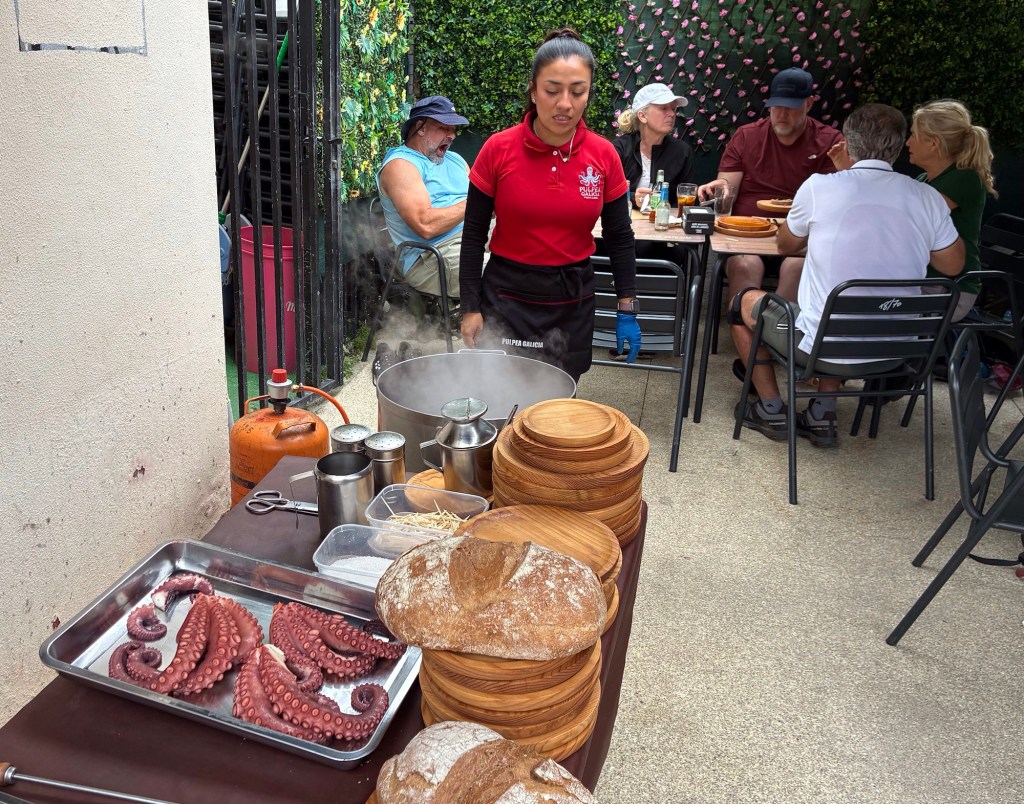
CAMINO PORTUGUÉS – Day 9: Wednesday 3 June 2026 – PORRIÑO to CESANTES (20 [+0] kilometres)

St James (or James the Great as he is often termed) was one of the twelve apostles of Christ. It is his remains that, according to tradition, lie in the shrine at the Cathedral in Santiago de Compostela, and hence have provided the reason and inspiration for pilgrimages such as mine since time immemorial. Adopted as the patron saint of Spain, James was the first of the apostles (after Judas Iscariot) to die, and the first to be martyred, in AD 44. It is said that James preached the gospel in Hispania and, that after his martyrdom, his remains were carried back to the province by sea – to Padrón, where I am due to stay in three days’ time – and thence for burial in Santiago. And so it is in honour of St James that the pilgrimage routes developed across Iberia and from Central and Western Europe, reaching an estimated annual peak in medieval times of a half-million pilgrims making the journey to the saint’s Santiago resting place.
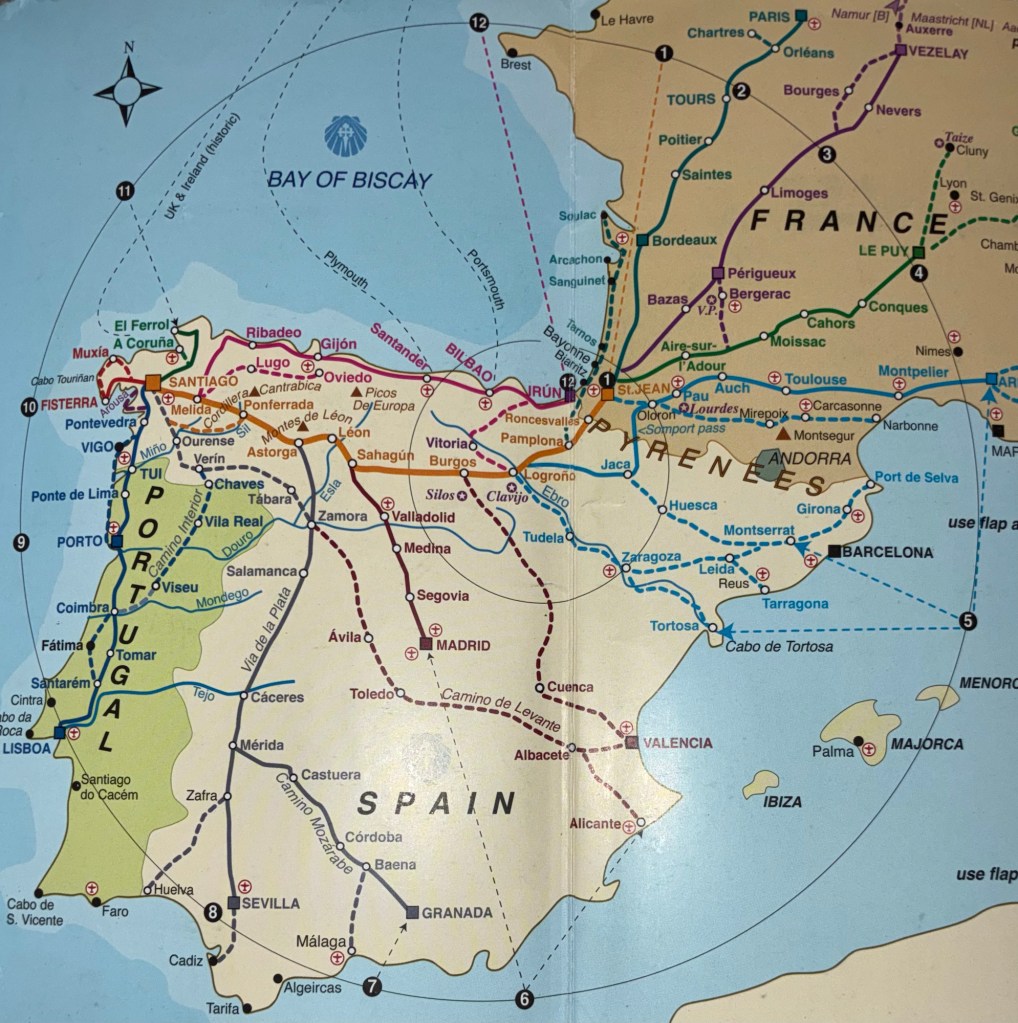
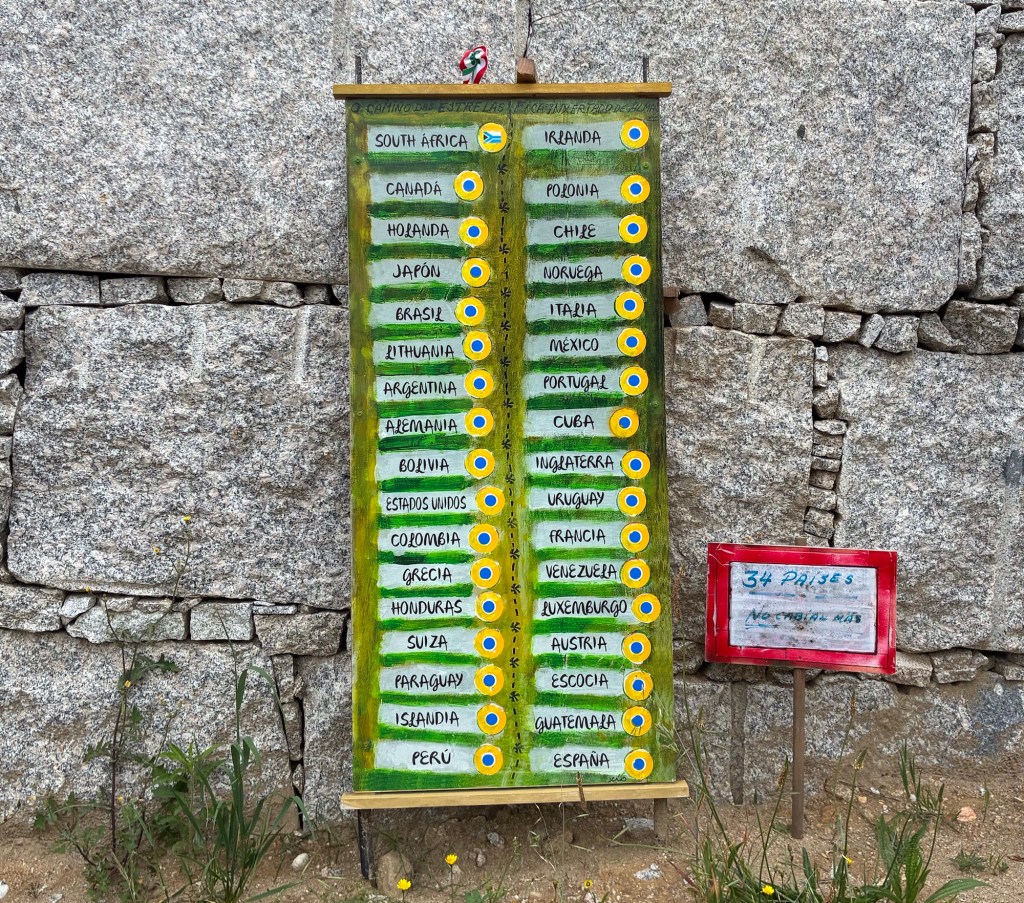
What I find incredible is the recent resurgence of interest in the Camino trails: in 1985 only 690 recorded pilgrims entered Santiago – by 2000 the number had risen to 55,000, then to 250,000 by 2015, and (after a decline around the pandemic) to just under 500,000 in 2024 – so back to the estimated levels of medieval times! The most popular contemporary route is the Camino Francés across northern Spain (47% of pilgrims), the route that I completed last year, followed by my current trail, the Portugués (at 18%), and the Portuguese Costa (coastal route) with 15%. There are several theories doing the rounds here, between us peregrinos, as to why the pilgrimage numbers are increasing at such a rate – mostly these are to do with fears around the worsening state of the world (climate change, poverty and geopolitics), and changing attitudes towards social and personal matters, such as environmental protection, the cost of living, mental health, and self-fulfilment. All of these factors seem to have created a ‘sweet spot’ for a certain sector of the world’s population, now seeking indulgence in the joys of a shared journey, whilst enjoying the physical activity, camaraderie, emotional headspace and personal reflection that a Camino provides. So far on my Portugués trek I have met and spoken with nationals of 24 different countries – from Canada to Korea, Austria to Australia, Uruguay to the UAE, and Italy to India. Perhaps surprisingly only a small minority of pilgrims are overtly religious, and far fewer than half seem to have a specific personal reason (eg separation, bereavement, insolvency or failing health) for undertaking the walk, aside from the personal challenge and enjoyment of the pilgrimage for its own sake. In general, I would observe tendencies within this self-selecting group towards democracy, anti-popularism, environmental protection, a love for nature and exercise, tolerance, politeness, sociability and self-awareness. Hence to undertake a Camino serves to reaffirm faith in the prospects for global harmony.
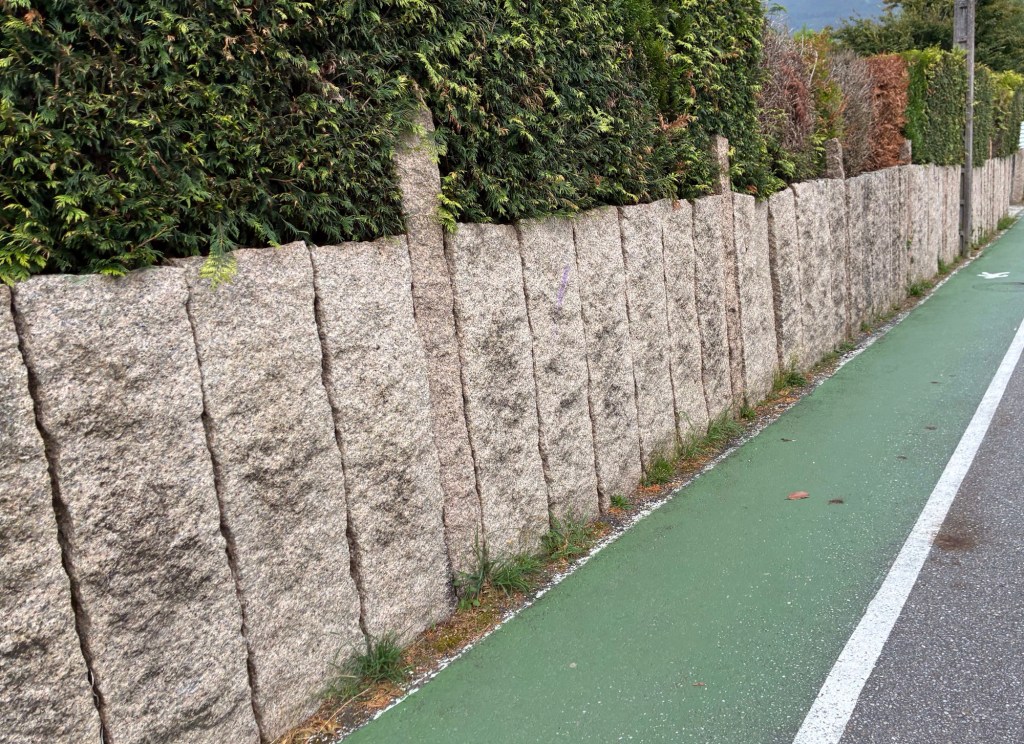
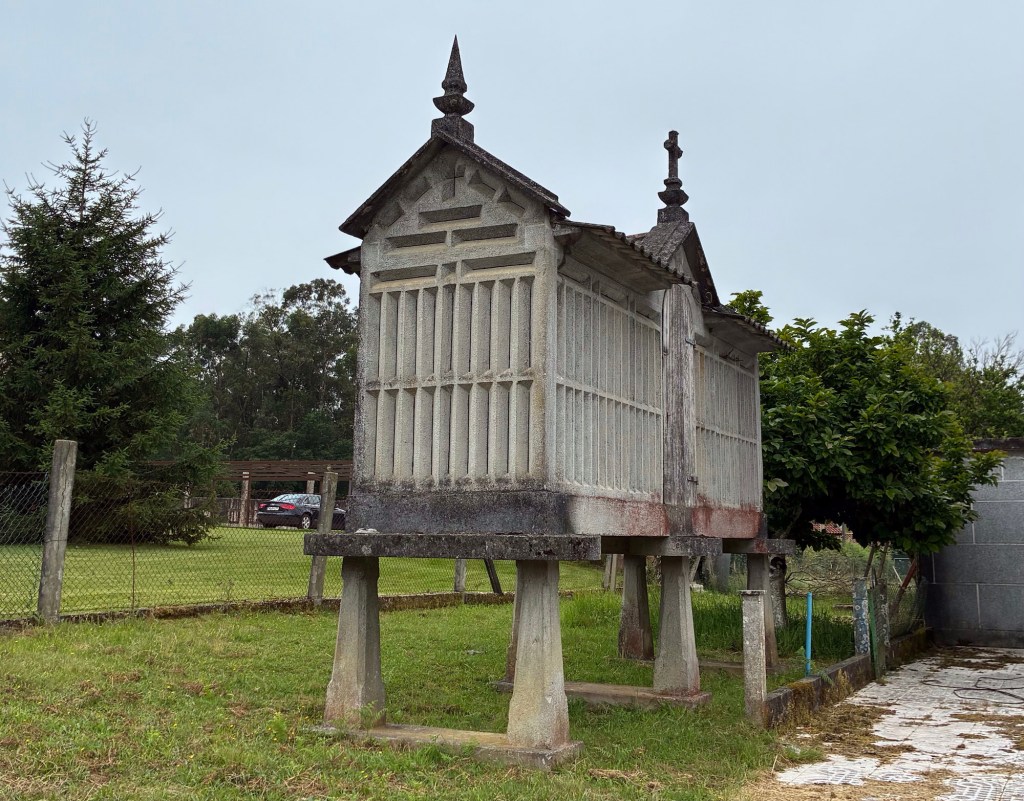
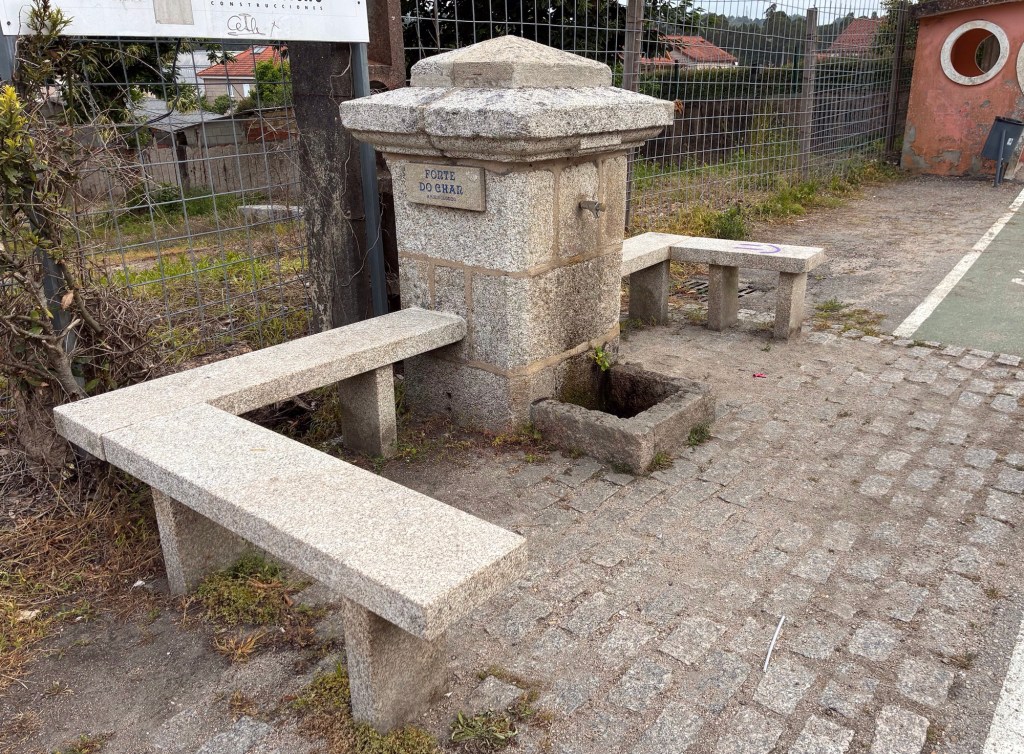
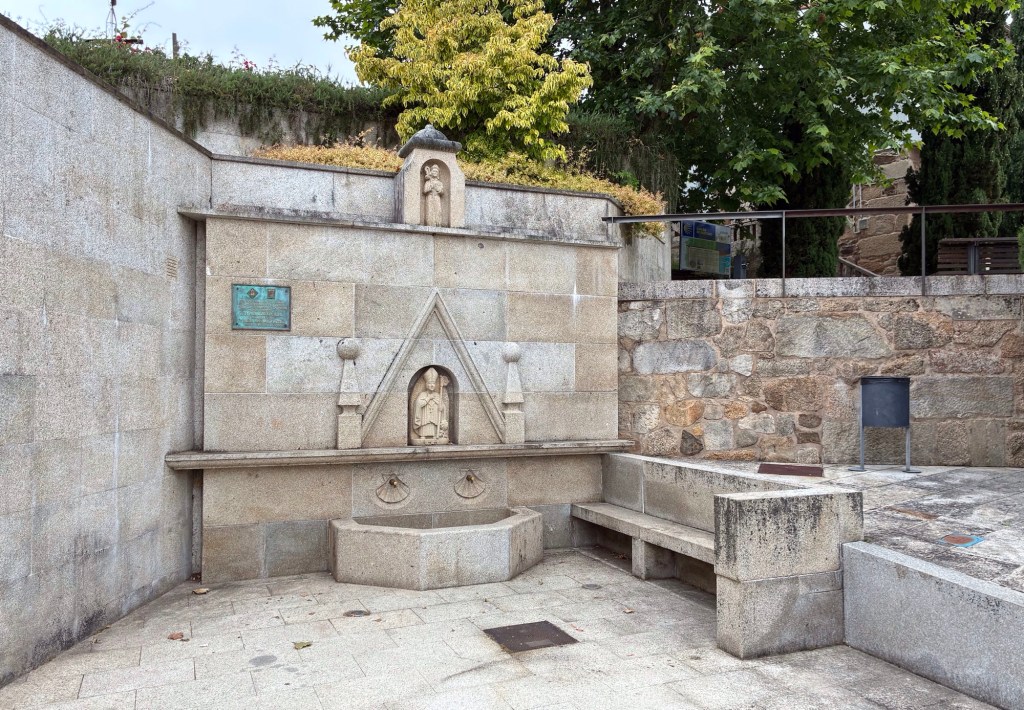
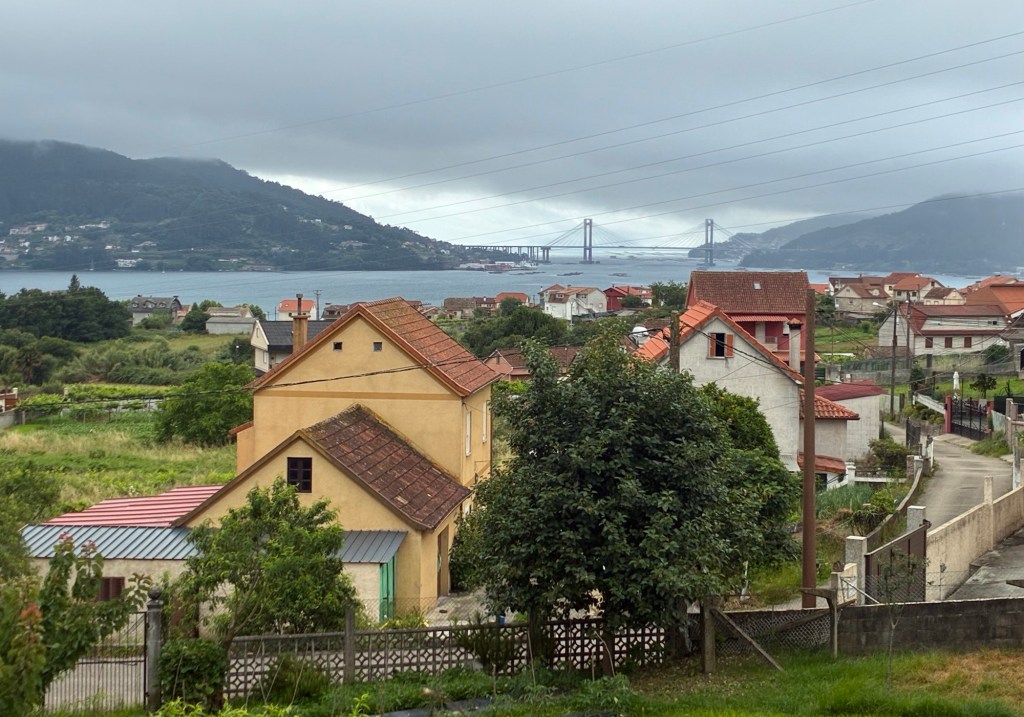
Here follow the maps and pictures of my day.
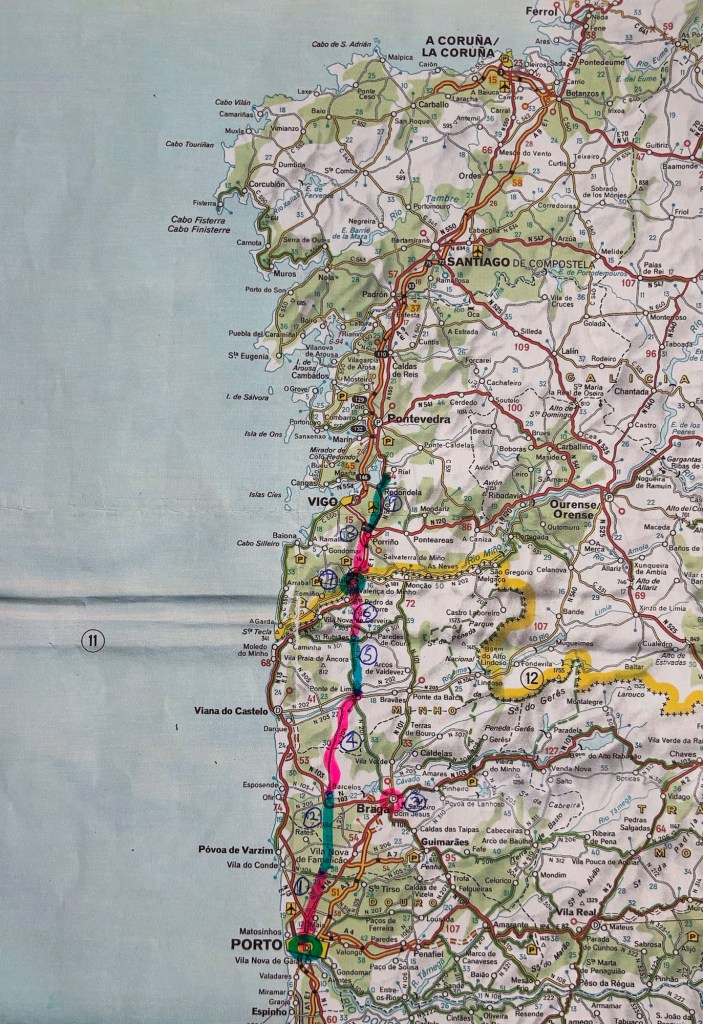
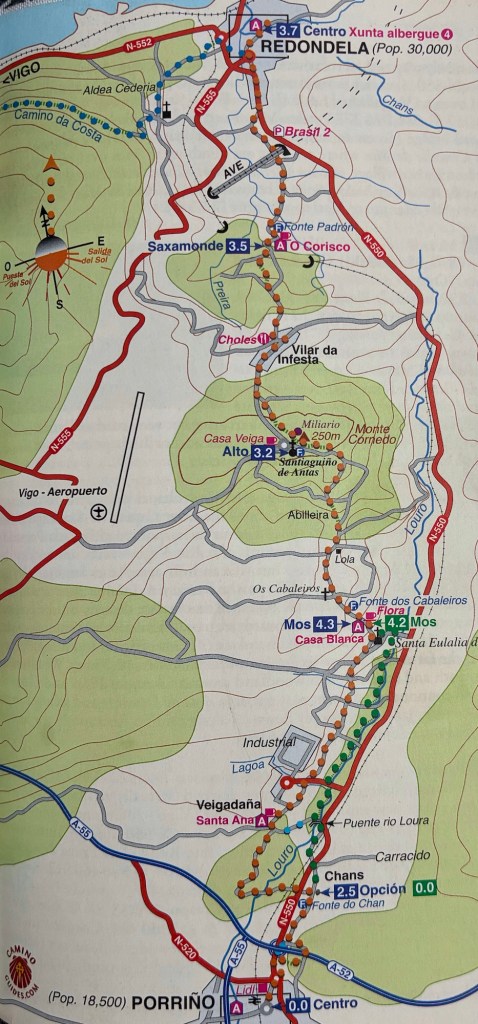
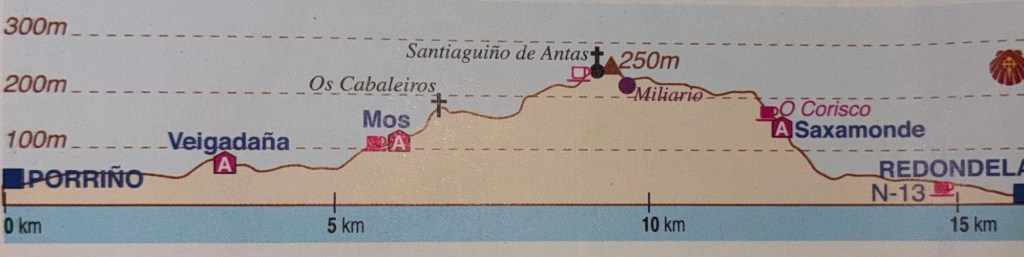
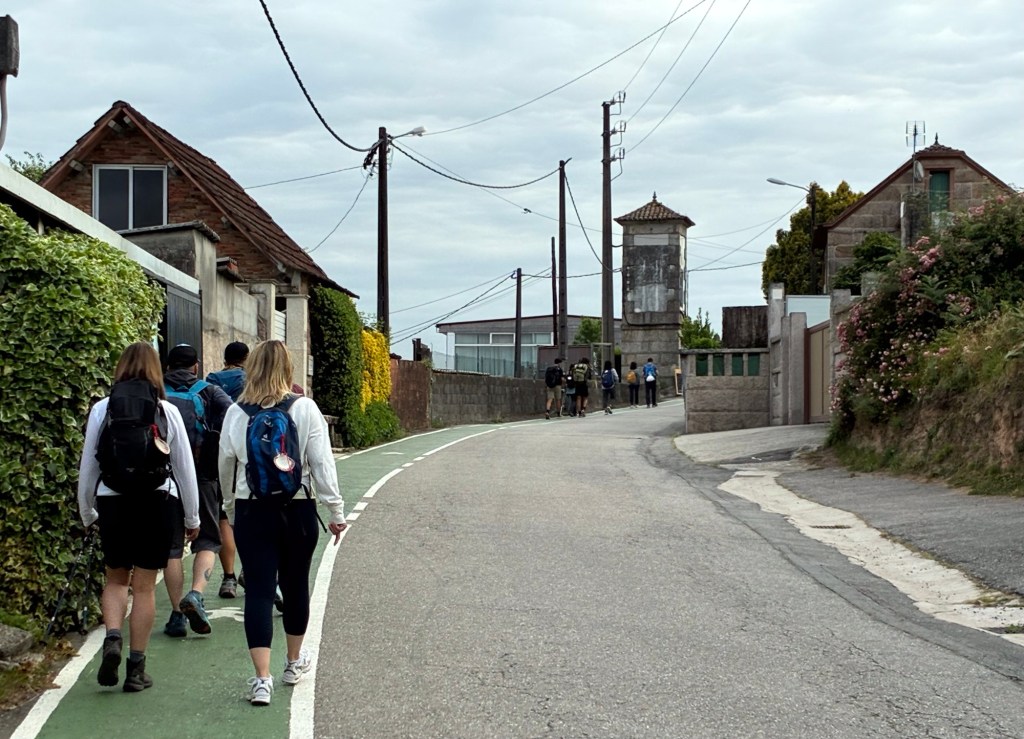
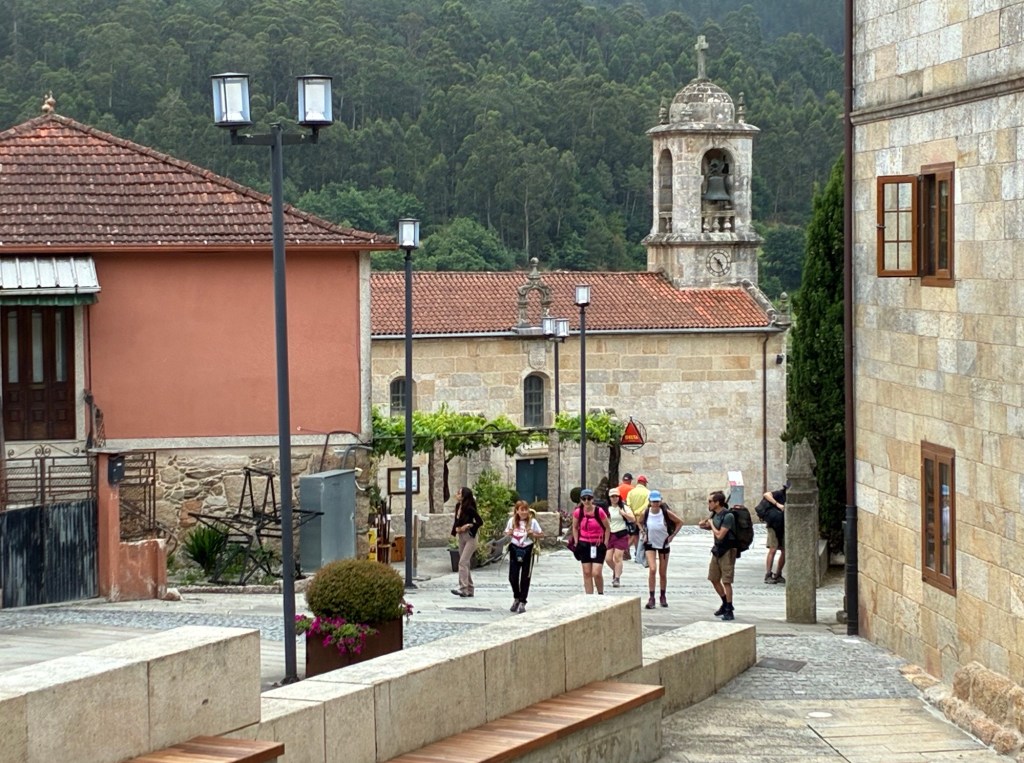
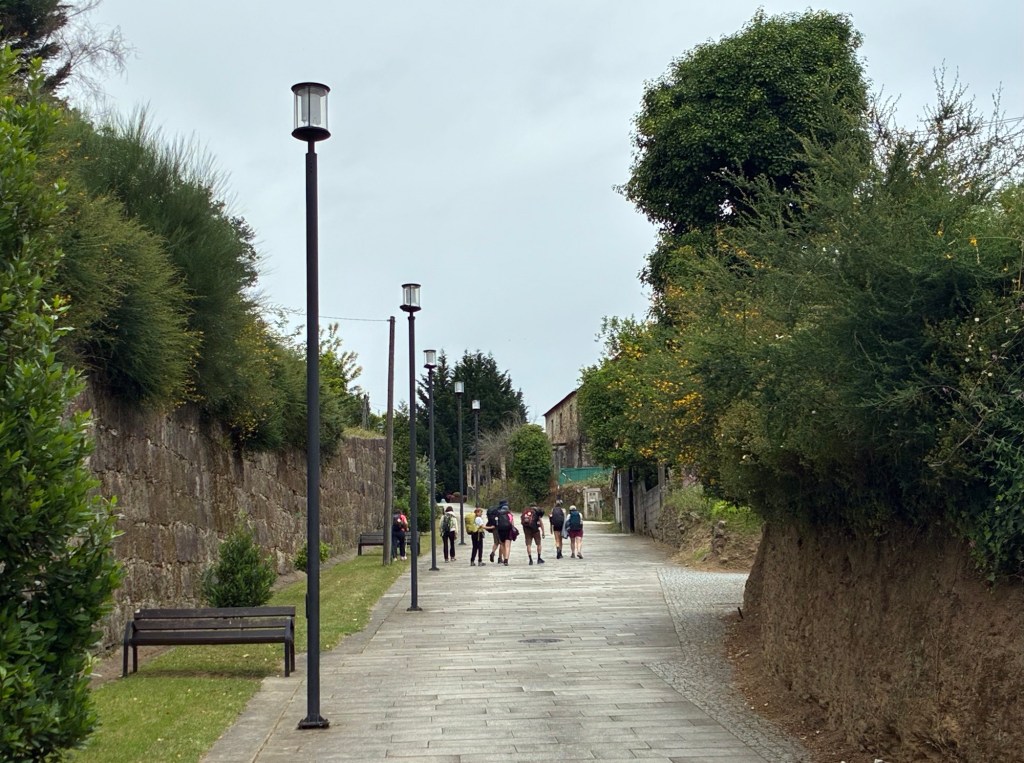
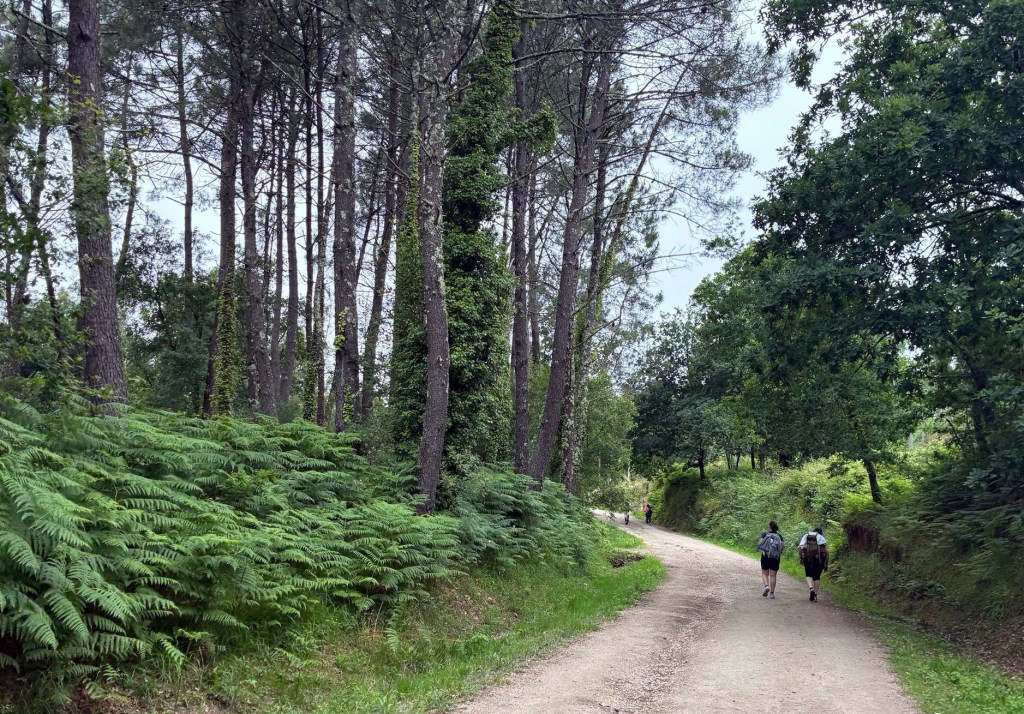
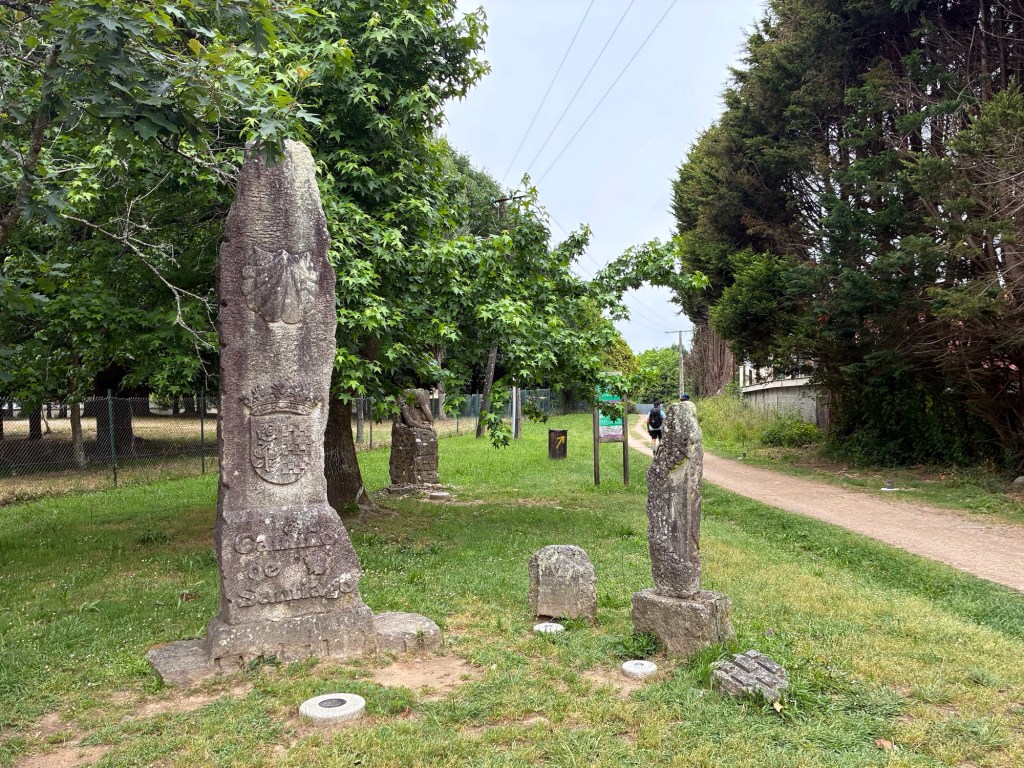
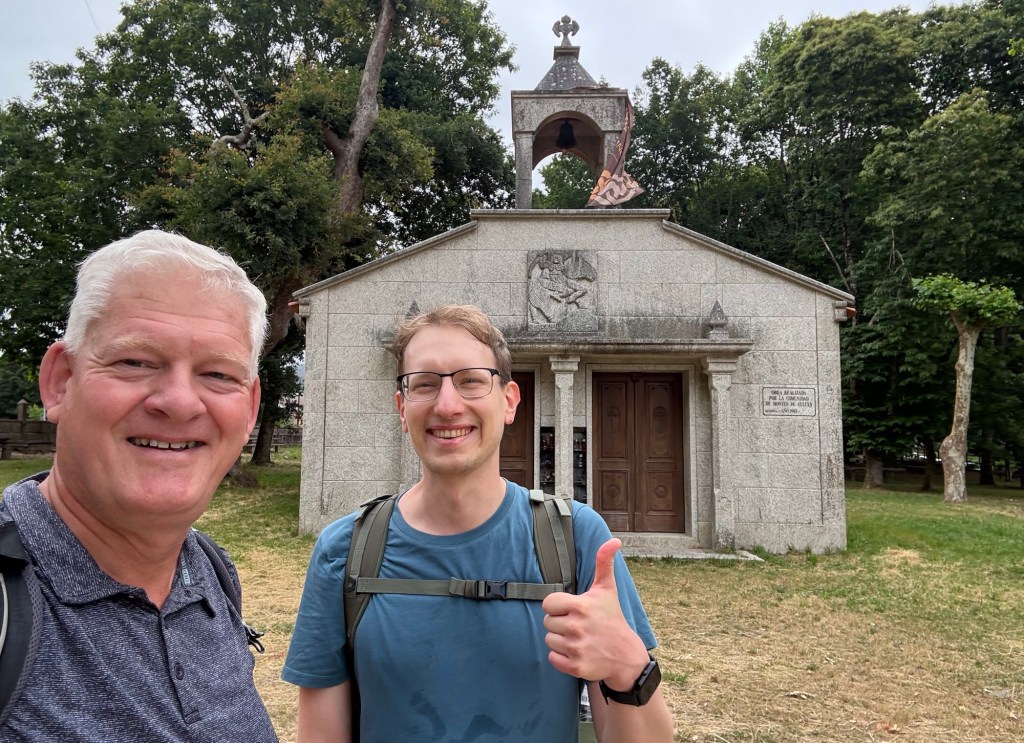
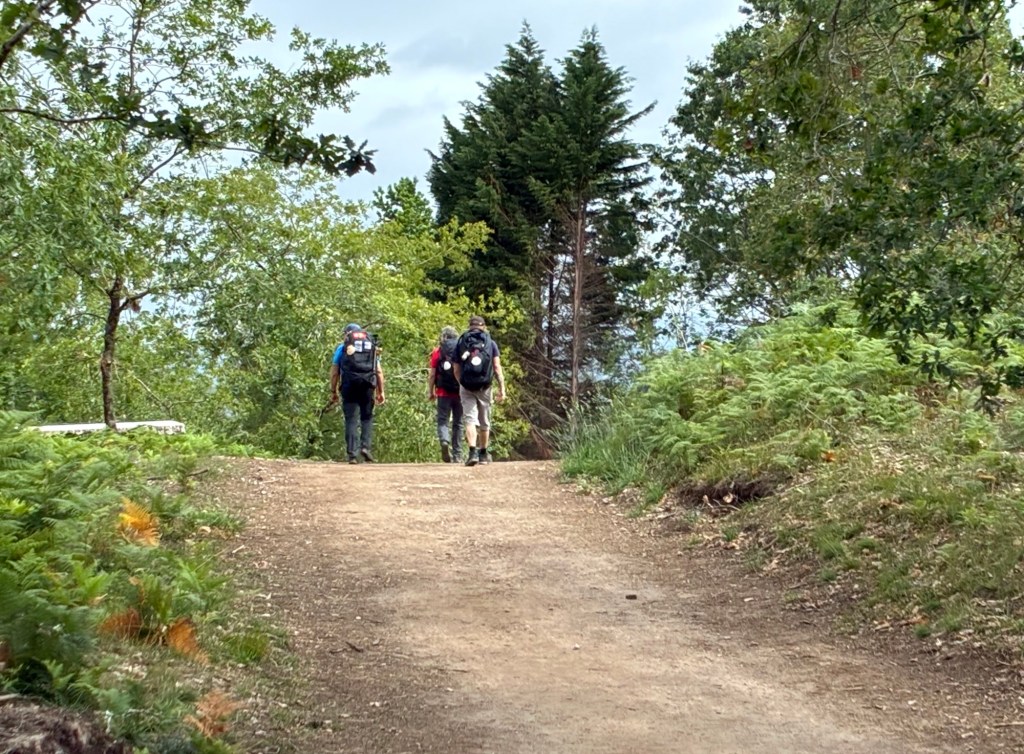
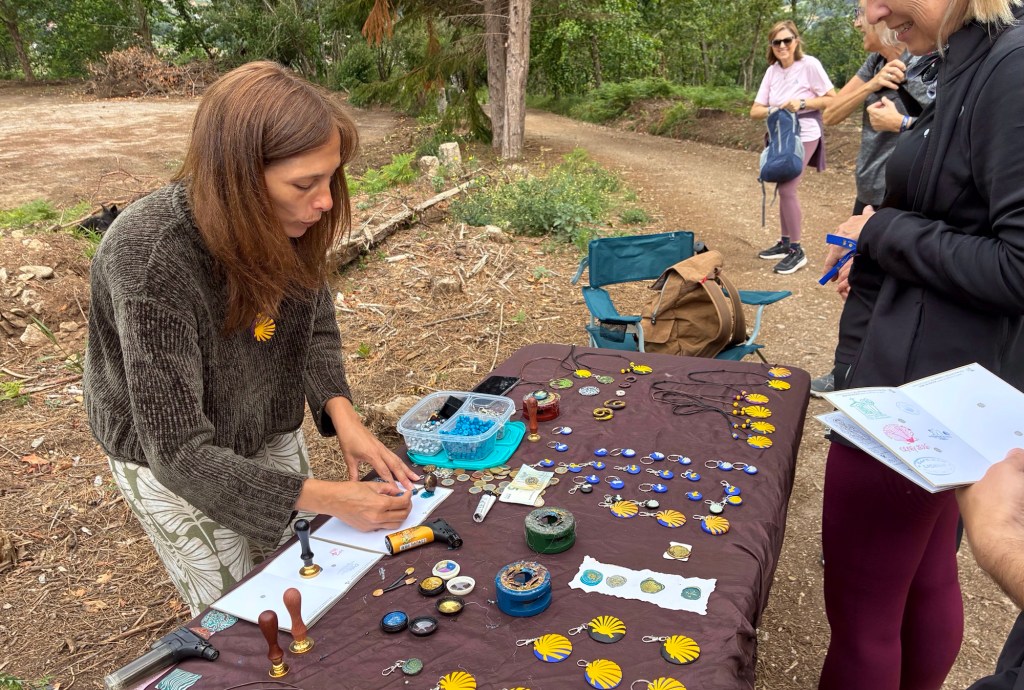
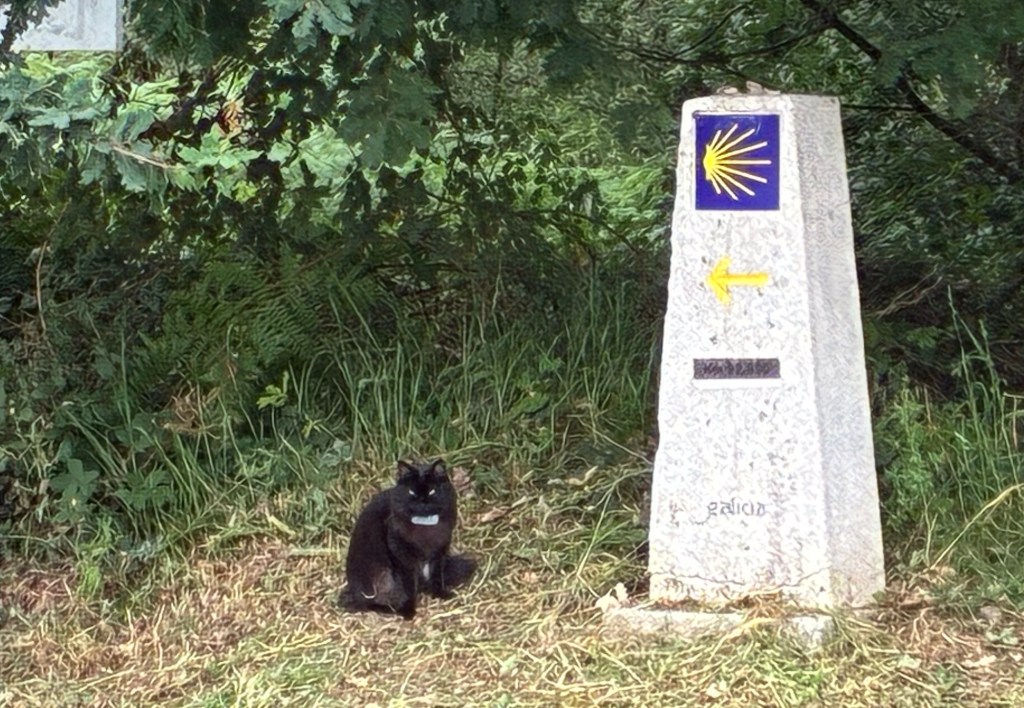
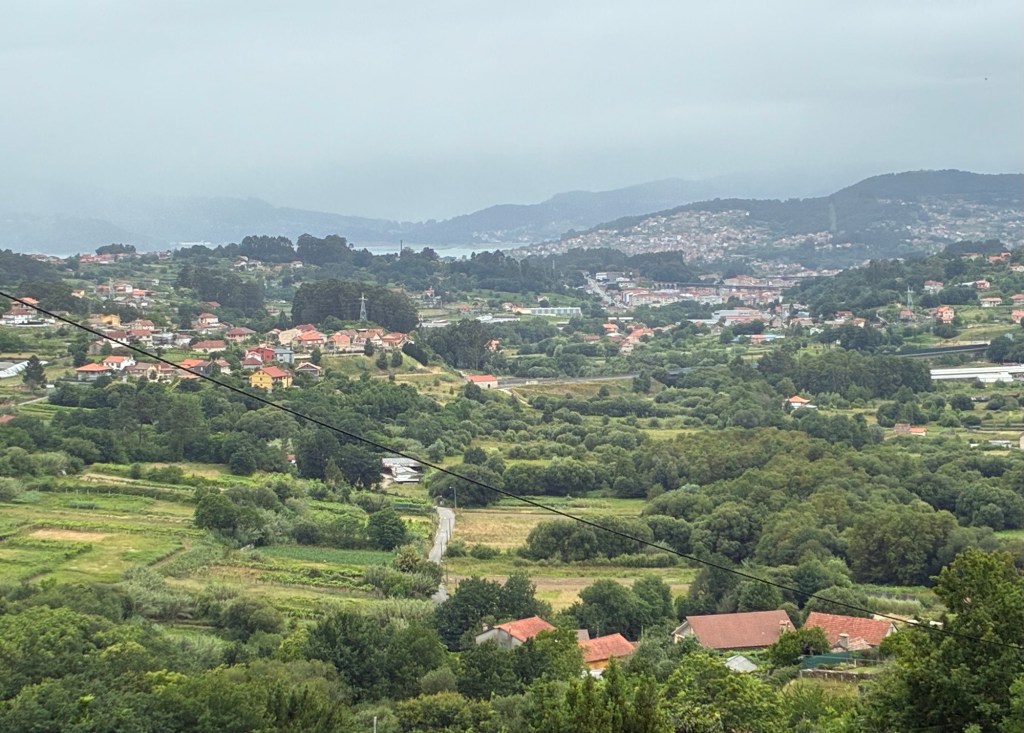
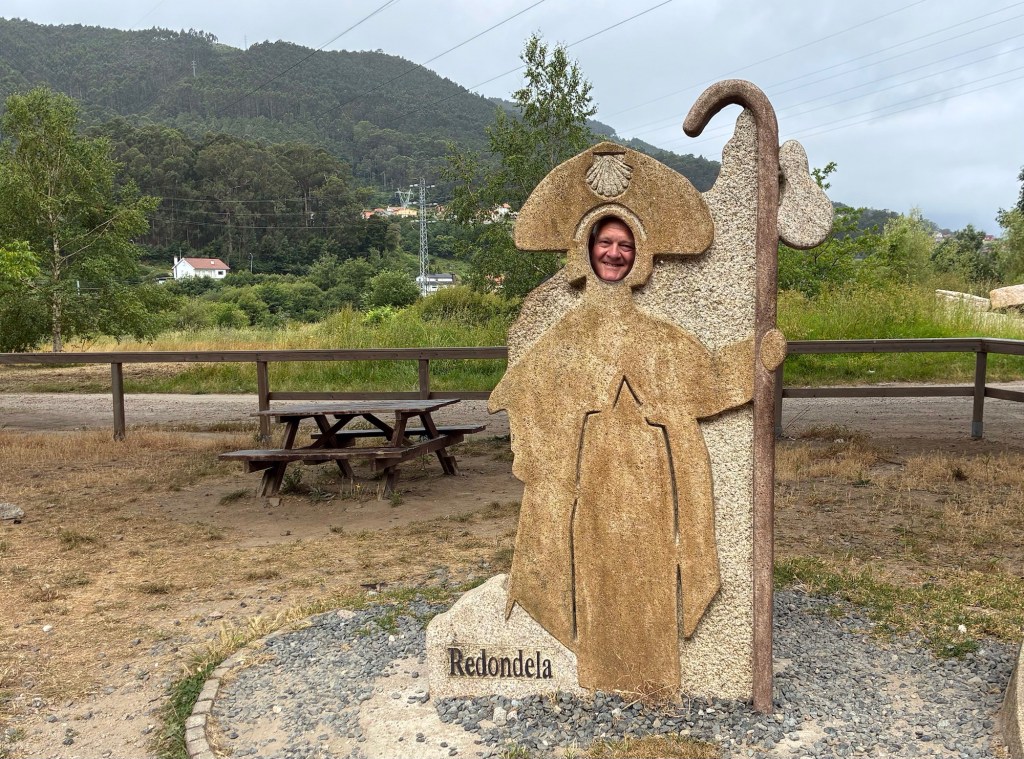
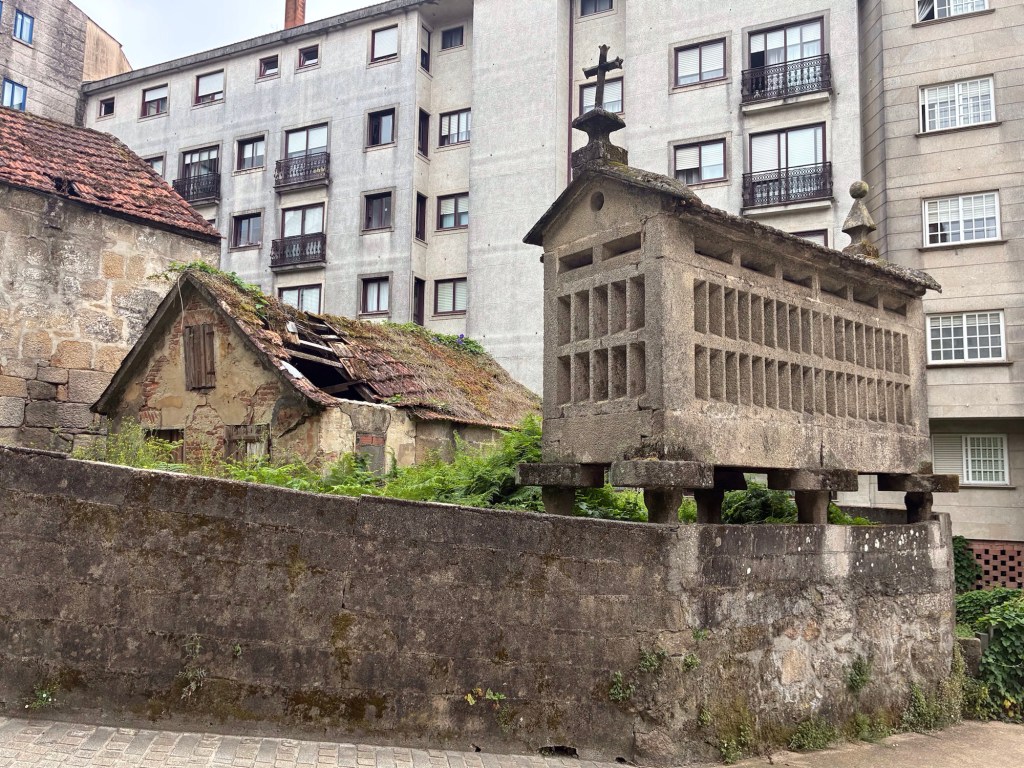
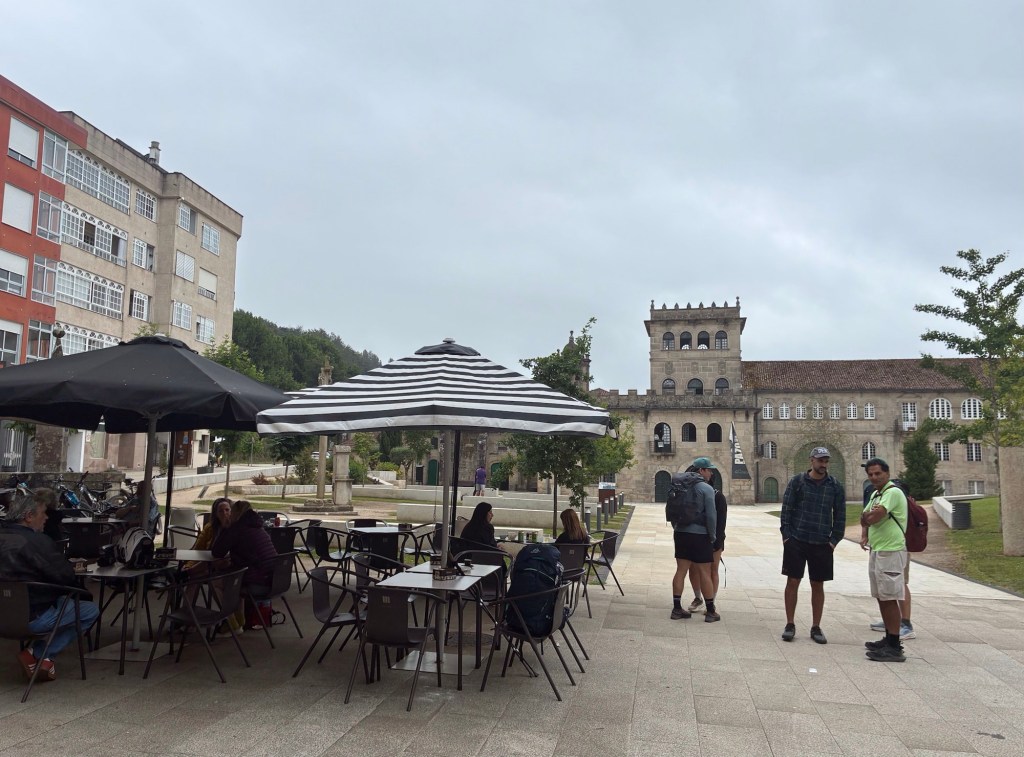
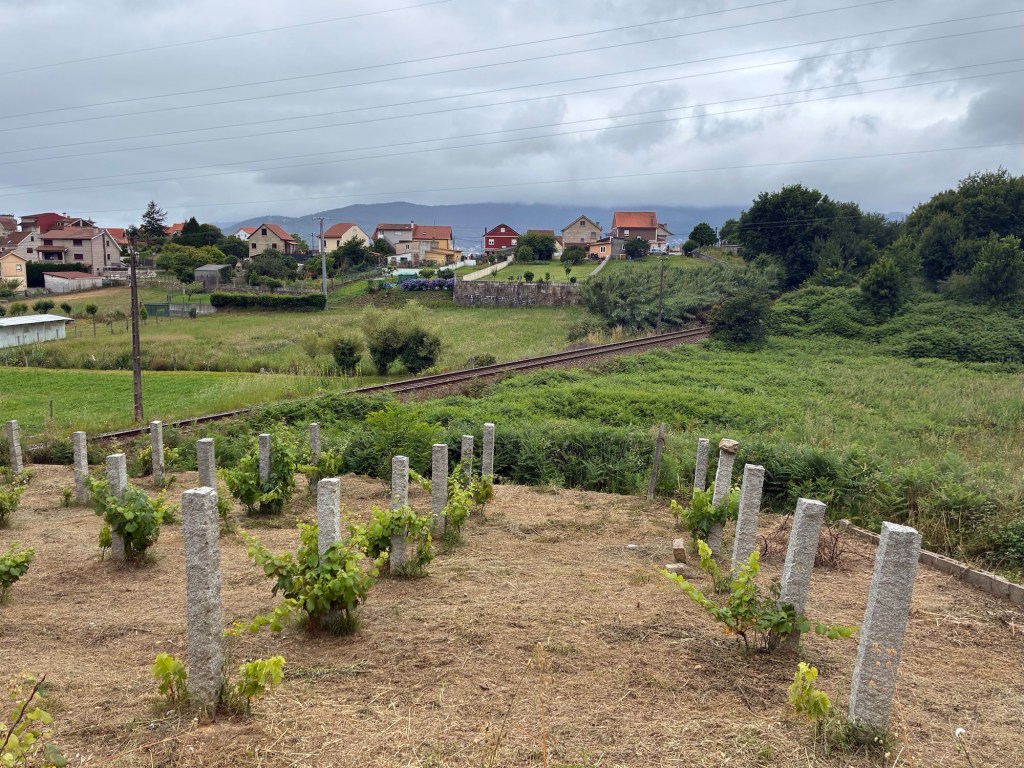
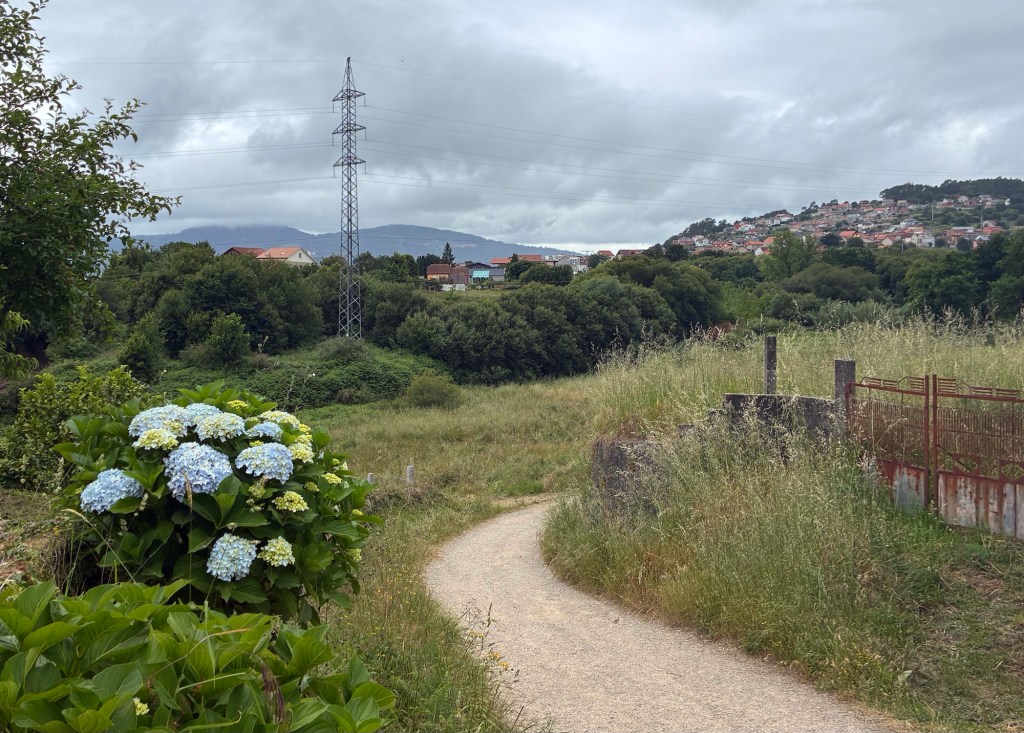
The two Portugués Caminos, the Costa and the Central, merge in Redondela, the town that I passed through this afternoon, and this, combined with the above ‘100-kilometre ruling’, means that I can now expect busier paths for the remainder of the way to Santiago. Hence a different Camino experience may lie ahead – but I hope very much to be able to spot a few familiar faces in the crowd! Roll on tomorrow for some coastal walking.
The song ‘James’, from which I have taken today’s Blog heading, was penned by US singer-songwriter Billy Joel as a heartfelt ode to an old friend who had chosen a different path in life, namely education (and responsibility), compared to the writer’s life on the road as a wannabe musician. The lyrics question whether James, the friend, has truly enjoyed the freedom to pursue his authentic self or whether he has just had to conform to the expectations of others. Released in mid-1976, ‘James’ appeared as the first single from ‘Turnstiles’, Joel’s fourth studio album, that predated his commercial breakthrough with ‘The Stranger’ LP of the following year.