
CAMINO INGLÉS – Sunday 31 August: REFLECTIONS, FACTS & FIGURES
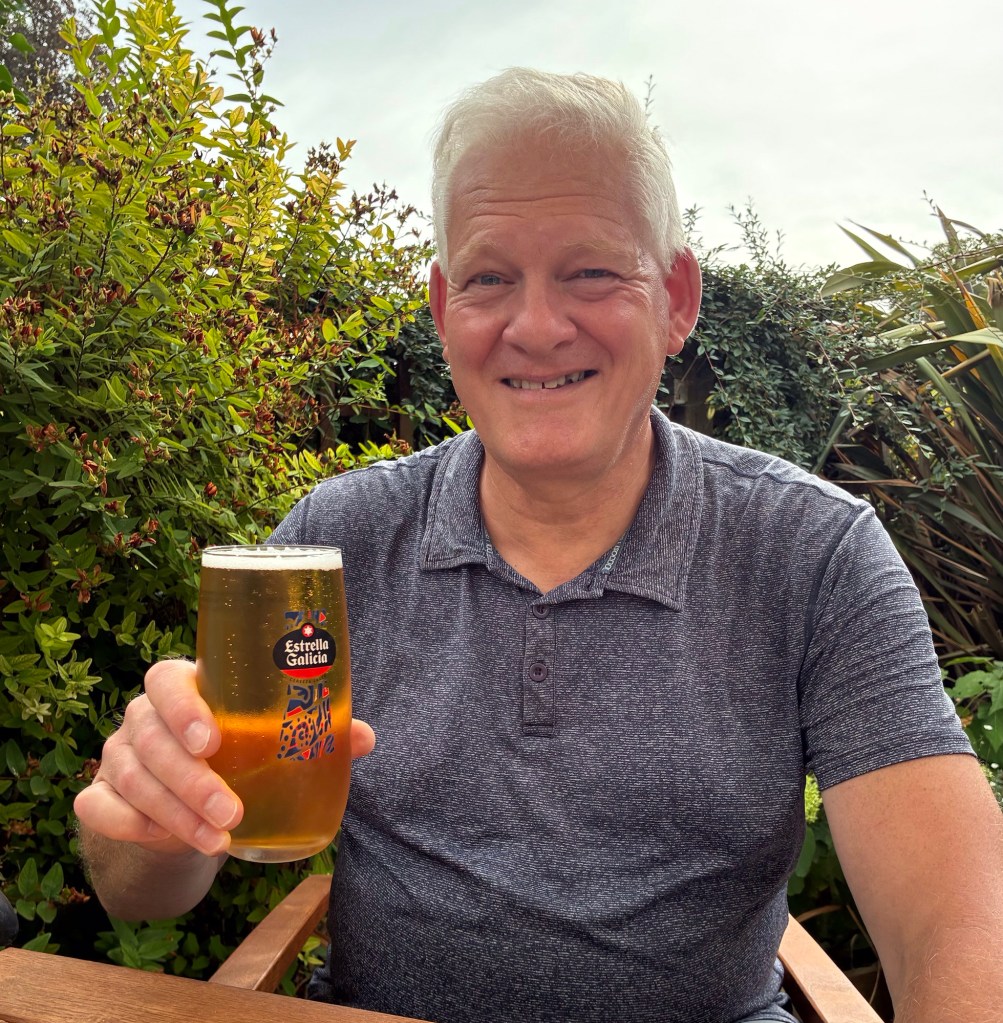
Home, rested and dry! We are now back from our Camino Inglés, and we have been looking back on a fabulous week of walking and camaraderie, nature and history, laughter and reflection. Having set out on two previous pilgrimages on my own, it was a huge pleasure to share the experience with Rachel and to have the presence of old friends Karen and George alongside us. The English section of this ancient pilgrimage route is much less trafficked by walkers than the Francés and Portugués paths that I have followed abroad previously, so the company was especially appreciated. We did meet a handful of other pilgrims (as reported, we numbered 404 to 407 for the year in one of the church visitors’ books that we signed), but such small numbers do not compare with the thousands that now walk daily across Iberia along the more popular paths that descend upon the cathedral in Santiago de Compostela.
These considerations suggest that for anyone based in the UK the Camino Inglés, from Reading to Southampton, provides an excellent first introduction to the joys of walking a pilgrimage – the path is easily accessible, the terrain is pleasant and undemanding, and there are no issues around language and culture on the journey. On the flip side, there is very little camino infrastructure along the English section of the way, beyond some basic signage and an occasional information board – plus, of course, access to the Pilgrim Passport stamps in the various establishments that line the path. The idea of pilgrimage is still in its infancy in this country but, with a little research, the places along the way do provide all of the necessary interest, as well as the basic facilities required to sustain a walker – even if the prices for wayside food and accommodation are significantly higher than on the more frequented routes overseas. The pilgrimage trend seems to be ever-upward, and with the recent signposting of the route and it’s promotion as part of a Europe-wide network of ancient pathways, we can expect greater numbers walking the Camino Inglés, and this should soon start to attract additional facilities. Overseas, for example, the widespread popularisation of Camino-walking has seen numbers increase to around 500,000 pilgrims annually arriving at the cathedral in Santiago – up from under a thousand just fifty years ago, and now equal to the estimated numbers from the late medieval period.
In this context, in walking the English Camino Rachel and I like to think of ourselves as being amongst the modern-day trend-setters – not a sensation that we are accustomed to feeling – and I hope that we have inspired a few others to follow us in enjoying a Camino experience. The common sense of purpose and the connection with history are aspects of Camino walks that I had not experienced before on long distance footpaths – so I am sure that this Camino Inglés pilgrimage will not be my last!
I have just a few more pictures to share of our week on the trail.
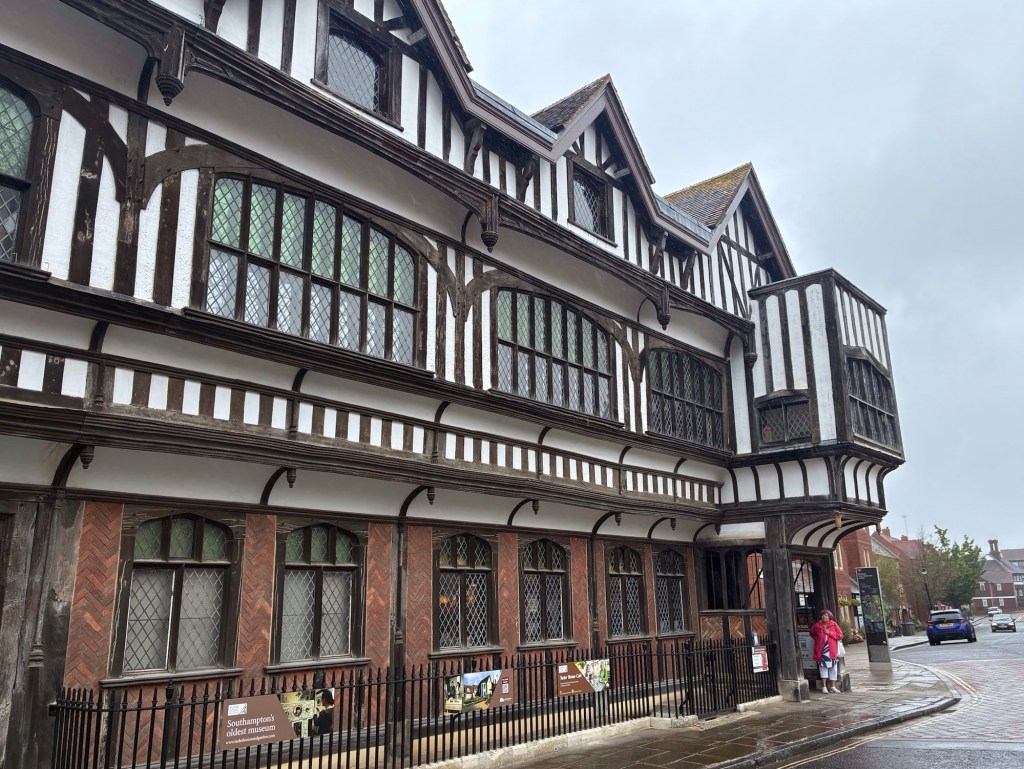

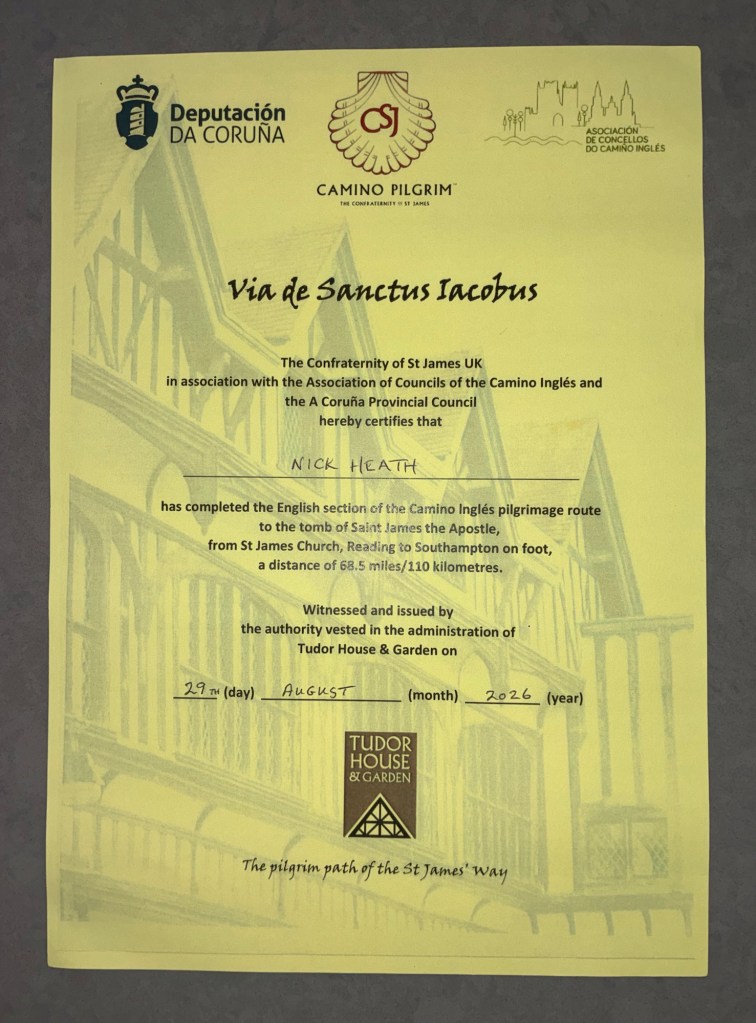
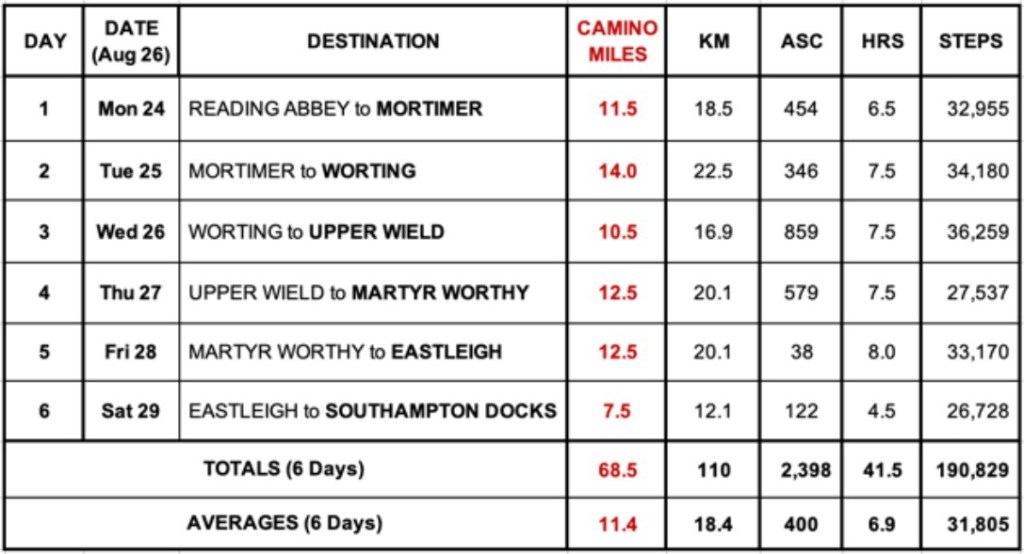
As I have said, any Camino is all about the people and the camaraderie, the places and the history, the connections and the emotions – rather than being about facts and figures. But for the record, and for anyone tempted to follow in our footsteps, our vital statistics for the week read as follows:
And, for those interested, my Camino Inglés playlist reads as follows:
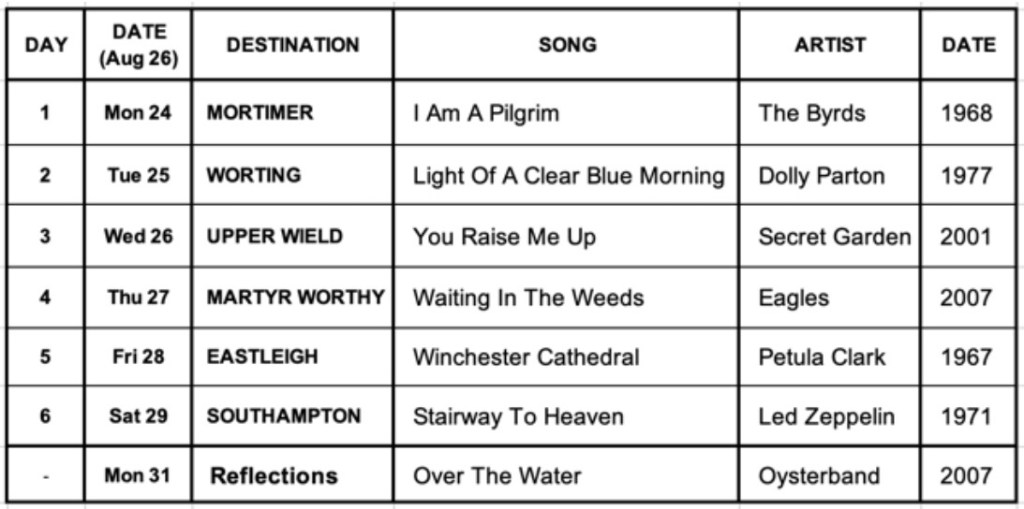
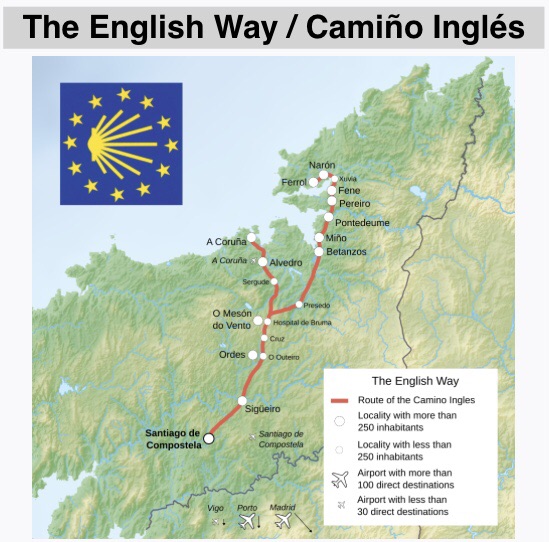
I could perhaps add the Beatles’ ‘Ballad of John and Yoko’ to the list, as the song’s first line: ‘Standing in the dock at Southampton’ has some prescience given our intention to resume the Camino Inglés at the Spanish port of A Coruña for the final 75 kilometres (47 miles) to the Cathedral in Santiago de Compostela – the ultimate destination of our pilgrimage. I hope to be reporting back with news of our future plans to complete the walk before too many more moons wax and wane!
The song ‘Over The Water’ that I have used for my Blog heading today follows a song of that title by British folk-rock group Oysterband, the first track off their 2007 album ‘Meet You There’. The long-standing Kent-based band took their name from the oysters of Whitstable that are renowned for their quality – I wonder how they compare to Galician octopus?



Definitely felt like a lot more work for my little trotters! Now recovered so can hopefully plan the Spanish section soon.
LikeLike