ROUTE 1066: Friday 23 October 2026
At the risk of repeating a little of what I have said in some earlier posts, I thought I would share with you all on this Blog the script of a short piece that I will be presenting to the Tring U3A Writing Group at our next meeting on Monday afternoon.
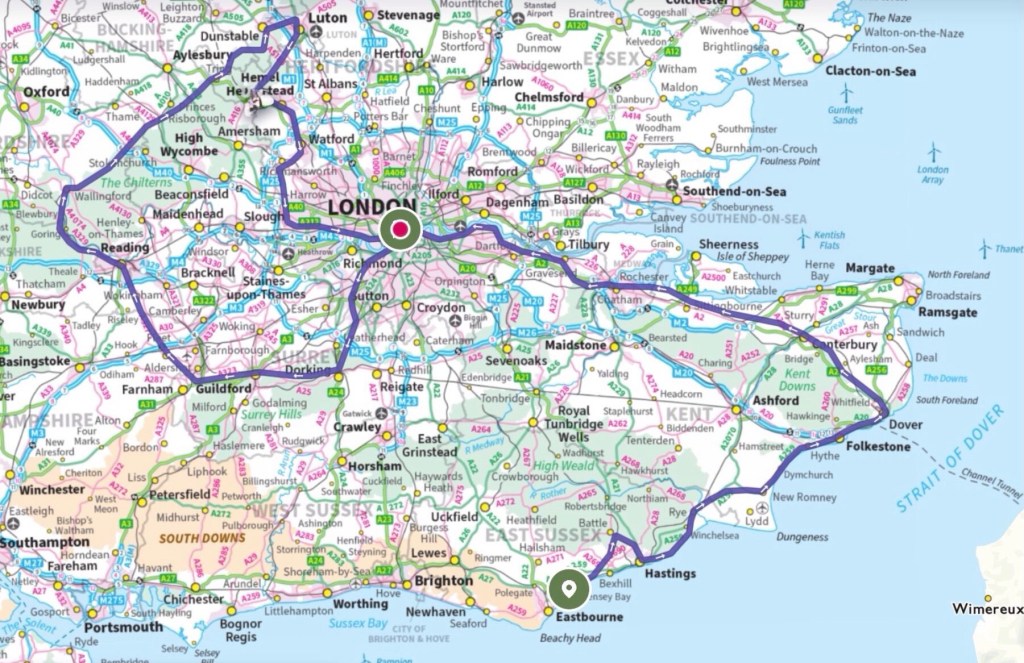
“The Path is 360 miles long, and whilst it passes through many well-known towns and familiar parts of southern England, nobody has trodden the entire route, at least to my knowledge for nearly a millennium: 960 years, to be precise. When this fact dawned upon me it was quite a revelation and, I have to say, somewhat of a temptation. And on realising that I might be able link the challenge of walking this historic Norman trail whilst supporting an important contemporary cause, I guess that I knew, within seconds, that I would soon be putting on my walking boots to follow in the footsteps of an ancient army.
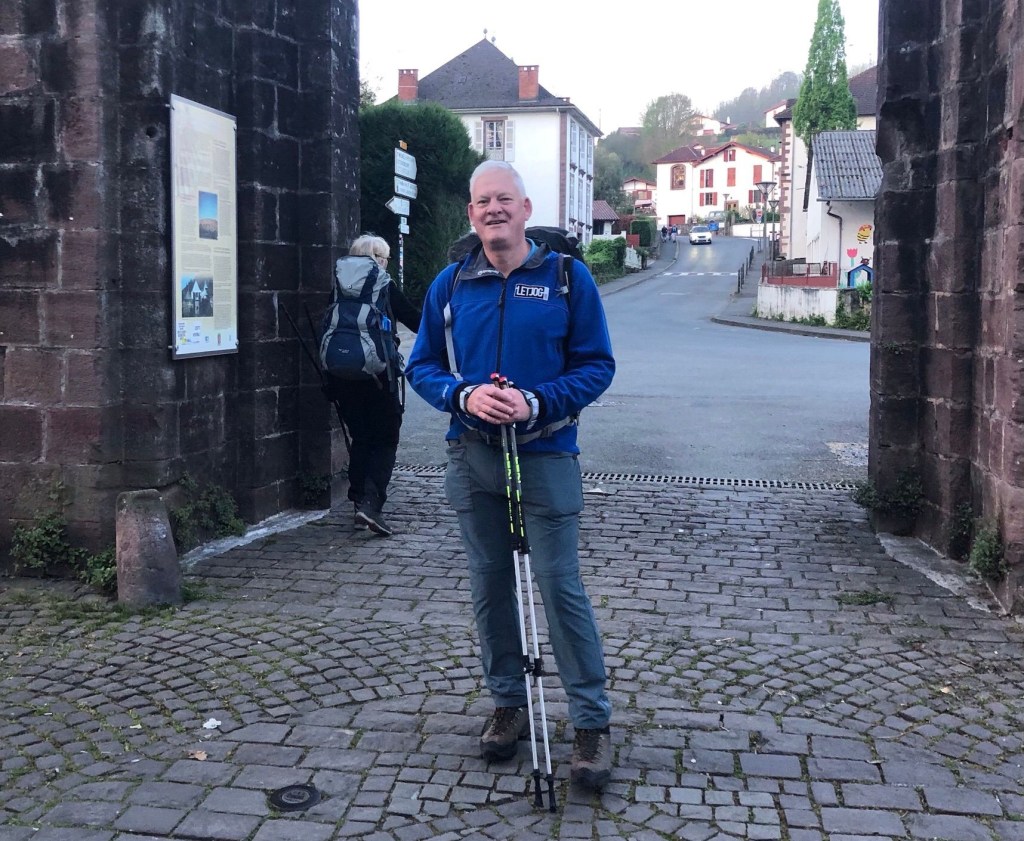
“Of course I am no stranger to long-distance rambles, and in the last two years I seem to have caught the Camino bug, completing three pilgrimage trails across France, Spain, Portugal, and southern England. One of the main attractions to me of these medieval pathways is the connection with the past through the landscapes and buildings, a rich and tangible heritage that brings to life my reading and research around the history of our ancestors.
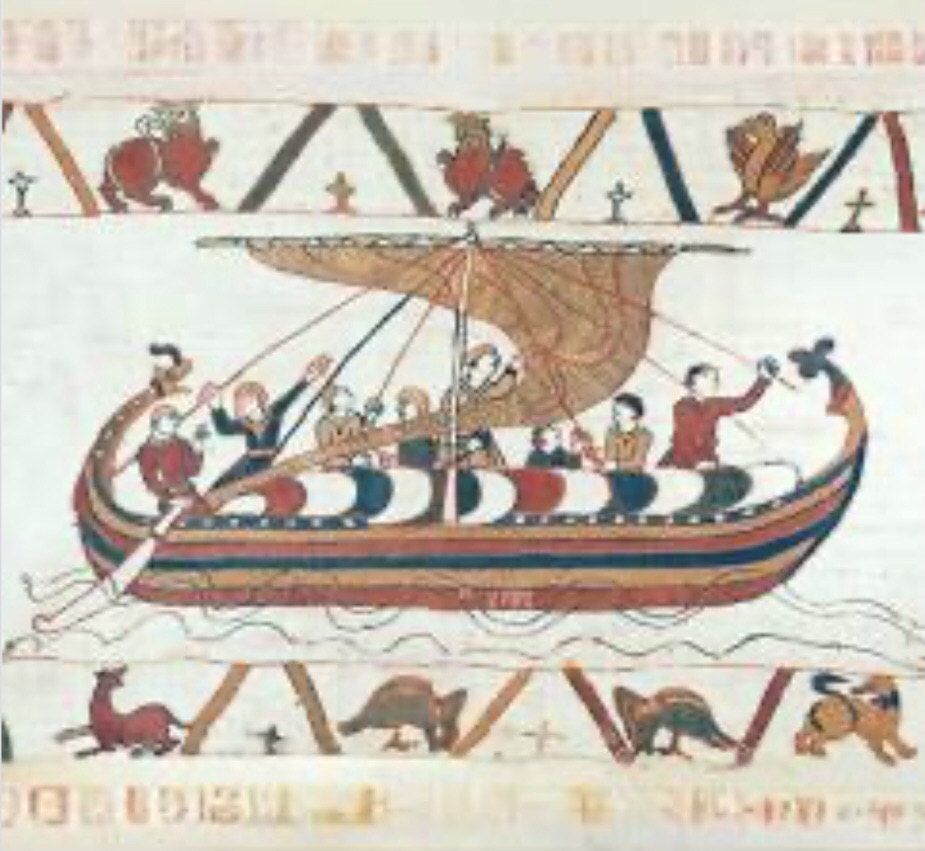
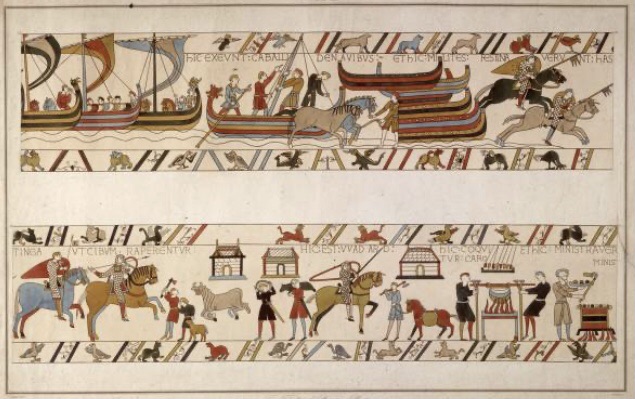
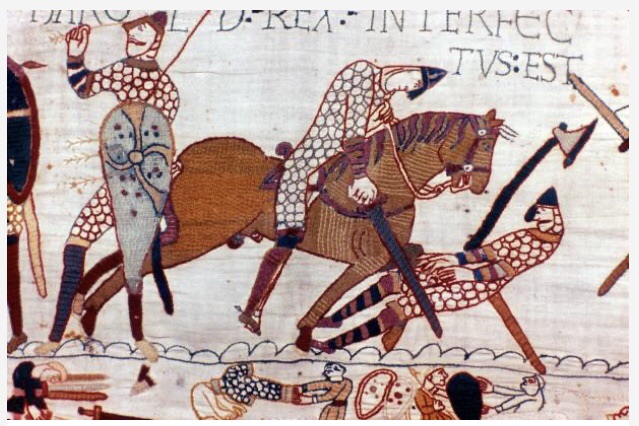
“But the Path in question starts out from a beach in southern England, Pevensey Bay, just east of Eastbourne, where William’s boats made landfall on the 28th (or perhaps the 29th) of September 1066. He immediately sent a deployment of men to take nearby Hastings, a better harbour for his fleet, whilst he mustered his main force a few miles inland. News of William’s arrival soon spread, and the Anglo-Saxon leader, Harold, who had just expelled some invading Norseman in a bloody skirmish at Stamford Bridge, marched southward in an attempt to surprise these Norman invaders. Battle was joined on 14 October 1066 on a hill, Senlac, some miles inland from Hastings. You will all know the outcome, as William’s forces eventually slew Harold and overwhelmed the English at the end of a very long day of fighting. The present-day town of Battle, stands at the spot where Harold and many of his men fell.
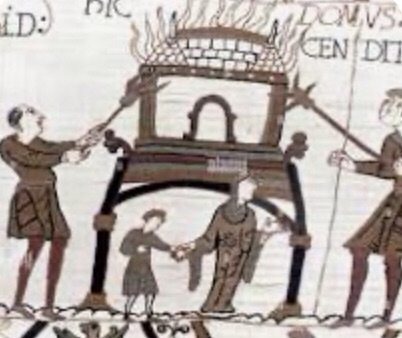
“William retreated to Hastings, so that his troops could count their losses, stow the spoils of victory, and rest their weary frames for the conquest to come: their journey though was to prove far from straightforward. The army moved first to the east, garnering supplies as they ransacked the villages and countryside, before holing up in Dover, where the citizens had surrendered to the invaders.
William awaited news from London of a surrender, but this did not come. His army, short on rations and stricken by dysentery grew restless: it was time to move on – at least for those who could. Canterbury fell, as did the settlements of Kent along the way – but on reaching Southwark the army’s path was barred at London Bridge, the capital’s only Thames crossing point. William then adopted a new tactic – one of terrorising the natives whilst cutting off the supply routes to London. Turning south he marched to Dorking, on to Guildford, and then in a wide arc through present-day Surrey, northern Hampshire and Berkshire, and into Oxfordshire, his raiding parties gathering supplies whilst sacking the towns and villages in his wake. At Wallingford the Norman army at last crossed the Thames, continuing north-east along the Icknield Way to sever the vital artery of Watling Street that linked London to the Midlands.
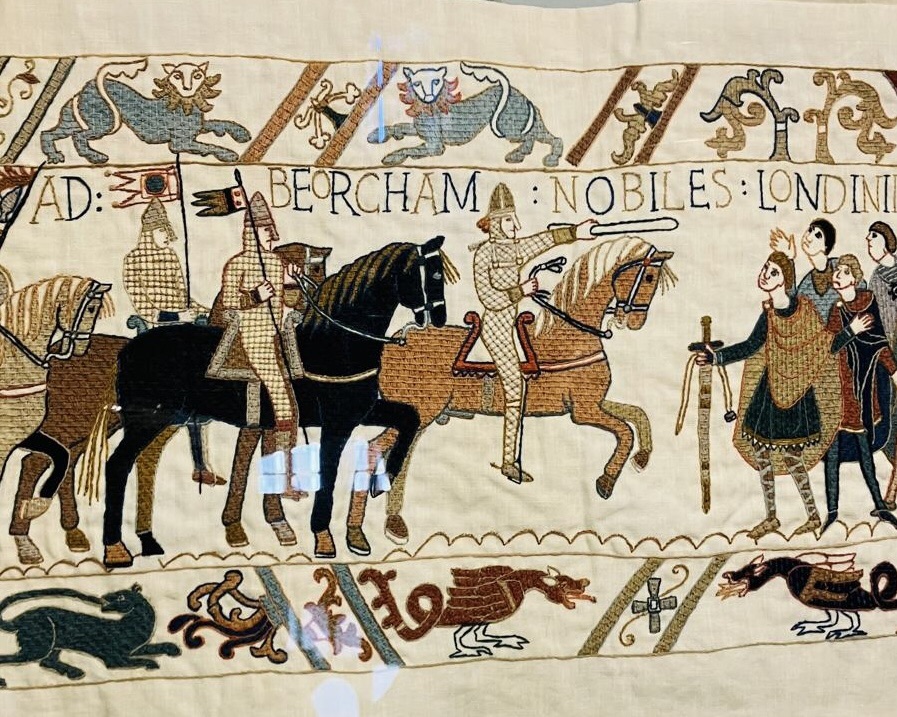
“Near Luton confirmation came, at last, of the surrender. William and his army turned southward, meeting the delegation of vanquished Englishmen at Berkhamsted, and here ‘William the Bastard’ took the Crown of England to become ‘the Conqueror’. Without further loss of further blood, the new monarch marched into London ahead of his coronation at Westminster Abbey on Christmas Day 1066 – some ten weeks after the Battle of Hastings and nearly three months since landing on the English shore.
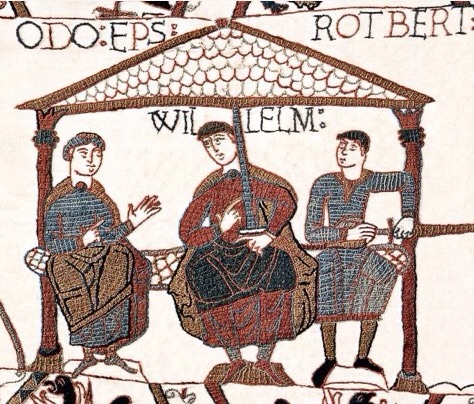
“I will be following in William’s steps from Monday, 2 November, and I am planning to complete my own ROUTE 1066 in 24 days. Unlike William I hope not to face the threat of spears, arrows and dysentery – but then William had a horse, whilst I shall be on foot armed merely with a small backpack and a pair of walking poles. And the November weather is likely to be just as wet!

“And why am I doing all of this? Castle Fields, immediately to the east of Berkhamsted Castle, built by the Normans on the site of William’s accession, are threatened by development. Last year the Berkhamsted Castle Trust took on a philanthropic loan of £500,000 to buy the land, but this needs to be repaid by September 2027. The SAVE CASTLE FIELDS campaign was launched and our own army of supporters has already raised nearly £290,000: my ROUTE 1066 escapade forms a small part of this huge challenge to raise awareness and the funds needed to preserve our heritage and to secure the legacy of this historic site for future generations.”

Thank you for following my ROUTE 1066 journey – re-tracing the steps of William the Conqueror in 1066 on his 360-mile campaign trail from Pevensey Bay, via Berkhamsted, and on to Westminster Abbey. If you are following my Blog, enjoying the ramble, and would like to help us to SAVE CASTLE FIELDS for future generations by pledging £39 to sponsor a 3×3-metre square of the land, then please click on this link:
THANK YOU ALL FOR SUPPORTING MY ROUTE 1066 WALK, AND FOR HELPING TO PRESERVE THE LEGACY OF CASTLE FIELDS

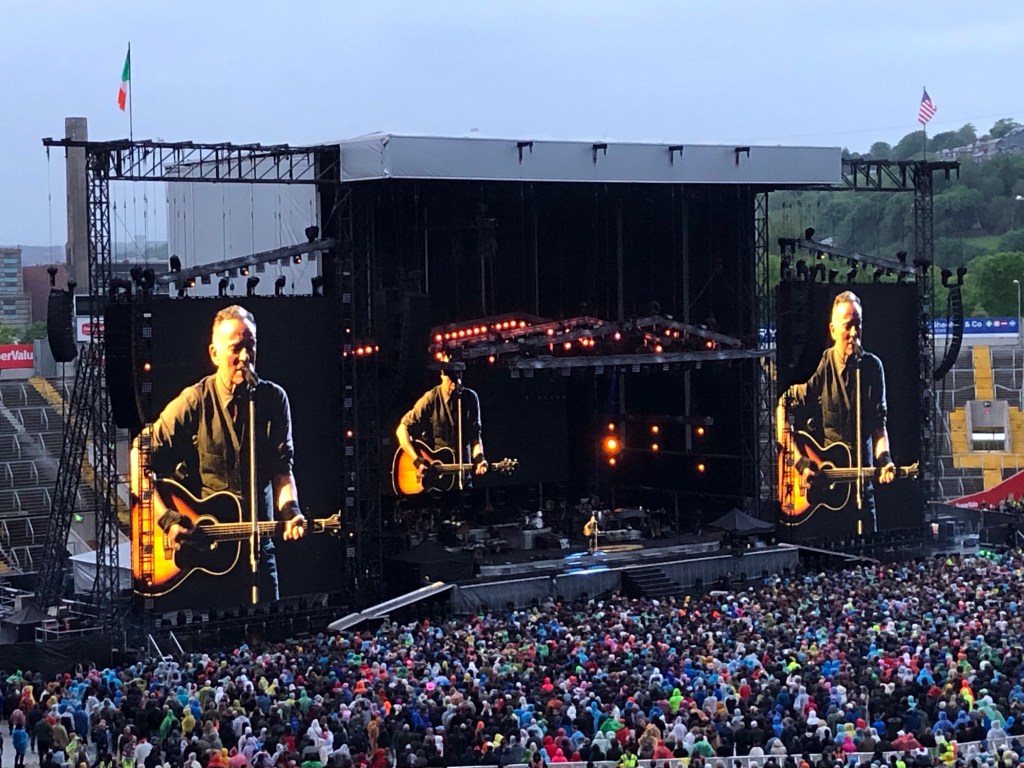
The Blog heading that I have adopted today ‘Long Walk Home’ is taken from the title of a Bruce Springsteen song from his 2007 ‘high energy rock’ ‘Magic’ album, a release that topped the album charts on both sides of The Pond. The song is about ‘a guy who comes back to his (home) town and finds it totally alien’ – I hope that is not the case for me once I complete my three-and-a-half-week walk, although it might well have been the case for many Anglo-Saxons some 960 years ago.