
ROUTE 1066 – Day 4: Thursday 5 November 2026 – RYE to HYTHE (22 miles)
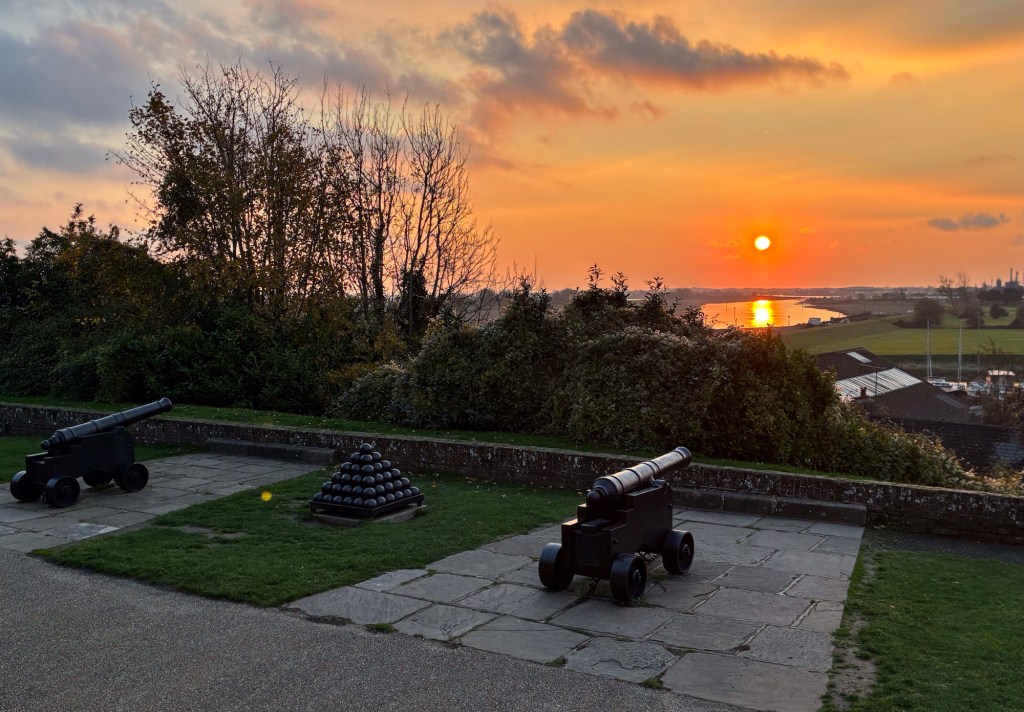
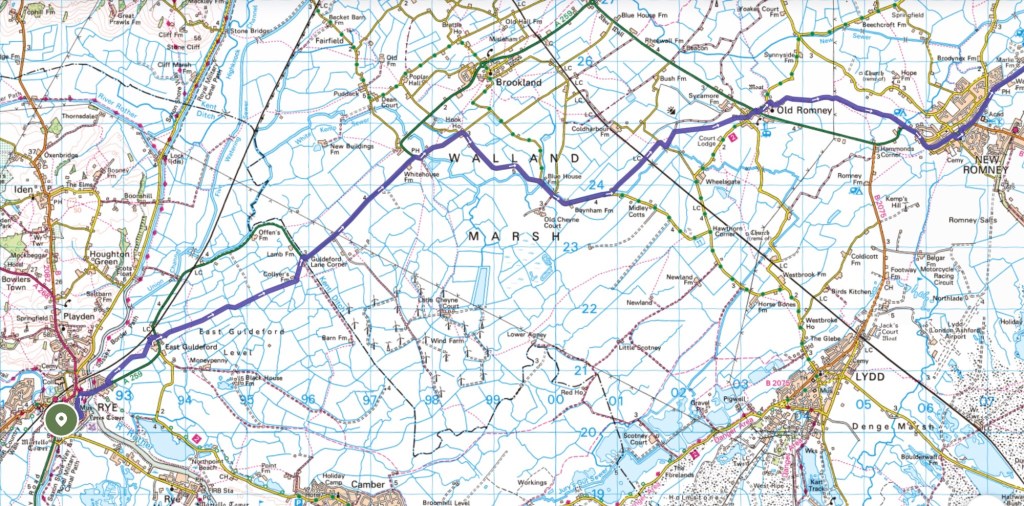
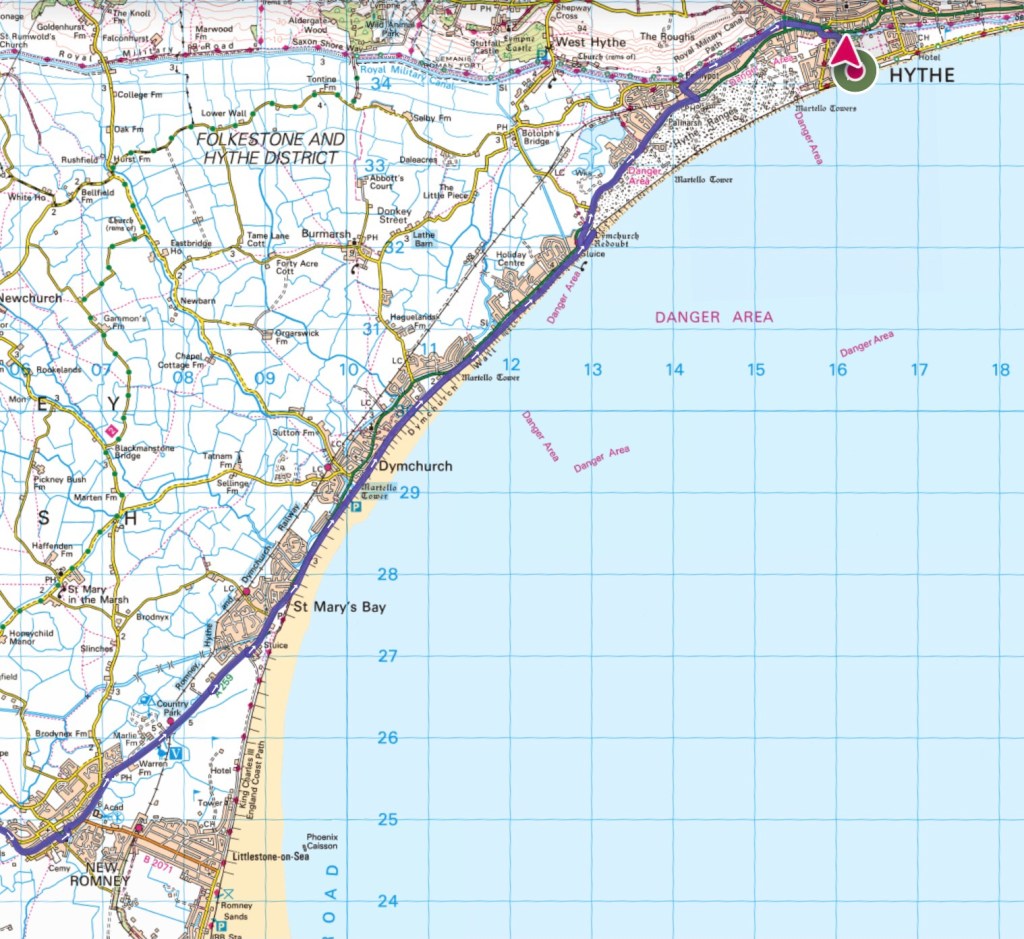
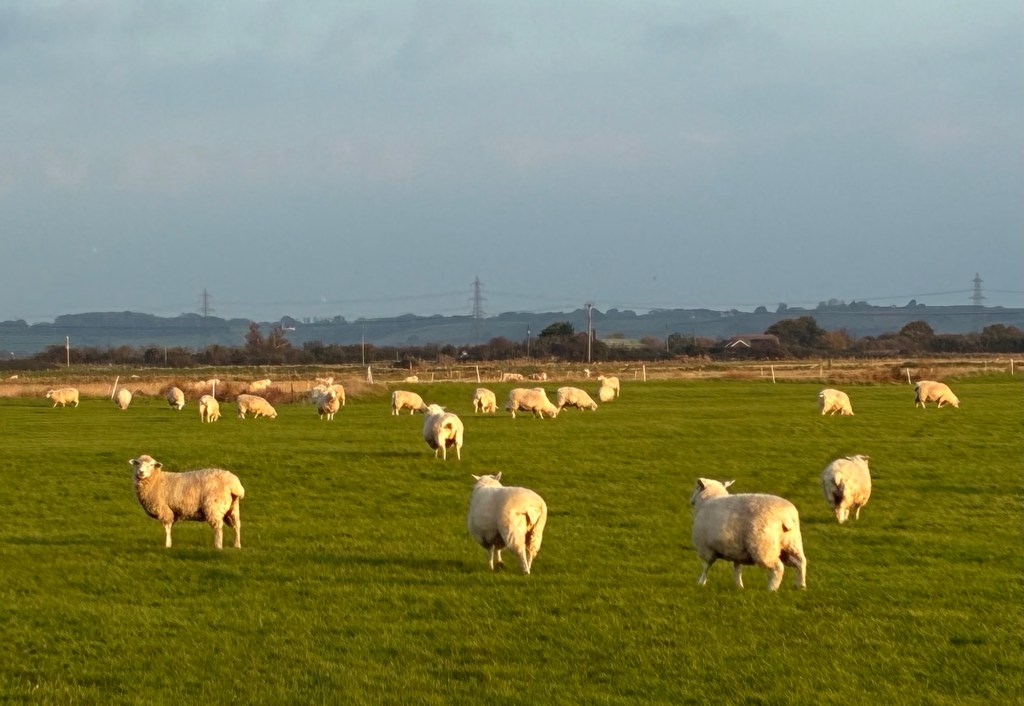
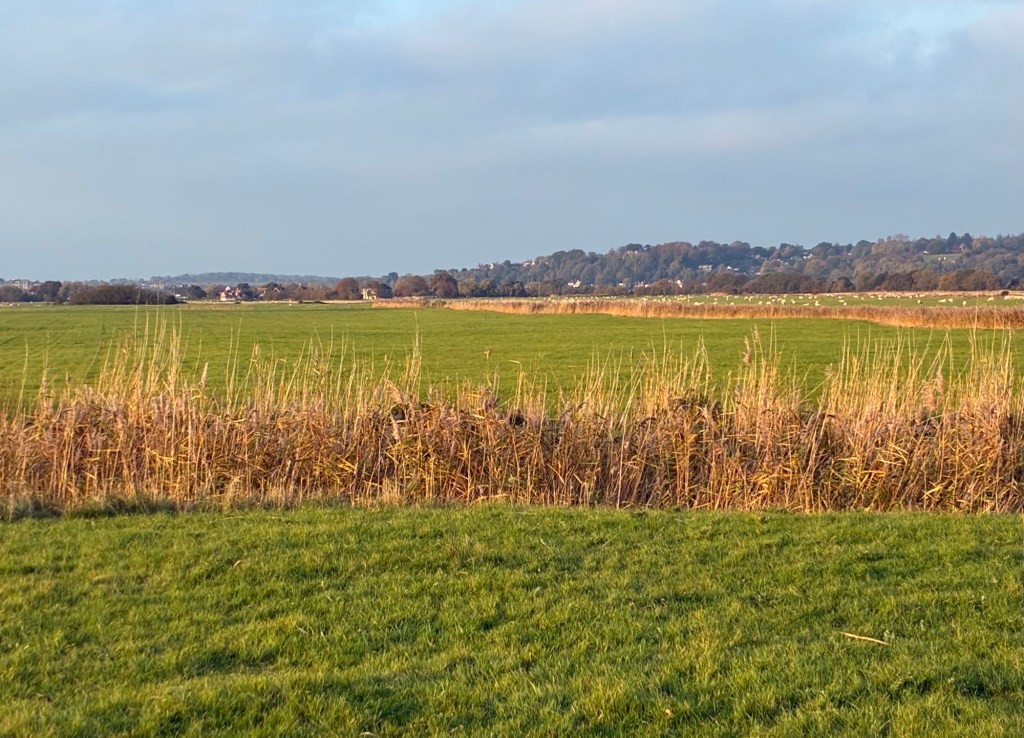
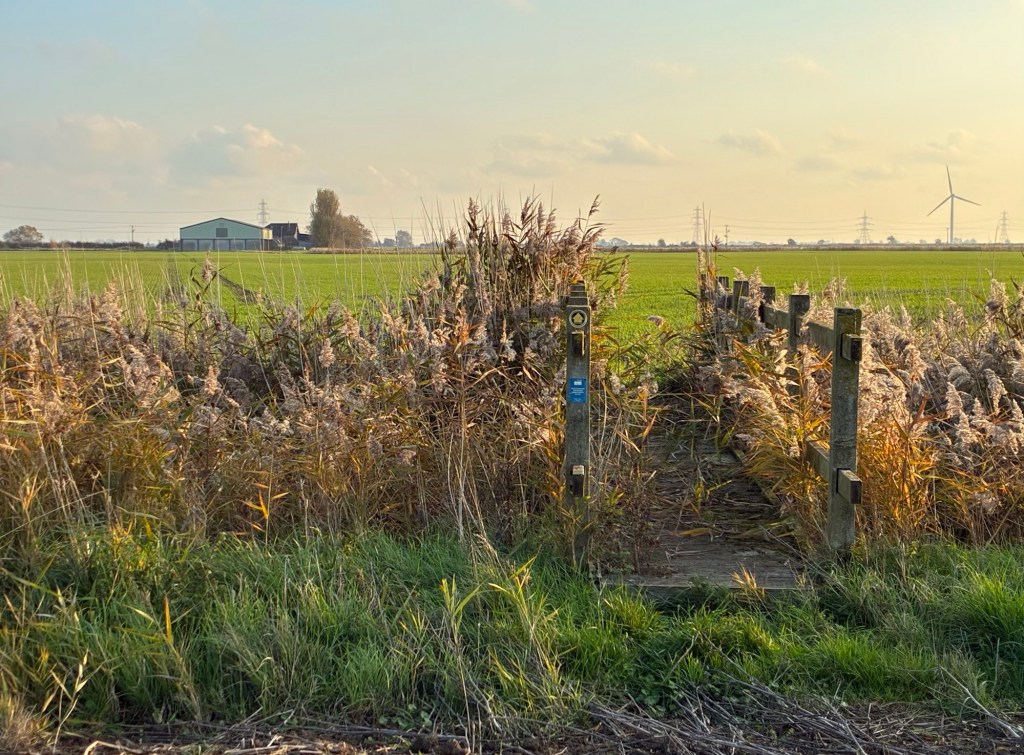
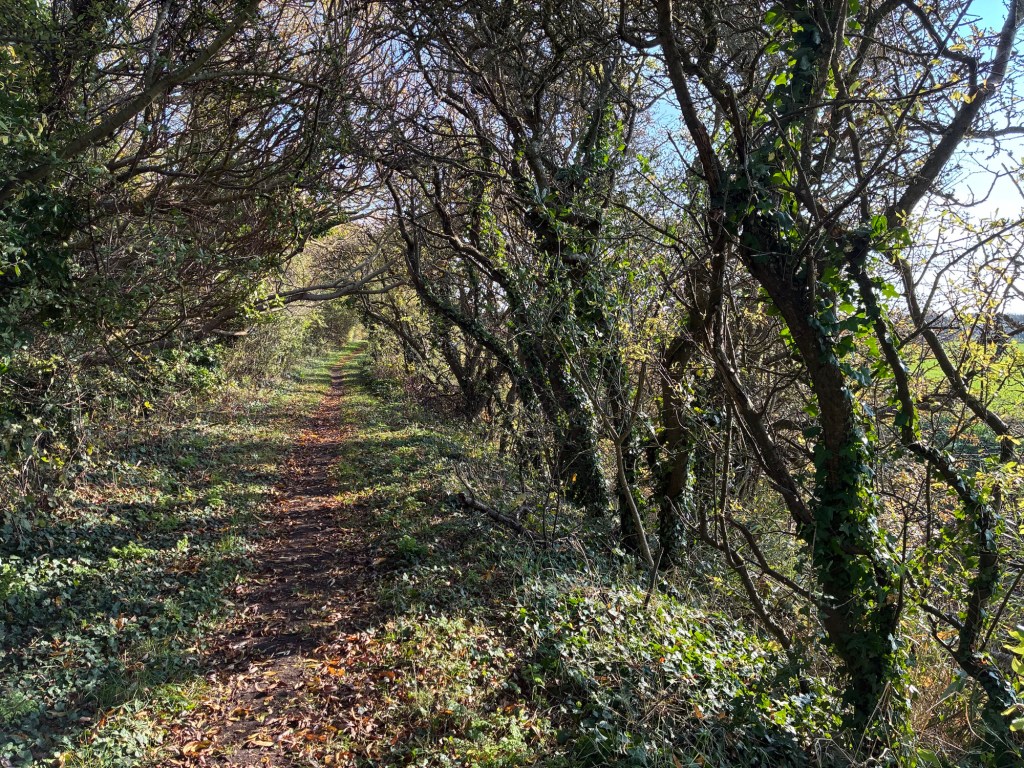
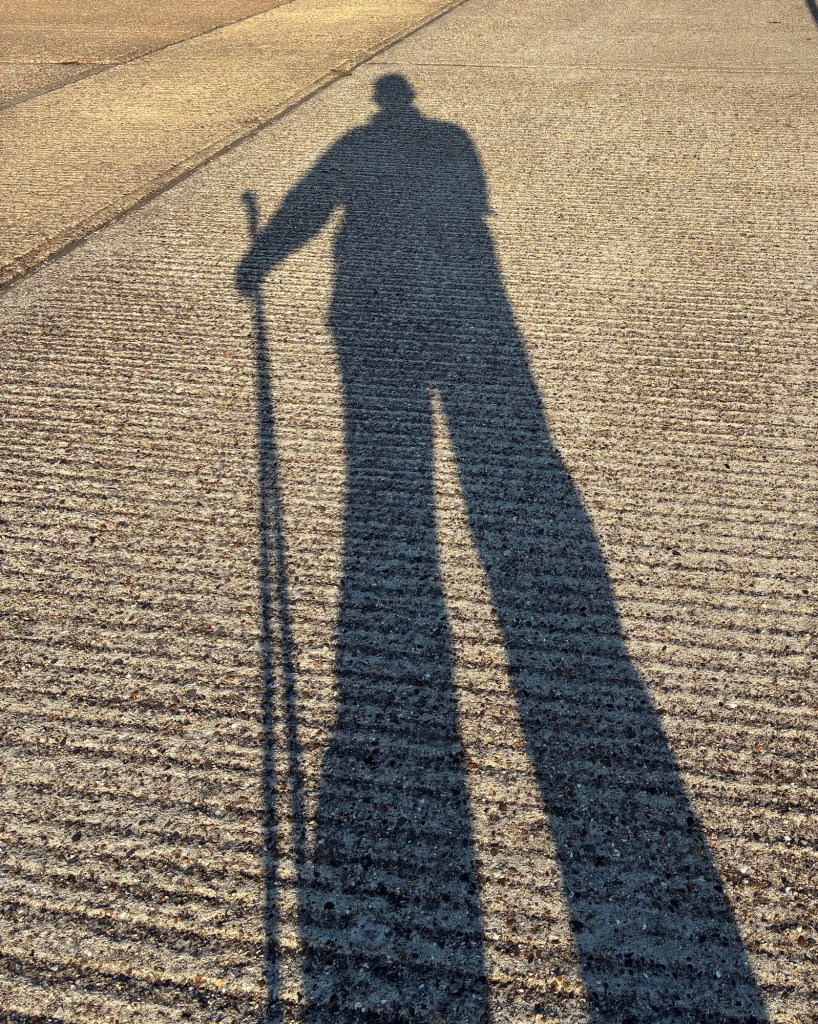
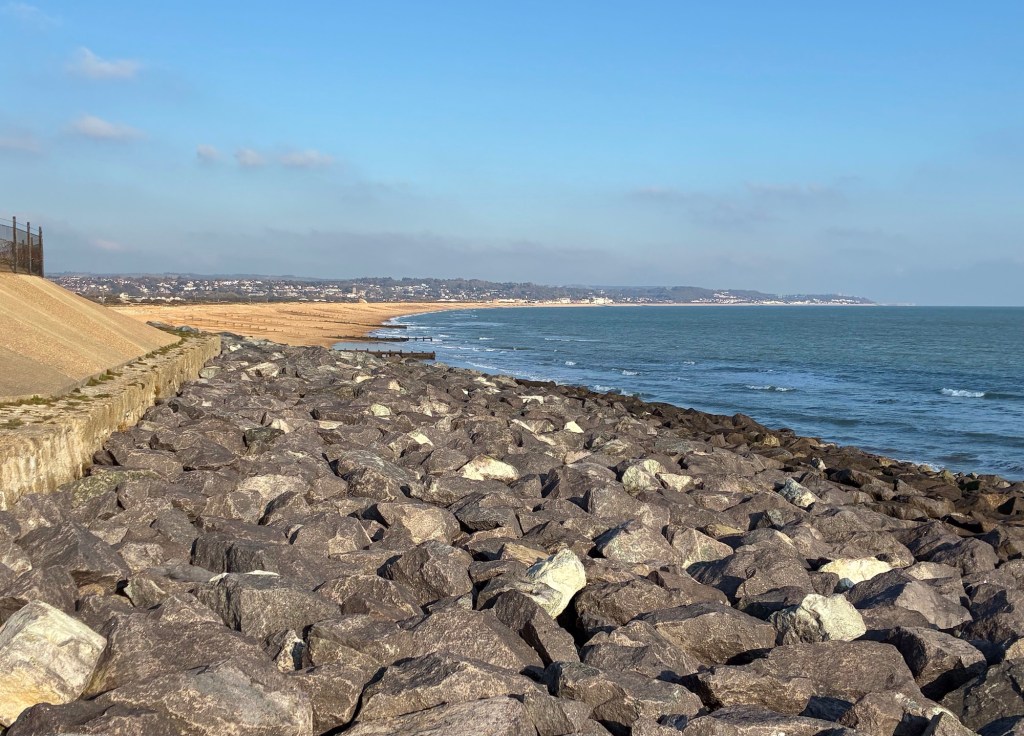
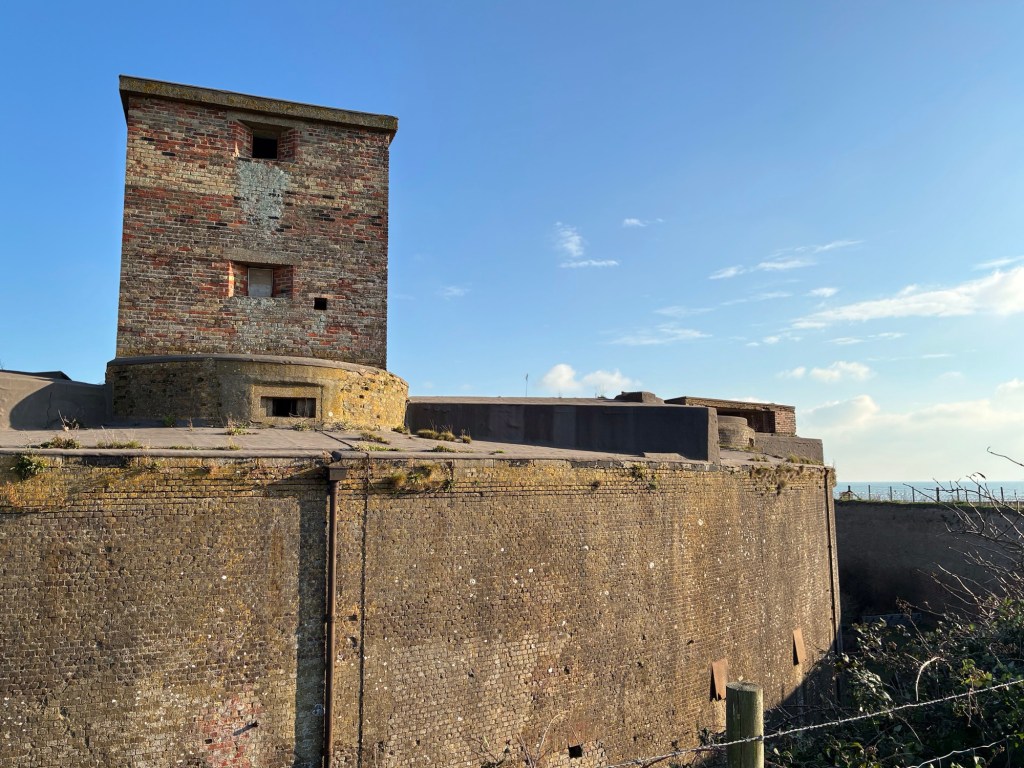
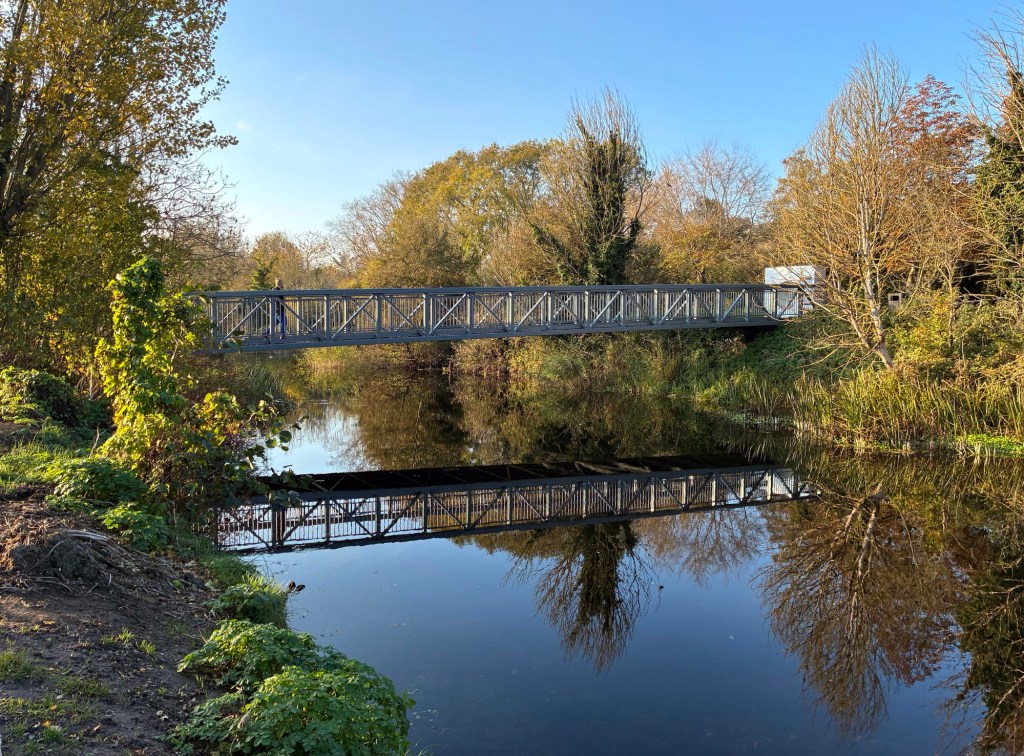
Autumn walking does not come much better than today; cool but with blue skies all day and the sunshine only interrupted by occasional clouds, and (after yesterday’s blasts) nothing more than a light headwind. The terrain was entirely free of inclines – a morning of a dozen miles on the pastures and farm tracks of the Welland Marsh levels, and the afternoon of around eight miles along the seafront promenade of St Mary’s Bay and Dymchurch, with a final mile or two, just for good measure, on the Royal Military Canal into Hythe. Although this stage was quite a long walk, today must surely rank as the flattest section of my ROUTE 1066 journey: my OS App shows a cumulative elevation of just 69 feet! Small wonder then that this mini-marathon, even with coffee, lunch and water breaks, took me less than eight hours to complete.
I mentioned yesterday as I passed through Winchelsea and on arriving in Rye, that these two towns were ‘Cinque Ports’: today I encountered another two – Romney, and my overnight destination of Hythe. The origin of this confederation deserves some explanation. Although the the history of the Cinque Ports dates back to the late Anglo-Saxon realm of Edward the Confessor, it is commonly agreed that the five founding ports of Hastings, Romney, Hythe, Dover and Sandwich were designated in early Plantagenet times by Henry II, who conferred privileges upon these coastal towns (such as reduced taxes) in exchange for the ports keeping and providing a supply of ships and men for the King’s trading purposes and for use in times of conflict. The club grew, initially to include Rye and Winchelsea, and then further to many other ports in Sussex and Kent (as well as Brightlingsea in Essex) – and by the late Middle Ages around 40 south-eastern coastal towns could count themselves as a Cinque Port. Their dominance did not preclude ports in other parts of the country however, and in time their prestige waned (not least for some, as we saw yesterday, due to the silting up of the estuaries and the retreat of the sea), to the point that their significance was reduced to a purely ceremonial role that endures to this day. But I have digressed once more – here is the story of my walking day.
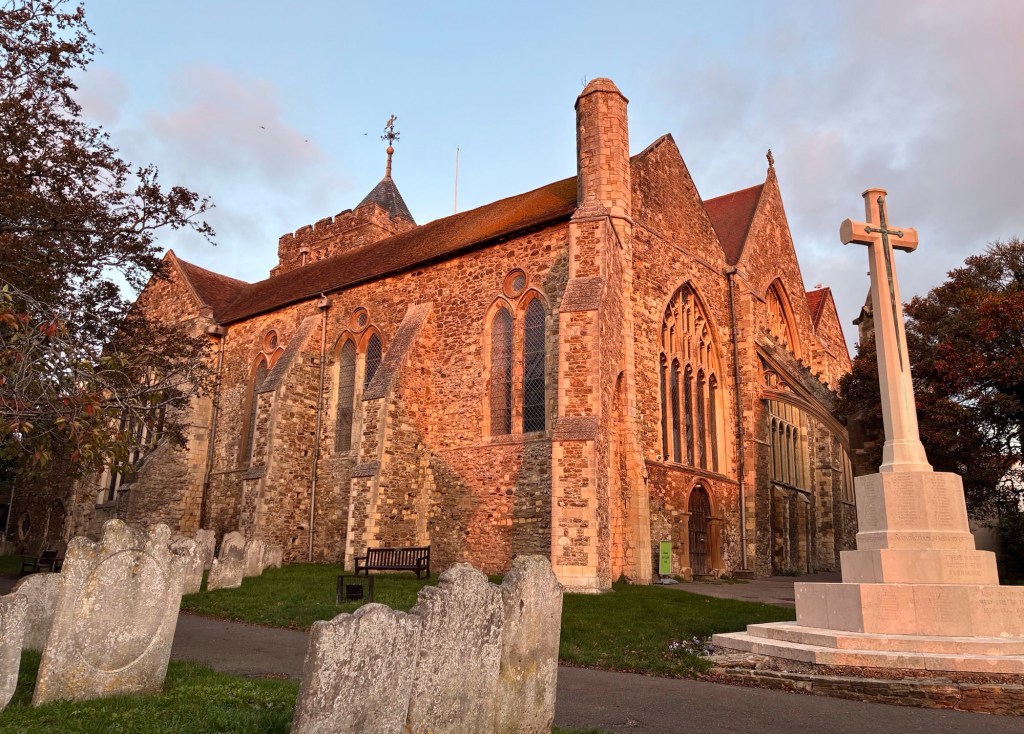
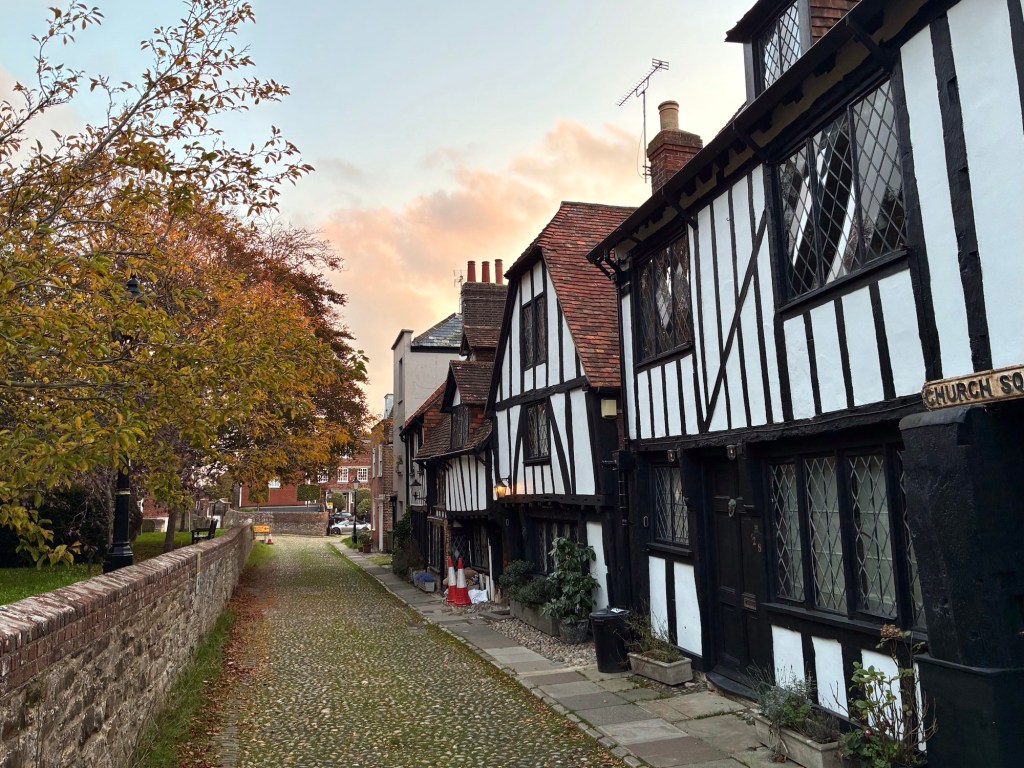
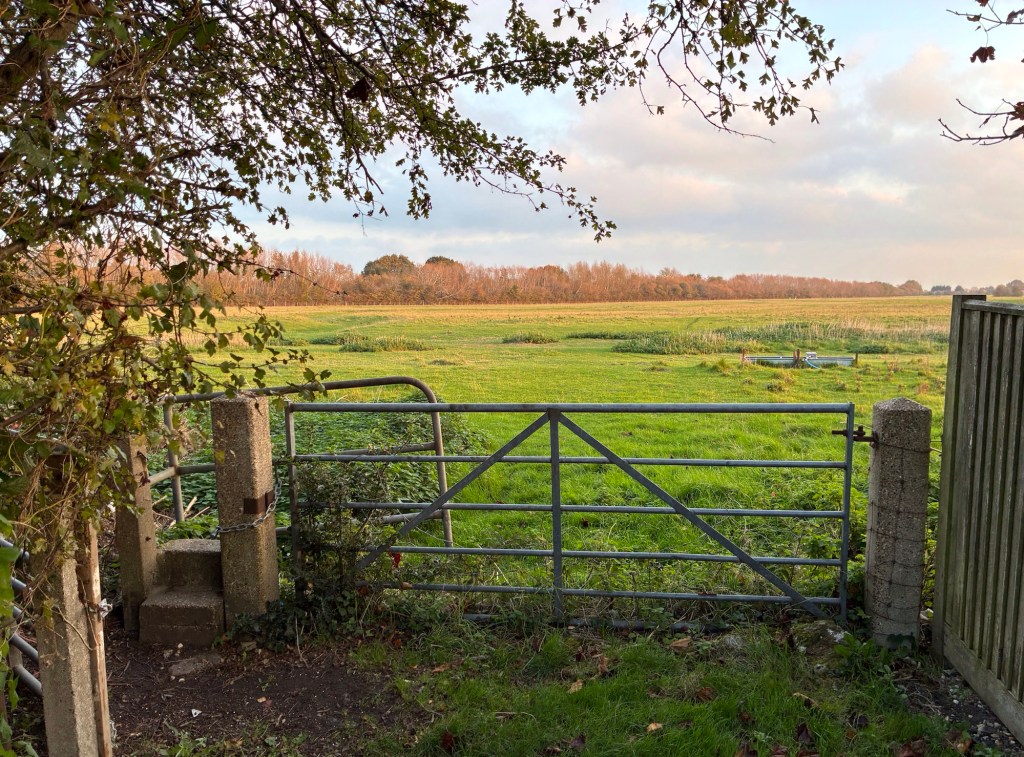
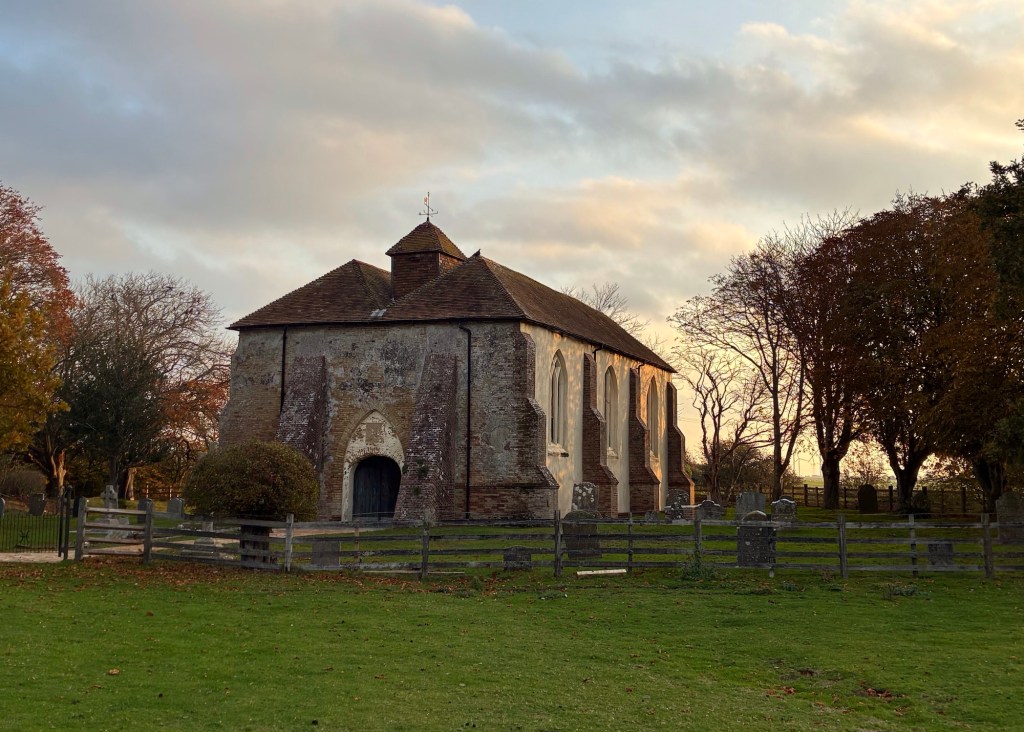
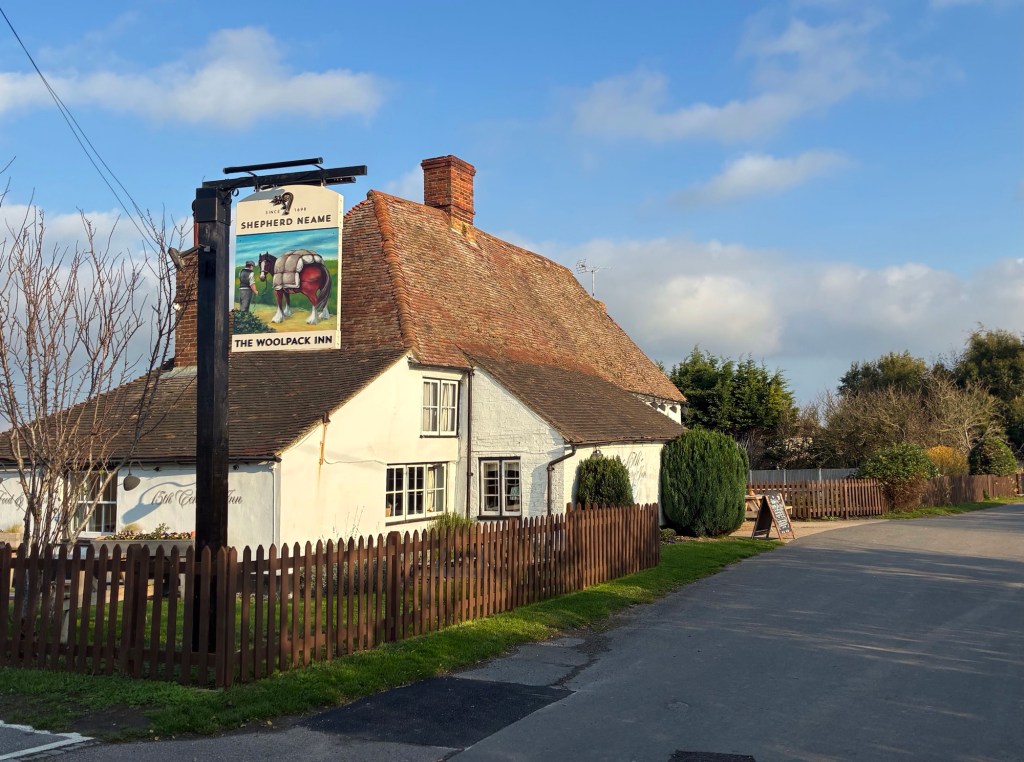
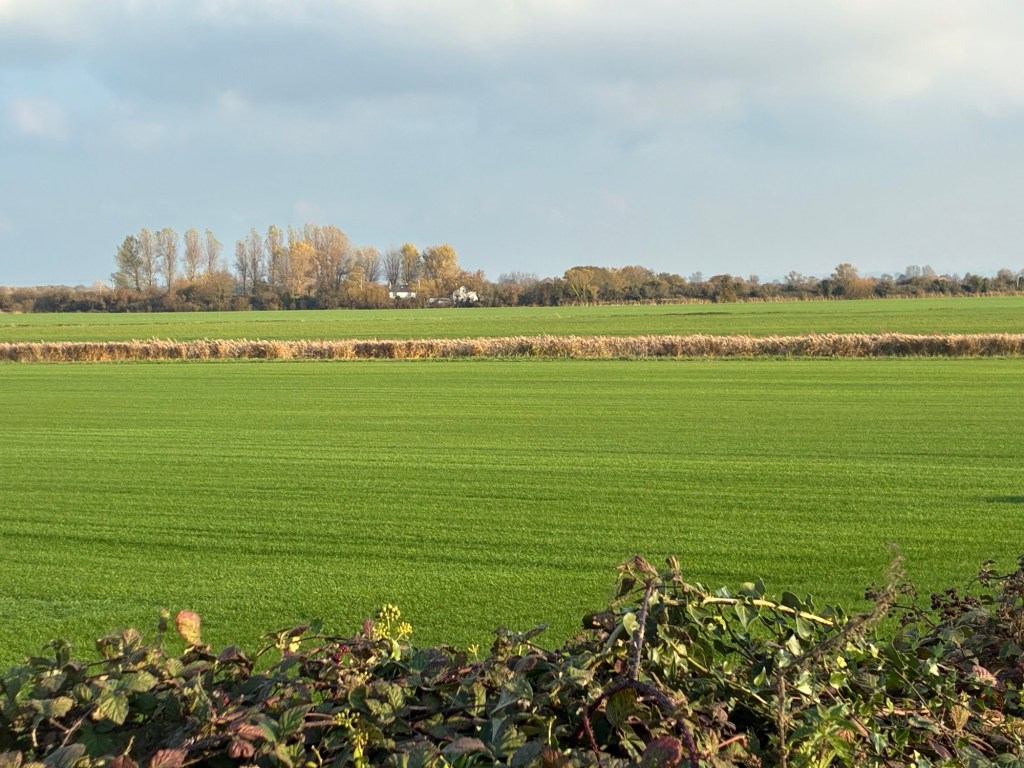
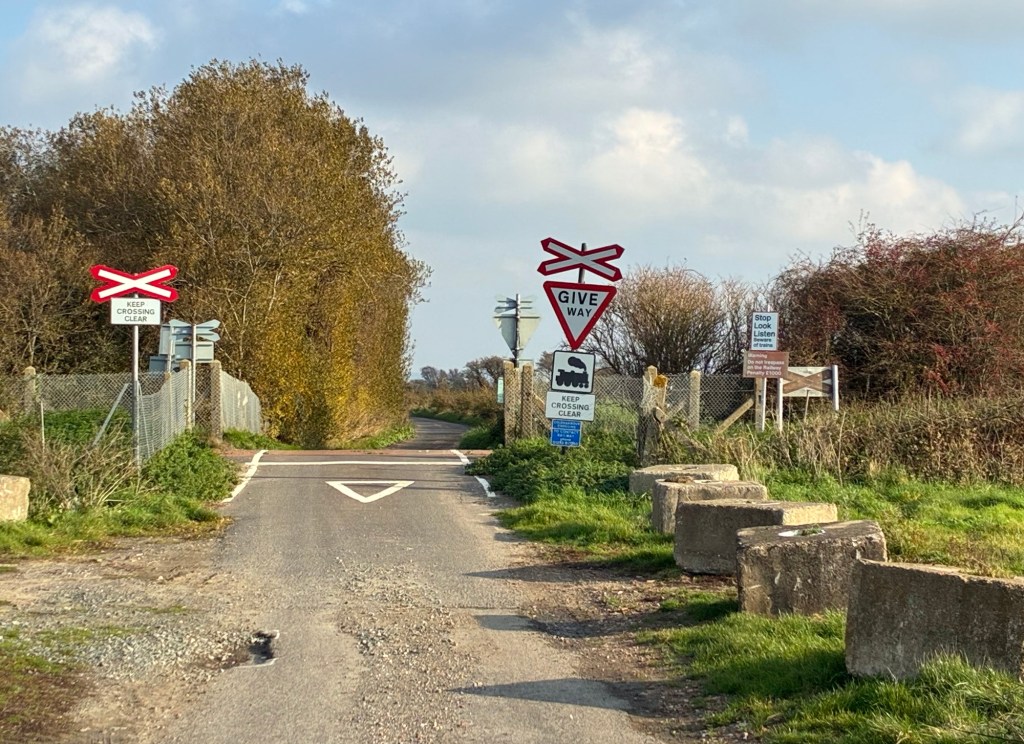
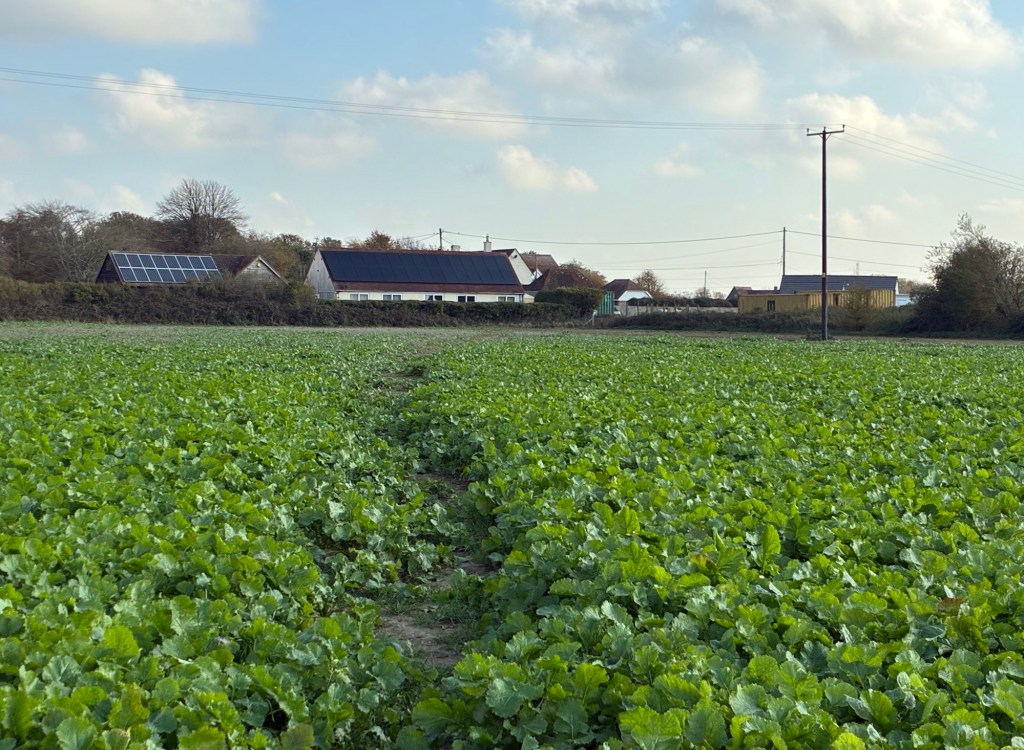
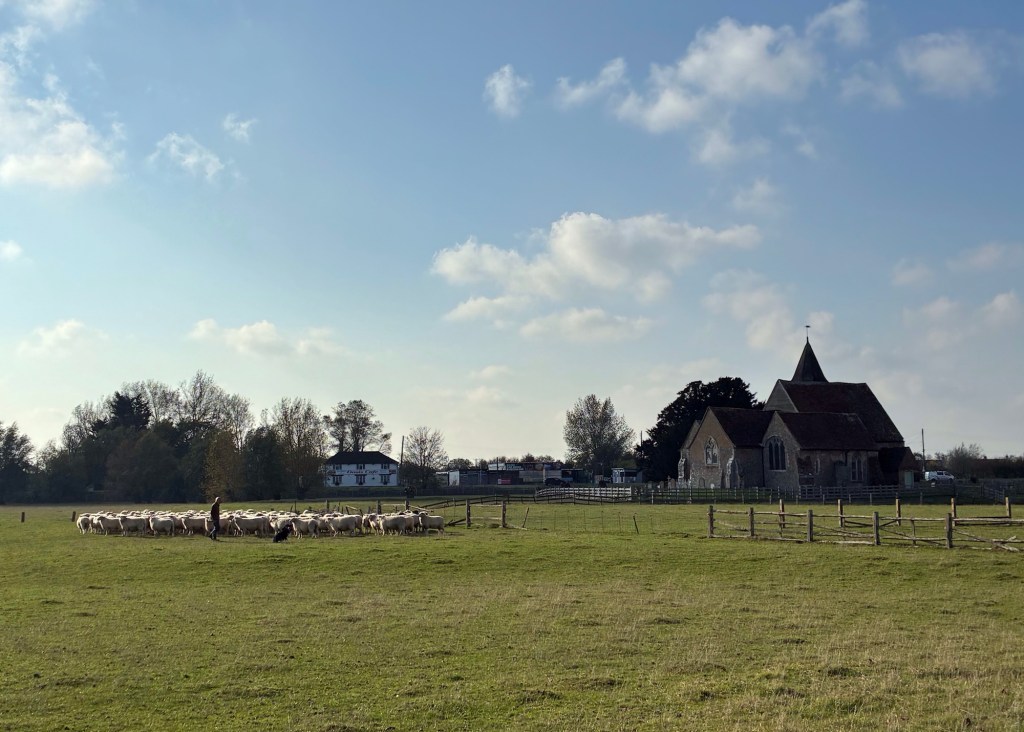
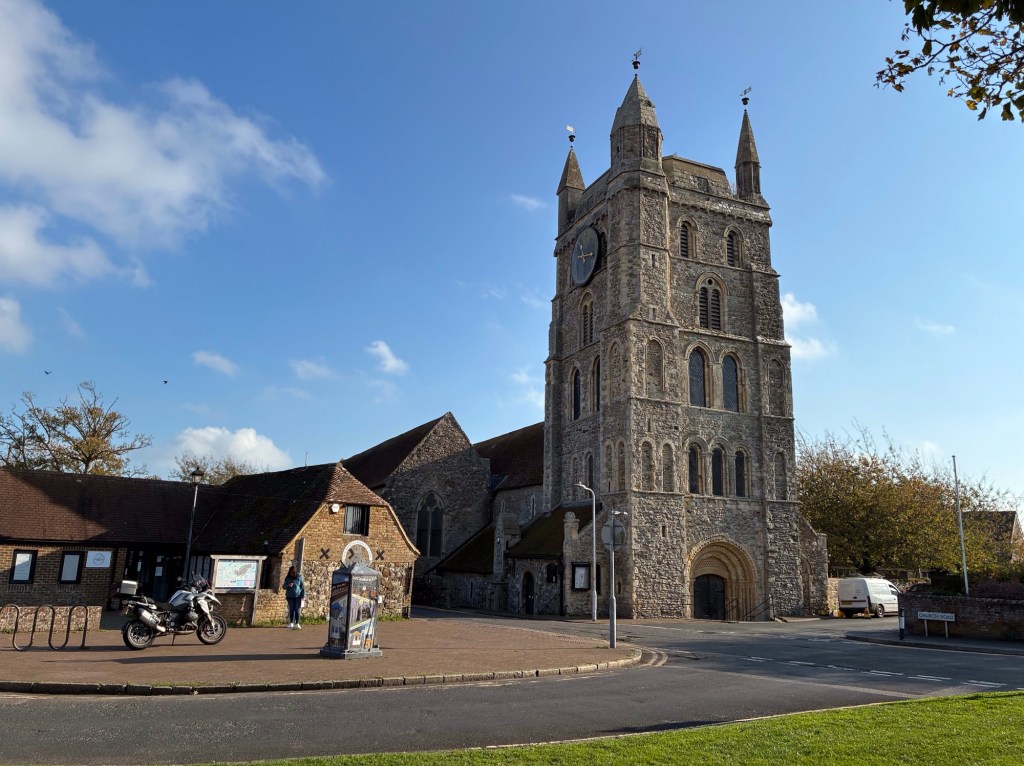
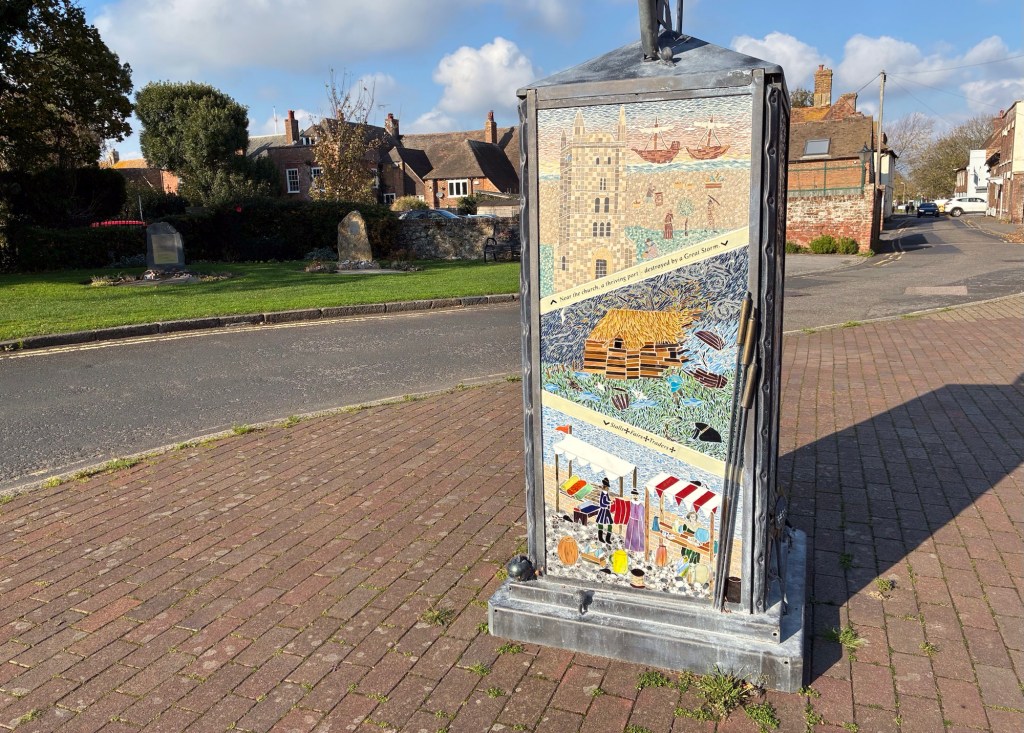
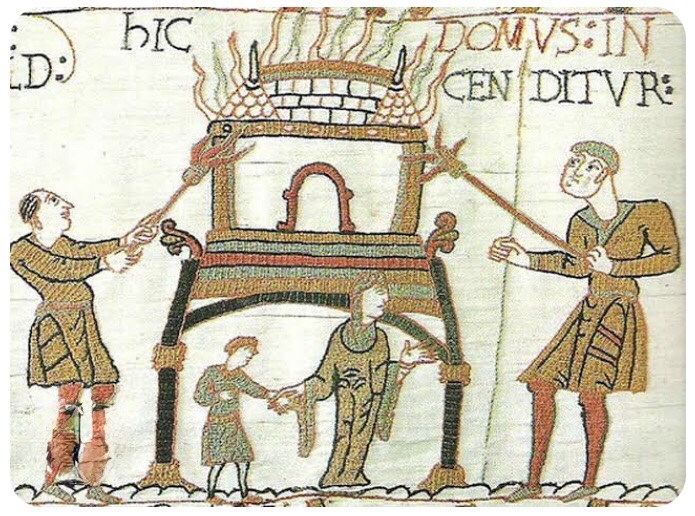
So now to today’s historical interlude. We know for sure that William set foot in the port of Romney (now New Romney) from records of the atrocities that were visited upon the townsfolk and the 1066 invaders alike during the Norman conquest. After laying up in Hastings after the battle for a fortnight or so, William headed eastwards with the aim of consolidating his victory: he was actually expecting (or perhaps hoping) for a surrender from the surviving Anglo-Saxon noblemen, but in the meantime he led the main contingent of his army along the coast towards Dover. Without logistical back-up his men were forced to keep moving and to scour the towns, villages and countryside to provide for their sustenance. These were brutal times, and in the process of stealing food many settlements were burned and their inhabitants killed: as we shall see later in William’s campaign, these practices of terrorism became a strategy to force a surrender. But, in the case of Romney, William had an additional motive – one of revenge. A month or so previously, towards the end of September – on the night that the Norman fleet set sail from St Valéry bound for Pevensey Bay – two of William’s ships ventured too far east, making landfall at Romney. The English butchered all on board and, in return, William now laid waste to the town, burning the buildings and slaying the inhabitants. Needless to say, there is nothing today that hints at this barbaric past – just a pleasant town going about daily life. Now back to the trail:
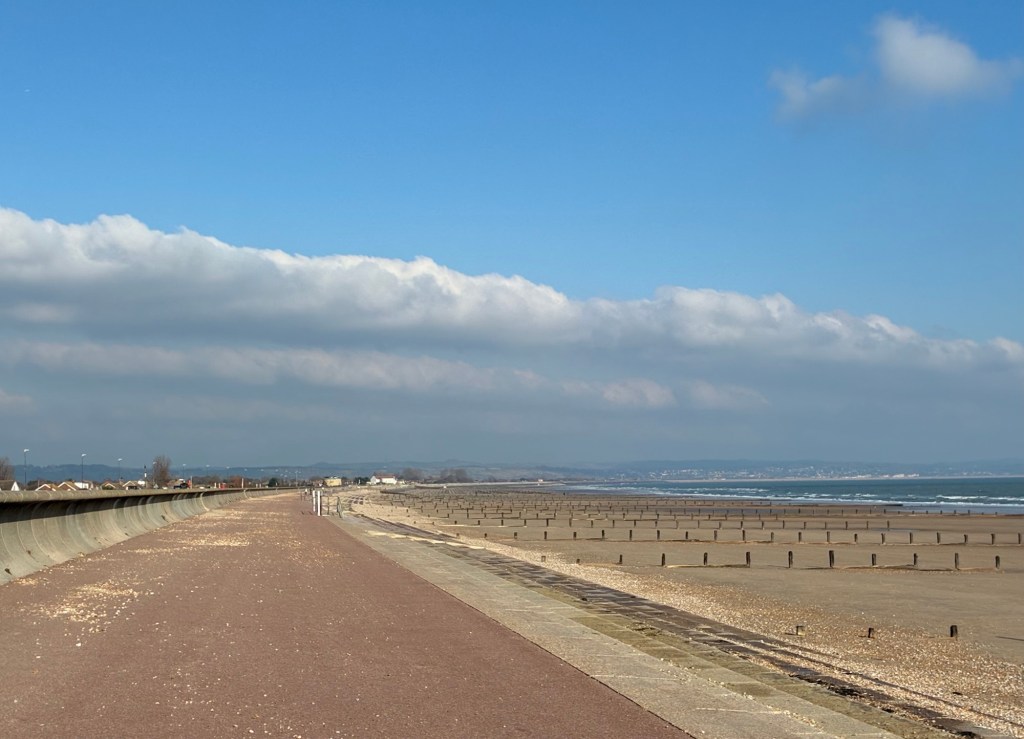
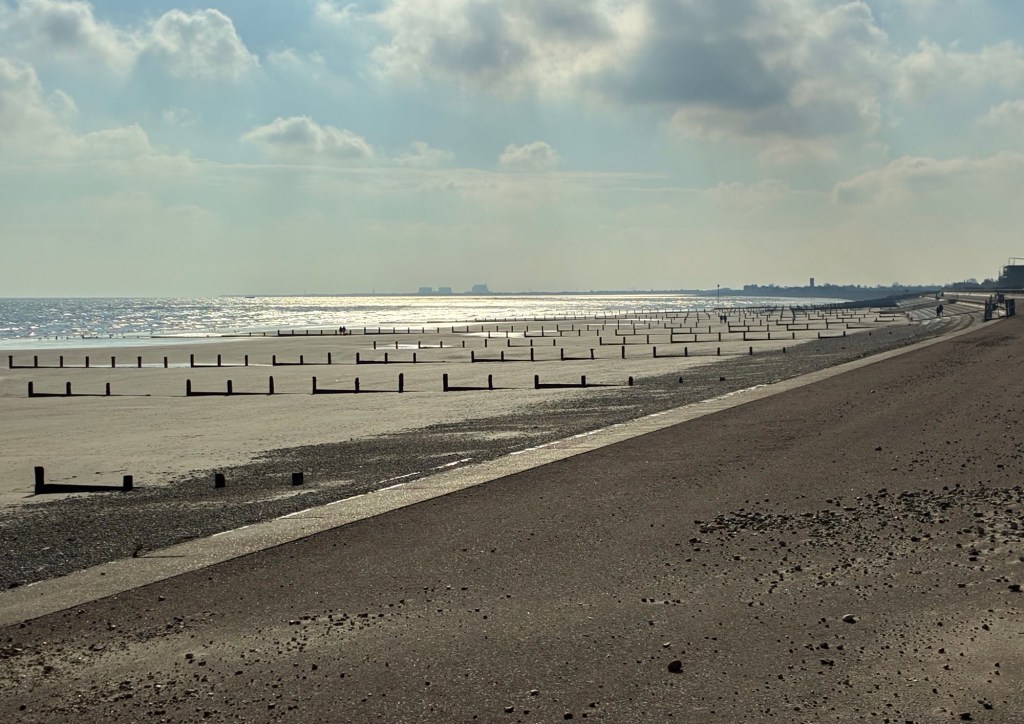
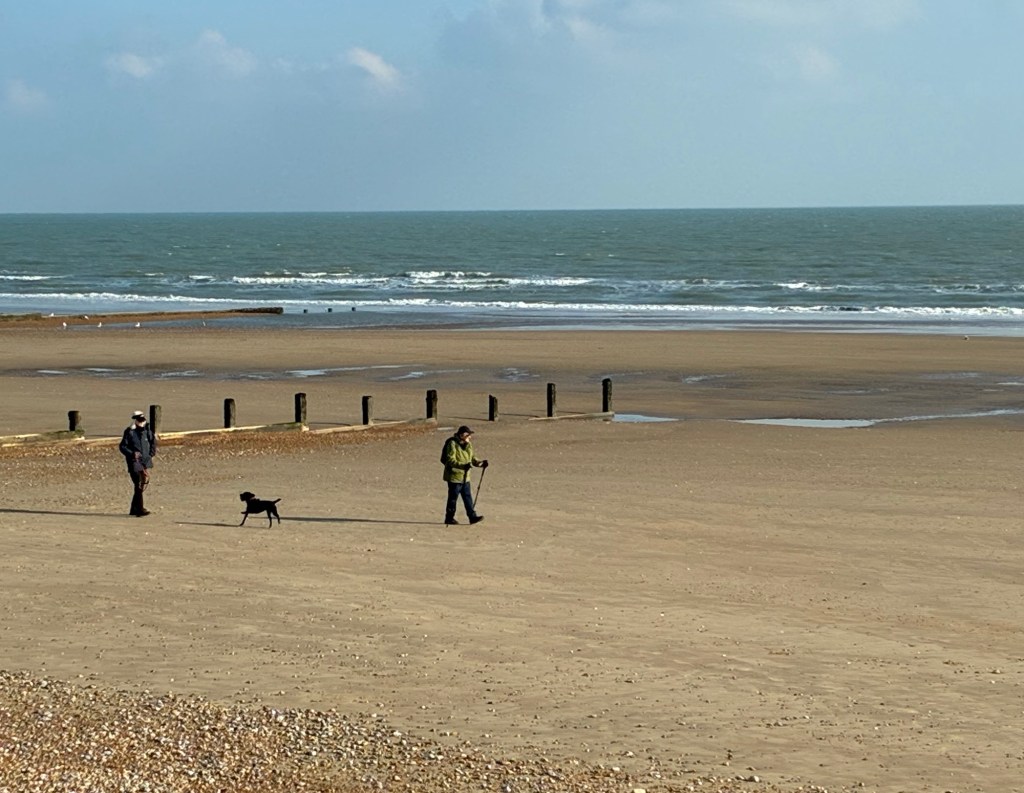
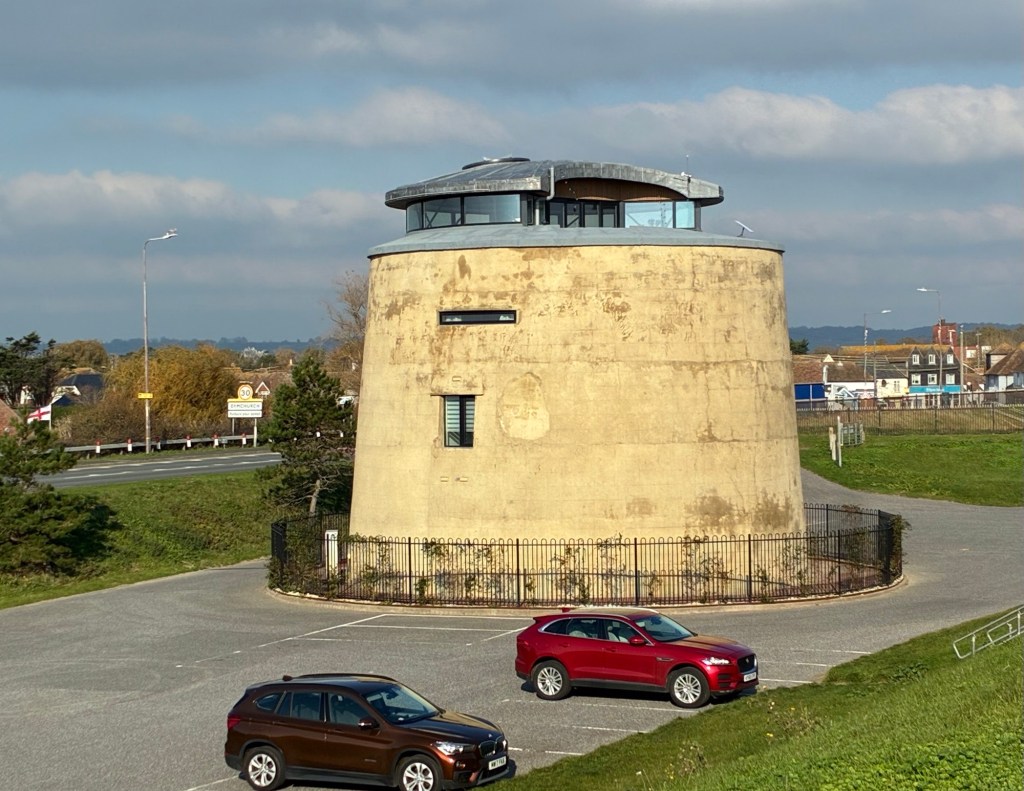
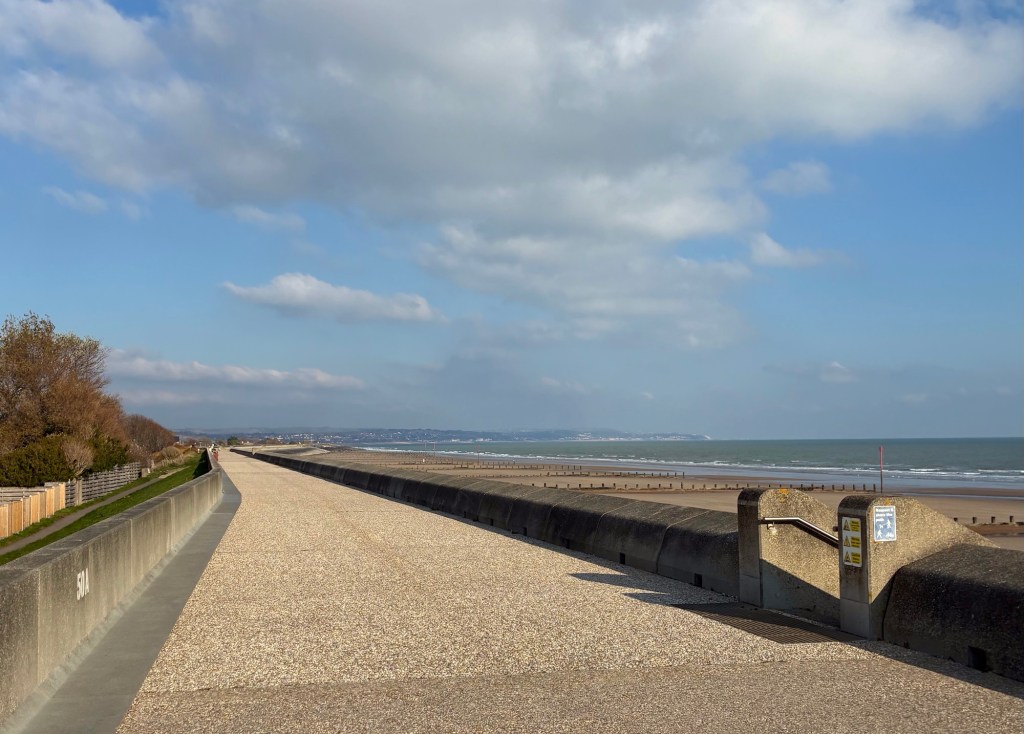
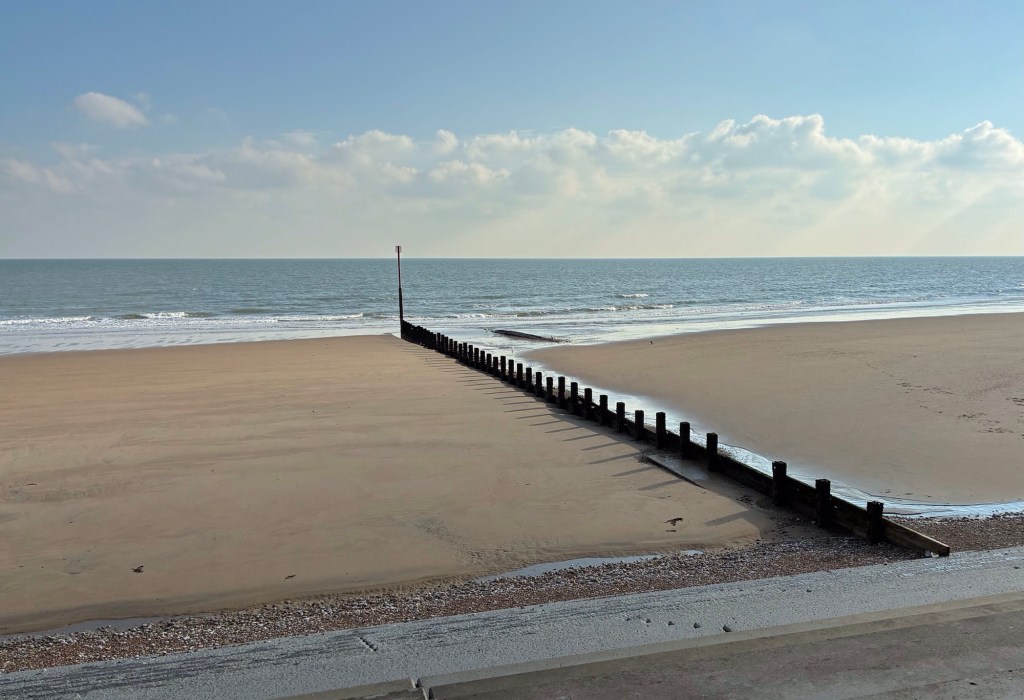
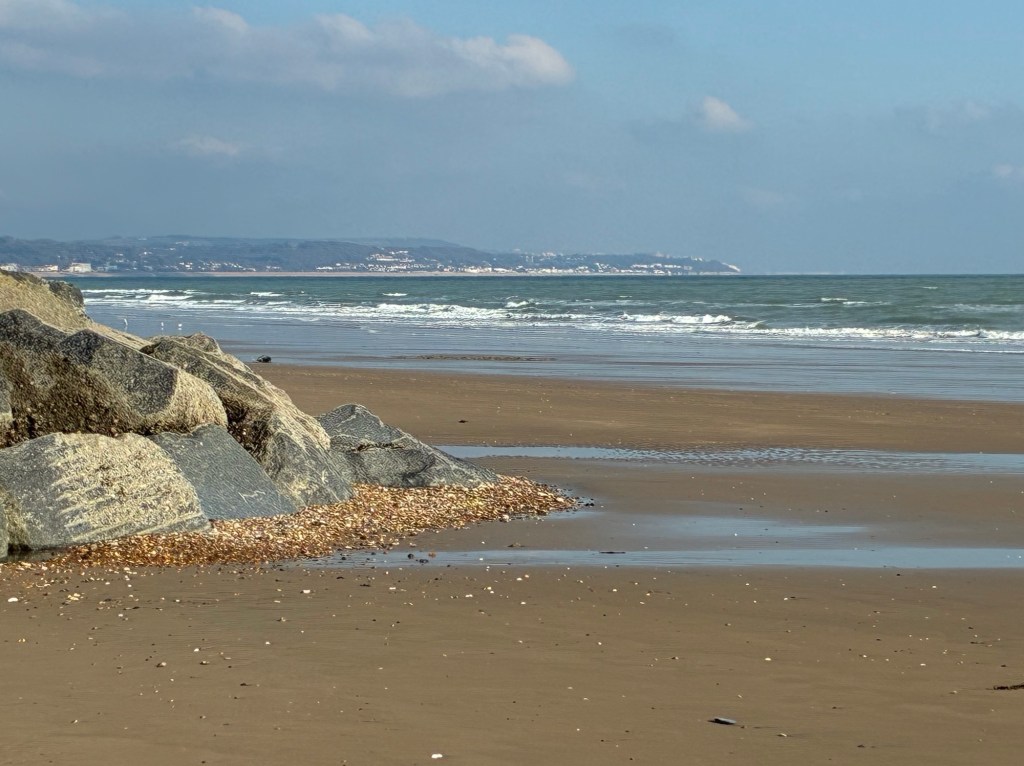
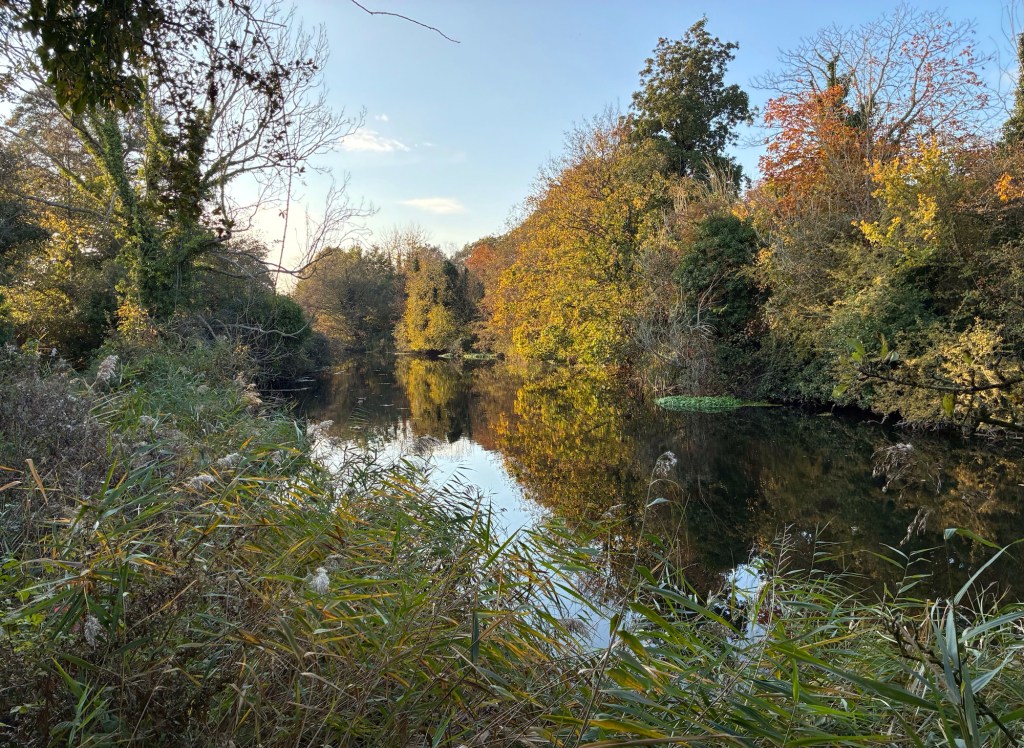
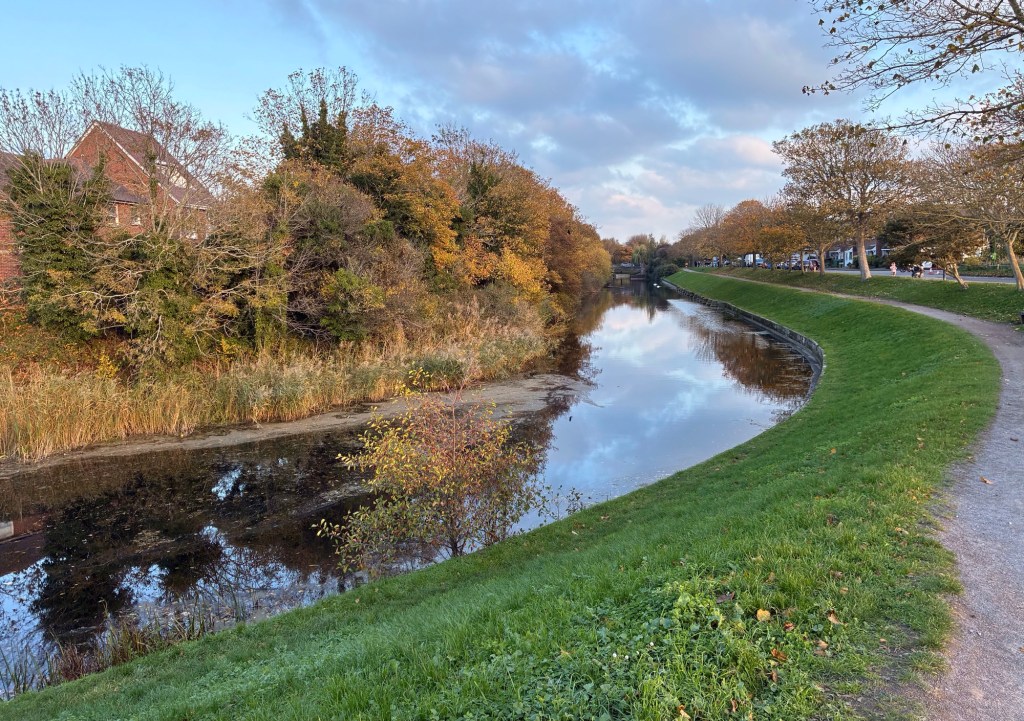
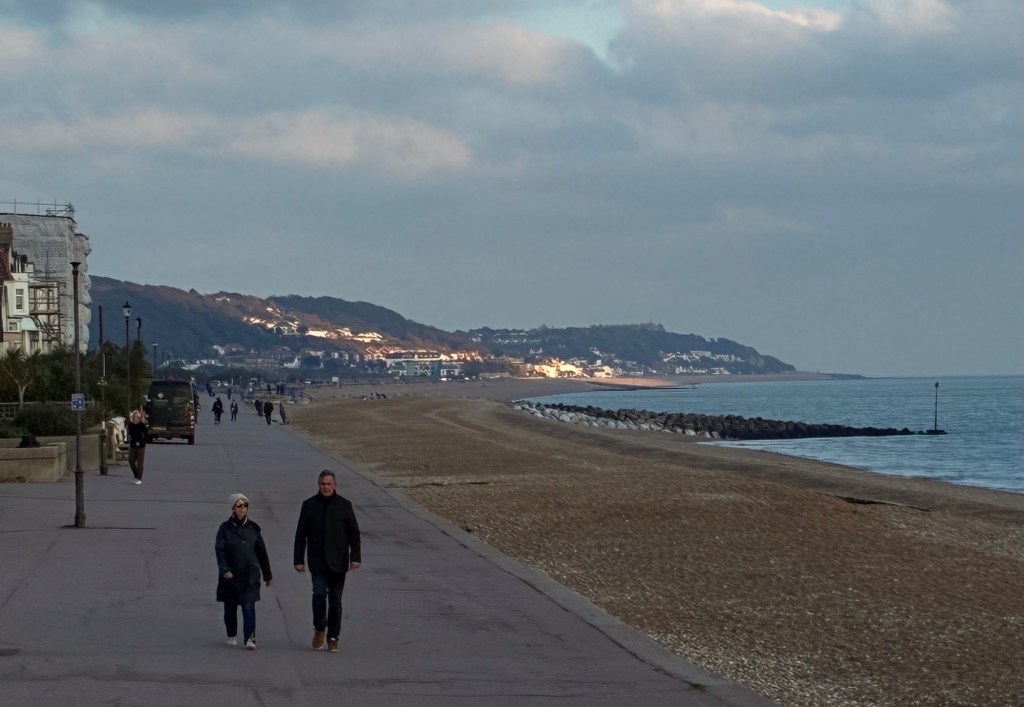
I am writing this Blog in a noodle bar, just around the corner from my rambling hotel on the front at Hythe. I had to escape my room to get decent wifi, but as it happens the food here is super, the heating is on high, and they serve Harvey’s Sussex Best at the bar – what better way to recover from a long day of walking? Tomorrow, I have a shorter section of my ROUTE 1066 journey, just 15 miles or so, as the cliff path returns with a high climb out of Folkestone en route for Dover.

Thank you for following my ROUTE 1066 journey – re-tracing the steps of William the Conqueror in 1066 on his 360-mile campaign trail from Pevensey Bay, via Berkhamsted, and on to Westminster Abbey. If you are following my Blog, enjoying the ramble, and would like to help us to SAVE CASTLE FIELDS for future generations by pledging £39 to sponsor a 3×3-metre square of the land, then please click on this link:
THANK YOU ALL FOR SUPPORTING MY ROUTE 1066 WALK, AND FOR HELPING TO PRESERVE THE LEGACY OF CASTLE FIELDS


My Blog heading today ‘Streets of Fire’ follows the title of a Bruce Springsteen song from his 1978 album ‘Darkness on the Edge of Town. The recording marked a change in style from the ‘wall of sound’ production on Springsteen’s previous ‘Born to Run’ album, towards a more raw hard-rock feel that showcases to a greater degree his acclaimed E-Street band members who subsequently joined ‘the Boss’ on his ‘Darkness Tour’. The album’s theme of ‘ill-fortuned characters who fight back against overwhelming odds’ and the urgency of ‘Streets of Fire’ form an appropriate backdrop on my playlist to William’s sacking of Romney.
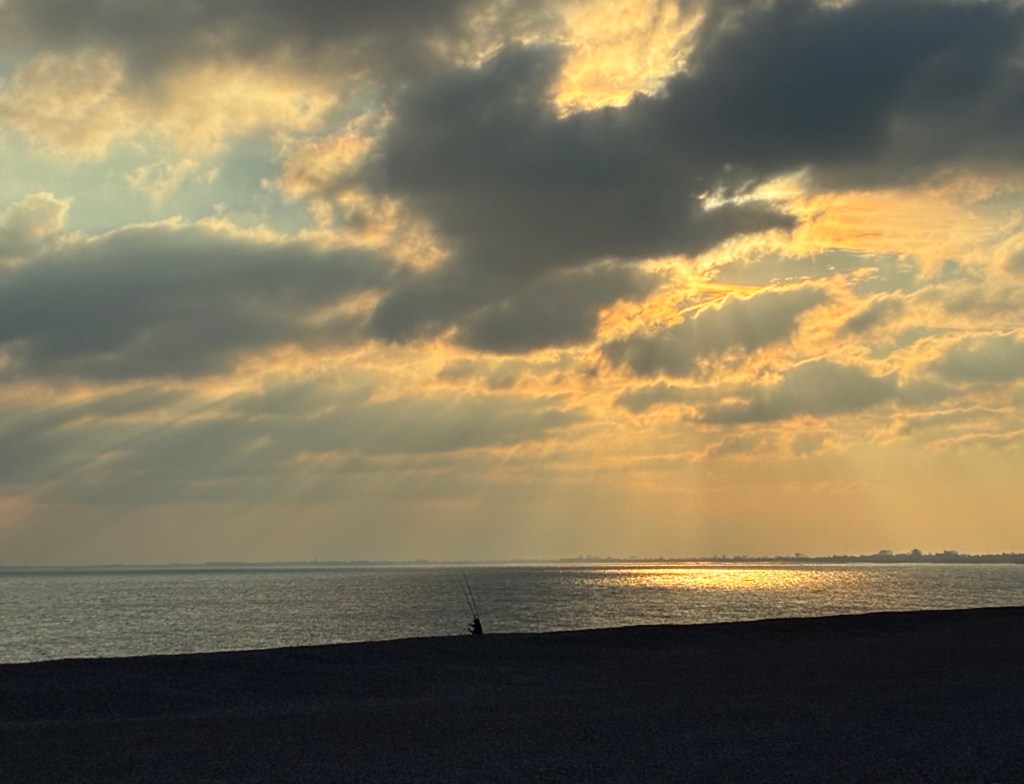


Really enjoying reading about your travels Nick and seeing some spectacular photos. Very educational too learning so much more about William. Safe travels!
LikeLike